Tuesday, 20 January 2026

Exxon knew there would be a climate crisis.


Trump ditches UN climate treaty as he moves to dismantle America’s climate protections

On Jan. 7, 2026, President Donald Trump declared that he would officially pull the United States out of the world’s most important global treaty for combating climate change. He said it was because the treaty ran “contrary to the interests of the United States.”

His order didn’t say which U.S. interests he had in mind.

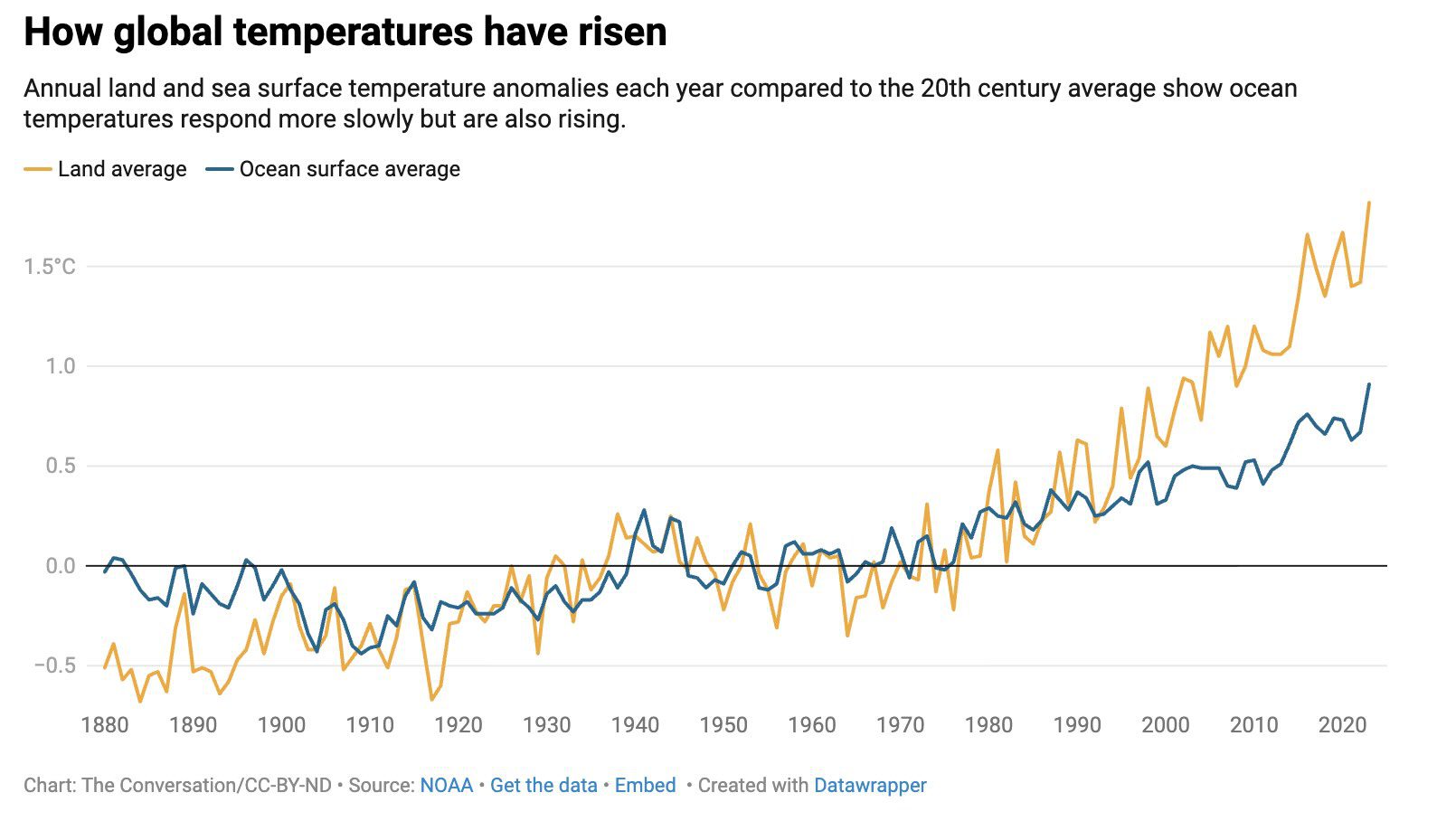
Americans had just seen a year of widespread flooding from extreme weather across the U.S. Deadly wildfires had burned thousands of homes in the nation’s second-largest metro area, and 2025 had been the second- or third-hottest year globally on record. Insurers are no longer willing to insure homes in many areas of the country because of the rising risks, and they are raising prices in many others.

For decades, evidence has shown that increasing levels of greenhouse gases in the atmosphere, largely from burning fossil fuels, are raising global temperatures and influencing sea level risestorms and wildfires.

Damn the torpedoes! Trump ditches a crucial climate treaty as he moves to dismantle America’s climate protections

The climate treaty – the United Nations Framework Convention on Climate Change – was created to bring the world together to find ways to lower those risks.

Trump’s order to now pull the U.S. out of that treaty adds to a growing list of moves by the admnistration to dismantle U.S. efforts to combat climate change, despite the risks. Many of those moves, and there have been dozens, have flown under the public radar.

Why this climate treaty matters

A year into the second Trump administration, you might wonder: What’s the big deal with the U.S. leaving the United Nations Framework Convention on Climate Change now?

After all, the Trump administration has been ignoring the UNFCCC since taking office in January. The administration moved to stop collecting and reporting corporate greenhouse gas emissions data required under the treaty. It canceled U.S. scientists’ involvement in international research. One of Trump’s first acts of his second term was to start the process of pulling the U.S. out of the Paris climate agreement. Trump made similar moves in his first term, but the U.S. returned to the Paris agreement after he left office.

This action is different. It vacates an actual treaty that was ratified by the U.S. Senate in October 1992 and signed by President George H.W. Bush.

America’s ratification that year broke a logjam of inaction by nations that had signed the agreement but were wary about actually ratifying it as a legal document. Once the U.S. ratified it, other countries followed, and the treaty entered into force on March 21, 1994.

The U.S. was a global leader on climate change for years. Not anymore.

Chipping away at climate policy

With the flurry of headlines about the U.S. intervention in Venezuela, renewed threats to seize Greenlandpersistent high pricesimmigration arrestsICE and Border Patrol shootings, the Epstein files and the fight over ending health care subsidies, important news from other critical areas that affect public welfare has been overlooked for months.

Two climate-related decisions did dominate a few news cycles in 2025. The Environmental Protection Agency announced its intention to rescind its 2009 Endangerment Finding, a legal determination that certain greenhouse gas emissions endanger the public health and welfare that became the foundation of federal climate laws. There are indications that the move to rescind the finding could be finalized soon – the EPA sent its final draft rule to the White House for review in early January 2026. And the Department of Energy released a misinformed climate assessment authored by five handpicked climate skeptics.

Both moves drew condemnation from scientists, but that news was quickly overwhelmed by concern about a government shutdown and continuing science funding cuts and layoffs.

This chipping away at climate policy continued to accelerate at the end of 2025 with six more significant actions that went largely unnoticed.

Three could harm efforts to slow climate change:

Three other moves by the administration shot arrows at the heart of climate science:

Fossil fuels at any cost

In early January 2025, the United States had reestablished itself as a world leader in climate science and was still working domestically and internationally to combat climate risks.

A year later, the U.S. government has abdicated both roles and is taking actions that will increase the likelihood of catastrophic climate-driven disasters and magnify their consequences by dismantling certain forecasting and warning systems and tearing apart programs that helped Americans recover from disasters, including targeting the Federal Emergency Management Agency.

To my mind, as a scholar of both environmental studies and economics, the administration’s moves enunciated clearly its strategy to discredit concerns about climate change, at the same time it promotes greater production of fossil fuels. It’s “damn the torpedoes, full speed ahead!” with little consideration for what’s at risk.

Trump’s repudiation of the UNFCCC could give countries around the world cover to pull back their own efforts to fight a global problem if they decide it is not in their myopic “best interest.” So far, the other countries have stayed in both that treaty and the Paris climate agreement. However, many countries’ promises to protect the planet for future generations were weaker in 2025 than hoped.

The U.S. pullout may also leave the Trump administration at a disadvantage: The U.S. will no longer have a formal voice in the global forum where climate policies are debated, one where China has been gaining influence since Trump returned to the presidency.

To my mind, as a scholar of both environmental studies and economics, the administration’s moves enunciated clearly its strategy to discredit concerns about climate change, at the same time it promotes greater production of fossil fuels. It’s “damn the torpedoes, full speed ahead!” with little consideration for what’s at risk.

Trump’s repudiation of the UNFCCC could give countries around the world cover to pull back their own efforts to fight a global problem if they decide it is not in their myopic “best interest.” So far, the other countries have stayed in both that treaty and the Paris climate agreement. However, many countries’ promises to protect the planet for future generations were weaker in 2025 than hoped.

The U.S. pullout may also leave the Trump administration at a disadvantage: The U.S. will no longer have a formal voice in the global forum where climate policies are debated, one where China has been gaining influence since Trump returned to the presidency.

This article is republished from The Conversation under a Creative Commons license. Read the original article.


Trump Links His Push for Greenland to Not Winning Nobel Peace Prize: New York Times

 In a text, President Trump told Norway’s prime minister that he no longer felt obliged to “think purely of Peace” and that the U.S. needed the island for global security.


President Trump is now claiming that one reason he is pushing to acquire Greenland is that he didn’t win the Nobel Peace Prize, according to a text message he sent to Norway’s prime minister over the weekend.

Jonas Gahr Store, Norway’s leader, received the text message on Sunday, an official in the prime minister’s office said on Monday.

“Considering your Country decided not to give me the Nobel Peace Prize for having stopped 8 Wars PLUS, I no longer feel an obligation to think purely of Peace, although it will always be predominant, but can now think about what is good and proper for the United States of America,” Mr. Trump wrote in the message, which was first published by PBS.

Mr. Trump also questioned Denmark’s claim to Greenland, saying, “There are no written documents,” and adding, “The World is not secure unless we have Complete and Total Control of Greenland. Thank you!”

The tensions over Greenland have sharply escalated in the last week, and the message injected a new level of uncertainty into Mr. Trump’s thinking and his campaign to gain control of the island.

Greenland has been part of the Danish Kingdom for more than 300 years, and world leaders have condemned Mr. Trump’s insistence that the United States take over the territory, a giant icebound island in the Arctic region.

According to copies of the messages provided by the Norwegian prime minister’s office, Mr. Trump’s message was a response to one that Mr. Store sent Mr. Trump on Sunday. It was co-signed by the president of Finland, Alexander Stubb, a leader with whom Mr. Trump is close.

The European leaders asked to speak to Mr. Trump about Greenland and his threat of using tariffs to pressure Denmark into selling it, which Denmark has refused to do. They asked for a phone call and struck a collaborative tone, writing, “We believe we all should work to take this down and de-escalate — so much is happening around us where we need to stand together.”

After Mr. Trump’s response, Mr. Store said in a statement, “As regards the Nobel Peace Prize, I have on several occasions clearly explained to Trump what is well known, namely that it is an independent Nobel Committee, and not the Norwegian government, that awards the prize,” Mr. Store said.

The White House did not respond to requests for comment.

Mr. Trump has repeatedly challenged Denmark’s claims to Greenland, but in decades-old agreements that the United States has signed with Denmark, the United States has recognized Denmark’s close connection to the island.

A 2004 amendment to an older defense pact between Denmark and the United States, which grants the United States broad military access, explicitly recognizes Greenland as “an equal part of the Kingdom of Denmark.”

And in 1916, Denmark sold what are now the U.S. Virgin Islands to the United States for $25 million in gold. In the treaty for that deal, a clause reads, “The United States of America will not object to the Danish Government extending their political and economic interests to the whole of Greenland.”

In the past year, as Mr. Trump has repeatedly vowed to “get” Greenland, Denmark has repeatedly rebuffed him. Denmark’s position is that it does not have the authority to sell the self-governing territory and that Greenland’s 57,000 inhabitants will decide their own fate. Polls and interviews show that an overwhelming majority of Greenlanders strongly oppose joining the United States.

On Saturday, Greenlanders staged the biggest protest of recent months. Hundreds marched through the snowy streets of Nuuk, the capital, chanting, “No means no,” “Greenland is already great” and “Yankee, go home!”

In the past few days, Denmark and other European countries have sent more military forces to the island. Small groups of Danish soldiers dressed in green camouflage and dark woolen hats have been walking through downtown Nuuk. Beyond the harbor, a 200-foot-long Danish warship capable of breaking through ice has been patrolling the shoreline.

A much-anticipated three-way meeting last week of the United States, Denmark and Greenland, hosted by Vice President JD Vance in Washington, did not produce any breakthroughs and seemed to instead create misunderstandings.

It was the first time Greenland had been included in such high-level discussions, and the Danish and Greenlandic officials left saying that a working group had been formed to explore possibilities for a solution. But the Trump administration said afterwards that the two sides would begin “technical talks on the acquisition of Greenland,” a statement that raised even more concern in Greenland, in Denmark and across Europe.

Patrick Kingsley, Jeanna Smialek and Steven Erlanger contributed reporting.

Jeffrey Gettleman is an international correspondent based in London covering global events. He has worked for The Times for more than 20 years.

A version of this article appears in print on Jan. 20, 2026 of the New York edition with the headline: Trump Links Failed Bid For a Nobel Peace Prize To His Greenland Push. Order Reprints | Today’s Paper | Subscribe

DeSmog's Climate Disinformation Database


Trump pulls out of UN climate agreement, 66 bodies deemed 'contrary' to US interests


"United States President Donald Trump is withdrawing the US from a foundational climate treaty and the world's leading global warming assessment body, as part of a sweeping exit from the United Nations system, the White House announced on Wednesday.

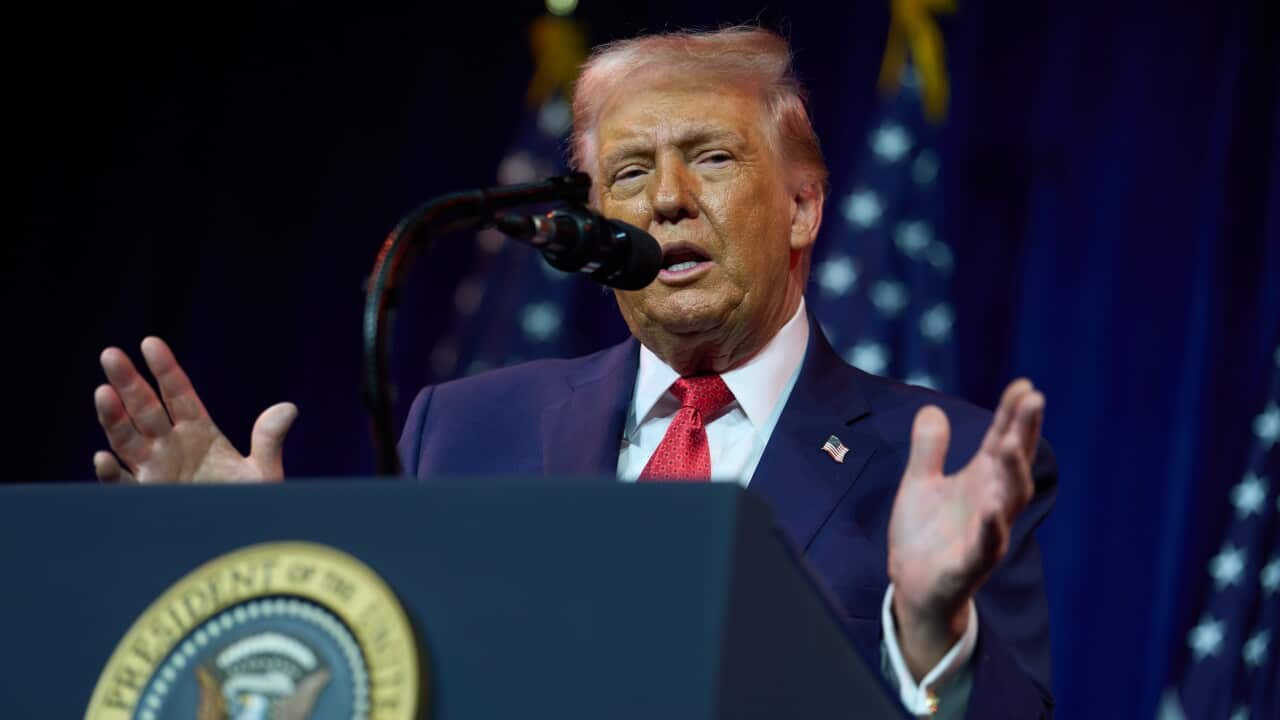
Donald Trump speaks from behind a presidential podium with his hands raised. Behind him are several US flags.

A total of 66 international organisations — comprised of "35 non-United Nations (UN) organizations and 31 UN entities" — were named in a White House memorandum as being "contrary to US national interests, security, economic prosperity, or sovereignty".

Most notable among them is the United Nations Framework Convention on Climate Change (UNFCCC), the parent treaty underpinning all major international climate agreements." SBS NEWS