Showing posts with label jobs. Show all posts

Monday, 21 September 2020

Pandemic lands 'worst body blow' in modern history on fossil fuel companies (excerpt): Yale Climate Connections


 "......“Serious stress, serious stress.”

“An industry in its last days.”

“Steady decline [in growth, demand] for the past decade.”

“Cratering.”

Those are a few of the characterizations of today’s oil, natural gas, and coal industries put forward by several independent journalists, writers, and analysts in the new edition of the “This is Not Cool” video series.

… And then, along came the coronavirus and the COVID-19 challenges, providing one more blow to the energy industry.

Even pre-pandemic, the conventional energy sector “already had plans to cancel major infrastructure projects like pipelines,” independent journalist Keith Schneider told Yale Climate Connections. And with the pandemic, oil and gas experienced “the worst body blow in its modern contemporary history,” he said.

Journalist and writer Antonia Juhasz agrees, pointing to “an industry in its last days, it’s just getting hit from too many sides.”

“Most of the new electricity generation coming online today is coming from wind and solar,” says Houston Chronicle reporter Chris Tomlinson. And professor Dan Kammen of the University of California Berkeley says solar and wind have been the cheapest energy options worldwide for at least the past three consecutive years.

Kammen also says that he believes solar and wind energy initiatives can advance two to three times as many job opportunities as traditional fossil fuel projects: That would be critical to help long-time coal and other fossil fuel industry employees whose decades of work has been critical to economic development … and who society cannot simply leave stranded as momentum turns toward a clean economy. Tending to the plight of those workers whose jobs are lost will have to be part of the energy-options puzzle, interviewees say."..."

Watch the video

Go Yale Climate Connections


Related: Scottish green hydrogen scheme gears up to fuel ferries, buses and trains (excerpt): The Guardian

Thursday, 10 September 2020

Australian coal worker of 40 years embraces renewables: Climate Council video


Tony Wolfe has worked in coal for over forty years. But he knows it's time for a change - it's time to embrace renewables. Australia needs clean jobs to reboot its economy. That's why we created the Clean Jobs Plan. 
 
Learn more about it here: https://climc.nl/3hAZdSW -- 
 
 The Climate Council is Australia's leading independent, community-funded climate change communications organisation. We're a catalyst propelling Australia to take bold, effective steps to address the climate crisis. We're made up of some of the country’s leading climate scientists, health, renewable energy and policy experts, as well as a team of staff, and a huge community of volunteers and supporters who power our work. 
 
Find out more and connect with us here: → Website: https://www.climatecouncil.org.au → Facebook: https://www.facebook.com/climatecouncil → Instagram: https://www.instagram.com/theclimatec... → Twitter: https://twitter.com/climatecouncil

Wednesday, 9 September 2020

Trump and Biden: Little Room for Climate Change in 2020 Election (excerpt 2): Deutsche Welle

The last generation who can do something about climate change
Trump digs coal.
(Pics by this blog)

"U.S. President Donald Trump has undone many major pieces of climate policy during his term, walking out on the 2015 Paris Agreement to limit global warming and eliminating numerous Obama-era environmental regulations. 

 Trump's Democratic opponent, Joe Biden, has promised as part of his presidential campaign to invest $1.7 trillion in a "clean energy revolution and environmental justice" over the next decade. It falls some $14 trillion short of what the progressive U.S. senator from Vermont, Bernie Sanders, pledged on climate action during the Democratic primaries.........................."

...............................................................................................................................................................

Related:  Trump will roll back more environmental regulations if reelected, says EPA chief: CNBC
..........................................................................................................

"......  Growing Impatience Among Young Republicans

Some younger Republicans are starting to become critical of their party's inattention to climate change. During the recent Republican National Convention, a small group turned to Twitter during the online event, to ask "#WhatAboutClimate"?

Another Pew study from June 2020 found that millennial and Gen Z Republicans, currently aged 18 to 39, are more likely than older GOP voters to think humans have a significant impact on the climate and that the federal government is doing too little to tackle the problem.

The last generation who can do something about climate change Trump and climate


That doesn't mean they're ready to switch allegiance to the Democrats, though. 

"Being a Republican is very much rooted in my upbringing," said Kiera O'Brien, who founded the group Young Conservatives for Carbon Dividends (YCCD). "Conservatism at home in Ketchikan, Alaska, has a focus on community and nature." 

O'Brien dislikes the Democrat's "regulatory approach to climate" and is instead lobbying for free market solutions to climate change through YCCD.

The last generation who can do something about climate change
Biden and climate change

Reframing Climate Action  

Environmental policies can be a complicated issue when it comes to federal elections and hard to address for presidential candidates. Many regions in the U.S. have unique challenges: from wildfires in California and storms wiping out harvests in Iowa to water pollution in Flint, Michigan.

Harvard's Ansolabehere also pointed out that opposition to climate policies in the past were typically connected to the fear of losing jobs and that prohibiting coal or retooling the auto industry will "adversely affect employment" in places like Kentucky and Michigan.

The last generation who can do something about climate change
How Climate Change is Killing Us: Book
Daron Shaw added that Republicans typically "try to frame environmental issues as a matter of high taxation and job killing proposals with the hope that they can peel off Democrats."

Biden might be trying to assuage fears that tackling climate change means job losses by framing his plan as an opportunity for employment in new industries and a reinvigorated green manufacturing sector.

But when it comes to the swing states of Pennsylvania, Virginia and Ohio, Trump's climate record and support for jobs in the fossil fuel sector might give him the upper hand. His backing for ethane cracker plants, which take natural gas and converts it into the basis for making plastics, has received a lot of support, said Ansolabehere, especially from local unions. 

Go to original article.. By Julia Mahncke in Deutsche Welle 

The last generation who can do something about climate change


Related:  Trump will roll back more environmental regulations if reelected, says EPA chief: CNBC

Biden, Trump, #climateaction, Republicans, #methanegas, jobs, Paris Targets, Paris Agreement, 

Tuesday, 8 September 2020

The Federal Government’s plan to use clean money to fund dirty projects - Video: The Climate Council

The Federal Government wants to use Australia’s clean energy bank to fund dirty fossil fuel projects. 

Yes, you read that correctly. Australia doesn’t need any new polluting fossil fuels. Coal and gas are expensive, polluting and a bad public investment. Our Clean Jobs Plan shows we can create 76,000 jobs in the short term, while setting Australia up for the future and tackling long-term problems like climate change (which seems like a much better idea). 

Learn more: https://climc.nl/3hCA9uI


Related:  Trump will roll back more environmental regulations if reelected, says EPA chief: CNBC

Climate Council, #Australia, jobs, #renewables, PM Morrison, coal, #methanegas, #climatechange, 

Sunday, 23 August 2020

Climate change is an economic issue (excerpt from Labor would have to be politically insane to follow Fitzgibbon's fossil fuel folly ): The Guardian

"Climate change is an economic issue, not a matter of religious observance, or inner city high fashion. All the ridiculous language of “belief” and “scepticism” – as if climate science was astrology, or a cult, or a wellness guru – has been entirely unhelpful to progress. 

Labor is fully capable of putting workers at the centre of a plan for economic transformation which will see carbon-intensive industries scale back and other more sustainable industries prosper in a low carbon world. 

That’s how Bob Hawke would have framed climate and energy policy in the 2020s, and Hawke presided over one of the most successful Labor governments in the party’s history."


 Related: There is an answer to post Covid-19 economic chaos.

#Australia, Labor Party, economic impact, jobs, #jailclimatecriminals, 

Tuesday, 11 August 2020

Fossil Fuel Workers Deserve Better: Video

Fossil Fuel Workers Deserve Better: Video from Climate Reality


Click here to view
"Fossil fuels are not only dangerous for our planet but to those working in the industry itself. It’s beyond time for a #RenewableRevolution. (via The Years Project)"


video, fossil fuel subsidies, workers, jobs, global corruption, corporategreed, #jailclimatecriminals, 

Sunday, 9 August 2020

Video - Impact of climate change on Australian industries: CNBC


Sadly, at the federal government level in Australia, there is a lack of political will and action when it comes to climate change, Martin Rice, acting CEO at the Climate Council told CNBC

Subscribe to CNBC Life: http://cnb.cx/2wAkfMv 

Subscribe to CNBC International: http://cnb.cx/2gft82z

Related:

Australia's Climate Council- Worth Checking Out the Website


video, Great Barrier Reef, jobs, tourism, #drought, #renewables, energy storage, electricity, carbon, Climate Council, #stranded assets


Sunday, 7 June 2020

More jobs in renewable-led COVID-19 economic recovery, EY report finds:ABC

Climate action to protect coral reefs and tourism  #jailclimatecriminals
Cooked coral reefs
A renewables-led economic recovery will create almost three times as many jobs as a fossil-fuel-led recovery, according to a report by economic consultancy Ernst and Young (EY).
The newly published report proposed six focus areas, which it said would simultaneously stimulate the economy and move Australia towards net-zero greenhouse gas emissions by 2050, in accordance with the 2015 Paris Agreement.

While the Federal Government has spoken of a "gas-fired" COVID-19 recovery, the EY report, commissioned by conservation group WWF Australia, argues replacing fossil fuels with renewable electricity and hydrogen will be better for the economy. 

"We can rebuild our economy in a way that sets up Australia for prosperity in a world hungry for a low-carbon future," WWF Australia energy transition manager Nicky Ison said.

Wednesday, 11 December 2019

Climate explained: seven reasons to be wary of waste-to-energy proposals


"I was in Switzerland recently and discovered that they haven’t had any landfill since the early 2000s, because all of their waste is either recycled or incinerated to produce electricity. How “green” is it to incinerate waste in order to produce electricity? Is it something New Zealand should consider, so that 1) we have no more landfill, and 2) we can replace our fossil-fuel power stations with power stations that incinerate waste?
Burning rubbish to generate electricity or heat sounds great: you get rid of all your waste and also get seemingly “sustainable” energy. What could be better? 

Many developed countries already have significant “waste-to-energy” incineration plants and therefore less material going to landfill (although the ash has to be landfilled). These plants often have recycling industries attached to them, so that only non-recyclables end up in the furnace. If it is this good, why the opposition?

Here are seven reasons why caution is needed when considering waste-to-energy incineration plants.


Read more: Why municipal waste-to-energy incineration is not the answer to NZ's plastic waste crisis


Stifling innovation and waste reduction

  1. Waste-to-energy plants require a high-volume, guaranteed waste stream for about 25 years to make them economically viable. If waste-to-energy companies divert large amounts of waste away from landfills, they need to somehow get more waste to maintain their expensive plants. For example, Sweden imports its waste from the UK to feed its “beasts”. 
  2. The waste materials that are easiest to source and have buyers for recycling - like paper and plastic - also produce most energy when burned.
  3. Waste-to-energy destroys innovation in the waste sector. As a result of China not accepting our mixed plastics, people are now combining plastics with asphalt to make roads last longer and are making fence posts that could be replacing treated pine posts (which emit copper, chrome and arsenic into the ground). If a convenient waste-to-energy plant had been available, none of this would have happened.
  4. Waste-to-energy reduces jobs. Every job created in the incineration industry removes six jobs in landfill, 36 jobs in recycling and 296 jobs in the reuse industry.
  5. Waste-to-energy works against a circular economy, which tries to keep goods in circulation. Instead, it perpetuates our current make-use-dispose mentality.
  6. Waste-to-energy only makes marginal sense in economies that produce coal-fired electricity – and then only as a stop-gap measure until cleaner energy is available. New Zealand has a green electricity generation system, with about 86% already coming from renewable sources and a target of 100% renewable by 2035, so waste-to-energy would make it a less renewable energy economy. 
  7. Lastly, burning waste and contaminated plastics creates a greater environmental impact than burning the equivalent oil they are made from. These impacts include the release of harmful substances like dioxins and vinyl chloride as well as mixtures of many other harmful substances used in making plastics, which are not present in oil.

Read more: Circular fashion: turning old clothes into everything from new cotton to fake knees


Landfills as mines of the future

European countries were driven to waste-to-energy as a result of a 2007 directive that imposed heavy penalties for countries that did not divert waste from landfills. The easiest way for those countries to comply was to install waste-to-energy plants, which meant their landfill waste dropped dramatically.
New Zealand does not have these sorts of directives and is in a better position to work towards reducing, reusing and recycling end-of-life materials, rather than sending them to an incinerator to recover some of the energy used to make them.

Is New Zealand significantly worse than Europe in managing waste? About a decade ago, a delegation from Switzerland visited New Zealand Ministry for the Environment officials to compare progress in each of the waste streams. Both parties were surprised to learn that they had managed to divert roughly the same amount of waste from landfill through different routes.

This shows that it is important New Zealand doesn’t blindly follow the route other countries have used and hope for the same results. Such is the case for waste-to-energy.

There is also an argument to be made for current landfills. Modern, sanitary landfills seal hazardous materials and waste stored over the last 50 years presents future possibilities of landfill mining. 

Many landfills have higher concentrations of precious metals, particularly gold, than mines and some are being mined for those metals. As resources become scarcer and prices increase, our landfills may become the mines of the future.

From The Conversation 

Related: 

The big polluters’ masterstroke was to blame the climate crisis on you and me : The Guardian

 #criminales climáticos de la cárcel

#criminalesclimáticosdelacárcel

#jailclimatecriminals

#gaolclimatecriminals

Sunday, 24 February 2019

Australian headlines are designed to scare people into not acting on climate change : The Guardian


As other nations reduce emissions, demand for these products falls regardless of what we do.
Global Heating

"As we head into another cycle of climate change politics beware the economic doomsayers"


"Thirdly, because Australia exports a lot of coal and other emissions-intensive products to other countries, what they do matters an awful lot to the Australian economy. As other nations reduce emissions, demand for these products falls regardless of what we do. It has been established for some time that a significant part of the economic impacts of climate change on Australia comes from things we can’t control and this is generally presented in the results (see here for an example). While he does not report this, Brian Fisher knows this because he spearheaded economic analysis in the 1990s that was targeted at convincing Japan, one of our major coal markets, it would be too costly for them to reduce emissions."  .......
 

"Lastly, whenever these headlines are blasted across the papers one point is always lost: these results don’t include the cost of climate change itself. This summer, we have again seen a glimmer of what climate change will mean for Australia. Recent economic analysis indicates the benefits of limiting global warming far outweigh the cost of doing so, in one case by 70-1 (a good summary is here). (Again, this is something Fisher has considered in the past as he once said it would be cheaper to move people from the Pacific and put them in condos on the Gold Coast than act on climate change.)" ......

Read the complete 21/2/2019 The Guardian article

Wednesday, 23 January 2019

The good, the bad and the ugly of climate change in 2018: Green Magazine


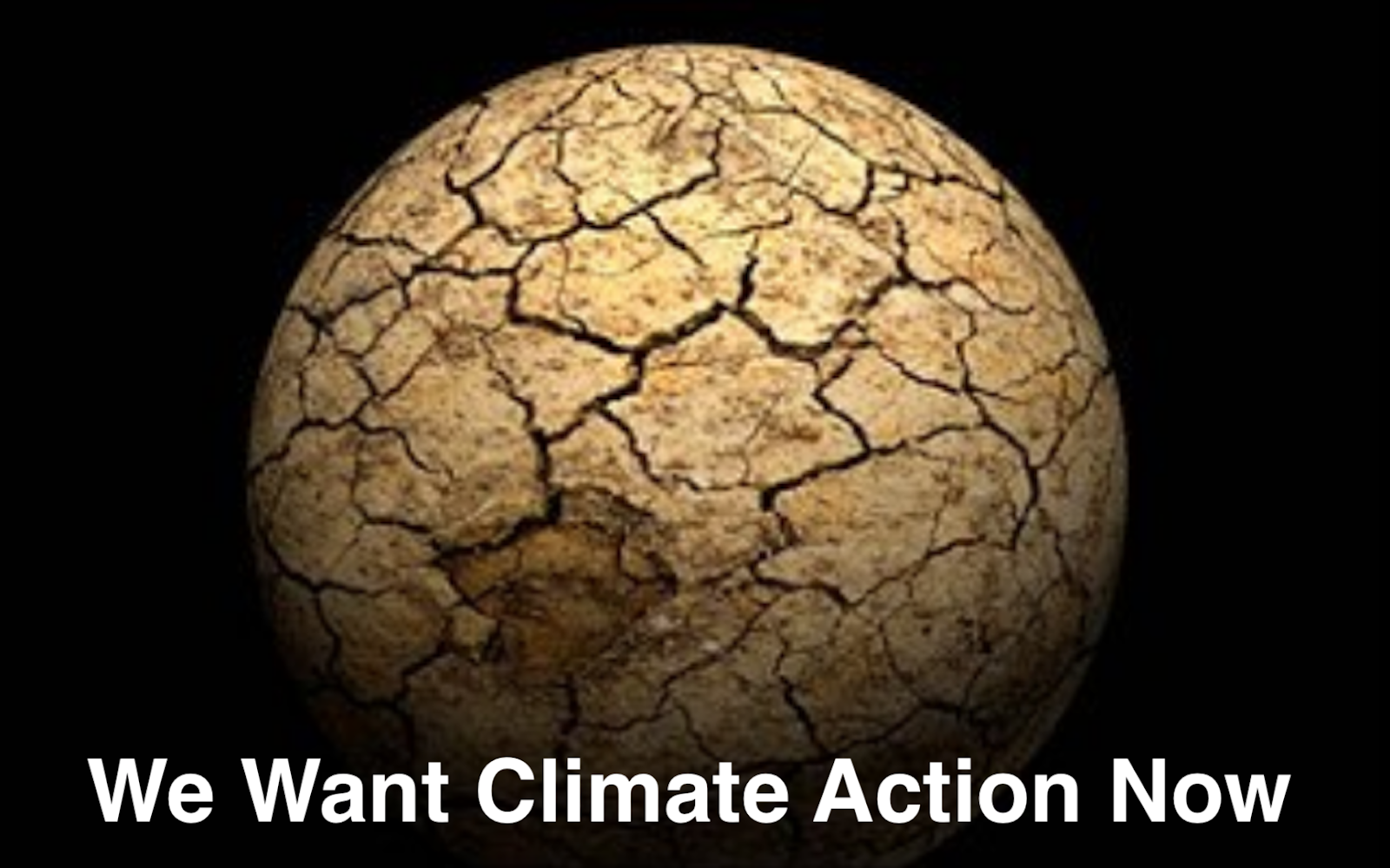
we want climate action now

As the planet relentlessly warms, action to address it is also heating up.  But while other parties are quickly adopting the cause, the Greens have been at the forefront of climate change action for years – and still are.

By Chris Johansen
 

Although ‘economics’ is derided as the ‘dismal science’, I would suggest that an even more dismal one is ‘climate science’. The unfolding series of measurements quantifying how planet Earth is overall warming, and its manifestations, paints a gloomy future for not only our grandkids but our kids – and even us. 

Increasing understanding of how humanity is driving this change, mainly through deforestation and the burning of fossil fuels, also presents solutions for turning this process around, i.e. revegetate and convert to renewable energy. However, an additional pall of gloom is imposed by the failure of humanity to, so far, meaningfully implement the obvious solutions to an otherwise inevitable catastrophe.

At this time of year, it is usual to sit back and review where we are, in the light of events unfolding over the previous 12 months. 

Yes, the bad news keeps on coming but signs of meaningful action to turn around our present climate trajectory are appearing.

Thursday, 17 January 2019

Meeting Paris Agreement Targets Would Create 24 Million Jobs Globally: Nexus Media


"A rapid transition to clean energy would create, not eliminate, jobs."

"The study, which appears in the journal International Labour Review, found that accelerating the transition to clean energy could add 24 million jobs globally by 2030. In reaching their conclusions, Montt and his colleagues developed a model of the world economy to reflect how it would look with widespread adoption of renewables and enhanced energy efficiency. They found the impact in the renewables sector will ripple across other industries, such as construction and manufacturing."

Read the Nexus Media article 

#jobs  #renewableenergy  # cleanenergy  #industries  #manufacturing  #construction  #climatechange

Sunday, 28 October 2018

Greens Slam NSW for Voting Against Developing a Climate Plan at COAG


NSW Energy Minister Don Harwin has voted against an ACT Government motion at the COAG Energy Council for a national emissions reduction scheme for the electricity sector, despite State Parliament debating numerous motions criticising the government for its lack of energy policy and emissions reduction strategy this week.