Wednesday, 9 January 2019

Mental health added to impact of climate change as global damage grows: The Age

Rising temperatures are leading to increased levels of stress, worsening anxiety and depression, and even suicide in the most extreme cases in Australia.


Scientists have identified for the first time an association between mean annual maximum temperatures pushed higher by climate change and suicides for both males and females across states and territories, according to a paper published by The Medical Journal of Australia on Thursday.

Read the article 

#mentalhealth  #climatecatastrophe  #suicide  #healthrisks  #health  #risingtemperatures  #climateactionnow

Tuesday, 8 January 2019

China’s Climate Progress May Have Faltered in 2018, But It Seems to Be on the Right Path: DESMOG

 "In short, despite recent fluctuations, I remain optimistic that China remains on the path toward meeting its Paris target of capping carbon emissions by 2030 and deriving 20 percent of its energy from sources other than oil, gas and coal.

Despite the recent setbacks, the most likely scenario is that China’s emissions will peak before 2030. How quickly they might decline after 2030 is not yet clear.

This is not to say China is doing everything it can to combat climate change.

Like the U.S. and all other countries, China must make its climate policies more ambitious if the world is to keep global warming well below 2 degrees Celsius, as the Paris climate accord is intended to do. For example, global emissions will be lower in the long run if China phases out its fossil fuel subsidies and stops building coal-fired power plants in other countries.

But given the pace of its economic growth, China’s accomplishments to date are notable. As the Center for American Progress, a think tank, found, if regulatory trends continue, by 2020 no American coal plants would meet China’s carbon emission standards.

That is a good reminder that the whole world, and not just China, needs to do more if we are to be spared from the worst impacts of climate change.

The Conversation
Phillip Stalley is Associate Professor and Fulbright Scholarship Program Advisor at DePaul University.


This article is republished from The Conversation under a Creative Commons license. Read the original article.


Main image: A woman in Beijing wearing a mask to avoid inhaling smog passes an anti-pollution mural. Credit: AP Photo/Andy Wong"

Sunday, 6 January 2019

Extreme heat increasing in both summer and winter: AGU100

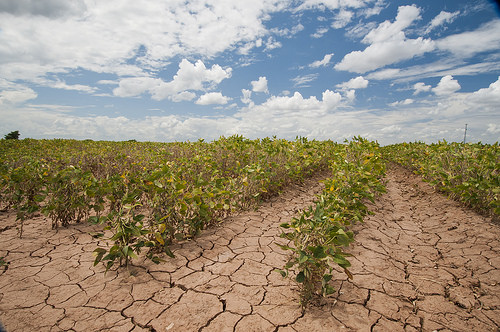
Texas drought near Navasota, TX 2013.
Credit: USDA

A new study shows extreme heat events both in the summer and in the winter are increasing across the U.S. and Canada, while extreme cold events in summer and winter are declining.

A new study in the in Journal of Geophysical Research: Atmospheres, a publication of the American Geophysical Union, examined absolute extreme temperatures—high temperatures in summer and low temperatures in winter—but also looked at relative extreme temperature events—unusually cold temperatures and unusually warm temperatures throughout the year.

26 November 2018


Read  AGU100 research

#globalheating  #extremecoldevents  #canada


Friday, 4 January 2019

Jay Inslee, the ‘Climate Candidate,’ Joins the 2020 Race : Rolling Stone

Jay Inslee (Ted S Warren/AP/REX/Shutterstock)
WASHINGTON — Jay Inslee, the Democratic governor of Washington state, has entered the 2020 presidential race. And he’s betting his candidacy on the idea that Americans care enough about the existential threat of our time — climate change — to elect a president with a laser-like, almost singular focus on that issue.

The news does not come as much of a surprise. Last month, Inslee first spoke to Rolling Stone about the need for a Democratic candidate in 2020 who would put climate change at the forefront of his or her campaign — a role for which he refused to rule himself out. “I do think that it is absolutely imperative that the Democratic Party put forth a candidate who will make climate change a principal, front-burner issue, rather than some peripheral back burner,” he said. “I believe it’s a potentially winning issue to run on, and we need a candidate who will do that.” 

Read Rolling Stone article

See also The Guardian article: Risks of 'domino effect' of tipping points greater than thought, study says

#USA #climatecatastrophe #politicians #JayInslee 

Risks of 'domino effect' of tipping points greater than thought, study says : The Guardian

Policymakers have severely underestimated the risks of ecological tipping points, according to a study that shows 45% of all potential environmental collapses are interrelated and could amplify one another. 

The authors said their paper, published in the journal Science, highlights how overstressed and overlapping natural systems are combining to throw up a growing number of unwelcome surprises.

Read The Guardian article 

#amazonforest   #ecologicaltippingpoints  #dominoeffect  #climatechange  #climatecrisis

Thursday, 3 January 2019

2018: the 8 biggest moments in climate change: Climate Council

 To say that 2018 has been a huge year in climate change would be an understatement. From climate change-fuelled extreme weather – record-breaking heat, dangerous bushfires, severe drought – to political action (and inaction), both internationally and home on Australian soil; to climate leaders popping up in surprising places – there’s been no shortage of memorable events in the climate change space.

Here are the Climate Council’s eight biggest moments in climate change for 2018, in order of appearance:

Read more

One person’s recycling won’t stop climate change in itself. We must act collectively: The Guardian

"It is liberalism’s most dangerous lie that an individual’s action can solve problems of this scale."

"It’s not surprising that in response to a problem this huge, this existential, people seek out something they can do, from using a keep cup to being fastidious with the recycling. It makes us feel better, it gives us something tangible to do, it stops us from despairing. But we need to admit that even if every plastic bottle and tin can ever produced was recycled, we’d still be on track for catastrophic climate change. No matter how many plastic straws are declined or ocean plastic turned into shoes, every indication points to our children never knowing coral reefs, the Arctic melting and the seas rising."
 
So what should we be doing?"


Read more:

One person’s recycling won’t stop climate change in itself. We must act collectively | Emily Mulligan


#climateaction   #plastic #Adani  #coalmining  # coralbleaching  #coralreefs