Climate Choir Melbourne supporting Extinction Rebellion protestors at their sit down on the busiest intersection in Melbourne City, Australia. The police were very restrained. Are they in agreement with the protestors? They do have family of their own.
"Our
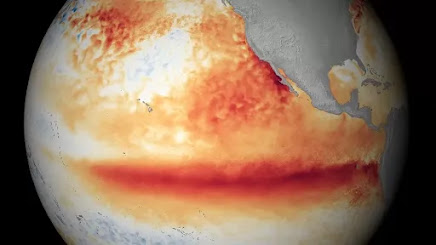
overheating world is likely to break a key temperature limit for the
first time over the next few years, scientists predict.
Researchers say there's now a 66% chance we will pass the 1.5C global warming threshold between now and 2027.
The chances are rising due to emissions from human activities and a likely El Niño weather pattern later this year.
If the world passes the limit, scientists stress the breach, while worrying, will likely be temporary.
Hitting
the threshold would mean the world is 1.5C warmer than it was during
the second half of the 19th Century, before fossil fuel emissions from
industrialisation really began to ramp up.
And breaking the limit even for just one year is a worrying sign that warming is accelerating and not slowing down.
The
1.5C figure has become a symbol of global climate change negotiations.
Countries agreed to "pursue efforts" to limit global temperature rises
to 1.5C under the 2015 Paris agreement.
Going
over 1.5C every year for a decade or two would see far greater impacts
of warming, such as longer heatwaves, more intense storms and wildfires.
But
passing the level in one of the next few years would not mean that the
Paris limit had been broken. Scientists say there is still time to
restrict global warming by cutting emissions sharply.
Aug 18, 2022OUR LOCAL presented by AFL Players For Climate Action, reconnects past & present AFL players with their junior clubs to talk about the importance of local footy and how renewable energy can help protect its future.
AFL fans will be happy to see the massive percentage of AFL footballers pushing for greater climate action. See what they have done at their local clubs.
Yes! New declarations might not be receiving a lot of media coverage
these days but there are now 2,248 jurisdictions that have passed a
Climate Emergency Declaration (CED). In just the last fortnight there
have been two more CEDs in the UK (North Yorkshire County Council and
Swindon Borough Council) and one more in Japan (Hiroshima City).
Certainly the rate of new declarations has slowed since the start of
the pandemic, but even the CEDs that are happening now seem to get less
media coverage than during the 2019 peak. The ground-breaking
declaration by the first Australian state, South Australia on 31 May 2022, received little media coverage, and the April declaration by Nillumbik Shire Council in Victoria received none.
In April 2020 there was just one new CED in the US and one in Italy.
That suggests that the pandemic that was escalating at the time was a
factor slowing the rate of new declarations. But it wasn’t the only
factor. The dark purple bars in the chart above show the UK CEDs, a
massive 506 before April 2020. Of those, 265 were mid-tier councils in
England, of which there are only 333 in total. By 2020 there weren’t
enough non-CED mid-tier councils left for such a high rate of new CEDs
to be possible. Even so, their numbers did continue to rise. Currently
278 (83.5%) mid-tier councils of varying political persuasions have
passed declarations.
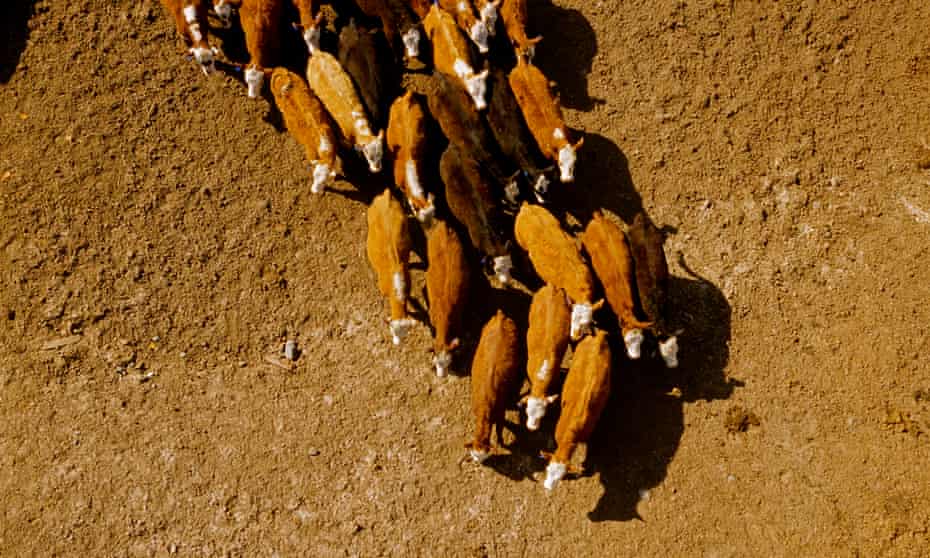
Extreme heat is predicted for large parts of the US including Kansas, which is one of the country’s top three beef producers
‘What is clear is that the livestock heat stress issue will become increasingly challenging,’ said one expert. Photograph: Richard Hamilton Smith/Design Pics/Getty Images/Design Pics RF
Fri 17 Jun 2022 03.47 AEST Last modified on Fri 17 Jun 2022 03.49 AEST
This week, the National Weather Services (NWS) predicted extreme heat
on parts of the Gulf coast and spreading to the Great Lakes in the
midwest, with more than 100 million Americans advised to stay inside to
fight the heat.
This map shows the coal mines emitting the most methane in the country.(Supplied: Ember)Australia's methane emissions from coal mines are twice as high as national estimates, with some mines leaking up to 10 times more methane than officially reported, research by an international climate think tank has found.
Key points:
A new report has revealed that Australian coal mine methane emissions are double official estimates
In 2019 coal methane emissions had a greater global warming impact than all of Australia's cars
New "readily available" technologies could reduce methane emissions by 45 per cent
European-based researcher Ember was commissioned by the environmental group, Lock the Gate Alliance, to analyse available data on methane emissions from the Australian Greenhouse Emissions Information System (AGEIS), the Clean Energy Regulator (CER), the Australian Chief Economist, Department of Natural Resources and Mines, the International Energy Agency (IEA) and the Global Energy Monitor.
The report found that in 2019, Australian coal mine methane emissions made up 68 per cent of overall energy industry emissions, making it a bigger contributor than oil and gas.
"That's a really massive climate impact before we even start to think about the carbon dioxide emissions released from burning coal."