Showing posts with label coal mining. Show all posts

Wednesday, 8 June 2022

Australia's total coal mine methane emissions double official estimates, Ember report finds (Excerpt): ABC News

A map of Australia showing coal mining areas in Queensland and New South Wales where methane leaks have been detected.
This map shows the coal mines emitting the most methane in the country.(Supplied: Ember)
Australia's methane emissions from coal mines are twice as high as national estimates, with some mines leaking up to 10 times more methane than officially reported, research by an international climate think tank has found.

European-based researcher Ember was commissioned by the environmental group, Lock the Gate Alliance, to analyse available data on methane emissions from the Australian Greenhouse Emissions Information System (AGEIS), the Clean Energy Regulator (CER), the Australian Chief Economist, Department of Natural Resources and Mines, the International Energy Agency (IEA) and the Global Energy Monitor.

Methane is a powerful greenhouse gas and its global warming potential is more than 25 times that of carbon dioxide.

The report found that in 2019, Australian coal mine methane emissions made up 68 per cent of overall energy industry emissions, making it a bigger contributor than oil and gas.

"That's a really massive climate impact before we even start to think about the carbon dioxide emissions released from burning coal."

By ABC national regional reporter Nathan Morris

Go to complete ABC News report

Saturday, 26 September 2020

Class action to stop planned coal mine extension filed by climate action-focused Australian teenagers (excerpt): ABC

"A class action launched on behalf of young people everywhere seeks an injunction to stop the Australian Government approving an extension to Whitehaven's Vickery coal mine, arguing it will harm young people by exacerbating climate change.


from: nwprotectionadvocacy.com


Monday, 21 September 2020

Pandemic lands 'worst body blow' in modern history on fossil fuel companies (excerpt): Yale Climate Connections


 "......“Serious stress, serious stress.”

“An industry in its last days.”

“Steady decline [in growth, demand] for the past decade.”

“Cratering.”

Those are a few of the characterizations of today’s oil, natural gas, and coal industries put forward by several independent journalists, writers, and analysts in the new edition of the “This is Not Cool” video series.

… And then, along came the coronavirus and the COVID-19 challenges, providing one more blow to the energy industry.

Even pre-pandemic, the conventional energy sector “already had plans to cancel major infrastructure projects like pipelines,” independent journalist Keith Schneider told Yale Climate Connections. And with the pandemic, oil and gas experienced “the worst body blow in its modern contemporary history,” he said.

Journalist and writer Antonia Juhasz agrees, pointing to “an industry in its last days, it’s just getting hit from too many sides.”

“Most of the new electricity generation coming online today is coming from wind and solar,” says Houston Chronicle reporter Chris Tomlinson. And professor Dan Kammen of the University of California Berkeley says solar and wind have been the cheapest energy options worldwide for at least the past three consecutive years.

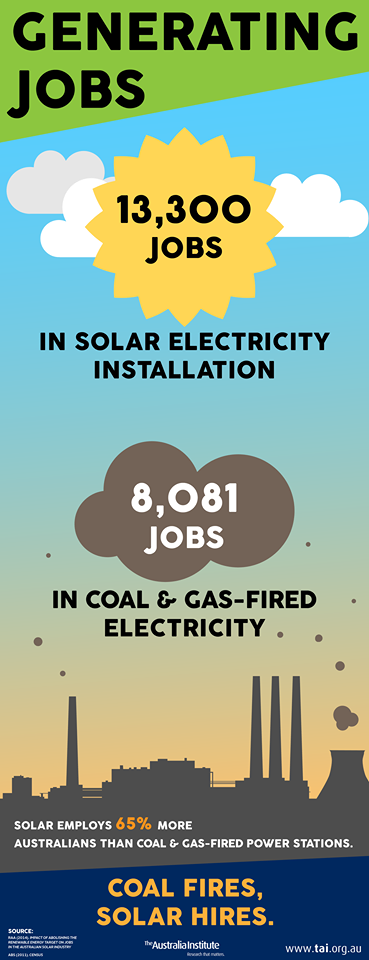
Kammen also says that he believes solar and wind energy initiatives can advance two to three times as many job opportunities as traditional fossil fuel projects: That would be critical to help long-time coal and other fossil fuel industry employees whose decades of work has been critical to economic development … and who society cannot simply leave stranded as momentum turns toward a clean economy. Tending to the plight of those workers whose jobs are lost will have to be part of the energy-options puzzle, interviewees say."..."

Watch the video

Go Yale Climate Connections


Related: Scottish green hydrogen scheme gears up to fuel ferries, buses and trains (excerpt): The Guardian

Thursday, 17 September 2020

Australia's government channels government green funds away from renewables towards subsidies for fossil fuels.

(Pics by this blog)

ARENA to get $1.4 billion as Coalition channels funds to CCS, hydrogen and pubs (excerpt): RenewEconomy

The federal Coalition government has finally decided to extending the funding for the Australian Renewable Energy Agency, but will – as predicted – push both ARENA and the Clean Energy Finance Corporation away from wind and solar into other “low emission” technologies, including carbon capture and storage.


ARENA and CEFC have played critical roles in advancing Australian renewable, storage and other critical enabling technologies since their creation in 2012, and despite repeated attempts by the Coalition government to dismantle them, and severe cuts to ARENA’s original budget.

ARENA – which is now nearly exhausted of funds, and had its board recently stacked with Coalition favourites – is to be given “guaranteed baseline funding” of $1.427 billion over the next 10 years, and will be given extra allocations in the annual budget. For 2020/21, that will amount to $191 million.

This is part of a $1.9 billion package to the two green funds that will include money for CCS, a regional hydrogen hub, along with many of the project identified by a group led by former Origin Energy CEO Grant King, and even some money for pubs to upgrade their refrigeration systems.


The government will change the mandates of both ARENA and the CEFC so they can more or less follow the government’s Technology Roadmap which is to be finalised in the next couple of weeks, and which looks at technologies beyond wind and solar, including gas, hydrogen and CCS.


The push to broaden the mandate into “low emissions” technologies will require parliamentary approval – rejected by the Senate when the Coalition first tried to scrap the bodies – and comes just days after the unveiling of a major gas package, and the government’s extraordinary ultimatum to build a 1GW gas plant in the Hunter Valley.


Go to Renew Economy's complete article by Giles Parkinson


PM Morrison,#Australia,#methanegas,coal mining,gas,ARENA,#fossilfuelcompanies,role of media,


Friday, 11 September 2020

Impact Assessment of the Canada's Vista Coal Mine Expansion Project: CAN

Vista Coal Mine, Alberta, Canada
"Unceded Algonquin Anishinaabe Territories [OTTAWA], 30 July 2020 – Teika Newton of Climate Action Network – Réseau action climat Canada applauds Minister Wilksinson’s decision to designate the Vista Coal Mine Expansion for a federal assessment in light of its potential adverse impacts to areas under federal jurisdiction and to Aboriginal and Treaty rights, a welcome shift from his December 2019 determination.  

Canada’s domestic and international leadership on phasing-out coal power would be severely undermined by continuing to supply overseas markets with the dirtiest fossil fuel. The Vista expansion must be closely scrutinized, and its climate effects carefully taken into consideration throughout the federal assessment process, as is to be expected under the newly released Strategic Assessment of Climate Change (part of the Impact Assessment Act)."

30 July 2020

Go to Climate Action Network


From Climate Action Network Canada

coal mining, Canada, #jailclimatecriminals, greenhouse gases, 100% renewable energy,

Thursday, 10 September 2020

Australian coal worker of 40 years embraces renewables: Climate Council video


Tony Wolfe has worked in coal for over forty years. But he knows it's time for a change - it's time to embrace renewables. Australia needs clean jobs to reboot its economy. That's why we created the Clean Jobs Plan. 
 
Learn more about it here: https://climc.nl/3hAZdSW -- 
 
 The Climate Council is Australia's leading independent, community-funded climate change communications organisation. We're a catalyst propelling Australia to take bold, effective steps to address the climate crisis. We're made up of some of the country’s leading climate scientists, health, renewable energy and policy experts, as well as a team of staff, and a huge community of volunteers and supporters who power our work. 
 
Find out more and connect with us here: → Website: https://www.climatecouncil.org.au → Facebook: https://www.facebook.com/climatecouncil → Instagram: https://www.instagram.com/theclimatec... → Twitter: https://twitter.com/climatecouncil

Tuesday, 8 September 2020

South Africa's Climate Action Rating by the 'Climate Action Tracker' (Excerpt)

At the Climate Action Tracker site countries are evaluated according to the sufficiency of climate action.
Check out your country at the site.

(Excerpt- Pics by this blog)

"At 2 Dec 2019     Rating: Highly Insufficient"

"The South African government finally approved its Integrated

Resource Plan (IRP2019) in October 2019, confirming the trend change in power sector planning indicated in the draft for comment from August 2018. The plan reduces the role of coal compared to previous planning and increases the adoption of renewables and gas. Unlike earlier drafts, the IRP2019 proposes extending the operational lifetime of South Africa’s sole nuclear power plant by 20 years, up to 2044.

The final plan marks a major shift in energy policy, which is remarkable for a coal-dominated country like South Africa. It aims to decommission over 35 GW (of 42 GW currently operating) of coal-fired power capacity from state-owned coal and utility giant Eskom by 2050.

remarkable for a coal-dominated country like South Africa.
Coal in South Africa - Wikipedia
However, it would still see South Africa complete nearly 6 GW of costly coal capacity currently under construction and commission another 1.5 GW of new coal capacity by 2030. IRP2019 includes a detailed phase-out plan for coal-fired power plants, which, despite improvements to earlier plans, still shows that substantial amounts of coal capacity will run beyond the year 2050. For Paris-compatibility, coal must be phased out globally, at the very latest by 2040.

The plan also proposes a significant increase in renewables-based generation from wind and solar as well as gas-based generation capacity by 2030 (an additional 15.8 GW for wind, 7.4 GW for solar and 2.5 GW for gas by 2030), with no further new nuclear capacity being procured.

Implementing the IRP2019 will enable South Africa to achieve its 2030 NDC target. However, we rate South Africa’s NDC target as “Highly Insufficient” based on the upper end of the NDC range. In this context, South Africa should consider revising its target downward for 2030 to be resubmitted to the UNFCCC as part of the Paris Agreement’s ambition raising cycle of 2020.

To be in line with the Paris Agreement goals, South Africa would need to adopt more ambitious actions by 2050 beyond the IRP2019, such as even further increasing renewable energy capacity by 2030 and beyond, fully phasing out coal-fired power generation by latest 2040, and substantially limiting natural gas use.

Although South Africa is one of the few countries that has put forward absolute emissions targets in their NDC, we still rate this target “Highly Insufficient”.  ..........................


Go to Climate Action Tracker for more detail.

Related: This is what sea level rise will do to coastal cities: Video


...and in Australia: "While the federal government continues to repeatedly state that Australia is on track to meet its 2030 target “in a canter”, the Climate Action Tracker is not aware of any scientific basis, published by any analyst or government agency, that would support this. The OECD has warned the Australian Government that it will not achieve its target without intensified mitigation efforts. It describes current climate policy as a “piecemeal approach”." Climate Action Tracker

#climateaction, coal mining, South Africa, Paris Agreement, Paris Targets, #renewables,

Saturday, 25 April 2020

No green new deal for Australia as Coalition tightens embrace of fossil fuels: Renew Economy

The full economic impact of the Covid-19 is still yet unknown, but it is clear that world’s governments face a choice in their response: 
Do they look to protect industries in terminal decline, or do they look to the long-term, supporting new green industries to flourish in a post-Covid-19 future?

A growing number of experts and global leaders have joined calls for the response to Covid-19 to be a ‘green response’, including the implementation of a ‘Green New Deal’ for a sustainable economy popularised by US Democrats.

The Green New Deal provides a vision for a sustainable future economy, and integrates proposals for ambitious climate action, investment in clean energy, a circular economy and includes a boost to direct public sector investment in sustainable infrastructure, including electric vehicles and public transport systems.

Unfortunately for Australia it is becoming increasingly clear that the Morrison government is steadfast in giving life support to the fossil fuel industry, clearly indication its preference for short-term opportunities for fossil fuel interests, and its ministers have been clearly working  reinforce the position of the oil, gas and coal sectors.

Resources minister Keith Pitt has gone in to bat for the gas and coal sectors, while energy minister Angus Taylor is working to prop up demand for oil and relaxing already weak regulations on the oil sector, including fuel standards.

This includes the Morrison government gifting almost $100 million to the United States to purchase oil that will remain stored in the United State’s Strategic Petroleum Reserve.

On Wednesday, Taylor announced that the government would also be looking to soften fuel standards to allow the industry to redeploy stockpiled aviation fuels for use in other parts of the transport sector. Australia already has weak fuel standards by most international standards, and a further weakening of the standards will likely lead to worse environmental and health outcomes.

Pitt made the government’s priorities even clearer, welcoming the expansion of Australia’s gas sector with Arrow Energy’s commitment to a new gas project in Queensland. “Notwithstanding COVID-19, our energy and resources will be important in getting not just our economy back on its feet, but vital in assisting our important trading partners to kickstart their economies,” Pitt said.

“The Australian Government is committed to working with the oil and gas industry in order to provide support and flexibility given the changing circumstances at this time.

At the same time, Taylor – who doubles as emissions reduction minister –  has praised the electricity and gas sectors for overseeing significant falls in domestic prices. But he studiously avoided any mention of the ongoing significant cuts in greenhouse gas emissions in the grid, or the prominent role played in that by investment in wind and solar.

Despite Covid-19, the threat of climate change has not subsided and the need to transition the global energy system to one with significantly less greenhouse gas emissions will remain a pressing global issue during and after the world has dealt with the pandemic. And studies show that acting on climate change will deliver substantial economic benefits for those who embrace it.

The International Renewable Energy Agency this week published new analysis that shows ambitious investment in the clean energy sector would provide substantial benefits to the global community, boosting global economic output by as much as A$160 trillion by 2050 above a ‘business as usual’ scenario.

This included the potential to create almost 250,000 new jobs in Oceania’s renewable energy sector by 2050, with growth more than compensating for inevitable job losses in the fossil fuel sector.
A global poll conducted by Ipsos in April found that 71 per cent of adults globally still view climate change as serious a long-term crisis as Covid-19. The figure was lower in Australia, with 59 per cent agreeing with the proposition locally.

“Despite the environment taking a back seat compared with other current issues, it’s still important to people. There is strong support among the public for a green economic recovery from the COVID-19 crisis,” Ipsos Australia public affairs director, Jennifer Brook, said.

While it still sees a majority of Australians ranking the climate change response as equal importance with Covid-19, the Morrison government will likely see the weaker response as an opportunity to put climate action event further on the backburner.

Bruce Robertson from the Institute for Energy Economics and Financial Analysis told RenewEconomy that moves to prop up ailing parts of the fossil fuel sector were a mistake.

“While governments say they are not supposed to be picking winners, they are certainly not supposed to be picking losers,” Robertson said.

“Globally since the coronavirus pandemic, there’s been a permanent shift down in demand – and the world is swimming in gas and oil. How will this investment get us out of the hole? It is not a governments role to pick winners. It is definitely not a governments role to pick proven losing industries to shower tax payer dollars on.”

“The government is making big decisions about our future right now. We need a new normal, not going back to the old ways of a reliance on emissions-intensive gas, which is both a fossil fuel and a loss-making industry. Gas is not the industry of the future. We have the choice now. We can do things differently going forward,” Robertson added.

With a long-term view, strategic investments in the green infrastructure required for the long term offers the best possible economic response to the Covid-19 crisis.

The government can do this by heeding the calls of the clean energy sector to include investment and support for new zero-emissions generation and energy efficiency in stimulus measures.

Doing so will not only provide a powerful form of short-term economic stimulus, but will also leave Australia better placed in the long-term, well after the crisis of Covid-19 as been resolved.

Original article

RenewEconomy and the Smart Energy Council will be co-hosting a “virtual conference” on May 6, focusing on a renewables-led economic recovery, featuring industry leaders, analysts and advocates. More information and registration here.

RenewEconomy and its sister sites One Step Off The Grid and The Driven will continue to publish throughout the Covid-19 crisis, posting good news about technology and project development, and holding government, regulators and business to account. But as the conference market evaporates, and some advertisers pull in their budgets, readers can help by making a voluntary donation here to help ensure we can continue to offer the service free of charge and to as wide an audience as possible. Thankyou for your support.

 
Michael Mazengarb is a journalist with RenewEconomy, based in Sydney. Before joining RenewEconomy, Michael worked in the renewable energy sector for more than a decade.


Tuesday, 28 January 2020

Morrison now demands we 'adapt' to climate change catastrophes: IA

Independent Australia

"IT'S REMARKABLE that the least resilient, most non-adaptive Federal Government in living memory should now urge its citizens, in the face of horrific bushfires, to prove our resilience and adaptability by learning to put up with weather conditions that are hostile to human life.

It will, in Prime Minister Scott Morrison’s view, take resilience to learn to adapt to whatever horrors nature has in store for us as a consequence of anthropogenic climate change.


It’s difficult to argue against this. It will indeed take a resilience – previously unheard of within humanity – to withstand record-breaking temperatures, prolonged drought and catastrophic weather events such as the fires, floods and cyclones we’re certain to experience if more is not done globally and urgently to reduce emissions. The question is, why demand this resilience as the way forward, instead of committing to undertake mitigation and prevention?

Morrison’s latest tactic is a textbook example of behaviour typical of an abuser — also known as "gaslighting". In order to continue the pattern of abuse that brings gratification of one kind or another, the abuser must convince the abused that they have to adapt to the abusive conditions. In order to perform that adaptation, the abused must develop the resilience both to withstand the abuse, and to live an outwardly normal life. The abused party must not give any indication of the dysfunctional nature of their circumstances because the abuser must be allowed to maintain the illusion of normality for the eyes of the outside world. Resilience and adaptation are essential to achieve these goals, as many survivors of abuse will confirm."

Read the complete Independent Australia article 

Related:
Australia is going up in flames, and its government calls for resilience while planning for more coal mines." New York Times

Thursday, 24 October 2019

Berejiklian back down: NSW Government capitulates to coal lobby: Lock the Gate Alliance

"A NSW Government proposal to prevent the Independent Planning Commission from considering downstream climate emissions when assessing mining projects is a terrible mistake that will be remembered by future generations, according to Lock the Gate Alliance. 

It is being reported the government will move to restrict the IPC from considering the effects of "scope 3" greenhouse gas pollution when considering coal mining projects, with new laws to be introduced to parliament this week.

Scope 3 emissions are the greenhouse emissions produced when coal is burned at its final destination. 

Lock the Gate NSW spokesperson Georgina Woods said the legislation would be remembered by future generations as a shameless capitulation to the coal lobby that would harm communities in NSW.

“The government is capitulating to mining industry pressure and winding back laws to address the most important strategic, economic and environmental challenge of our century," she said.

“This is a regressive and fatal mistake that will be remembered for generations.
"New South Wales is right now experiencing a severe and unprecedented bushfire season and one of the worst droughts on record due to climate change. There is so little time left to prevent the problem escalating beyond our control. 

“The public expects all responsible agencies to use the powers available to them to act to avoid harm to our communities and our environment. 

"This is absolutely the wrong move at the wrong time for the Berejiklian Government. A petty political act of vandalism against the urgent needs of their constituents, particularly those on the frontline of global heating in rural Australia.

"Instead of pretending we have no stake in global action on climate change, we need a plan that recognises that the Hunter region will need to adjust to declining coal use worldwide and to prepare our communities for the severe weather extremes that are bearing down on us."

Published: October 22, 2019  

See also:

Does climate change make it immoral to have kids? : The Guardian


#criminales climáticos de la cárcel

#criminalesclimáticosdelacárcel

#jailclimatecriminals

#gaolclimatecriminals

Saturday, 17 August 2019

Australia's PM Scott Morrison blasted by Pacific heat: The Guardian

Scott Morrison blasted by Pacific heat while trying to project calm on climate

Things are not under control when it comes to Australia meeting our Paris target, even if Scott Morrison wants us to believe that. 

We’ll get to climate, and the rumble in the Pacific, but I want to begin closer to home. It’s been a busy news week, so you might have missed an excellent story from my colleague Adam Morton on Tuesday revealing that a coalmine in Queensland has nearly doubled its greenhouse gas emissions in two years without penalty under a Morrison government mechanism that is supposed to impose limits on industrial pollution.

According to documents released under freedom of information laws, mining company Anglo American was given the green light under the safeguards mechanism to increase its emissions by about 1m tonnes at its Moranbah North mine, in central Queensland. The case study matters, because it helps us separate spin from substance.

Read the excellent The Guardian article