"The Morrison-McCormack government is planning a
massive expansion of the gas industry as a way to recover from COVID-19.
However, a gas-led recovery is not the way to go. It's the way to lock
Australia into a climate-destroying, fossil-fueled disaster.
A
recovery should, if the science is respected as it is with COVID,
transition Australia to 100 per cent clean energy, create thousands of
clean jobs, boost the economy, and bring Australia's emissions down. A
recovery that would make Australia a renewable energy superpower.
Despite
the scientific, economic and health evidence that we must decarbonise
rapidly, the government is planning a vast increase in fossil fuels.
They have no plan to transition away from coal, and no plan to close
down coal-fired power stations, although they will anyway because they
are getting old.
There are a staggering
22 new gas projects, starting with three vast areas - the Beetaloo Basin
in the Territory, and the North Bowen and Galilee Basins in Queensland.
In NSW, there are plans for enormous volumes of gas to be extracted
just off the coastline between Newcastle and Sydney."
"The Morrison government has quietly appointed
fossil fuel industry leaders and a controversial economist to a
committee responsible for ensuring the integrity of projects that get
climate funding.
Critics have raised concerns about whether some appointees to the Emissions Reduction Assurance Committee may have a potential conflict of interest that could leave its decisions open to legal challenge.
The
overhaul of the committee follows the government indicating it plans to
expand the industries that can access its $2.5bn emissions reduction
fund, including opening it to carbon capture and storage (CCS) projects
by oil and gas companies."
........
"Bill Hare, the chief executive and senior
scientist with Climate Analytics, said it appeared the government had
appointed “mostly people concerned with the status quo” rather than
aiming for a rapid shift towards zero emissions.
He
said he was concerned the government planned to allow fossil fuel
companies to receive climate funding for merely reducing emissions below
inflated estimates of what their CO2 output otherwise might be."
............
"The emissions reduction
fund has so far operated with limited success in reducing national
emissions. The government has paid $740m for emissions cuts and signed
contracts for another $1.66bn. Despite this, national emissions had dipped only slightly since the Coalition was elected in 2013 prior to the Covid-19 shutdown.
Government
data shows the small reduction was overwhelmingly due to the rise of
solar and wind energy, which are not supported through the fund."
"That health and climate change are interwoven is widely accepted, with
extensive evidence of their interactions. For the past 5 years, the Lancet
Countdown on Health and Climate Change has monitored and reported more
than 40 global indicators that measure the impact of our changing
climate on health. The newly published 2020 report includes novel
indicators on heat-related mortality, migration and population
displacement, urban green spaces, low-carbon diets, and the economic
costs of labour capacity loss due to extreme heat. The breadth of the
indicators has deepened scientific understanding of how climate affects
health and puts stress on health systems. This is manifested in, for
example, the health effects of air pollution leading to asthma,
challenges to global food security and reduced crop yield potentially
leading to poor diets, limited access to green space increasing risk
factors for mental health conditions, and vulnerability to heat in
people older than 65 years. Treating these resultant health conditions
effectively depends on health systems' capacity, which is in turn
dependent on the resilience of health services that are increasingly
stretched in response to the two crises."
If winning the U.S. election wasn’t exactly straightforward, Joe Biden now has a mountain to climb. He takes over the White House from the most climate-sceptic President
in history; President Donald Trump scaled back over 70 environmental
regulations during his time in office and weakened Obama-era regulations
on everything from oil and gas companies to air pollution.
Biden, and his Vice President Kamala
Harris, have vowed to put the climate at the heart of his presidency.
But all the rhetoric in the world won’t be enough to reduce the
footprint of the world’s second largest emitting nation, so they’ll have
their work cut out for them — especially if the Democrats fail to win the Senate.
On the global stage, Biden’s first major act after his January 20 inauguration will be to rejoin the Paris Agreement after Trump officially withdrew in November. This will commit the U.S.
to contribute its fair share to keeping global warming to 1.5C or 2C
above pre-industrial temperatures. But actually delivering adequate
reductions in emissions will be an uphill battle.
We’ll be looking to see how this plays out on a global stage – and scrutinising how Biden plans to cut U.S.
emissions while keeping environmental justice firmly in focus. It
remains to be seen whether Biden and Boris Johnson manage to bond over
climate change, as has been suggested, despite the president-elect’s serious concerns over Britain’s Brexit policy."
This article has provided an overview of the major strands of
research on climate change-induced migration. Returning to the question
posed at the beginning, how likely is it that we will witness mass
migration as result of climate change in coming decades?
Researchers have used a variety of techniques to try and predict
numbers of future migrants and, to some degree, source and destination
areas. At the simplest level, exposure models identify the number of
people who will likely be exposed to a given hazard—most often sea-level
rise, but also recurrent flooding or drought—and estimate the
proportion of people likely to move. For example, researchers Scott Kulp
and Benjamin Strauss estimate that 1 billion people now occupy land
less than 10 meters above current high-tide lines, including 230 million
below one meter who will presumably need to relocate as sea levels
rise. At a more sophisticated level, statistical models of populations’
past tendencies to migrate in response to climate anomalies project
possible numbers of migrants under various future scenarios. "
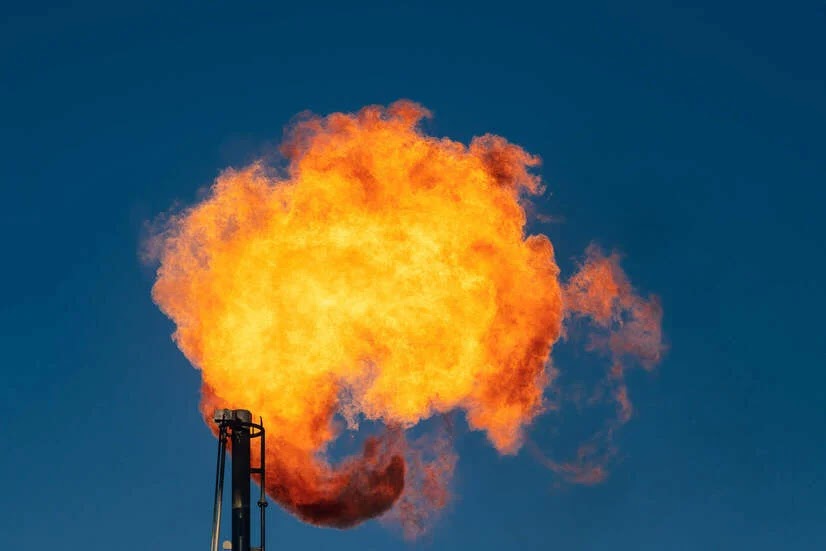
At the same time, cheap renewable energy is out-competing gas.
A new report released in December by industry analysts Wood MacKenzie predicts that “More than 75% of new liquefied natural gas global supply could be at risk due to competition from renewable energy.”
In December, the Energy Information Administration (EIA) predicted that the share of electricity in the U.S.
produced by natural gas would decline “in response to a forecast
increase in the price of natural gas delivered to electricity
generators.” The EIA predicts that the percentage of U.S. power generated from natural gas could fall from 39 percent in 2020 to 34 percent in 2021 due to a rise in prices. And the EIA predicts renewable energy, and a return to coal in some locations, will replace that market share.
This highlights a fundamental problem facing the gas industry.
Current prices are too low for the industry to make money. But when
prices rise to levels where the industry could make money, the gas is no
longer economically competitive because renewable energy is cheaper
right now.
As gas prices rise and renewable energy prices continue to fall, the U.S. gas industry is in a no-win situation.
A recent analysis by the Institute for Energy Economics and Financial Analysis (IEEFA), for instance, found that shale gas producers in the Appalachian region of the U.S. lost another $500 million in the third quarter of 2020.
The U.S. gas industry also is suffering due to the warmer winters the U.S. is experiencing — warmer weather due in part to the burning of fossil fuels and the methane released by the natural gas industry. Warmer weather depresses gas prices because there is less heating demand.
IEEFA, which has been tracking the industry’s decline, recently summed up the reality of what the “shale revolution” has done: “The shale revolution has turned the U.S.
into the world’s most prolific gas producer. Yet in financial terms,
the gas production boom has been an unmitigated financial bust.”
It’s Not Easy to Pay Off Debt
Despite all of this, to this day, the U.S.
oil and gas industry is still producing large amounts of oil and gas by
fracking — and it continues to lose money doing it. The companies that
are doing this have taken on large amounts of debt to make this happen."
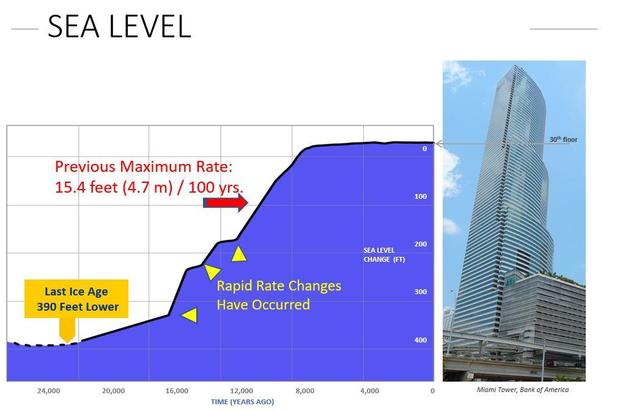
Since the end of the last Ice Age 20,000 years ago, sea levels have risen dramatically, sometimes at a very fast pace.
John Englander
"Historically speaking, simple math reveals that for every degree Fahrenheit the Earth warms, sea-level eventually rises by an astonishing 24 feet. There is, however, a sizable lag time between warming, melting and consequent sea-level rise.
Considering
that Earth has already warmed 2 degrees Fahrenheit since the late
1800s, we know that substantial sea-level rise is already baked in,
regardless of whether we stop global warming. Scientists just don't know
exactly how long it will take to see the rise or how fast it will
occur. But using proxy records, glaciologists can see that as we emerged
from the last Ice Age, sea level rose at remarkable rates — as fast as
15 feet per century at times.
That said, the fact that there is
a lot less ice on Earth today than there was 20,000 years ago means the
amount of sea-level rise per degree would likely be less now, and the
maximum pace may be tempered as well. But even a pace that's half the
historical maximum would still be catastrophic to an Earth with billions
of people who depend on stability.
We must also remember that warming today, due to human-caused climate change, is happening faster than it has in at least 2,000 years and possibly over 100,000 years.
So scientists just don't have a directly comparable situation to
measure against — once again highlighting our uncertain future.
While
scientists and scientific periodicals tend to be conservative in their
public projections of sea-level rise, scientists will often remark that
they are concerned it may be much worse. When CBS News asked Englander
what he thinks is a "realistic range" of sea-level rise by 2100, he
said, "With the current global temperature level and rate of temperature
increase I believe that we could get 5 to 10 feet before the end of
this century."
While this is just one expert's opinion, if sea-level rise even comes close to those levels, the impacts would be truly dangerous and destabilizing, dramatically reshaping nations' coastlines and forcing hundreds of millions of people to abandon their homes. Englander says to reduce the potential impacts, it is better to be prepared for a worst-case scenario.
"We need to begin planning and designing for that while there is time to adapt.""