Showing posts with label #climatecriminals. Show all posts

Thursday, 18 March 2021

Opinion: No gas-led recovery thanks, we need clean energy : Excerpt from BCS

 "The Morrison-McCormack government is planning a massive expansion of the gas industry as a way to recover from COVID-19. However, a gas-led recovery is not the way to go. It's the way to lock Australia into a climate-destroying, fossil-fueled disaster.

A recovery should, if the science is respected as it is with COVID, transition Australia to 100 per cent clean energy, create thousands of clean jobs, boost the economy, and bring Australia's emissions down. A recovery that would make Australia a renewable energy superpower.

Despite the scientific, economic and health evidence that we must decarbonise rapidly, the government is planning a vast increase in fossil fuels. They have no plan to transition away from coal, and no plan to close down coal-fired power stations, although they will anyway because they are getting old.

There are a staggering 22 new gas projects, starting with three vast areas - the Beetaloo Basin in the Territory, and the North Bowen and Galilee Basins in Queensland. In NSW, there are plans for enormous volumes of gas to be extracted just off the coastline between Newcastle and Sydney."

Read the complete Bellingen Courier Sun Opinion piece by Harry Creamer.

Friday, 20 November 2020

Trump gutted environmental protections. How quickly can Biden restore them? (excerpt): GRIST

President Donald Trump hands coal miners the pen he used to sign a bill eliminating
 regulations on the mining industry in the Roosevelt Room at the White House in Washington, 
D.C. Nicholas Kamm / AFP / Getty Images
Just a month before he won the U.S. presidential election in 2016, Donald Trump vowed to spend his time in office systematically slashing government rules. “I would say 70 percent of regulations can go,” Trump told a crowd of town hall attendees in New Hampshire. “It’s just stopping businesses from growing.”

Now, four years later, it looks like Trump did his best to keep those promises. Over the course of his term, Trump has erased or watered-down dozens upon dozens of regulations designed to keep pollutants out of the water, air, and soil. He has allowed oil and gas companies to leak planet-warming methane into the air. He has told power plants that they can keep emitting dangerous levels of carbon dioxide. If all those rules stand, according to one analysis, they will be responsible for 1.8 billion metric tons of additional greenhouse gas emissions by 2035.

With President-elect Joe Biden preparing to move into the White


House in January, this anti-environment era is about to come to an end. Biden has promised to re-enter the Paris Agreement, prioritize climate change across the federal government, and push for sweeping clean-energy legislation. But putting the most ambitious plans in place will prove especially difficult if Republicans keep control of the Senate. (Democrats will have one more chance to recapture the chamber in two Georgia runoffs, though they’re facing tough odds.)

 See complete Grist article 


Related:  Politicians Try to Rally Support for Coal Despite Economics and Biden Presidential Win (excerpt): DeSmog


#climatecriminals, Trump, #fossilfuelcompanies, fossil fuel industry, Biden,


Sunday, 15 November 2020

Politicians Try to Rally Support for Coal Despite Economics and Biden Presidential Win (excerpt): DeSmog

Sen. Mitt Romney

"The election results are a stark reminder of just how divided the country remains on many issues. However, in the days since the results were announced November 7, two senators from both parties are finding common ground in a familiar space: opposition to the Green New Deal and support for a dying coal industry.

Both Sen. Mitt Romney (R-UT) and Sen. Joe Manchin (D-WV) immediately took to CNN and Fox News in the days after the election was called to try and rally support for the fossil fuel industry in the wake of Joe Biden's election as president a success which brings with it the promise of strong climate action.

But their comments also come on the heels of yet another coal plant closure in the U.S. and as the world's largest coal producer, Peabody Energy, warns of going bankrupt for the second time in five years.

Romney told CNN on November 8 that “I want to make sure that we conservatives keep on fighting to make sure we don't have a Green New Deal, we don't get rid of gas and coal.”


Pic from this blog

Meanwhile, Manchin went on Fox News on November 9 to alsocriticize the Green New Deal, saying, “That’s not who we are as a Democratic Party.” 

We’re going to use fossil in its cleanest fashion,” he added. Manchin's unwavering support for the coal industry is well documented and unsurprising as he ran a coal company prior to being elected to the Senate.

Manchin in his comments also echoed Romney’s call to not get rid of gas and coal, telling Fox News, “You have to have energy independence in this country. You can’t eliminate certain things.”


Read complete Politicians Try to Rally Support for Coal Despite Economics and Biden Presidential Win

in DeSmog by Justin Mikulka • Thursday, November 12, 2020. Read time: 10 mins


Related:  What is the Climate 21 Project?


Sunday, 4 October 2020

Exxon Touts Carbon Capture as a Climate Fix, but Uses It to Maximize Profit and Keep Oil Flowing (excerpts): Inside Climate News

Is Carbon Capture a tax scam?
"The company sells the CO2 to other companies that use it to revive depleted oil fields and has relentlessly fought EPA oversight of the practice.

Saturday, 12 September 2020

The Climate Disasters We Ignore Today Will Eventually Come for Us (excerpt): Gizmodo


Even if the world does act, some climate disasters may be inevitable
Vehicles ply on waterlogged Delhi-Gurgaon Expressway
 near Narsingpur after heavy rains, in Gurugram
..... "In a just world, this would be major news, even in the faraway U.S. Perhaps stories about the local covid-19 crises we’re seeing across the country would get more attention, but surely, the displacement of millions deserves a spot on the front page. And yet.


If you didn’t know these floods were happening, I’m not here to scold you. Tragedies take place around the world every day, from bombings to hunger. Plus, here in the U.S., things are pretty awful for lots of people, too. It’s difficult if not impossible to keep up with every bad thing happening in all places. It’s also, frankly, easier for many of us in the Global North to ignore crises that are happening to poor people far away. When these crises do surface in news reports, many of us are taught to treat them as inevitable — things are simply more difficult for people “over there.”


This can all lead us to feel insulated from these horrors. We need to
Even if the world does act, some climate disasters may be inevitable
Local residents look at a submerged bus in a waterlogged road 
underpass after monsoon rainfalls in New Delhi
 (Photo: Prakash Singh, Getty Images)
fight that impulse. Caring about our fellow human beings is the right thing to do, sure. But even if empathy isn’t your thing, there’s also an uncomfortable reality: Climate disasters will eventually come for us all if we don’t act now. 


The deafening silence about climate change-fuelled weather in the Global South isn’t limited to the recent floods in South Asia. People have died in deluges in India and Bangladesh in previous years, too — hundreds last year, 1,000 in 2018, over 1,200 in 2017. Hurricane Dorian, one of the most intense hurricanes to ever form in the Atlantic Ocean, absolutely ravaged the Bahamas just last year. Yet it has all but faded from popular memory in the U.S. aside from the saga of Sharpiegate. And nearly three years after Hurricane Maria hit Puerto Rico, thousands are still without homes and the power grid recently crashed again in the face of a moderate tropical storm yet these stories of widespread suffering are rarely found on front pages. 


Even if the world does act, some climate disasters may be inevitable
World leaders plan for climate change
All of this devastation was not inevitable. World leaders could have taken steps to move us away from fossil fuels decades ago. They also could have poured far more resources into helping vulnerable people adapt before emergencies strike, and rebuild after they do. But they’ve made clear they won’t do much of that of their own accord — they claim it’s too expensive, too difficult, too impractical. We need a mass movement that shows them we won’t take no for an answer, and part of that is recognising the toll the crisis is already taking and acting with urgency and compassion.
World leaders already have blood on their hands. Every life these actions could have saved is important. Each of the hundreds of Indian and Bangladeshi people killed by the ongoing monsoons in India deserved better. And we all deserve better than to see this continue.


That’s not just because it’s the right thing to do. It’s also our only option. Eventually, ecological horror will come for all of us. It might be in a month, a year, or 20 years, but eventually, a storm, heat wave, or tornado will come banging down your door. The time to change course is now, starting with, at a minimum, acknowledging the impacts the climate crisis on the poorest among us. 


Even if the world does act, some climate disasters may be inevitable
We want climate action now
Even if the world does act, some climate disasters may be inevitable since we’ve already overheated the planet and left people vulnerable. We won’t be able to stop every flood or heat wave from taking place. But what’s not inevitable is our treatment of some people as disposable. If we prioritise taking steps to help people adapt and prepare, countless lives could be saved. Stopping deforestation of catchment areas and restoring wetlands, for instance, could go a long way to better shielding communities in India and Bangladesh from rising waters. So could national policies to provide more resilient housing to all people, and international policies to prioritise aid to the struggling countries that are hit hardest......"

Go to complete Gizmodo story by Dharna Noor, August 21, 2020

Related:  Climate Change Poses Serious Threats to India's Food Security (excerpt): The Wire


Sunday, 6 September 2020

Trump and Biden: Little room for climate change in US election (excerpt): DW

68% of Democratic voters see climate change as high priority
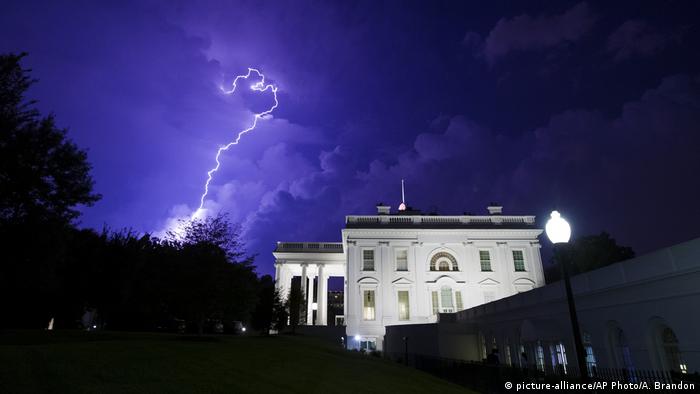
The White House
As the US faces wildfires and storms, climate change remains one of the most divisive topics among voters. Yet despite the high stakes, so far, it has played a minor role in the upcoming election. 

US President Donald Trump has undone many major pieces of climate policy during his term, walking out on the Paris Agreement to limit global warming and eliminating numerous Obama-era environmental regulations. 

However, climate change doesn't even make the top 10 concerns among registered voters, even as the US faces extreme weather from wildfires to storms, scientists say are more prevalent by global warming. It ranks 11th behind the economy, health care, Supreme Court appointments and the pandemic, according to a survey conducted by the Pew Research Center published in August. 

While climate doesn't top the voters' agenda, it's still one of the most divisive issues among Trump and Biden supporters. Some 68% of Democratic voters see climate change as high priority compared to 11% of Republicans, found the Pew survey. 


68% of Democratic voters see climate change as high priority
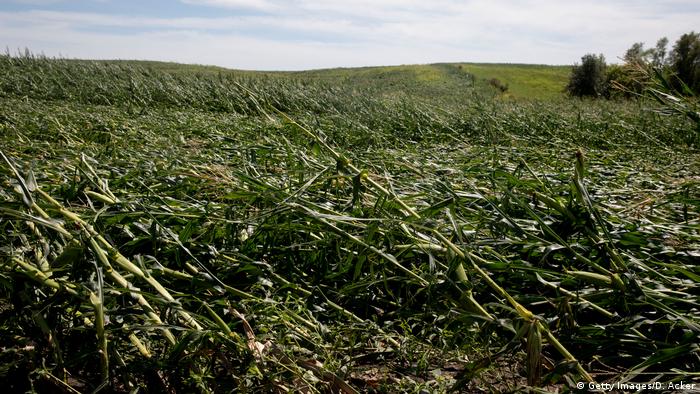
Following a storm in Iowa last month, estimates suggested that almost a third of the state's crop-growing land was affected
68% of Democratic voters see climate change as high priority
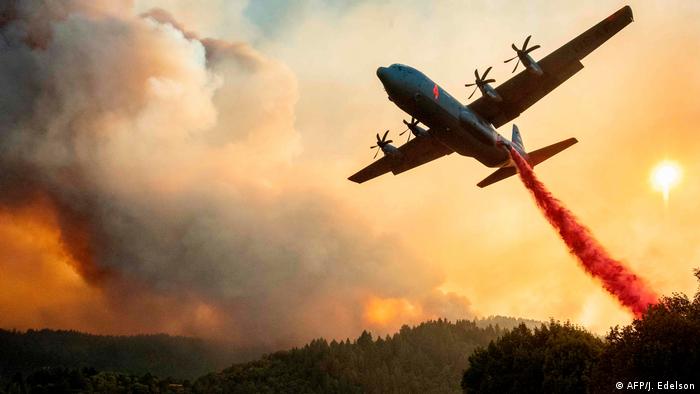
Wildfires are becoming more frequent in California, where the ground and vegetation has suffered from long, dry summers
But what are the Biden and Trump campaigns promising to do on climate change and the environment — and how does it tally with what voters want?

Go to complete DW article

 Related: Donald Trump is hampering fight against climate change, WEF warns (excerpt) : The Guardian (2 years ago)

Trump, Biden, #USA, USA, voters, #climate crisis, #climatecriminals, #jailclimatecriminals, 

Sunday, 30 August 2020

Climate crisis: business, farming and environment leaders unite to warn Australia 'woefully unprepared' (excerpt): The Guardian


(Pics by this blog)

Australia faced escalating costs due to unavoidable climate change from historical emissions
The last generation who can do something about climate change.


An extraordinary statement by 10 groups says the nation’s future prosperity is at risk without a coherent response

Business, industry, farming and environmental leaders have joined forces to warn Australia is “woefully unprepared” for the impact of climate change over the coming decades and to urge the Morrison government to do far more to cut emissions and improve the country’s resilience.

Australia faced escalating costs due to unavoidable climate change from historical emissions
Food systems must adapt
An extraordinary statement by 10 organisations, several with close ties to the Coalition, said climate change was already having a “real and significant” impact on the economy and community. The groups, representing the breadth of Australian society, called on the federal and state governments to act immediately to reduce and manage the risks.

Organisations including the Business Council of Australia, the Australian Industry Group, the National Farmers’ Federation, the Australian Aluminium Council and the ACTU said public debate about the cost of doing more to reduce emissions had too often not considered the cost of climate change to the economy, environment and society.

They cited evidence from the Intergovernmental Panel on Climate Change that emissions would need to be net-zero by 2050 if the goals of the Paris agreement are to be achieved, and said Australia must adopt that target.


Australia faced escalating costs due to unavoidable climate change from historical emissions
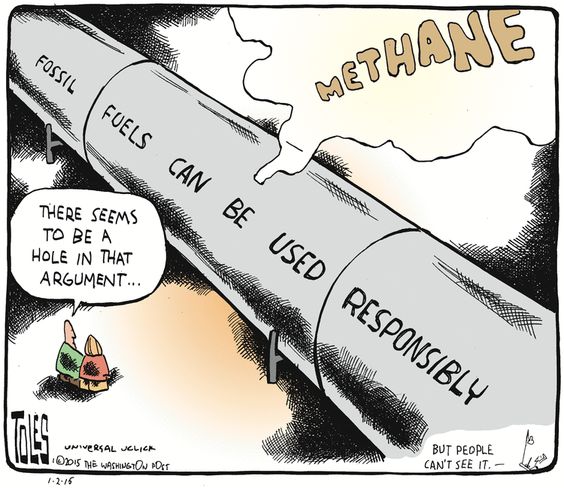
Methane produces greenhouse gas.
The statement, issued under the Australian Climate Roundtable banner, said Australia’s future prosperity would be at risk unless it had a coherent national response to the crisis.
“The scale of costs and breadth of the impact of climate change for people in Australia is deeply concerning and will escalate over time,” it said. “It is in Australia’s national interest that we do all we can to contribute to successful global action to minimise further temperature rises and take action to manage the changes we can’t avoid.”


The statement said the expert advice made clear temperatures were increasing, extreme climate-related events such as heatwaves and bushfires were becoming more intense and frequent, and natural systems were suffering irreversible damage. Some communities were now in a constant state of recovery from successive natural disasters with growing economic ramifications. 
 
Australia faced escalating costs due to unavoidable climate change from historical emissions
Agriculture must adapt

It said inaction would lead to unprecedented economic damage to Australia and its regional trading partners, heightened risks to financial stability – particularly as the insurance industry became compromised – and significant threats to the agriculture, forestry, tourism and fishing industries. 

There would be severe pressure on government budgets due to a dramatic fall in tax revenue and a rise in natural disasters that demanded emergency response and recovery spending and there would be major and long-lived social and health impacts, including loss of life.

The roundtable concluded Australia must play its fair part in international efforts to limit average global heating to 1.5C above pre-industrial levels, or at most to well below a 2C increase.


That meant setting a target of net-zero emissions by mid-century and introducing policies to meet it that aimed to lift social equity and the country’s global competitive advantage in a zero-emissions world.


The Morrison government has rejected calls that it back the goal of net-zero emissions by 2050. The target has been adopted by more than 70 countries, all Australian states and a growing number of business and investors, including fossil fuel companies. National emissions have dipped 1.5% since the Coalition was elected in 2013 after falling about 14% in six years under Labor.

Australia faced escalating costs due to unavoidable climate change from historical emissions
Our cities will inundate from sea rise.
The roundtable said even with ambitious global action Australia faced escalating costs due to unavoidable climate change from historical emissions, and must act swiftly to improve resilience. It said the country was “woefully unprepared” for the scale of threats that would emerge as it lacked a systemic government response at any level.


#Australia, #bigbusiness, #cambio-climatico, #climate crisis, #climatecriminals, #climateemergency, #economy, #methanegas, #icemelting, 

Related: 2020 is a Warning That Our Civilization is Beginning to Fall Apart (excerpt): Medium

IPCC: the dirty tricks climate scientists faced in three decades since first report (excerpt): The Conversation

(Pics added by this blog)

As the evidence became ever more compelling, the attacks on scientists escalated.
Wildfire
..... "The path to the summit
The accumulation of carbon dioxide in the atmosphere, caused primarily by the burning of fossil fuels, had been worrying scientists since the 1970s. The discovery of the “ozone hole” above Antarctica had given atmospheric scientists enormous credibility and clout among the public, and an international treaty banning chlorofluorocarbons, the chemicals causing the problem, was swiftly signed. 

Greenhouse gases
The Reagan White House worried that a treaty on CO₂ might happen as quickly, and set about ensuring the official scientific advice guiding leaders at the negotiations was under at least partial control. So emerged the intergovernmental – rather than international – panel on climate change, in 1988.

Already before Sundsvall, in 1989, figures in the automotive and fossil fuel industries of the US had set up the Global Climate Coalition to argue against rapid action and to cast doubt on the evidence. Alongside thinktanks, such as the George Marshall Institute, and trade bodies, such as the Western Fuels Association, it kept up a steady stream of publishing in the media – including a movie – to discredit the science.

But their efforts to discourage political commitment were only partially successful. The scientists held firm, and a climate treaty was agreed in 1992. And so attention turned to the scientists themselves.

The Serengeti strategy

In 1996, there were sustained attacks on climate scientist Ben Santer, who had been responsible for synthesising text in the IPCC’s second assessment report. He was accused of having “tampered with” wording and somehow “twisting” the intent of IPCC authors by Fred Seitz of the Global Climate Coalition.

Wildfire
In the late 1990s, Michael Mann, whose famous “hockey stick” diagram of global temperatures was a key part of the third assessment report, came under fire from right-wing thinktanks and even the Attorney General of Virginia. Mann called this attempt to pick on scientists perceived to be vulnerable to pressure “the Serengeti strategy”.

As Mann himself wrote

Vote for your children's future
By singling out a sole scientist, it is possible for the forces of “anti-science” to bring many more resources to bear on one individual, exerting enormous pressure from multiple directions at once, making defence difficult. It is similar to what happens when a group of lions on the Serengeti seek out a vulnerable individual zebra at the edge of a herd."

Go to complete The Conversation article
by

Research Associate in Social Movements, Keele University

Related:  2020 is a Warning That Our Civilization is Beginning to Fall Apart (excerpt): Medium

#bigbusiness, #bushfires, #carbonstorage, #climatecriminals, #criminalesclimáticosdelacárcel, #climateemergency, #jailclimatecriminals, #jail the climate criminals, anti-science, climate science,

Friday, 28 August 2020

The Unraveling of America (excerpt): Rolling Stone

*Photos added by this blog.

most Americans live on a high wire, with no safety net
Elizabeth Warren: Storm is Coming
 "Anthropologist Wade Davis on how COVID-19 signals the end of the American era"

"Never in our lives have we experienced such a global phenomenon. For the first time in the history of the world, all of humanity, informed by the unprecedented reach of digital technology, has come together, focused on the same existential threat, consumed by the same fears and uncertainties, eagerly anticipating the same, as yet unrealized, promises of medical science."

"At the root of this transformation and decline lies an ever-widening chasm between Americans who have and those who have little or nothing. Economic disparities exist in all nations, creating a tension that can be as disruptive as the inequities are unjust. In any number of settings, however, the negative forces tearing apart a society are mitigated or even muted if there are other elements that reinforce social solidarity — religious faith, the strength and comfort of family, the pride of tradition, fidelity to the land, a spirit of place.

But when all the old certainties are shown to be lies, when the promise of a good life for a working
most Americans live on a high wire, with no safety net
"...as a buffoon of a president.."
family is shattered as factories close and corporate leaders, growing wealthier by the day, ship jobs abroad, the social contract is irrevocably broken. For two generations, America has celebrated globalization with iconic intensity, when, as any working man or woman can see, it’s nothing more than capital on the prowl in search of ever cheaper sources of labor.

For many years, those on the conservative right in the United States have invoked a nostalgia for the 1950s, and an America that never was, but has to be presumed to have existed to rationalize their sense of loss and abandonment, their fear of change, their bitter resentments and lingering contempt for the social movements of the 1960s, a time of new aspirations for women, gays, and people of color. In truth, at least in economic terms, the country of the 1950s resembled Denmark as much as the America of today. Marginal tax rates for the wealthy were 90 percent. The salaries of CEOs were, on average, just 20 times that of their mid-management employees."


Thursday, 27 August 2020

Major investment firm dumps Exxon, Chevron and Rio Tinto stock (excerpt): The Guardian

"Storebrand says corporate lobbying to undermine climate solutions is ‘unacceptable’"

Storebrand says corporate lobbying to undermine climate solutions is ‘unacceptable
companies that use their political clout to block green policies
 "A Nordic hedge fund worth more than $90bn (£68.6bn) has dumped its stocks in some of the world’s biggest oil companies and miners responsible for lobbying against climate action.

Storebrand, a Norwegian asset manager, divested from miner Rio Tinto as well as US oil giants ExxonMobil and Chevron as part of a new climate policy targeting companies that use their political clout to block green policies.

The investor is one of many major financial institutions divesting from polluting industries, but is understood to be the first to dump shares in companies which use their influence to slow the pace of climate action.

Jan Erik Saugestad, the chief executive of Storebrand, said corporate lobbying activity designed to undermine solutions to “the greatest risks facing humanity” is “simply unacceptable”.

Storebrand says corporate lobbying to undermine climate solutions is ‘unacceptable
It's not OK to profit from the wreckage of the climate.
Storebrand will also divest from German chemicals company BASF and US electricity supplier Southern Company for lobbying against climate regulation, and a string of companies that derive more than 5% of their revenues from coal or oil sands.

“We need to accelerate away from oil and gas without deflecting attention on to carbon offsetting and carbon capture and storage. 

Renewable energy sources like solar and wind power are readily available alternatives,” he said.

The Exxons and Chevrons of the world are holding us back,” he added. “This initial move does not mean that BP, Shell, Equinor and other oil and gas majors can rest easy and continue with business as usual, even though they are performing relatively better than US oil majors.”"

Go to The Guardian complete article

Related: How Hard Is It to Quit Coal? For Germany, 18 Years and $44 Billion (excerpt): NYT

Related: Prepare for even far more economic chaos than the depression caused by Covid-19


#jail the climate criminals, #jailclimatecriminals, #climatecriminals, Exxon, Chevron, BP, Shell, 


Wednesday, 26 August 2020

Australia fires: Similar or worse disasters 'will happen again' (excerpt): BBC

Australia should expect "worse" in the years to come
Wildfire: Australia should expect "worse" in the years to come
"An inquiry into the recent massive bushfire disaster in Australia has found the country should expect "worse" in the years to come.
 
The review - which looked at New South Wales (NSW), the worst-hit state - made sweeping proposals aimed at better preparing for future fire seasons.
 
The blazes began last August and burned for months, killing 33 people nationally and scorching vast areas.
 
The NSW state government said it would adopt the inquiry's 76 recommendations.
 
The "extreme and extremely unusual" bushfires destroyed 2,476


Australia should expect "worse" in the years to come
Fires caused by climate change
houses and 5.5 million hectares of land in that state alone, according to the NSW Bushfire Inquiry report.
 
"It showed us bushfires through forested regions on a scale that we have not seen in Australia in recorded history, and fire behaviour that took even experienced firefighters by surprise."
 
The main causes were a drought which had made the land extremely dry and ready to burn, hot and windy weather, and climate change.
 
NSW Premier Gladys Berejiklian said on Tuesday: "The next fire season is already upon us."
 
As deadly fires rage in the US summer in California, NSW has seen winter blazes this month - though none have posed a significant threat.

What did the report recommend?

Australia should expect "worse" in the years to come
Californian wildfires are also caused by climate change
It made far-reaching proposals, including:
  • ordering residents in at-risk areas to conduct compulsory land-clearing
  • better aerial firefighting strategies, including more water-bombing at night
  • drawing on more Aboriginal land management techniques, such as cultural burning
  • allowing firefighters to enter private properties to start controlled burns on materials which fuel fires
  • improving alert systems for bushfire smoke, and research into its health impacts
  • making government agencies more efficient and auditing their progress.
"Ms Berejiklian said: 'We have to accept also that our climate is changing and those who wrote the report acknowledge that.' "


#firestorms, #bushfires, #wildfire, firefighters, #Australia, #California, #cambio-climatico, #climatecriminals, #criminalesclimáticosdelacárcel, #jailclimatecriminals, #climateaction,  

Tuesday, 25 August 2020

The End of the Environment: Bob Brown.: The Saturday Paper (excerpt)

.... "The prime minister’s post-Covid-19 plan is to roar ahead with a slate of mega-projects that would be delayed by any
a boon for corporate environmental exploiters
Liberals and nationals Fail Australian Forests
proper consideration of their environmental and Indigenous heritage impacts.
 
 
While the EPBC Act rarely leads to any project being given the thumbs down, it does require environmental impacts to be assessed, and this takes time. The government’s solution? Get rid of the federal assessment.
 
a boon for corporate environmental exploiters
Forests are only proven carbon storage
When parliament resumes next week, Minister for the Environment Sussan Ley will introduce a bill, under the cover of Covid-19, to amend Howard’s EPBC Act and hand the power to the states – which are more vulnerable to the corporate sector – to approve mining, gas fracking, dam building, the rapid expansion of industrial fish farming and the invasion of national parks by private enterprise. She aims to wash her hands of the Commonwealth’s responsibility for environmental assessment and protection.
 
...........................
 
.........................
 
The minister is not waiting for the final report, due in October, of her own inquiry into the EPBC Act, headed by businessman Graeme Samuel. Last month she peremptorily dismissed his interim report’s key recommendation that the Commonwealth set up a policing agency to watch over state management of environmental matters. This was despite Samuel’s finding that “Australia’s natural environment and iconic places are in an overall state of decline and are under increasing threat”.
 
Undoubtedly, the powers to protect Indigenous heritage will be the
a boon for corporate environmental exploiters
Koala after wildfire
next thing shunted to the states. Ley knew the Juukan Gorge caves were to be blown up by Rio Tinto before the event and yet she did nothing. Next, she rejected national heritage protection for the ancient Djab Wurrung eucalypts in Victoria. Handing her powers to the states will spare her from such complicit embarrassment in the future.
 
a boon for corporate environmental exploiters
Australia's climate action record
With the Greens opposed, it will be up to Labor and the crossbenchers in the senate to take on Scott Morrison’s game plan to relegate environmental powers to weaker state governments while concentrating economic might in Canberra: a boon for corporate environmental exploiters and their lobbyists in both cases.
 
This is a watershed moment for Australia’s environment. It has taken more than two decades to see any success in our fight to chip away at Howard’s RFAs. And now we face another era wherein policy is being devised to ignore the certainty of environmental devastation for the promise of a quick profit.
 
In Earth’s sixth great age of extinction, there is a rising tide of opposition to the foolishness, if not criminality, of destroying wildlife habitats – from the deep seas to coral reefs and coastlines to what little is left of woodlands, grasslands and forests.
 
a boon for corporate environmental exploiters
Koala and destroyed forest
The phenomenon of Extinction Rebellion, temporarily quietened by Covid-19, is just a hint of the public unrest to come unless the needless exploitation of nature and our finest human heritage ends. Earth’s ecosystem is at breaking point. Our human herd is already using nearly twice the living produce this planet is capable of sustaining and yet, everywhere, the clamour is for “growth”.
If the forests continue to fall, everything else will follow. As with whaling in 1978, the time for logging Australia’s wildlife-filled and carbon-rich native forests is up.