Showing posts with label #Australia. Show all posts

Thursday, 18 March 2021

Opinion: No gas-led recovery thanks, we need clean energy : Excerpt from BCS

 "The Morrison-McCormack government is planning a massive expansion of the gas industry as a way to recover from COVID-19. However, a gas-led recovery is not the way to go. It's the way to lock Australia into a climate-destroying, fossil-fueled disaster.

A recovery should, if the science is respected as it is with COVID, transition Australia to 100 per cent clean energy, create thousands of clean jobs, boost the economy, and bring Australia's emissions down. A recovery that would make Australia a renewable energy superpower.

Despite the scientific, economic and health evidence that we must decarbonise rapidly, the government is planning a vast increase in fossil fuels. They have no plan to transition away from coal, and no plan to close down coal-fired power stations, although they will anyway because they are getting old.

There are a staggering 22 new gas projects, starting with three vast areas - the Beetaloo Basin in the Territory, and the North Bowen and Galilee Basins in Queensland. In NSW, there are plans for enormous volumes of gas to be extracted just off the coastline between Newcastle and Sydney."

Read the complete Bellingen Courier Sun Opinion piece by Harry Creamer.

Sunday, 24 January 2021

Coalition quietly adds fossil fuel industry leaders to emissions reduction panel (excerpts): The Guardian


"The Morrison government has quietly appointed fossil fuel industry leaders and a controversial economist to a committee responsible for ensuring the integrity of projects that get climate funding.

Critics have raised concerns about whether some appointees to the Emissions Reduction Assurance Committee may have a potential conflict of interest that could leave its decisions open to legal challenge.

The overhaul of the committee follows the government indicating it plans to expand the industries that can access its $2.5bn emissions reduction fund, including opening it to carbon capture and storage (CCS) projects by oil and gas companies."

........

 "Bill Hare, the chief executive and senior scientist with Climate Analytics, said it appeared the government had appointed “mostly people concerned with the status quo” rather than aiming for a rapid shift towards zero emissions.

He said he was concerned the government planned to allow fossil fuel companies to receive climate funding for merely reducing emissions below inflated estimates of what their CO2 output otherwise might be."

............

"The emissions reduction fund has so far operated with limited success in reducing national emissions. The government has paid $740m for emissions cuts and signed contracts for another $1.66bn. Despite this, national emissions had dipped only slightly since the Coalition was elected in 2013 prior to the Covid-19 shutdown.

Government data shows the small reduction was overwhelmingly due to the rise of solar and wind energy, which are not supported through the fund." 

 To go to the original The Guardian article

Thursday, 26 November 2020

Big batteries are getting bigger and smarter, and doing things fossil fuels can’t do (excerpt): RenewEconomy

 "South Australia and Victoria seem to be engaged in a competition for bragging rights over who has the biggest big battery in the country.

Right now it is South Australia, with the newly expanded Hornsdale Power Reserve (150MW/194MWh), but the mantle late next year will go to Victoria, where Hornsdale owner Neoen has committed to building a 300MW/450MWh big battery at Geelong, before the crown possibly returns to South Australia with AGL’s proposed “gigawatt hour” battery next to the Torrens Island gas generator.

What we can be sure of is that big batteries will get even bigger. AGL has talked of a 500MW battery at Liddell with as yet unspecified hours of storage, Neoen is talking of a 900MW/1800MWh big battery at the massive Goyder South wind and solar hybrid plant in South Australia, while Sun Cable may trump them all with a 20 gigawatt hour battery in the Northern Territory if its bold plan to supply Singapore with the world’s biggest solar farm becomes a reality.

Big might be beautiful, and able to steal the headlines, but the real significance of the most recent announcements – Neoen’s in Victoria and AGL’s in South Australia, as well as this week’s new AGL big battery proposal for the Loy Yang A brown coal generator in Victoria – is not just their size, but what they are able to do."

Read complete RenewEconomy article 


Related:   NO FUTURE IN GAS - video

Tuesday, 27 October 2020

1 year on since Australia's biggest bushfire: Climate Council

Exactly 12 months ago today, the huge Gospers Mountain Fire started from a lightning strike north-west of Sydney. The fire burned for almost 80 days, and became the biggest forest fire in Australia's recorded history. 
 
One year on, the fire has left a heart-wrenching scar on both the landscape and the communities it tore through. This is what climate change looks like. 
 
In just a few days, the Royal Commission will hand down its findings into the 2019-20 bushfire season, and it's imperative that it clearly acknowledges the role of climate change in fuelling the 2019-20 bushfires.


Related: 

Polling Shows Growing Climate Concern Among Americans. But Outsized Influence of Deniers Remains a Roadblock (excerpt): DeSmog


#climatefires,#Australia,#cambio-climatico,#climateemergency,#bushfires,#firestorms,NSW,

Saturday, 3 October 2020

China's zero emissions target puts Australia on notice (excerpts): The Age


Flag: Peoples Republic of China
"Australia's former top climate diplomat has warned China's net-zero emissions target will leave Australia behind, threatening future trade deals and its influence in the Pacific as the Morrison government becomes wedged between the US and China on climate action.

Howard Bamsey, who was Australia's special envoy on climate change during the Rudd government, said the announcement from President Xi Jinping last week had turned the politics of emissions reduction into a sharp economic and diplomatic issue.


Renewables consumption by region

Exajoules


*Commonwealth of Independent States

Source: BP Statistical Review of World Energy 2020


Professor Bamsey, who was also Australia's ambassador for the environment under the Howard government, said the new policy "pulls the rug out from under the argument" that Australia's domestic climate goals do not need to accelerate because China was yet to increase its ambitions.

"It's clear now China is accepting a leadership role," he said. "Xi made the announcement. That carries all the weight of the state and party.".."

..............

".. Professor Bamsey said the UK, European Union and a potential Biden presidency will pressure Australia to match their climate goals ahead of Glasgow.

"We are an internationally connected economy and we will have to adopt the policies of our trading partners, including our main partner in China," he said. "We won't be able to continue to provide goods and services and ignore the climate dimension.".."

.....................

".. The director of the European Union's Centre of Excellence at RMIT, Bruce Wilson, said China's pledge would increase pressure on Australia as it attempts to negotiate free trade deals with the EU and Britain.

"If anyone is trying to do a trade deal with the EU, the Paris deal is non-negotiable," he said.

Professor Wilson said it was still not clear if the EU would accept Australia's use of Kyoto carryover credits to meet its obligations and said a "carbon border tax" was on the agenda for countries not compliant with the EU's environmental standards.

"If you are exporting an emissions heavy product into Europe there will be a tax on that," he said.

"Chief negotiators from the EU and Australia were expected to brief stakeholders about progress on the trade deal on Wednesday afternoon. ..."

Go to The Age article  


 Related: Class action to stop planned coal mine extension filed by climate action-focused Australian teenagers (excerpt): ABC


carbon tariffs,European Union,China,impose trade tariffs on carbon offenders,coal,#renewables,#Australia,#climatechange,


Sunday, 27 September 2020

Wildfires Explained: The YEARS Project video

  Maya Lilly—who has lived through several California wildfires that threatened her home—explains the science behind wildfires. How is climate change responsible for making wildfires worse? Global warming produces more heat and more fuel—two ingredients that necessary for fires. Watch more #ClimateFacts: https://theyearsproject.com/watch/cli...


Related:A season of climate-fueled disasters (excerpt): NYT

Saturday, 26 September 2020

Class action to stop planned coal mine extension filed by climate action-focused Australian teenagers (excerpt): ABC

"A class action launched on behalf of young people everywhere seeks an injunction to stop the Australian Government approving an extension to Whitehaven's Vickery coal mine, arguing it will harm young people by exacerbating climate change.


from: nwprotectionadvocacy.com


Thursday, 17 September 2020

Australia's government channels government green funds away from renewables towards subsidies for fossil fuels.

(Pics by this blog)

ARENA to get $1.4 billion as Coalition channels funds to CCS, hydrogen and pubs (excerpt): RenewEconomy

The federal Coalition government has finally decided to extending the funding for the Australian Renewable Energy Agency, but will – as predicted – push both ARENA and the Clean Energy Finance Corporation away from wind and solar into other “low emission” technologies, including carbon capture and storage.


ARENA and CEFC have played critical roles in advancing Australian renewable, storage and other critical enabling technologies since their creation in 2012, and despite repeated attempts by the Coalition government to dismantle them, and severe cuts to ARENA’s original budget.

ARENA – which is now nearly exhausted of funds, and had its board recently stacked with Coalition favourites – is to be given “guaranteed baseline funding” of $1.427 billion over the next 10 years, and will be given extra allocations in the annual budget. For 2020/21, that will amount to $191 million.

This is part of a $1.9 billion package to the two green funds that will include money for CCS, a regional hydrogen hub, along with many of the project identified by a group led by former Origin Energy CEO Grant King, and even some money for pubs to upgrade their refrigeration systems.


The government will change the mandates of both ARENA and the CEFC so they can more or less follow the government’s Technology Roadmap which is to be finalised in the next couple of weeks, and which looks at technologies beyond wind and solar, including gas, hydrogen and CCS.


The push to broaden the mandate into “low emissions” technologies will require parliamentary approval – rejected by the Senate when the Coalition first tried to scrap the bodies – and comes just days after the unveiling of a major gas package, and the government’s extraordinary ultimatum to build a 1GW gas plant in the Hunter Valley.


Go to Renew Economy's complete article by Giles Parkinson


PM Morrison,#Australia,#methanegas,coal mining,gas,ARENA,#fossilfuelcompanies,role of media,


Body count: How climate change is killing us: Paddy Manning's Book


"True stories of loss and courage from people at the frontlines of Australia's worst climate-fuelled disasters - bushfire, heatwaves, flash-floods, disease outbreaks and now the latest in a new age of pandemics. 


What are the health risks of climate change, why weren't we warned and what are Australian governments doing about it?"
"Suddenly, when the country caught fire, people realised what the government has not: that climate change is killing us.

But climate deaths didn’t start in 2019. Medical officers have been warning of a health emergency as temperatures rise for years, and for at least a decade Australians have been dying from the plagues of climate change – from heat, flood, disease, smoke. And now, pandemic.

In this detailed, considered, compassionate book, Paddy Manning paints us the big picture. He revisits some headline events which might have faded in our memory – the Brisbane Floods of 2011; Melbourne’s thunderstorm asthma fatalities of 2016 – and brings to our attention less well-publicised killers: the soil-borne diseases that amplify after a flood; the fact that heat itself has killed more people than all other catastrophes put together. In each case, he has interviewed scientists to explore the link to climate change and asks how – indeed, whether – we can better prepare ourselves in the future.

Most importantly, Manning has spoken to survivors and the families of victims, creating a monument to those we have already lost. Donna Rice and her 13-year-old son Jordan. Alison Tenner. The Buchanan family. These are stories of humans at their most vulnerable, and also often at their best. In extremis, people often act to save their loved ones above themselves. As Body Count shows, we are now all in extremis, and it is time to act.

 
#climate crisis, #climateemergency, #Australia, #California, Oregon, #climatefires, #USA, smoke, infectious diseases, #foodsecurity, water security, #heatwaves,
Climate Fires in the USA


Respected journalist Paddy Manning tells these stories of tragedy and loss, heroism and resilience, in a book that is both monument and warning.

‘A climate emergency tour de force.' Dr Bob Brown

'True stories of heroism and unimaginable loss...Body Count is a brilliant exposition of why we must deal with the climate problem now.' Ross Garnaut

'Climate change kills. … Through the accounts of people who have lost so much, Paddy Manning drives home the deeply personal impact of climate change. Governments continue to ignore the impact on climate change on human health at OUR peril. The future of our planet and our future generations depends on everyone playing their part, today.' Professor Kerryn Phelps

'A stunningly powerful call to political leaders everywhere who hear the warnings of the devastating impacts of climate change on health but fail to act.' Dr Helen Haines, independent member for Indi

‘Moving stories of heroic courage and tragic loss. A pause to reflect on the lives lost and how urgently we need change.’ David Pocock, former Wallabies captain"


#climate crisis, #climateemergency, #Australia, #California, Oregon, #climatefires, #USA, smoke, infectious diseases, #foodsecurity, water security, #heatwaves,
Children Face Unique Health Threats Due To Climate Change


Related: How Climate Migration Will Reshape America Millions will be displaced. Where will they go? (excerpt) : NYT Magazine

#climate crisis, #climateemergency, #Australia, #California, Oregon, #climatefires, #USA, smoke, infectious diseases, #foodsecurity, water security, #heatwaves,  

Monday, 14 September 2020

'Australia in January, California in August': Aussies watch on in horror as wildfires ravage US west coast (excerpt): SBS

Washington governor blames climate change for fires
Australia and Oregon


Former NSW fire chief Greg Mullins says the wildfires ravaging the US are a 'direct reflection' of what happened in Australia last summer, and serve as another 'wake up call' to pay attention to climate change.

With up to 100 wildfires burning across multiple states on the US west coast, the situation is is eerily reminiscent of Australia’s deadly bushfire event of 2019-20.

Ross Bradstock is from the Centre for Environmental Risk Management of Bushfires at the University of Wollongong. He says what Australia went through last summer "is repeating itself in places like California". 

“We’re seeing something similar play out over there as to what played out in our last season in terms of unprecedented fires, unprecedented area burnt, unprecedented drought and heat,” he told SBS News.


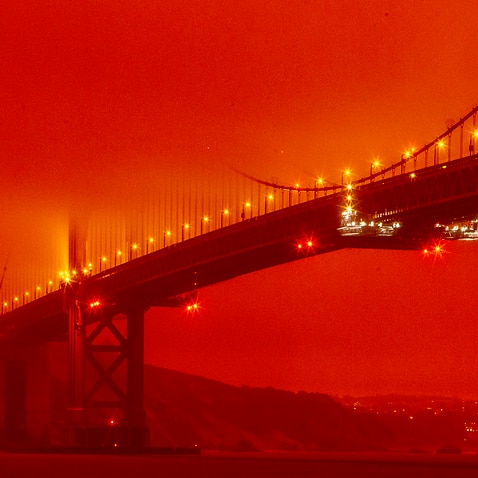
In this photo provided by Frederic Larson, the Golden Gate Bridge is seen at 11 a.m. PT amid a smoky, orange hue caused by the ongoing wildfires, Wednesday, Sept. 9, 2020, in San Francisco. (Frederic Larson via AP)
San Francisco, Pic from SBS story


Former NSW Fire and Rescue Commissioner Greg Mullins has helped to fight fires in California several times since the 1990s. 

He agrees the current wildfires are "a direct reflection" of what Australia faced.

"It's unprecedented," Mr Mullins told SBS News.

"The temperatures they're getting - you know, 49.4 (degrees) in the eastern suburbs of Los Angeles - nothing has ever come close." .................


Go to complete article By Rashida Yosufzai, Jodie Stephens

Related: Washington governor blames climate change for fires (excerpt): abc news


Washington governor blames climate change for fires
 Fires near Sydney, Pic from this blog

Sunday, 13 September 2020

Scientists say they're being silenced by the government: from ABC Radio

"On RN Breakfast with Fran Kelly
scientists employed by government and industry had work "unduly modified
science or fiction


As the Morrison Government rushes to amend national environmental protection laws, scientists warn a growing number of their colleagues are being silenced.

A study by the Ecological Society of Australia claims a third of ecologists and conservation scientists employed by government and industry had work "unduly modified" and almost half of those working for government were blocked from releasing their findings.

Their treatment has renewed calls for the creation of an independent environmental agency, something the Coalition has ruled out.

scientists employed by government and industry had work "unduly modified
The scientific conspiracy!
Featured:
Don Driscoll, Professor in Terrestrial Ecology, Deakin University

Producer: Cathy Van Extel

Duration: 8min 57sec

Friday, 11 September 2020

Joe Biden if president will push allies like Australia to do more on climate, adviser says (excerpt): The Guardian

tough conversations about Australia’s climate policies
Biden
Jake Sullivan says the former vice-president, if elected, won’t ‘pull any punches’ on what is a global problem

Joe Biden will not pull any punches with allies including Australia in seeking to build international momentum for stronger action on the climate crisis, an adviser to the US presidential candidate has said.

"If elected in November, Biden will hold heavy emitters such as
tough conversations about Australia’s climate policies
Biden and Harris
China accountable for doing more “but he’s also going to push our friends to do more as well”, according to Jake Sullivan, who was the national security adviser to Biden when he was vice-president and is now in the candidate’s inner circle.


In a wide-ranging podcast interview with the Sydney-based Lowy Institute, Sullivan also signalled that Biden would work closely with Australia and other regional allies in responding to the challenges posed by the rise of China.

While Australia’s prime minister, Scott Morrison, is likely to welcome the pledge of US coordination with allies on regional security issues, there may be unease in government ranks about the potential for tough conversations about Australia’s climate policies.

The Coalition government has resisted calls to embrace a target of net-zero emissions by 2050 and it proposes to use Kyoto carryover credits to meet Australia’s 2030 emission reductions pledge. Some Coalition backbenchers still openly dispute climate science......"

Pics are from this blog

Go to The Guardian article   

Related:The Federal Government’s plan to use clean money to fund dirty projects - Video: The Climate Council


Biden, Harris, Trump, PM Morrison, #cambio-climatico, #climateaction, #Australia, #climateemergency,

Thursday, 10 September 2020

Aussie invention could save old coal stations by running them on zero-emissions ‘Lego’ blocks (excerpt): The Conversation


(MGA), stores energy in the form of heat
Miscibility Gap Alloy (MGA)
"As climate change worsens, the future of fossil fuel jobs and infrastructure is uncertain. But a new energy storage technology invented in Australia could enable coal-fired power stations to run entirely emissions-free.
The novel material, called miscibility gap alloy (MGA), stores energy in the form of heat. 


MGA is housed in small blocks of blended metals, which receive energy generated by renewables such as solar and wind.


(MGA), stores energy in the form of heat
MGA
The energy can then be used as an alternative to coal to run steam turbines at coal-fired power stations, without producing emissions. Stackable like Lego, MGA blocks can be added or removed, scaling electricity generation up or down to meet demand.

MGA blocks are a fraction of the cost of a rival energy storage technology, lithium-ion batteries. Our invention has been proven in the lab – now we are moving to the next phase of proving it in the real world."
............................................

"If our electricity grid is to become emissions-free, we need an energy storage option that’s both affordable and versatile enough to be rolled out at massive scale - providing six to eight hours of dispatchable power every night. 
 
MGAs store energy for a day to a week. This fills a “middle” time frame between batteries and hydro-power, and allows intermittent renewable energy to be dispatched when needed."


Related:  'The Future We Choose', Book by Christiana Figueres & Tom Rivett-Carnac

miscibility gap alloy (MGA), energy, coal, #methanegas, #Australia, batteries, #jailclimatecriminals, video,

Tuesday, 8 September 2020

The Federal Government’s plan to use clean money to fund dirty projects - Video: The Climate Council

The Federal Government wants to use Australia’s clean energy bank to fund dirty fossil fuel projects. 

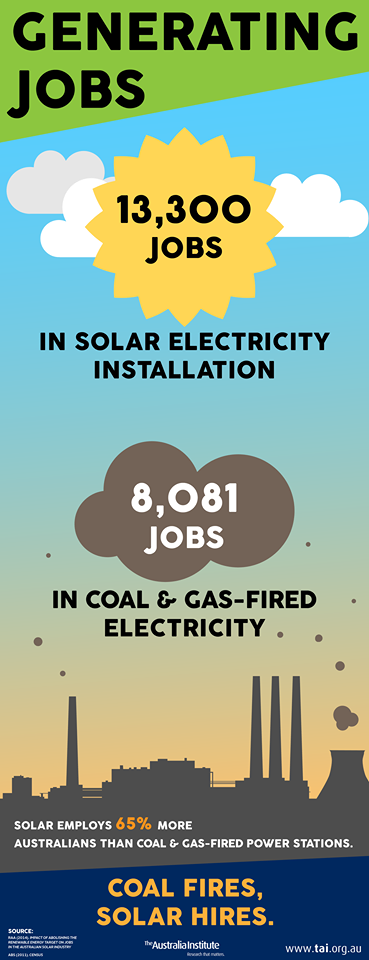
Yes, you read that correctly. Australia doesn’t need any new polluting fossil fuels. Coal and gas are expensive, polluting and a bad public investment. Our Clean Jobs Plan shows we can create 76,000 jobs in the short term, while setting Australia up for the future and tackling long-term problems like climate change (which seems like a much better idea). 

Learn more: https://climc.nl/3hCA9uI


Related:  Trump will roll back more environmental regulations if reelected, says EPA chief: CNBC

Climate Council, #Australia, jobs, #renewables, PM Morrison, coal, #methanegas, #climatechange, 

Saturday, 5 September 2020

Choosing A Place To Retire? Factor In Climate Change (excerpt): Forbes


The hazards of wildfires and extreme heat are also intensifying due to climate change.
Hurricane damage
(Pics added by this blog)

"When Bill and Annemarie Kachur retired in early 2016, they saw no reason to go anywhere. The gray shingled bungalow in Myrtle Beach, S.C. had been their home for more than 15 years.

“I’ve been here so long, it’s a sense of roots now for me,” says Bill, 65, who spent his early career hopping around the country, working on-air at various radio stations. 

Plus, they were already in a haven for retirees. “I like the fact that there isn’t a winter,” says Annemarie, who’ll be 65 in September.
But in recent years, their idyllic spot about 2 ½ miles from the Atlantic Ocean has revealed an ominous side: hurricane season. “I just noticed that the last four or five years, we keep getting hammered,” recalls Bill.

Two Hurricane Evacuations Since 2016

Since 2016, the Kachurs have ridden out four hurricanes, including two evacuations to safer ground.

“Ten months out of the year, it’s great,” says Bill. “And then there’s a couple months out of the year when you’re walking on eggshells and you’re a little bit concerned about what’s blowin’ in the wind, so to speak.” 

Warm, beachy spots on the Atlantic, Pacific and Gulf Coasts have been retirement magnets for decades. But, as Hurricane Laura just underscored, they’re also squarely in the crosshairs of the changing climate, effects of which are already evident in many of the nation’s most popular retirement destinations.

The hazards of wildfires and extreme heat are also intensifying due to climate change.
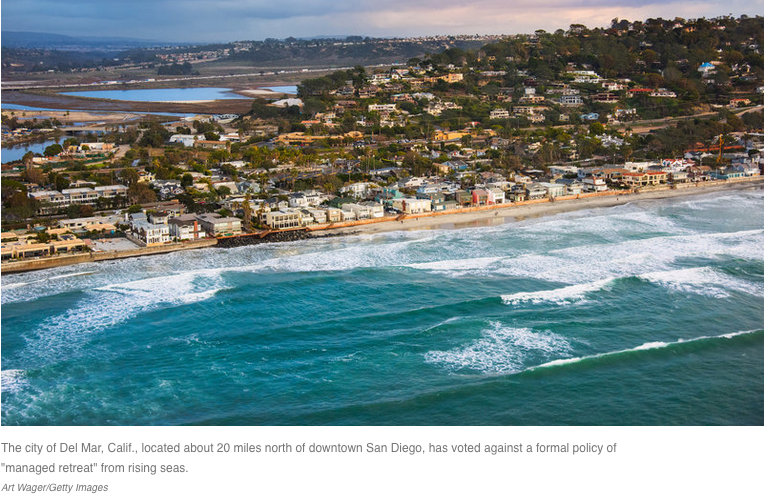
Planned retreat from rising seas


Climate Change and Retirement Location Decisions

“Current climate and future climate is absolutely something that people should be thinking about when deciding where to live, where to retire,” advises Radley Horton, a climate scientist at Columbia University’s Earth Institute, who has focused on climate adaptation strategies. “Those are absolutely critical concerns when you think about impacts directly on the home, but also livability outdoors — things like critical infrastructure, too,” says Horton.

The hazards of wildfires and extreme heat are also intensifying due to climate change.
Californian Wildfires
Rising seas are threatening things we tend to take for granted in many areas, like major freeways, airports and sewage treatment plants. The hazards of wildfires and extreme heat are also intensifying due to climate change."

Where then to retire to? : Read complete Forbes article: By Craig Miller, Science Journalist

Related: Port Macquarie after a 7m sea level rise. Insurance risks affect property values now.

Related: 'Retreat' Is Not An Option As A California Beach Town Plans For Rising Seas: NPR

hurricanes, #searise, #bushfires, property values, insurance, #America, #Australia, #Houston, #wildfire,  

Sunday, 30 August 2020

Climate crisis: business, farming and environment leaders unite to warn Australia 'woefully unprepared' (excerpt): The Guardian


(Pics by this blog)

Australia faced escalating costs due to unavoidable climate change from historical emissions
The last generation who can do something about climate change.


An extraordinary statement by 10 groups says the nation’s future prosperity is at risk without a coherent response

Business, industry, farming and environmental leaders have joined forces to warn Australia is “woefully unprepared” for the impact of climate change over the coming decades and to urge the Morrison government to do far more to cut emissions and improve the country’s resilience.

Australia faced escalating costs due to unavoidable climate change from historical emissions
Food systems must adapt
An extraordinary statement by 10 organisations, several with close ties to the Coalition, said climate change was already having a “real and significant” impact on the economy and community. The groups, representing the breadth of Australian society, called on the federal and state governments to act immediately to reduce and manage the risks.

Organisations including the Business Council of Australia, the Australian Industry Group, the National Farmers’ Federation, the Australian Aluminium Council and the ACTU said public debate about the cost of doing more to reduce emissions had too often not considered the cost of climate change to the economy, environment and society.

They cited evidence from the Intergovernmental Panel on Climate Change that emissions would need to be net-zero by 2050 if the goals of the Paris agreement are to be achieved, and said Australia must adopt that target.


Australia faced escalating costs due to unavoidable climate change from historical emissions
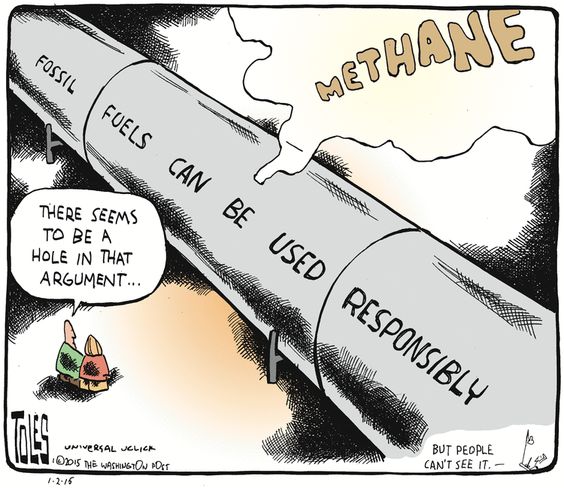
Methane produces greenhouse gas.
The statement, issued under the Australian Climate Roundtable banner, said Australia’s future prosperity would be at risk unless it had a coherent national response to the crisis.
“The scale of costs and breadth of the impact of climate change for people in Australia is deeply concerning and will escalate over time,” it said. “It is in Australia’s national interest that we do all we can to contribute to successful global action to minimise further temperature rises and take action to manage the changes we can’t avoid.”


The statement said the expert advice made clear temperatures were increasing, extreme climate-related events such as heatwaves and bushfires were becoming more intense and frequent, and natural systems were suffering irreversible damage. Some communities were now in a constant state of recovery from successive natural disasters with growing economic ramifications. 
 
Australia faced escalating costs due to unavoidable climate change from historical emissions
Agriculture must adapt

It said inaction would lead to unprecedented economic damage to Australia and its regional trading partners, heightened risks to financial stability – particularly as the insurance industry became compromised – and significant threats to the agriculture, forestry, tourism and fishing industries. 

There would be severe pressure on government budgets due to a dramatic fall in tax revenue and a rise in natural disasters that demanded emergency response and recovery spending and there would be major and long-lived social and health impacts, including loss of life.

The roundtable concluded Australia must play its fair part in international efforts to limit average global heating to 1.5C above pre-industrial levels, or at most to well below a 2C increase.


That meant setting a target of net-zero emissions by mid-century and introducing policies to meet it that aimed to lift social equity and the country’s global competitive advantage in a zero-emissions world.


The Morrison government has rejected calls that it back the goal of net-zero emissions by 2050. The target has been adopted by more than 70 countries, all Australian states and a growing number of business and investors, including fossil fuel companies. National emissions have dipped 1.5% since the Coalition was elected in 2013 after falling about 14% in six years under Labor.

Australia faced escalating costs due to unavoidable climate change from historical emissions
Our cities will inundate from sea rise.
The roundtable said even with ambitious global action Australia faced escalating costs due to unavoidable climate change from historical emissions, and must act swiftly to improve resilience. It said the country was “woefully unprepared” for the scale of threats that would emerge as it lacked a systemic government response at any level.


#Australia, #bigbusiness, #cambio-climatico, #climate crisis, #climatecriminals, #climateemergency, #economy, #methanegas, #icemelting, 

Related: 2020 is a Warning That Our Civilization is Beginning to Fall Apart (excerpt): Medium

Friday, 28 August 2020

Far-reaching climate change risks to Australia must be reduced and managed: Aigroup

Photos added by this blog.

It is in Australia's national interest that we do all we can to contribute to successful global action to minimise further temperature rises
Add caption
"The Australian Climate Roundtable (ACR) is a forum that brings together leading organisations from the business, farming, investment, union, social welfare and environmental sectors. Since 2014 we have sought and found common ground on responding to the challenge of climate change."
28 Aug 2020


"What the experts say

Climate change is already having a real and significant impact on the economy and community. Australian temperatures are increasing, extreme climate-related events such as heat waves and bushfires are becoming more intense and frequent, natural systems are suffering irreversible damage, some communities are in a constant state of recovery from successive natural disasters, and the economic and financial impacts of these changes continue to grow.


It is in Australia's national interest that we do all we can to contribute to successful global action to minimise further temperature rises
Sea Level Rise will affect our cities

Even with ambitious global action in line with the objectives of the Paris Agreement, Australia will experience escalating costs from the climate change associated with historical emissions. These costs will be significant and will require a concerted national response to manage these now unavoidable climate related damages.

It is in Australia's national interest that we do all we can to contribute to successful global action to minimise further temperature rises
Health risks for children because of climate change


The Intergovernmental Panel on Climate Change advises that global emissions will need to reach net-zero by around 2050 to achieve the goals of the Paris Agreement. If the world fails to meet the objectives of the Paris Agreement, and instead continues its current emissions pathway, climate change would have far-reaching economic, environmental and social effects on Australia. It is unlikely that Australia and the world can remain prosperous in this scenario.

Australia requires a risk assessment for climate change.


These effects include but are not limited to:
* Unprecedented economic damage to Australia and our regional trading partners from acute (e.g. extreme events) and chronic (e.g. sea level rise) changes in climate. Significant impacts on coastal regions, agriculture, human productivity and infrastructure. The economy-wide costs of not achieving the Paris Agreement objectives far outweigh the costs of a smooth transition to net-zero emissions.
* Risks to financial stability and particularly the insurance industry. The ability of the insurance and reinsurance markets to support Australian investments and communities would be compromised.
It is in Australia's national interest that we do all we can to contribute to successful global action to minimise further temperature rises
Drought
* Major acute and long-lived human and community social andhealth impacts. This includes both loss of life and livelihood from extreme events through to long-term medical conditions such as post-traumatic stress disorder. Many communities and regions will suffer a constant cycle of natural disaster and rebuilding or face relocation.

* Irreversible damage to Australian unique natural heritage, including Australia's iconic and internationally significant ecosystems such as the Great Barrier Reef and Kakadu National Park.
* Significant threats to agriculture, forestry, nature-based tourism
It is in Australia's national interest that we do all we can to contribute to successful global action to minimise further temperature rises
Destroyed forests
and fisheries. Unconstrained climate change is a risk to Australia's domestic food security.

The impacts of climate change will also put many governments under fiscal stress. Tax revenues will fall dramatically and increases in the frequency and severity of weather events and other natural disasters, which invoke significant emergency management responses and recovery expenditures, indicate that pressure on government budgets will be especially severe.

Related: Australia fires: Similar or worse disasters 'will happen again' (excerpt): BBC