Saturday, 16 November 2019

Africa is Burning Right Now More than the Amazon and Nobody Even Knows: YouTube


Aug 25, 2019
 
"Africa's Forest is Burning more than the Amazon But Nobody Cares. More Fires are Now Burning in Angola, DR Congo Than Amazon. Blazes burning in the Amazon have put the World on notice, but Brazil is actually 3rd in the world in wildfires over the last 48 hours, according to MODIS satellite data analyzed by Weather Source. Weather Source has recorded 6,902 fires in Angola over the past 48 hours, compared to 3,395 in the Democratic Republic of Congo and 2,127 in Brazil. But it seems nobody cares about the fires burning in Africa right now."

You can support 2nacheki on Patreon here https://www.patreon.com/2nacheki -~-~~-~~~-~~-~- 

Thanks for watching 2nacheki the biggest African channel on Youtube from #Africa . All our videos are aimed at Educating, Informing, Reporting, Reviewing, Criticizing & Ranking everything #African.

Friday, 15 November 2019

The facts about bushfires and climate change: Climate Council

The following excerpt is taken from a new Climate Council briefing paper titled This Is Not Normal, which finds the catastrophic bushfire conditions affecting NSW and Queensland have been aggravated by climate change. To read the briefing paper in full, click here.

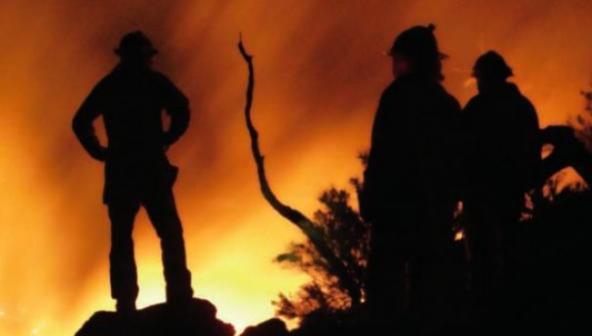
This is not normal. As we write, New South Wales and Queensland have declared a state of emergency. There are also fires in South Australia and Western Australia. For the first time catastrophic bushfire conditions have been declared for Greater Sydney. Climate change has worsened the catastrophic bushfire conditions. The nature of bushfires in Australia has changed.
Bushfire conditions are now more dangerous than in the past, and the risk to people and property has increased. For well over 20 years, scientists have warned that climate change would increase the risk of extreme bushfires in Australia. This warning was accurate. Scientists expect extreme fire weather will continue to become more frequent and severe without substantial and rapid action to reduce greenhouse gas emissions.

Key Findings

  1. The catastrophic, unprecedented fire conditions currently affecting NSW and Queensland have been aggravated by climate change. Bushfire risk was exacerbated by record breaking drought, very dry fuels and soils, and record breaking heat.
    Bushfire conditions are now more dangerous than in the past. The risks to people and property have increased and fire seasons have lengthened. It is becoming more dangerous to fight fires in Australia.
  2.  
    The fire season has lengthened so substantially that it has already reduced opportunities for fuel reduction burning. This means it is harder to prepare for worsening conditions.
  3.  
    The costs of fighting fires are increasing. Australia relies on resource sharing arrangements between countries and states and territories within Australia. As seasons overlap and fires become more destructive, governments will be increasingly constrained in their ability to share resources and the costs of tackling fires will increase.
  4.  
    The government must develop an urgent plan to (1) prepare Australian communities, health and emergency services for escalating fire danger; and (2) rapidly phase out the burning of coal oil and gas which is driving more dangerous fires.

Read the complete Climate Council article

Wednesday, 13 November 2019

How realistic a goal is decarbonizing the economy?: Medium


An analysis of the size of the US green economy shows that despite the subsidies to the oil and coal industry by the world’s most vocal denier of the climate emergency, sales and employment figures for the 24 economic subsectors that make up renewable energies, environmental protection and the provision of low-carbon goods and services, represent more than $1.3 trillion dollars in turnover, and is growing by around 20% annually, and employs some 9.5 million people, giving it a much greater economic impact than the entire fossil fuel industry.
Enrique Dans  

Oct 28 · 3 min read

Read the Medium article 

Related:

Just 20 Companies Are Responsible for 35% of All Greenhouse Gas Emissions: Medium

Tuesday, 12 November 2019

Thousands Of Scientists Declare A Climate Emergency

It's only Tuesday, but more than 11,000 scientists around the world have come together to declare a climate emergency. Their paper, published Tuesday in the journal Bioscience, lays out the science behind this emergency and solutions for how we can deal with it.

Scientists aren’t the first people to make this declaration. A tribal nation in the Canadian Yukon, the U.K., and parts of Australia have all come to the same grim conclusion. 

In the U.S., members of Congress have pushed the government to do the same, but y’know, they got Donald Trump. Ain’t shit happening with that fool in office. Anyway, this proclamation from scientists is significant because they’re not doing it out of a political agenda or as an emotional outcry. They’re declaring a climate emergency because the science supports it.

Read the article 

 Related:

Just 20 Companies Are Responsible for 35% of All Greenhouse Gas Emissions: Medium


#criminales climáticos de la cárcel

#criminalesclimáticosdelacárcel

#jailclimatecriminals

#gaolclimatecriminals

Monday, 11 November 2019

As New York Takes Exxon to Court, Big Oil’s Strategy Against Climate Lawsuits Is Slowly Unveiled: DESMOG


Last week, in a historic first, the former CEO of a major oil company took the witness stand in a New York City courtroom and spent four hours defending his company against charges that it misled investors about the potential impact of global warming on its viability as a business.   
Rex Tillerson, who led ExxonMobil from 2006 until the end of 2016 when he became U.S. secretary of state, was grilled by an attorney for the New York State attorney general for allegedly participating in a “longstanding fraudulent scheme” by Exxon to fool investors. More specifically, the company is charged with exaggerating the stringency of its financial safeguards in pricing risks from regulations restricting greenhouse gas emissions, according to the complaint filed last year in New York state court.   

— By Dan Zegart (12 min. read) —


Sunday, 10 November 2019

Just 20 Companies Are Responsible for 35% of All Greenhouse Gas Emissions: Medium

The Climate Accountability Institute recently released a new report into the role of the oil and gas industry in our climate crisis. The report looks at companies within this industry since 1965*, evaluating the fossil fuels which they are responsible for extracting from the earth and the emissions that these fossil fuels are responsible for.
The key finding of this report? That just twenty fossil fuel companies are responsible for 35% of the global total greenhouse gas emissions since 1965.

These companies are a mixture of investor-owned, private companies, and state-owned companies. Top of the list comes Saudi Aramco, a state-owned company in Saudi Arabia which is responsible for 4.38% of the global total emissions since 1965. In terms of private companies, Chevron, an American energy company active in 180 countries, is the worst offender, responsible for 3.2% of global total emissions since 1965. You probably recognise Exxon, BP, and Shell who are also up there in the list.


Related: 

Morrison’s claim of an Australian gold in per capita renewables is not true: RenewEconomy


Video: How the 1% will live After The End Of The World


#criminales climáticos de la cárcel

#criminalesclimáticosdelacárcel

#jailclimatecriminals

#gaolclimatecriminals

Thursday, 7 November 2019

Rising Seas Will Erase More Cities by 2050, New Research Shows: NYT

Rising seas could affect three times more people by 2050 than previously thought, according to new research, threatening to all but erase some of the world’s great coastal cities.

The authors of a paper published Tuesday developed a more accurate way of calculating land elevation based on satellite readings, a standard way of estimating the effects of sea level rise over large areas, and found that the previous numbers were far too optimistic. The new research shows that some 150 million people are now living on land that will be below the high-tide line by midcentury. 

Read the article