Showing posts with label wildfire. Show all posts

Wednesday, 17 June 2020

Australia had more supersized bushfires creating their own storms last summer than in previous 30 years : The Guardian

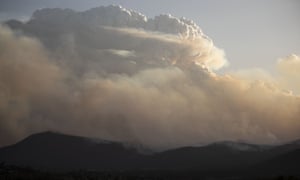
A pyrocumulonimbus cloud generated by the intense Orroral Valley bushfire south of Canberra, 31 January 2020
A pyrocumulonimbus (pyroCB) cloud generated by the Orroral Valley bushfire south of Canberra.
 During the 2019-20 summer there was a record number of these events. Photograph: Brook Mitchell/Getty Images


There was a near doubling of the record of pyrocumulonimbus (pyroCB) storms, royal commission hears

Huge thunderstorm-type clouds called pyrocumulonimbus form over fires in particularly hot, dry and dangerous conditions and are capable of generating their own winds and lightning.

They were once considered “bushfire oddities” but last summer there was a “near doubling of the record of these events, in one event,” Prof David Bowman told the royal commission on Tuesday.

Read The Guardian story


Saturday, 30 May 2020

'Some things were out of bounds': Fire chiefs 'gagged' on climate change warnings to government, inquiry told: SMH


climate change wildfire
LINK
Decorated former firefighter and climate action advocate Greg Mullins says current fire chiefs have been effectively gagged from raising the bushfire risks created by global warming with politicians.

Mr Mullins said he had "deep concerns over climate change", which was fuelling "unprecedented" bushfires in evidence to a Senate inquiry into the 2019-20 bushfire season on Wednesday.


Asked by Victorian Liberal senator James Paterson if he thought
Climate change key to cause of wildfires
"the current serving fire chiefs are gagged in some way", Mr Mullins replied: "yes".

Mr Mullins, a former Fire and Rescue NSW commissioner, said when he was in the role "some things were out of bounds and often climate change was one of those issues, even to the point of having to work around it when preparing documents, and I think that is a tragedy".


Greens senator Janet Rice asked Mr Mullins if it was "still the case" that fire chiefs were discouraged from raising the effect of climate change on bushfire risks with politicians.


"I know it's the case," Mr Mullins said. "I’ve had a number of discussions and it's clear."
Mr Mullins had a 39-year career in NSW Fire and Rescue, and was appointed commissioner in 2003. He retired in 2017.

Mr Mullins was representing the Emergency Leaders for Climate Action group, which comprises 33 former fire and emergency service leaders from around the country.

Mr Mullins said he was pressured not to speak out on climate change when he was a public servant.

"We self-censored because we knew what would be acceptable, and what would not, for certain political masters and if you went outside those bounds life could be made very unpleasant for you," he said.
The Emergency Leaders for Climate Action unsuccessfully sought meetings with Prime Minister Scott Morrison in April and again in May last year, ahead of the long 2019-20 summer bushfire season about the looming "catastrophic" fire season.

Significantly less property may be have been lost to the fires if the government had heeded their warnings, and moved to secure lease agreements for an expanded fleet of water bombing aircraft ahead of the most recent fire season, Mr Mullins said.

"These aircraft weren’t available and arrived too late," he said.

Read the complete SMH article

Friday, 29 May 2020

Ex-fire bosses say climate change must be key in bushfire royal commission: SBS

Australia's bushfires
wildfire
Australia's alliance of former emergency services chiefs has warned Prime Minister Scott Morrison that a bushfires royal commission will fail unless it focuses on climate change.

The Emergency Leaders for Climate Action group has written to Mr Morrison noting that it sees "little value" in a federal inquiry but concedes one will likely go ahead.

Former Fire and Rescue NSW Commissioner Greg Mullins says it is abundantly clear increased temperatures and extreme weather driven by climate change set the scene for NSW and Queensland's "worst fires" in history.

#jailclimatecriminals #climatechange  #globalwarming

Sunday, 22 March 2020

The Frontline: experts answer your questions on the impacts of the climate emergency – as it happened: Ther Guardian

To mark the end of The Frontline series a panel of experts answer your questions about the climate crisis and how it is affecting Australia.
Ask Prof Lesley Hughes, Greg Mullins, Prof Michael Mann and Assoc Prof Donna Green your questions, and see the answers on our live blog. Email frontline.live@theguardian.com or tweet #frontlinelive

Friday, 31 January 2020

Bushfire survivors join claim against ANZ for financing climate crisis : The Guardian

A pedestrian walks past ANZ bankThree survivors joined Friends of the Earth to accuse ANZ of misleading consumers by investing in fossil fuel projects

 
One survivor, Jack Egan, claims there is a clear link between ANZ’s support for fossil fuels and the exacerbated bushfires conditions. Photograph: Mick Tsikas/AAP 
 
Three bushfire survivors have joined environment group Friends of the Earth in a legal claim against ANZ, accusing it of financing the climate crisis by funding fossil fuel projects.

Read The Guardian article 

Related:

With 130-Mile Coast, New Jersey Marks a First in Climate Change Fight: NYT


Tuesday, 28 January 2020

Morrison now demands we 'adapt' to climate change catastrophes: IA

Independent Australia

"IT'S REMARKABLE that the least resilient, most non-adaptive Federal Government in living memory should now urge its citizens, in the face of horrific bushfires, to prove our resilience and adaptability by learning to put up with weather conditions that are hostile to human life.

It will, in Prime Minister Scott Morrison’s view, take resilience to learn to adapt to whatever horrors nature has in store for us as a consequence of anthropogenic climate change.


It’s difficult to argue against this. It will indeed take a resilience – previously unheard of within humanity – to withstand record-breaking temperatures, prolonged drought and catastrophic weather events such as the fires, floods and cyclones we’re certain to experience if more is not done globally and urgently to reduce emissions. The question is, why demand this resilience as the way forward, instead of committing to undertake mitigation and prevention?

Morrison’s latest tactic is a textbook example of behaviour typical of an abuser — also known as "gaslighting". In order to continue the pattern of abuse that brings gratification of one kind or another, the abuser must convince the abused that they have to adapt to the abusive conditions. In order to perform that adaptation, the abused must develop the resilience both to withstand the abuse, and to live an outwardly normal life. The abused party must not give any indication of the dysfunctional nature of their circumstances because the abuser must be allowed to maintain the illusion of normality for the eyes of the outside world. Resilience and adaptation are essential to achieve these goals, as many survivors of abuse will confirm."

Read the complete Independent Australia article 

Related:
Australia is going up in flames, and its government calls for resilience while planning for more coal mines." New York Times

Sunday, 29 December 2019

If I have no hope for the planet, why am I so determined to have this baby?

I wonder if my child will ever have the innocence I had two months ago, of not having to think about whether the air will kill you

Sitting, nauseous with morning sickness, on a park bench in the bright heat of an unusually hot spring day my partner and I watch children march past us, striking from school:
“What’s the point of an education if we have no future,” their signs say.

My heart relocates itself, sinking down somewhere around my ankles. They have 10 more years of habitable planet than the baby I am carrying.

In early summer of the same year, after a miscarriage, I find myself pregnant again in the week that megafires tear through the state. 

There are 70-metre flames producing their own weather systems, driving them further on across the countryside, through the bushland that relies on fire to stimulate new life, on to forests that have never before burnt.

Read he Guardian

Related: 

Climate change deniers’ new battle front attacked : The Guardian

Saturday, 14 December 2019

Air pollution is much more harmful than you know: Vox

"The Trump administration is making a bad problem worse. 

Air pollution — mostly fine particulates, but also ozone and nitrogen oxides — has risen in recent years, in part due to ongoing rollbacks of regulations relating to air pollution, leading to what a team of researchers at Carnegie Mellon estimate is nearly 10,000 extra deaths per year

Policymakers in the Trump administration seem determined to
ABC
continue down this course. On November 11, Lisa Friedman of the New York Times reported on a draft memo circulating among Environmental Protection Agency officials that, if enacted, would sharply limit the kinds of scientific studies the agency can use to consider the impact of air pollution. Yet there’s good reason to believe the EPA and other global public health agencies should be moving in the opposite direction and considering a wider range of studies about the harms of air pollution. 

That’s because in addition to its impacts to lung and cardiovascular functioning, it seems increasingly clear that pollution has a significant effect on cognitive function over both the short and long term. A spate of studies released in recent years indicate that people work less efficiently and make more mistakes on higher-pollution days, and that long-term exposure to air pollution “ages” the brain and increases the odds of dementia. 

These consequences are not nearly as dramatic as dying, of course. But they are spread across a huge swath of the population. And since cognitive function is linked to almost everything else in life, the implications are potentially enormous. 

Many current EPA documents don’t mention the impact of air pollution on brain functioning, and landmark Obama-era regulatory efforts like the Clean Power Plan don’t cite cognitive benefits as part of their cost-benefit analysis. But a growing body of research indicates that the harms of air pollution are more wide-ranging and systematic than we’ve realized.

The new research on pollution and cognition ......"

Read more. Original Vox article

#criminales climáticos de la cárcel   #criminalesclimáticosdelacárcel

#jailclimatecriminals  #gaolclimatecriminals

Related: Climate change forcing millions out of homes: report: 9 NEWS

Related: Sydney smoke three times worse this NSW bushfire season, but health effects from 'medium-term' exposure unclear

Saturday, 7 December 2019

Climate change forcing millions out of homes: report: 9 NEWS

"Climate-fuelled disasters have forced about 20 million people a year to leave their homes in the past decade, according to a new report from Oxfam.
This equates to one every two seconds - making the climate the biggest driver of internal displacement for the period, with the world's poorer countries at the highest risk, despite their smaller contributions to global carbon pollution compared to richer nations.
People are seven times more likely to be internally displaced by floods, cyclones and wildfires than volcanic eruptions and earthquakes, and three times more likely than by conflict, according to the report released today."

"Nobody has been prepared to talk about money and so that's one of the critical issues that will be on the table in Madrid," said Gore.
"Ultimately somebody is going to have to pay the price for these impacts and at the moment that price is being paid by the poorest communities in the world."
And while current data shows lower risk in developed nations, projections suggest that is set to change.
"Rich countries are not immune either from the threat of displacement," said Gore.
"Climate change is not going to discriminate."
Bob Ward, policy director at the Grantham Research Institute on Climate Change and the Environment, told CNN that increasing numbers of internally displaced people can be attributed in part to a growing population living in high-risk areas."
Related: 

Australia bushfires factcheck: are this year's fires unprecedented? : The Guardian

#criminales climáticos de la cárcel  #criminalesclimáticosdelacárcel

#jailclimatecriminals   #gaolclimatecriminals
 

Tuesday, 3 December 2019

Australia bushfires factcheck: are this year's fires unprecedented? : The Guardian

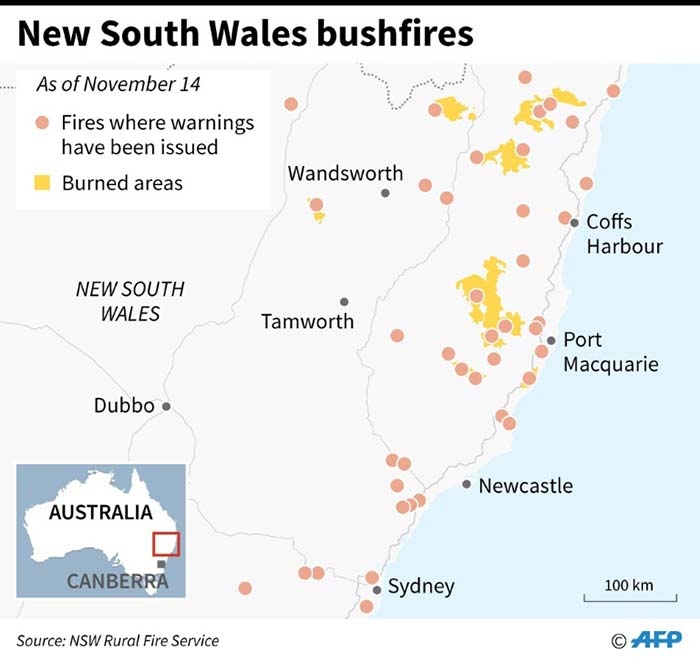
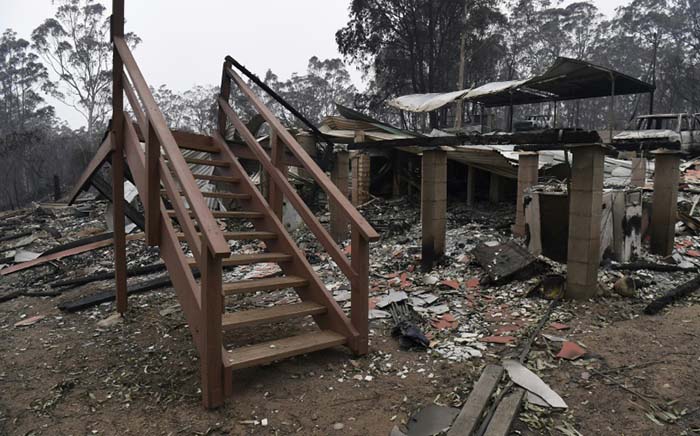
Australia has suffered a devastating early bushfire season with fires across several states burning through hundreds of thousands of hectares and destroying hundreds of properties with the loss of six lives.

New South Wales has been the most severely hit, with more than 1.65m hectares razed, an area significantly larger than suburban Sydney. All six deaths occurred in there and more than 600 homes were destroyed. At one point firefighters were battling a fire front about 6,000km long, equivalent to a return trip between Sydney and Perth.

In Queensland, 20 homes have been lost and about 180,000ha burned. In Victoria, where the bushfire season usually starts later, 100km/h winds fanned more than 60 blazes during an unprecedented heatwave on Thursday. The most extreme warning, a code red, was issued for the north-western and central regions. The state’s emergency services minister, Lisa Neville, compared it to “the worst conditions you’d see in February or March”.

Read The Guardian article 

See also

Scott Morrison and the big lie about climate change: does he think we're that stupid? : The Guardian

Sunday, 1 December 2019

Scott Morrison and the big lie about climate change: does he think we're that stupid? : The Guardian

"Of all the horrors that might befall the burnt-out, the flooded, the cyclone-ravaged and the drought-stricken Australian this summer, perhaps none could be viewed with more dread than turning from their devastated home to see advancing on them a bubble of media in which enwombed is our prime minister, Scott Morrison, arriving, as ever, too late with a cuddle.
It’s fair to say that Morrison has pulled off other roles with more conviction – the shouty Commandant of the Pacific camps perhaps his most heartfelt to date, the Gaslighter-in-Chief his most audacious, his Mini-Me to Donald Trump’s Dr Evil not without tragicomic charge – but sorrowful Father of the Nation has begun to feel a firebreak too far.
In Australia we are all now being treated as children, quietened Australians, most especially on the climate crisis. While the climate crisis has become Australians’ number one concern, both major parties play determinedly deaf and dumb on the issue while action and protest about the climate crisis is increasingly subject to prosecution and heavy sentencing."

Read the complete The Guardian article 

"All this theatre hides a deeply cynical calculation: that Australians will keep on buying the big lie, a lie given historic expression last Thursday morning when on national radio the prime minister declared that Australia’s unprecedented bushfires were unconnected to climate change."

Read the complete The Guardian article 

Sunday, 24 November 2019

Australia Bushfires Renew Anger Over Climate Change: The Youth Times

Unprecedented bushfires in eastern Australia have turbocharged demands the country's conservative government do more to tackle climate change, and have rekindled an ideological fight over the science behind the blazes.

The huge fires have touched communities up and down the east coast, killing four people and affecting millions of Australians threatening homes and blanketing major cities in hazardous smoke.

For many, the scale and intensity of the conflagrations, weeks before the Australian summer, have brought the dangers of climate change home.

"The whole east coast is on fire," said Julie Jones, who almost lost her house in the Blue Mountains. "I think it's climate change."

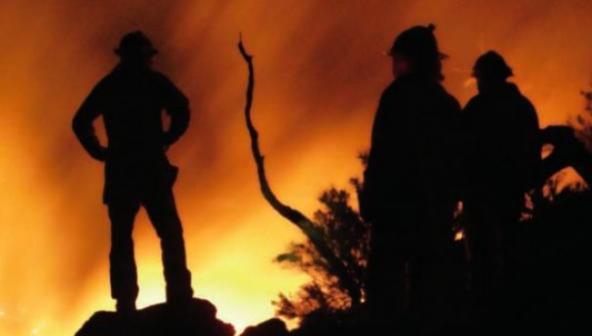
A group of ex-fire chiefs on Thursday warned climate change is "supercharging" the bushfire problem and they challenged Prime Minister Scott Morrison over his failure to confront the issue.

"I am fundamentally concerned about the impact and the damage coming from climate change," former fire chief Lee Johnson said.

"The word 'unprecedented' has been used a lot, but it's correct."

For days Morrison has refused to address the link between climate and bushfires, arguing the focus should be on victims despite being heckled about climate change while touring fire-ravaged areas.


Photo Credit : AFP / Laurence CHU

Morrison has made no secret of his support for the country's lucrative mining industry, which accounts for more than 70 percent of exports and was worth a record Aus$264 billion ($180 billion) in the last financial year.

He once carried a lump of coal onto the floor of the Australian parliament and recently proposed banning environmental boycotts of businesses.

His government insists Australia will meet its Paris climate agreement target of reducing emissions by 26-28 percent on 2005 levels by 2030.

But the approval of vast coal mines like the controversial Adani project which will ship most of its product overseas to be burned make global targets of keeping warming below 1.5 Celsius more difficult.

'Woke greenies'

Until now that has been good politics for the Liberal leader. His party unexpectedly won re-election in May, in part by framing the climate debate as a choice between jobs and higher energy costs in places like coal-rich Queensland.
Morrison's allies have also deployed the issue as a potent wedge issue to divide the electorate.

Photo Credit : AFP / Jonathan WALTER

When the Australian Greens attacked the government response to the bushfires this week, Deputy Prime Minister Michael McCormack went on the offensive.
"We don't need the ravings of some pure, enlightened and woke capital cities greenies at this time, when (people) are trying to save their homes," he said.

But the scale of the bushfire crisis has made it more difficult for Morrison to dismiss his political foes as out-of-touch lefty city slickers.

And after several exhausting days of spearheading crisis response, commissioner Shane Fitzsimmons said Wednesday the New South Wales Rural Fire Service acknowledged the new reality.

"We are mindful that the science is suggesting that fire seasons are starting earlier, and extending longer," he said.

Politicians who refuse to discuss climate change have been heckled as they tour areas destroyed by fire Photo Credit : AFP / WILLIAM WEST

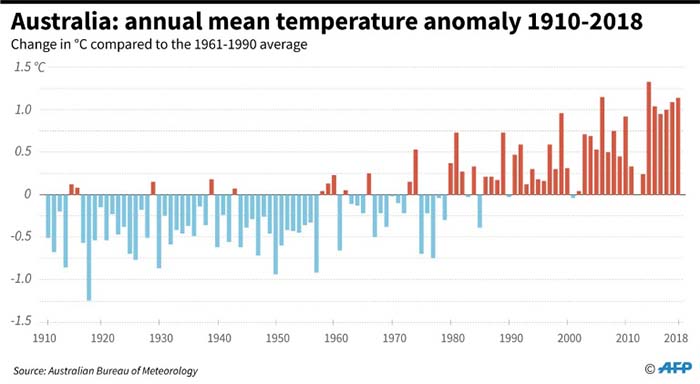
The government's own Bureau of Meteorology has acknowledged human-caused climate change is "influencing the frequency and severity of dangerous bushfire conditions".

Scientists say the link between climate change and bush fires is complex, but undeniable.

Wind movements around Antarctica and sea surface temperatures in the Indian Ocean can also help determine fire-friendly conditions in Australia.

But warming provides key ingredients for fires to thrive: high temperatures, low humidity, strong winds and drought.

"Bushfires are not directly attributable to climate change," said Janet Stanley of the University of Melbourne. "However, the fast-warming climate is making bushfires more frequent and intense."

"The mountain of irrefutable evidence linking global warming to bushfires makes the federal government's failure to act or even talk about the problem extremely hard to explain," she said.

Away from the political bickering, a growing number of Australians appear to agree.

A 2019 survey by think tank The Australia Institute found 81 percent of people are concerned climate change will cause more droughts and flooding, while 64 percent want the government to set a target of net-zero emissions by 2050.

Claire Pontin, a deputy mayor in badly-hit northern New South Wales, told the ABC it was "always" the right time to discuss climate change.

"It's not going to go away if we bury our heads in the sand."

From The Youth Times

Saturday, 16 November 2019

Africa is Burning Right Now More than the Amazon and Nobody Even Knows: YouTube


Aug 25, 2019
 
"Africa's Forest is Burning more than the Amazon But Nobody Cares. More Fires are Now Burning in Angola, DR Congo Than Amazon. Blazes burning in the Amazon have put the World on notice, but Brazil is actually 3rd in the world in wildfires over the last 48 hours, according to MODIS satellite data analyzed by Weather Source. Weather Source has recorded 6,902 fires in Angola over the past 48 hours, compared to 3,395 in the Democratic Republic of Congo and 2,127 in Brazil. But it seems nobody cares about the fires burning in Africa right now."

You can support 2nacheki on Patreon here https://www.patreon.com/2nacheki -~-~~-~~~-~~-~- 

Thanks for watching 2nacheki the biggest African channel on Youtube from #Africa . All our videos are aimed at Educating, Informing, Reporting, Reviewing, Criticizing & Ranking everything #African.

Friday, 15 November 2019

The facts about bushfires and climate change: Climate Council

The following excerpt is taken from a new Climate Council briefing paper titled This Is Not Normal, which finds the catastrophic bushfire conditions affecting NSW and Queensland have been aggravated by climate change. To read the briefing paper in full, click here.

This is not normal. As we write, New South Wales and Queensland have declared a state of emergency. There are also fires in South Australia and Western Australia. For the first time catastrophic bushfire conditions have been declared for Greater Sydney. Climate change has worsened the catastrophic bushfire conditions. The nature of bushfires in Australia has changed.
Bushfire conditions are now more dangerous than in the past, and the risk to people and property has increased. For well over 20 years, scientists have warned that climate change would increase the risk of extreme bushfires in Australia. This warning was accurate. Scientists expect extreme fire weather will continue to become more frequent and severe without substantial and rapid action to reduce greenhouse gas emissions.

Key Findings

  1. The catastrophic, unprecedented fire conditions currently affecting NSW and Queensland have been aggravated by climate change. Bushfire risk was exacerbated by record breaking drought, very dry fuels and soils, and record breaking heat.
    Bushfire conditions are now more dangerous than in the past. The risks to people and property have increased and fire seasons have lengthened. It is becoming more dangerous to fight fires in Australia.
  2.  
    The fire season has lengthened so substantially that it has already reduced opportunities for fuel reduction burning. This means it is harder to prepare for worsening conditions.
  3.  
    The costs of fighting fires are increasing. Australia relies on resource sharing arrangements between countries and states and territories within Australia. As seasons overlap and fires become more destructive, governments will be increasingly constrained in their ability to share resources and the costs of tackling fires will increase.
  4.  
    The government must develop an urgent plan to (1) prepare Australian communities, health and emergency services for escalating fire danger; and (2) rapidly phase out the burning of coal oil and gas which is driving more dangerous fires.

Read the complete Climate Council article

Monday, 14 October 2019

Hello From the Year 2050. We Avoided the Worst of Climate Change — But Everything Is Different: NYT

Let’s imagine for a moment that we’ve reached the middle of the century. It’s 2050, and we have a moment to reflect—the climate fight remains the consuming battle of our age, but its most intense phase may be in our rearview mirror. And so we can look back to see how we might have managed to dramatically change our society and economy. We had no other choice.
There was a point after 2020 when we began to collectively realize a few basic things.

One, we weren’t getting out of this unscathed. Climate change, even in its early stages, had begun to hurt: watching a California city literally called Paradise turn into hell inside of two hours made it clear that all Americans were at risk. When you breathe wildfire smoke half the summer in your Silicon Valley fortress, or struggle to find insurance for your Florida beach house, doubt creeps in even for those who imagined they were immune.

Two, there were actually some solutions. By 2020, renewable
energy was the cheapest way to generate electricity around the planet—in fact, the cheapest way there ever had been. The engineers had done their job, taking sun and wind from quirky backyard DIY projects to cutting-edge technology. Batteries had plummeted down the same cost curve as renewable energy, so the fact that the sun went down at night no longer mattered quite so much—you could store its rays to use later.

And the third realization? People began to understand that the biggest reason we weren’t making full, fast use of these new technologies was the political power of the fossil-fuel industry. 
Investigative journalists had exposed its three-decade campaign of denial and disinformation, and attorneys general and plaintiffs’ lawyers were beginning to pick them apart. And just in time.

Read the NYT article 

See also: 

Blame for Extinction Spreads to Methane Gas: NYT


#jailclimatecriminals  #suefossilcorpsdirectors

Wednesday, 2 October 2019

Satellite Data Record Shows Climate Change's Impact on Fires : NASA

"By Ellen Gray,
NASA's Earth Science News Team


Hot and dry. These are the watchwords for large fires. While every fire needs a spark to ignite and fuel to burn, the hot and dry conditions in the atmosphere determine the likelihood of a fire starting, its intensity and the speed at which it spreads. Over the past several decades, as the world has increasingly warmed, so has its potential to burn.

Since 1880, the world has warmed by 1.9 degrees Fahrenheit (1.09 degrees Celsius), with the five warmest years on record occurring in the last five years. Since the 1980s, the wildfire season has lengthened across a quarter of the world's vegetated surface, and in some places like California, fire has become nearly a year-round risk. The year 2018 was California's worst wildfire season on record, on the heels of a devasting 2017 fire season. In 2019, wildfires have already burned 2.5 million acres in Alaska in an extreme fire season driven by high temperatures, which have also led to massive fires in Siberia."

Near Ebor in NSW, Australia


Read the complete NASA article

It’s Time To Start Prosecuting Climate Criminals: Ecosystem Marketplace


#climatecriminals  #jailclimatecriminals  #jail the climate criminals  #climatecatastrophe


Friday, 13 September 2019

Former fire chiefs demand urgent action on 'escalating climate change threat': SBS

"Twenty-three of Australia’s most senior former emergency service bosses have come together in an unprecedented show of unity, calling on the Prime Minister to 'get on with the job' of reducing greenhouse gasses. 

Longer bushfire seasons, ‘dry’ lightning storms, increased flooding and higher rates of anxiety: this is Australia’s future without immediate action on climate change, some of Australia’s most senior former emergency service chiefs have warned.

In an unprecedented joint statement directed to the state and federal governments, 23 former emergency service bosses have come together on Wednesday to call for stronger action on climate change, which they believe is threatening lives in Australia.
The 23 signatories, representing every state and territory, have called on Prime Minister Scott Morrison to commit to a parliamentary inquiry into whether the emergency services are fit to defend Australia against the increasing risk of natural disasters."


Related: 

Time to rethink Australia's fire fighting resources.

Wednesday, 11 September 2019

Time to rethink Australia's fire fighting resources.


📷: Bindi Cox
Our wildfires are taking lives, destroying homes and infrastructure and stressing our rural communities. 

Our firefighters in Australia, both paid and volunteer, are out there risking injury and putting their lives on the line, or at the very least sacrificing their work. Employers, often small business employers, are supporting them. Are our firefighters sufficient in number?


"There are still 50 fires burning across New South Wales, with 21 fires uncontained. A total of 630 firefighters have been deployed across the state. A fire in Bees Nest, north-west of Dorrigo in the Armidale area, is currently over 66,500 hectares and out of control." September 10


What are we losing in these fires?

📷 Photo Credit: Darren, Jimboomba Police
 • Of course we are losing homes and infrastructure. Communities are being traumatised. We are now wondering whether drought stricken communities will have the required water to fight the inevitable fires that climate change is increasing. 

• We now have a new fire category, 'extreme'.

• We are also losing precious forests and biodiversity. This week the Gondwana World Heritage Area has been severely damaged.

"The Gondwana Rainforests of Australia, World Heritage Area, contains the most extensive areas of subtropical rainforest in the world, large areas of warm temperate rainforest, and the majority of the world's Antarctic beech cool temperature rainforest. These extraordinary areas still contain ancient and primitive plants and animals from which life on Earth evolved." NSW National Parks

The same fire began in the Guy Fawkes River National Park and by September10,  had burned 66,500 hectares and was 'out of control'.
 
"The park is a significant conservation site with amazing biodiversity. There are 24 threatened animal species you might encounter here, including the brush-tailed rock-wallabies that can often be seen in the park’s rocky areas." National Parks


There has been a world wide reaction to careless burning of the Amazon forests. Other countries are busily planting trees to protect soils and store carbon, yet Australia is busy clearing trees and fighting forest fires with limited resources. 


It is time to review our fire fighting resources.

We know some extra resources have been ordered or already purchased.

"New South Wales has signed a contract with United States-based Coulson Aviation to purchase three aircraft for firebombing duties, including a modified Boeing 737 large air tanker.

  
NSW buys Boeing 737 large air tanker for firefighting ...


https://australianaviation.com.au › 2019/05 › nsw-buys-boeing-737-large-..."

As we face an increasing number of fierce fires in an extended fire season, it is time to ask:

Are we allowing our rural communities to suffer unnecessarily?

Why are we allowing our world heritage forests with unique biodiversity to burn?

Do we have sufficient resources to fight fires and to extinguish them quickly?

Why are we still reliant on volunteers? Why are we putting volunteers at risk?

Do we have enough air support?

Is a budget surplus a priority over expanding our firefighting resources and better protecting our communities? 

Related:
What if we stopped pretending Climate Change could be prevented.

Thursday, 18 April 2019

Pentagon Warns of Dire Risk to Bases, Troops From Climate Change: Bloomberg

Wild Fire Risks from Climate Change
"The U.S. Defense Department has issued a dire report on how climate change could affect the nation’s armed forces and security, warning that rising seas could inundate coastal bases and drought-fueled wildfires could endanger those that are inland.

The 22-page assessment delivered to Congress on Thursday says about two-thirds of 79 mission-essential military installations in the U.S. that were reviewed are vulnerable now or in the future to flooding and more than half are at risk from drought. About half also are at risk from wildfires, including the threat of mudslides and erosion from rains after the blazes."


Read the full Bloomberg story
January 19, 2019