"WASHINGTON
- A coalition of grassroots groups, Black, Indigenous, and Brown
leaders from across the nation occupied the Democratic National
Committee Headquarters in Washington for 24 hours to demand that
President-Elect Biden and his administration follow through on a bold
agenda to address the climate crisis. They were joined at an afternoon
rally by members of Congress who are leading the effort in the House and
Senate to hold the incoming administration to its promises.
The occupation was led by youth, movement leaders, frontline
activists, and artists collectively representing a range of identities
and communities confronting the interlocking crises in front of us. For
24 hours, the group marched, created art, and called on Biden to live up
to his mandate to invest in Black, Indigenous, Brown, and working-class
communities.
As Jennifer K. Falcon of the Indigenous Environmental Network put it:
“We are beyond the tipping point with climate chaos. We must act
quickly to mitigate the climate chaos we are experiencing for the sky,
land and water. The people demand President-elect Biden move to a just
transition centered in Indigenous knowledge so that Mother Earth can
heal. We can't afford to continue to fight climate change with false
solutions and carbon mechanisms that allow big polluters to pollute.
It's time to divest from fossil fuels and invest in a regenerative
economy that allows us to thrive.” ..."
"Author Chris Goodall says tackling the climate crisis is neither difficult nor expensive and can help boost the economy
Illustration: Guardian Design
Net
zero. It’s a simple enough concept – the notion that we reduce carbon
emissions to a level where we are no longer adding to the stock in the
atmosphere. More and more companies and countries are taking the pledge, promising to hit net zero by 2050, 2030 or even sooner.
But it is easier said than done. Industrial processes remain carbon
intensive, as do agriculture and aviation. Even the sudden economic halt
brought about by the Covid-19 pandemic this year will result in a mere
downward blip in global greenhouse gas emissions.
The sharp decline in energy use at the beginning of the pandemic has
not persisted. Government stimulus programmes have done little to
prioritise green projects – barely 1% of the funds made available around
the world will target climate crisis mitigation. Hopes that the virus would push us into radical action to reduce emissions have proved illusory.
This may make us pessimistic about the future – but that would be a
mistake. The last six months have seen a growing realisation around the
world that fully decarbonising our societies is technically possible,
relatively cheap and potentially of major benefit to society, and
particularly to less prosperous sectors.
A sensible portfolio of actions could reduce emissions, provide jobs and
improve living standards in forgotten parts of the UK. It won’t be
completely painless, but this nine-step plan can transform much of the
British economy." ...
...................................
...."9. Carbon tax
Lastly, we should try to bring the reluctant oil and gas industries
onside by instituting a tax on the production of anything that results
in carbon emissions. Rarely in the past have businesses asked to be more
heavily taxed. But today almost all large fossil fuel companies are
pleading for a carbon levy that provides the necessary incentive for
them to wean themselves off extracting oil and gas.
Fighting
the causes and consequences of the climate emergency is neither
particularly difficult or expensive. The net impact on jobs and living
standards will be strongly positive. The programme will require
direction from central government, and probably an effective carbon tax,
alongside a willingness to hand over some powers to local authorities.
Perhaps this is the most contentious part of the programme I propose:
the idea that Whitehall should recognise both that the free market
needs some assistance when it comes to the climate crisis, and that
devolution of real power to towns and cities could be beneficial to
everybody."
• Chris Goodall is an author and environmentalist whose latest book, What We Need To Do Now, assesses
the steps needed to build a low-carbon world and was shortlisted for
the Wainwright Prize. He writes a weekly newsletter on low carbon
progress around the world, available at www.carboncommentary.com.
"Australia is host to a stranded asset. That is, something once
valuable that is now worthless as events have moved on.
We call it
Canberra. Specifically, Parliament House. Even more specifically, the
federal energy and climate debate.
The rest of the country has
moved on. The Coalition government and the Labor opposition are both
policy anachronisms stuck in a cul de sac of dead arguments.
"The Minister for Energy and the Environment in the Liberal government of NSW, Matt Kean, has a message for Canberra:
'The
community has moved on, the market has moved on, capital
Carbon tariffs will soon impact on trade.
has moved on,"
he tells me. "The only people standing in the way are those defending
vested interests, the beneficiaries of the fossil fuel industry. Those
MPs are defending Blockbuster in a Netflix world.' "
"As Kean's comments demonstrate, Australia's state governments are moving on, too. Including Liberal ones. Consider
four of the developments in the real world – the digital world of
Kean's metaphor, as opposed to the vintage-model videotape – in
Australia in just the past four days.
Our Renewable Future
On
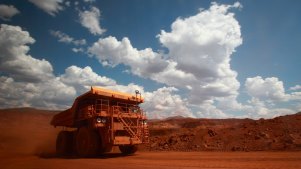
Tuesday, the world's biggest mining company, BHP Billiton, announced
its plans to sell off all its thermal coal mines, the type of coal
burned to make electricity, within two years. It's also selling down
some of its other carbon-intensive assets and has committed to net-zero
carbon emissions from its operations by 2050. Executive pay is now
linked to meeting the firm's emissions targets.
Climate Criminals
"On Thursday, the National Farmers
Federation announced its members had voted to adopt an economy-wide
policy of net-zero carbon emissions by 2050. The peak farm industry body
has long been one of the most politically conservative lobbies in the
land. "There is a huge potential for Australia to be a global leader in
low-emissions agriculture," said the NFF president, Fiona Simson. Some
farm sectors are well ahead in cutting their own emissions – the red
meat industry has committed to net zero by 2030.
On
Friday, the big Australian insurance firm Suncorp announced it would no
longer invest in, finance or insure any new oil and gas ventures.
That's on top of its policy banning dealings with new thermal coal. It
has pledged to phase out all its thermal coal exposures within five
years.
Climate Criminals
Also
on Friday, it was reported that Australia's biggest electricity
generator, AGL, had lodged planning documents disclosing its first
concrete steps towards shutting its coal-fired Liddell power station in
2022. The big Liddell generators in NSW's Hunter Valley are almost 50
years old. The plant is past its useful life. AGL, Australia's No. 1
emitter, has committed itself to net-zero emissions by 2050. It, too,
will link executive pay to meeting its emissions target."
Almost 90% of Americans are avoiding climate change activism.
Recent research
shows that at least 40% of Americans are concerned or even alarmed
about global warming, But only 13% say they have called their elected
officials or joined an activist group. One question on many minds is,
despite saying they are alarmed and concerned, why aren’t the other 87%
of Americans demanding policy changes that would curb greenhouse gases?
Photo by Glenn Fay
Apathy
It
is easy to attribute climate activism avoidance to apathy. By
definition, apathy is indifference, lack of interest, concern, or
enthusiasm. That would seem to explain it. Yet the same survey,
done by YPCC shows that 29% say they are indeed concerned about global
warming. If they are concerned then that would mean that they shouldn’t
be apathetic. Maybe they are concerned and they behave as if they are
apathetic because something else is going on.
Per Espen Stoknes, in his book, What We Think About When we try not to Think About Global Warming,
says that a lot of people are depressed about climate destabilization
and environmental damage. Apathy can be one symptom of depression and
maybe people are concerned and alarmed but depressed about it and
therefore act apathetic.
The Bystander Effect
Another
well-known phenomenon in psychology describes the diffusion of
responsibility that occurs with large groups of people, called “the bystander effect”.
The theory goes, when something bad happens, the larger the number of
people that are present, the less likely an individual is to take action
in an emergency.
In
the bystander effect scenario, we could be bystanders to the slow
heating of the earth’s atmosphere and systematic climate
destabilization, but most of us assume someone else will surely take
care of it. After all, the Chinese are still building coal-burning power
plants. And if we do take action many of us believe we have little
power to have an impact. The logic goes, others who do have more
responsibility than us will surely take action. In this way, the
majority of concerned and alarmed Americans stand by and assume someone
else will take action.
Carbon Addiction
There
is a third and more nefarious reason that concerned and alarmed
Americans might not be taking action. And this reason is not something
very many people are talking about. And the reason is that admitting it
might reflect poorly on our morals. This third possible reason is that
we are “carbon-addicts” and we are afraid that taking action might result in changing our lifestyles and identities.
How
can we possibly become climate activists when we know, deep down
inside, that it will threaten our supersized American consumption and
the affluence of our resource-rich lifestyles? Will it threaten our
personal attractiveness, our commodity culture, driving SUVs, flying
around the world regularly, enjoying our carnivorous eating habits,
shopping sprees, plentiful water, and unlimited energy that we have
worked so hard to enjoy ? Especially when our egos and identities are
built on those markers of our success?
In
short — we can’t. So we create plausible deniability. It’s much easier
to ignore it, to be skeptical, to not have time, and to find excuses
instead of taking action. Climate activist avoidance is driven by all
three of these reasons. But that’s not all.
Dynamic Conservatism
Did you ever notice how slow big institutions and corporations are to change? In the 1970’s MIT professor Donald Schon coined the term “dynamic conservatism”
to describe how organizations inherently fight to avoid change. Dynamic
conservatism in our government and society is reinforced by a
marketplace that saturates our habitual lifestyles with our
preoccupation with cars, consumption, meat-based diets, development, and
all of the things that lead to more carbon in the atmosphere.
Photo by Glenn Fay
When
political contributions and subsidies are added to the equation, the
deck is stacked in favor of continued fossil fuel production and
pollution. Schon suggested that learning, reflection, and perceptual
change is needed to overcome dynamic conservatism. But the U.S. shows no
signs of becoming a learning-oriented society now or any time in the
future.
Sustained Leadership
Even
if the vast majority of Americans became alarmed about climate change
and realized they are like the frog in a beaker of water slowly heating
up on a hot plate, our government leaders are heavily influenced by
fossil fuel companies and big money.
According to Forbes, we spend more on fossil fuel subsidies ($5.2 trillion a year) than we do on education. We don’t have the “sustained leadership” to make courageous changes in energy policy.
Sure,
there are bright spots with some Green New Deal advocates and states
taking the lead on renewables, local food production, planting trees,
saving energy, and other fronts. We have students holding climate strikes and threatening to vote green in a few years.
But
even if the next presidential administration and all of the countries
around the world were to immediately take action on decarbonization, it
would only be temporary until the next pro-fossil fuel oriented leaders
come into power and reverse those changes. We are kidding ourselves to
think that the green sea change is stable and consistent enough to
actually result in a sustained period of enormous policy changes that
would lead to significant decarbonization.
So
no matter how encouraging the pockets of increasing climate awareness
look, the reality is that our leaders and most of us will continue to be
addicted to the idea of free or relatively cheap carbon-dumping in the
atmosphere, regardless of the planetary consequences.
Should
we give up on climate action? Absolutely not. Even though serious
climate change mitigation may be impossible, anything we can do to
decarbonize and avoid a runaway greenhouse effect depicted by the most
hellish IPCC scenarios is a step in the right direction.
We
can turn around apathy by promoting the opportunity for a prosperous
green economy, our improved health, plentiful food, water, and military
security. We can model civic responsibility, coach and cajole people to
upend the bystander effect in order to inspire bystanders to pitch in.
We can strive for and promote a learning society and attempt to elect
leaders who will fight to reduce carbon in the air.
But
it’s a much harder, maybe impossible sell to convince someone living in
relative affluence and slack, who has a mindset rooted in hard work,
prosperity, and entitled consumption that they need to actively fight
the institutions that made their lifestyle possible, rather than enjoy
what they think they so richly deserve.

 As Jennifer K. Falcon of the Indigenous Environmental Network put it:
“We are beyond the tipping point with climate chaos. We must act
quickly to mitigate the climate chaos we are experiencing for the sky,
land and water. The people demand President-elect Biden move to a just
transition centered in Indigenous knowledge so that Mother Earth can
heal. We can't afford to continue to fight climate change with false
solutions and carbon mechanisms that allow big polluters to pollute.
It's time to divest from fossil fuels and invest in a regenerative
economy that allows us to thrive.” ..."
As Jennifer K. Falcon of the Indigenous Environmental Network put it:
“We are beyond the tipping point with climate chaos. We must act
quickly to mitigate the climate chaos we are experiencing for the sky,
land and water. The people demand President-elect Biden move to a just
transition centered in Indigenous knowledge so that Mother Earth can
heal. We can't afford to continue to fight climate change with false
solutions and carbon mechanisms that allow big polluters to pollute.
It's time to divest from fossil fuels and invest in a regenerative
economy that allows us to thrive.” ..."