Showing posts with label #corporations. Show all posts

Friday, 28 August 2020

The Unraveling of America (excerpt): Rolling Stone

*Photos added by this blog.

most Americans live on a high wire, with no safety net
Elizabeth Warren: Storm is Coming
 "Anthropologist Wade Davis on how COVID-19 signals the end of the American era"

"Never in our lives have we experienced such a global phenomenon. For the first time in the history of the world, all of humanity, informed by the unprecedented reach of digital technology, has come together, focused on the same existential threat, consumed by the same fears and uncertainties, eagerly anticipating the same, as yet unrealized, promises of medical science."

"At the root of this transformation and decline lies an ever-widening chasm between Americans who have and those who have little or nothing. Economic disparities exist in all nations, creating a tension that can be as disruptive as the inequities are unjust. In any number of settings, however, the negative forces tearing apart a society are mitigated or even muted if there are other elements that reinforce social solidarity — religious faith, the strength and comfort of family, the pride of tradition, fidelity to the land, a spirit of place.

But when all the old certainties are shown to be lies, when the promise of a good life for a working
most Americans live on a high wire, with no safety net
"...as a buffoon of a president.."
family is shattered as factories close and corporate leaders, growing wealthier by the day, ship jobs abroad, the social contract is irrevocably broken. For two generations, America has celebrated globalization with iconic intensity, when, as any working man or woman can see, it’s nothing more than capital on the prowl in search of ever cheaper sources of labor.

For many years, those on the conservative right in the United States have invoked a nostalgia for the 1950s, and an America that never was, but has to be presumed to have existed to rationalize their sense of loss and abandonment, their fear of change, their bitter resentments and lingering contempt for the social movements of the 1960s, a time of new aspirations for women, gays, and people of color. In truth, at least in economic terms, the country of the 1950s resembled Denmark as much as the America of today. Marginal tax rates for the wealthy were 90 percent. The salaries of CEOs were, on average, just 20 times that of their mid-management employees."


Sunday, 23 August 2020

Sinking billions of taxpayer dollars into gas would make Australia an international pariah (excerpt) : The Guardian


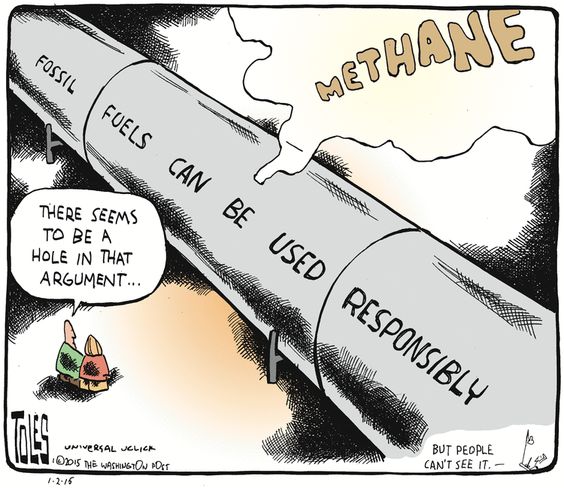
billions into gas would mean Australia having to say officially it was abandoning its Paris targets
"The world price for gas continues to dive."

"If environmentalists proposed a comparable
 guarantee to windfarms or industrial-scale
 solar or hydrogen they would be hounded
 for blatant rent seeking."
The Morrison government’s post-Covid recovery commission has called for an astonishing level of support for a declining carbon fuel.

"Gas in our own national electricity market has declined by 29% since 2014 and renewables sprung up by 70%, according to data from OpenNEM. The official market operator believes by 2040 the role of gas is going to be smaller. The gas glut on the world market will last the decade.

A decision by Canberra to rescue a declining carbon fuel by sinking billions into gas would mean Australia having to say officially it was abandoning its Paris targets. Given that our 2019-20 fire season is the most recent image the world has of us, this would brand us an international pariah.


Liveris admitted he “tingled with pride” being recruited as an adviser by the US president, Donald Trump. But a Biden-Harris presidency will elevate climate diplomacy and have little regard for an Australia turning its back on climate action as flamboyantly as Brazil’s president Jay Bolsonaro who allows fires to denude the Amazon."
Bob Carr

Read the complete (Aug 21) The Guardian story 

Related: There is an answer to post Covid-19 economic chaos.

#climatecriminals, #methanegas, #climate crisis, #jailclimatecriminals, #corporations, #criminalesclimáticosdelacárcel, #climateaction, Paris Targets, 


The Green Recovery: how Australia can close the recycling loop: The Guardian - Video


Remember when you would take your TV to get repaired if it was broken? 

Now, most people just buy a new one. 

When a new phone comes out, we ditch the old one. Each time we do this we're eating into a finite supply of resources and creating mountains of waste. 

A circular economy – also known as closing the loop – is when used items don't end up in landfill, but instead become the building blocks for new products. 

There's a whole industry waiting to be developed in Australia, if governments would get on board. 

This man turns discarded coffee cups into roads.

Related: There is an answer to post Covid-19 economic chaos.

Saturday, 22 August 2020

Draining the nation's energy: how Canberra lags industry on green power (excerpt): SMH


BHP has benefited as prices for iron ore passed $US110 a tonne.

BHP seeks buyers for coal mines, oil fields in portfolio shake-up


"Australia is host to a stranded asset. That is, something once valuable that is now worthless as events have moved on.


We call it Canberra. Specifically, Parliament House. Even more specifically, the federal energy and climate debate.


The rest of the country has moved on. The Coalition government and the Labor opposition are both policy anachronisms stuck in a cul de sac of dead arguments.

"The Minister for Energy and the Environment in the Liberal government of NSW, Matt Kean, has a message for Canberra:

'The community has moved on, the market has moved on, capital
Australia's state governments are moving on, too
Carbon tariffs will soon impact on trade.
has moved on," he tells me. "The only people standing in the way are those defending vested interests, the beneficiaries of the fossil fuel industry. Those MPs are defending Blockbuster in a Netflix world.' "


"As Kean's comments demonstrate, Australia's state governments are moving on, too. Including Liberal ones. Consider four of the developments in the real world – the digital world of Kean's metaphor, as opposed to the vintage-model videotape – in Australia in just the past four days.


Australia's state governments are moving on, too
Our Renewable Future
On Tuesday, the world's biggest mining company, BHP Billiton, announced its plans to sell off all its thermal coal mines, the type of coal burned to make electricity, within two years. It's also selling down some of its other carbon-intensive assets and has committed to net-zero carbon emissions from its operations by 2050. Executive pay is now linked to meeting the firm's emissions targets.

Australia's state governments are moving on, too
Climate Criminals
"On Thursday, the National Farmers Federation announced its members had voted to adopt an economy-wide policy of net-zero carbon emissions by 2050. The peak farm industry body has long been one of the most politically conservative lobbies in the land. "There is a huge potential for Australia to be a global leader in low-emissions agriculture," said the NFF president, Fiona Simson. Some farm sectors are well ahead in cutting their own emissions – the red meat industry has committed to net zero by 2030.

On Friday, the big Australian insurance firm Suncorp announced it would no longer invest in, finance or insure any new oil and gas ventures. That's on top of its policy banning dealings with new thermal coal. It has pledged to phase out all its thermal coal exposures within five years.
Australia's state governments are moving on, too
Climate Criminals
Also on Friday, it was reported that Australia's biggest electricity generator, AGL, had lodged planning documents disclosing its first concrete steps towards shutting its coal-fired Liddell power station in 2022. The big Liddell generators in NSW's Hunter Valley are almost 50 years old. The plant is past its useful life. AGL, Australia's No. 1 emitter, has committed itself to net-zero emissions by 2050. It, too, will link executive pay to meeting its emissions target."

Read the original August 21, 2020, SMH article 

Related: Revealed: how the gas industry is waging war against climate action (excerpt) : The Guardian

#climatechange, carbon addiction, #carbonstorage, #climatecriminals, #corporations, #farming, #economy, #fossilfuelcompanies, #trade-tariffs-on carbon-offenders


Saturday, 15 August 2020

Why COVID deniers and climate skeptics paint scientists as alarmist (excerpt): Grist


people trying to obstruct action deny the severity of the predicament
Climate Change Denial Tactics
In an interview with Fox News last month, President Donald Trump called Anthony Fauci, the country’s top infectious disease expert, an “alarmist,” using a pejorative straight from the playbook of those who deny the science behind climate change. Fauci rejected the characterization, describing himself as a “realist.”

For anyone paying attention to arguments about climate change over recent decades, Trump’s comment sounded awfully familiar: Scientists are alarmists, everything’s a hoax, and hysteria abounds.

 Michael Mann, a climatologist at Penn State University, wrote an op-ed for Newsweek this week drawing parallels between his experience and Fauci’s during COVID-19. Science deniers have lobbied attacks on the two public figures, he explained, sending death threats, calling them names, and questioning their expertise.
So what do terms like alarmist and hysteria really mean, where did they come from, and how can people respond to such accusations?"

"The strategies used to dismiss the threats of climate change and coronavirus follow a similar pattern, and they’re employed by many of the same people. It starts with denying the problem exists, as Naomi Oreskes, a professor of history at Harvard who studies disinformation, has explained. Then, people trying to obstruct action deny the severity of the predicament, say it’s too hard or too expensive to fix, and complain that their freedom is under threat. Denying the science requires dismissing what scientists are saying, and the easiest way to do that is by questioning their motives, impartiality, and rationality.

“If we don’t trust scientists or medical experts because we see them as alarmist or hysterical or as contributing overreaction, then we don’t trust the info they’re giving us,” said Emma Frances Bloomfield, an assistant professor of communication at the University of Nevada, Las Vegas."

Read the complete Grist article by Kate Yoder

See also:

'Two global health emergencies': doctors group backs green stimulus: The Age


climate deniers, Trump, COVID-19, #cambio-climatico, #climatecrisis, #climatecriminals, #corporations, #criminales-climáticos-de-la-cárcel, #


'Two global health emergencies': doctors group backs green stimulus: The Age

Air pollution kills  #jailclimatecriminals
Air Pollution from wildfires
"Peak medical groups representing about 75 per cent of Australia’s 90,000 doctors have written to the prime minister to ask him to make a response to climate change central to the government’s post-coronavirus economic stimulus plans.

The groups, which include bodies such as the Australian Medical Association and the College of Intensive Care Medicine of Australia and New Zealand, have called on the government to redirect funds from fossil fuel subsidies in stimulus efforts to renewable energy projects and infrastructure to promote walking, cycling and public transport.

The letter comes after a similar appeal sent on Monday by finance and industry heavyweights, including the big four banks and major corporations, also urging the government to make “sustainable investments” in areas such as health, education, clean energy and urban infrastructure as it helps rebuild the economy."


 #wildfire, #climateaction, #cambio-climatico, #climatecriminals, #climaterefugees, #economy, #corporations, #extinction, #climateemergency, 

Wednesday, 12 August 2020

The Harsh Economics of Climate Change: Economics Explained


Global warming is something that threatens to impact us all: both environmentally (with the loss of natural marvels such as the great barrier reef) and economically. But humans aren't actually contributing as significantly as you may think to global warming. In fact, the vast majority of the world's population lives a relatively low-carbon emission lifestyle compared to "the developed world". 

Yet, ironically, the world's poorest citizens are the ones most likely to be impacted by the potential byproducts of a warmer planet. In this video, let's explore the economic impacts of climate change – both in terms of its potential consequences and the feasibility of available solutions

Related: Fossil Fuel Workers Deserve Better: Video