Showing posts with label #farming. Show all posts

Saturday, 22 August 2020

Draining the nation's energy: how Canberra lags industry on green power (excerpt): SMH


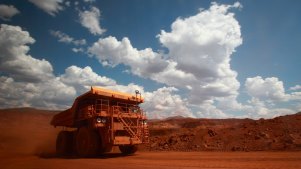
BHP has benefited as prices for iron ore passed $US110 a tonne.

BHP seeks buyers for coal mines, oil fields in portfolio shake-up


"Australia is host to a stranded asset. That is, something once valuable that is now worthless as events have moved on.


We call it Canberra. Specifically, Parliament House. Even more specifically, the federal energy and climate debate.


The rest of the country has moved on. The Coalition government and the Labor opposition are both policy anachronisms stuck in a cul de sac of dead arguments.

"The Minister for Energy and the Environment in the Liberal government of NSW, Matt Kean, has a message for Canberra:

'The community has moved on, the market has moved on, capital
Australia's state governments are moving on, too
Carbon tariffs will soon impact on trade.
has moved on," he tells me. "The only people standing in the way are those defending vested interests, the beneficiaries of the fossil fuel industry. Those MPs are defending Blockbuster in a Netflix world.' "


"As Kean's comments demonstrate, Australia's state governments are moving on, too. Including Liberal ones. Consider four of the developments in the real world – the digital world of Kean's metaphor, as opposed to the vintage-model videotape – in Australia in just the past four days.


Australia's state governments are moving on, too
Our Renewable Future
On Tuesday, the world's biggest mining company, BHP Billiton, announced its plans to sell off all its thermal coal mines, the type of coal burned to make electricity, within two years. It's also selling down some of its other carbon-intensive assets and has committed to net-zero carbon emissions from its operations by 2050. Executive pay is now linked to meeting the firm's emissions targets.

Australia's state governments are moving on, too
Climate Criminals
"On Thursday, the National Farmers Federation announced its members had voted to adopt an economy-wide policy of net-zero carbon emissions by 2050. The peak farm industry body has long been one of the most politically conservative lobbies in the land. "There is a huge potential for Australia to be a global leader in low-emissions agriculture," said the NFF president, Fiona Simson. Some farm sectors are well ahead in cutting their own emissions – the red meat industry has committed to net zero by 2030.

On Friday, the big Australian insurance firm Suncorp announced it would no longer invest in, finance or insure any new oil and gas ventures. That's on top of its policy banning dealings with new thermal coal. It has pledged to phase out all its thermal coal exposures within five years.
Australia's state governments are moving on, too
Climate Criminals
Also on Friday, it was reported that Australia's biggest electricity generator, AGL, had lodged planning documents disclosing its first concrete steps towards shutting its coal-fired Liddell power station in 2022. The big Liddell generators in NSW's Hunter Valley are almost 50 years old. The plant is past its useful life. AGL, Australia's No. 1 emitter, has committed itself to net-zero emissions by 2050. It, too, will link executive pay to meeting its emissions target."

Read the original August 21, 2020, SMH article 

Related: Revealed: how the gas industry is waging war against climate action (excerpt) : The Guardian

#climatechange, carbon addiction, #carbonstorage, #climatecriminals, #corporations, #farming, #economy, #fossilfuelcompanies, #trade-tariffs-on carbon-offenders


Wednesday, 12 August 2020

The Harsh Economics of Climate Change: Economics Explained


Global warming is something that threatens to impact us all: both environmentally (with the loss of natural marvels such as the great barrier reef) and economically. But humans aren't actually contributing as significantly as you may think to global warming. In fact, the vast majority of the world's population lives a relatively low-carbon emission lifestyle compared to "the developed world". 

Yet, ironically, the world's poorest citizens are the ones most likely to be impacted by the potential byproducts of a warmer planet. In this video, let's explore the economic impacts of climate change – both in terms of its potential consequences and the feasibility of available solutions

Related: Fossil Fuel Workers Deserve Better: Video


Saturday, 25 July 2020

9 Ways to assist Australia's farmers with climate change

"Global warming affects agriculture in a number of ways, including through changes in average temperatures, rainfall, and climate extremes (e.g., heat waves); changes in pests and diseases; changes in atmospheric carbon dioxide and ground-level ozone concentrations; changes in the nutritional quality of some foods; and ..."

Climate change and agriculture - Wikipedia


.....................................


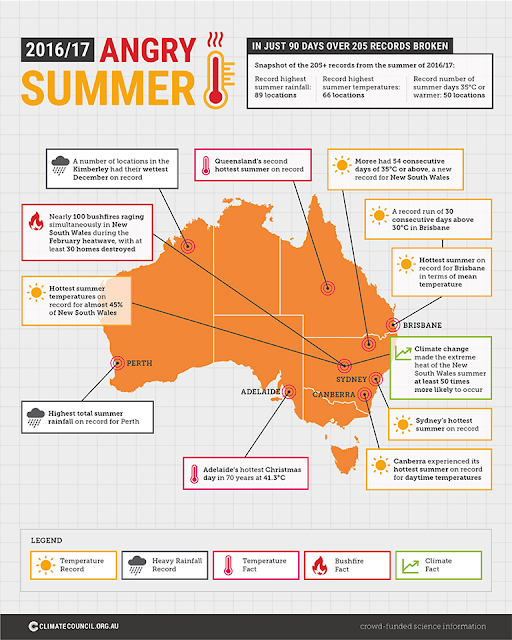
Climaste Council meme
Angry Summer by The Climate Council


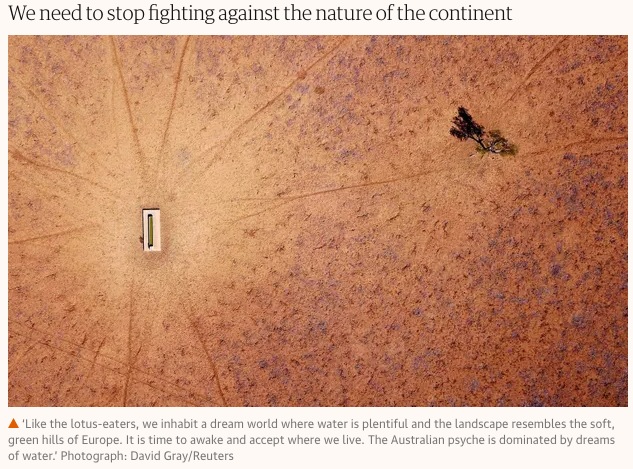
It is obvious that many farmers are going to be displaced because of climate change. As their usual crops become unviable and broad scale farming becomes uneconomical because of costs, it is impossible to continue to subsidise farmers that continue to farm or to graze unsuitable animals in an unsustainable fashion. Yet farmers need government support and Australia requires food production.

#jailclimatecriminals, #farmingpractices, #climatecrisis
Australia must learn to manage with less surface water. Artesian water resources must be husbanded.

Suggested Actions

1. “What we still don’t have in the year 2019 is a national (Australian) strategy on climate change in agriculture. There’s still no actual framework to help farmers manage these risks and implement solutions,” she said. Verity Morgan-Schmidt, the chief executive of Farmers for Climate Action

2. Revitalise, with extra funding, our agricultural support services that have provided excellent research and development in the past, new crops and animal husbandry practices can be developed.

3. Provide education for farmers that demonstrate alternative farming practices, for example move from cattle to goats.

4. Only subsidise farmers that change their practice to accommodate a changing climate and protect our soils but retrain farmers unable to accommodate change.

5. Encourage small farming practices such as permaculture, greenhouse production, urban farms.

Note: Intensive farming practices have been shown to be as productive as industrial broad scale farming.

6.  Stop selling water off or subsidising in any way corporations that persist in growing water hungry crops such as cotton and almonds in water scarce areas.

7.  Protect our surface and artesian water from destructive and unsustainable industries.

8.  Support farmers to plan moves from floodplains or cope with more flooding. 


#jailclimatecriminals, #cambioclimatico
Droughts will occur more often. Soils will erode. Desertification will occur.


9.  Encourage farmers to 'get a yield' with new products.

" 'Agritourism, insect farming off waste resources, bush tucker foods — there are options out there, but it's not traditional agriculture in that sense.'

" 'We need support structures, new ideas, people helping us transition to these other production industries. ' "

She (Anika) believes the first step needs to come from the energy sector to buy more time for other industries to develop response strategies.

'The easiest way to put the brakes on what we are experiencing is to transition away from dirty fossil fuel energy to clean, renewable energy; that then takes the pressure off other industries.' "


An article by Preparations for Climate Change

See also:  Preparing for a Climate Change Health Crisis