Showing posts with label economic impact. Show all posts

Monday, 28 February 2022

Will predicted sea rise inundation and flooding affect property values in Coffs Harbour NSW?

#inundation  #sea rise  #searise  #climatecrisis  #climatechange  #ice  #melting ice
Coffs Harbour 7m rise. Click to enlarge.
As many homes in Coffs Harbour  are flooded because of an intense rain depression we need also to examine the affect of sea rise. 
 
We also must stop building in flood affected areas. Councils must stop approving development in flood affected areas. It is ridiculous to see new buildings flooded to their roofs. Insurance companies may pay for a while but not without future higher payment rates. In the end every taxpayer pays.
 
• We are looking more and more unlikely to prevent severe global heating.

• Scientists are predicting the melting of the ice covering Greenland with a subsequent sea level rise of 7m.

• This rise does not factor in sea rise from the melting of Antarctica and other ice.

• Already many properties are likely to flood when a high tide is combined with high local rainfall. What were a hundred year rainfall events are now ten year events.

• The frequency of high rainfall events will increase with global heating and more and more severe hurricanes are predicted because of warmer seas.

• Low coastal areas will be subjected to severe storm surges.

• Would you buy a property likely to be inundated in twenty years, fifty years, a hundred years? Many wouldn't. Even the perception of possible inundation will greatly affect property values.

• When certain properties are in less demand their value falls.

• Would you buy a property with a value likely to fall?

•  The view of Coffs Harbour above shows areas likely to be inundated by a 7m sea level rise.

• Property above a 10m rise will become highly sought after and will greatly rise in value.

Learn more about how sea rise inundation will affect Australian property.

Click here to go to Coastal Risk Australia site

'Retreat' Is Not An Option As A California Beach Town Plans For Rising Seas: NPR 


#inundation  #sea rise  #searise  #climatecrisis  #climatechange  #ice  #melting ice 

Monday, 14 December 2020

Is Climate-Related Financial Regulation Coming Under Biden? Wall Street Is Betting on It (excerpt): Inside Climate News

 "The president-elect has said he would require publicly traded companies to disclose emissions and financial risks associated with global warming.

The White House may not be preparing to transition to a Biden administration, but Wall Street is.

While President Trump and other Republican leaders continue to dispute the election results, the financial sector is moving ahead with plans to begin the transition to a carbon-free economy and acknowledge a new administration that’s eager to tackle the climate crisis.

Investors are increasingly putting their money into funds geared toward either excluding the fossil fuel industry entirely, or underweighting high-carbon companies in their mix. 

A growing number of major banks and other money managers have committed to net-zero emissions by 2050 and have pledged to disclose


exactly how their finances contribute to climate change, as well as which of their assets are at risk from its impacts. And last week, the U.S. Federal Reserve said for the first time that failing to address climate change would put the nation’s finances at risk and its economy at a global disadvantage.

For years, analysts have been saying that the global economy is shifting away from fossil fuels and toward renewable energy, with or without the United States. Clean energy saw an expansion this year despite a global drop in energy demand because of the pandemic, the International Energy Agency said last week, and renewables are likely to expand nearly 50 percent by 2025.

Now, as President-elect Joe Biden prepares to take office in January, global finance leaders are again calling on the United States to provide some kind of federal guidance for companies in regard to climate change, especially as other parts of the world begin taking major regulatory action.

Last week, the United Kingdom announced that within five years, all major companies and financial institutions doing business in the country would be required to measure and disclose their climate risks and greenhouse gas emissions—a move met with wide support from the financial industry."

 Link to complete Inside Climate News story by Kristoffer Tigue

Big batteries are getting bigger and smarter, and doing things fossil fuels can’t do (excerpt): RenewEconomy


Wednesday, 2 December 2020

Beating Back the Tides (excerpt) : NASA

High-tide floodwaters in downtown Annapolis on April 4, 2017. Credit: City of Annapolis
 "It was a sight you don’t normally see: a jellyfish lying dead in the middle of a parking lot partly submerged in water. But this was no ordinary parking lot. This particular section of asphalt in downtown Annapolis, Maryland, is among a growing number of areas prone to frequent flooding in the seaside town. The jellyfish had slipped in from the Chesapeake Bay through an opening in the seawall.

“You can literally kayak from the bay right into this parking lot,” said NOAA oceanographer William Sweet on the September day that we visited. The tide was relatively low that day.

On days with the highest tides of the year, whole parking lots and streets in Annapolis are underwater, causing delays and traffic congestion. Compromise Street, a major road into town, is often forced to shut down, slowing response times for firefighters and other first responders. Local businesses have lost as much as $172,000 a year, or 1.4% of their annual revenue, due to high-tide floods, according to a study published in 2019 in the journal Science Advances.

High-tide floods, also known as nuisance floods, sunny-day floods, and recurrent tidal floods, occur “when tides reach anywhere from 1.75 to 2 feet above the daily average high tide and start spilling onto streets or bubbling up from storm drains,” according to an annual report on the subject by the National Oceanic and Atmospheric Administration (NOAA.) These floods are usually not related to storms; they typically occur during high tides, and they impact people’s lives. Because of rising seas driven by climate change, the frequency of this kind of flood has dramatically increased in recent years.".... By Jenny Marder,
NASA's Goddard Space Flight Center

Go to complete NASA article

Sunday, 18 October 2020

Vigorous action needed, and soon, on climate change (excerpt): Yale Climate Connections


"Our essays in this series have presented compelling scientific evidence about the warming of the planet, reviewed the evidence that human activity is its principal cause, and discussed the resulting economic and environmental damages.

Now comes the question of what we are going to do about it. The options are clear:

– Nations can work toward eliminating greenhouse gas emissions and reducing the scale of future warming.
– Governments and private actors can, and will, invest in measures to protect home and livelihood from effects of changes that cannot be prevented.
– Or human societies and natural ecosystems will suffer the severe harms of inaction.

The more they (really we) do now and in the near future, the smaller will be the residual damages imposed on ourselves, our children, and our grandchildren. The choice is ours.

The suffering is already here, of course. In some places, it is almost impossible to bear despite growing investments in adaptation. So what is missing? A commitment to emissions reductions appropriate to the special nature of the climate change threat. Fortunately, with a smart choice of policy measures, the emissions control challenge can still be met at a tolerable economic cost."

Go to complete Yale Climate Connections article 


Related: A nine-point plan for the UK to achieve net zero carbon emissions (excerpts): Guardian


economic impact, ecology, ecocide, greenhouse gas pollution, #globalheating, extreme heat, children,

Friday, 9 October 2020

A nine-point plan for the UK to achieve net zero carbon emissions (excerpts): Guardian

"Author Chris Goodall says tackling the climate crisis is neither difficult nor expensive and can help boost the economy

9point
Illustration: Guardian Design

Net zero. It’s a simple enough concept – the notion that we reduce carbon emissions to a level where we are no longer adding to the stock in the atmosphere. More and more companies and countries are taking the pledge, promising to hit net zero by 2050, 2030 or even sooner.

But it is easier said than done. Industrial processes remain carbon intensive, as do agriculture and aviation. Even the sudden economic halt brought about by the Covid-19 pandemic this year will result in a mere downward blip in global greenhouse gas emissions.

The sharp decline in energy use at the beginning of the pandemic has not persisted. Government stimulus programmes have done little to prioritise green projects – barely 1% of the funds made available around the world will target climate crisis mitigation. Hopes that the virus would push us into radical action to reduce emissions have proved illusory.

This may make us pessimistic about the future – but that would be a

mistake. The last six months have seen a growing realisation around the world that fully decarbonising our societies is technically possible, relatively cheap and potentially of major benefit to society, and particularly to less prosperous sectors.

A sensible portfolio of actions could reduce emissions, provide jobs and improve living standards in forgotten parts of the UK. It won’t be completely painless, but this nine-step plan can transform much of the British economy." ...

...................................

...."9. Carbon tax

Lastly, we should try to bring the reluctant oil and gas industries onside by instituting a tax on the production of anything that results in carbon emissions. Rarely in the past have businesses asked to be more heavily taxed. But today almost all large fossil fuel companies are pleading for a carbon levy that provides the necessary incentive for them to wean themselves off extracting oil and gas.

Fighting the causes and consequences of the climate emergency is neither particularly difficult or expensive. The net impact on jobs and living standards will be strongly positive. The programme will require direction from central government, and probably an effective carbon tax, alongside a willingness to hand over some powers to local authorities.

Perhaps this is the most contentious part of the programme I propose: the idea that Whitehall should recognise both that the free market needs some assistance when it comes to the climate crisis, and that devolution of real power to towns and cities could be beneficial to everybody."

Chris Goodall is an author and environmentalist whose latest book, What We Need To Do Now, assesses the steps needed to build a low-carbon world and was shortlisted for the Wainwright Prize. He writes a weekly newsletter on low carbon progress around the world, available at www.carboncommentary.com.

Go to complete Guardian article 

Related: Exxon Touts Carbon Capture as a Climate Fix, but Uses It to Maximize Profit and Keep Oil Flowing (excerpts): Inside Climate News

Saturday, 5 September 2020

A bit rich: business groups want urgent climate action, after resisting it for 30 years (excerpt): The Conversation

There is no systemic government response (federal, state and local) to build resilience to climate risks.
Renewable Energy
"Australia has seen the latest extraordinary twist in its climate soap opera. An alliance of business and environment groups declared the nation is “woefully unprepared” for climate change and urgent action is needed. 

And yesterday, Australian Industry Group – one of the alliance members – called on the federal government to spend at least A$3.3 billion on renewable energy over the next decade. 


Read more: The too hard basket: a short history of Australia's aborted climate policies


There is no systemic government response (federal, state and local) to build resilience to climate risks.
Bushfire readiness
The alliance, known as the Australian Climate Roundtable, formed   in 2015. It comprises ten business and environmental bodies, including the Business Council of Australia, National Farmers

Federation and the Australian Council of Trade Unions (ACTU).
Last week, the group stated

There is no systemic government response (federal, state and local) to build resilience to climate risks. Action is piecemeal; uncoordinated; does not engage business, private sector investment, unions, workers in affected industries, community sector and communities; and does not match the scale of the threat climate change represents to the Australian economy, environment and society.
There is no systemic government response (federal, state and local) to build resilience to climate risks.
Drought
This is ironic, since many of the statement’s signatories spent decades fiercely resisting moves towards sane climate policy. Let’s look back at a few pivotal moments."

Read the complete The Conversation article 


There is no systemic government response (federal, state and local) to build resilience to climate risks.
Youth want

 Related:  Will predicted sea rise inundation affect property values in Newcastle, NSW?
#climateaction, #climatecrisis, #bushfires, economic impact, government response, #jailclimatecriminals

Saturday, 29 August 2020

2020 is a Warning That Our Civilization is Beginning to Fall Apart (excerpt): Medium

(Pics from this blog)

we want climate action now
  "Some Ages Have World Wars. Others Have Moonshots. Our Great Challenge is Preventing the Collapse of Civilization.


....................................................

Sunday, 23 August 2020

Brazil slashes budget to fight climate change as deforestation spikes: Reuters


Brazil has seen a sharp spike in deforestation
Climate change driving Brazil's drought; Climate Change News.com
BRASILIA 

"Efforts to keep the Amazon rainforest standing and reduce Brazil’s planet-warming emissions are being hampered by budget cuts for the country’s environmental watchdog and its main climate change programme, researchers have said. 

Brazil has seen a sharp spike in deforestation under the right-wing government of President Jair Bolsonaro, with less than half the forest inspectors it had a decade ago and the COVID-19 pandemic spreading rapidly across the Amazon region. 

Compared with 2019, the first five months of 2020 registered a
Brazil has seen a sharp spike in deforestation
Amazon deforestration: Climate Change News com
substantial drop in government spending on forest inspection activities carried out by the Brazilian Institute of Environment and Renewable Natural Resources (Ibama). 

For January to May 2019, the amount allocated was R$17.4 million ($3.24 million), against R$5.3 million so far in 2020, according to figures provided by the Institute of Socioeconomic Studies (INESC), a non-profit organisation that has analysed Brazil’s public budget for more than 30 years. 

Climate change is an economic issue (excerpt from Labor would have to be politically insane to follow Fitzgibbon's fossil fuel folly ): The Guardian

"Climate change is an economic issue, not a matter of religious observance, or inner city high fashion. All the ridiculous language of “belief” and “scepticism” – as if climate science was astrology, or a cult, or a wellness guru – has been entirely unhelpful to progress. 

Labor is fully capable of putting workers at the centre of a plan for economic transformation which will see carbon-intensive industries scale back and other more sustainable industries prosper in a low carbon world. 

That’s how Bob Hawke would have framed climate and energy policy in the 2020s, and Hawke presided over one of the most successful Labor governments in the party’s history."


 Related: There is an answer to post Covid-19 economic chaos.

#Australia, Labor Party, economic impact, jobs, #jailclimatecriminals, 

Thursday, 23 July 2020

Australian Government sued by 23-year-old Melbourne student over financial risks of climate change: ABC NEWS

A young woman standing in a garden. She has long blonde hair wears a black top and a silver necklace.
Katta O'Donnell, 23, is suing the Government over the risks
 to her investments through climate change. 
(Supplied: Molly Townsend)
A 23-year-old Melbourne law student is suing the Australian Government for failing to disclose the risk climate change poses to Australians' super and other safe investments.

Katta O'Donnell, the head litigant for the class action suit, said she hoped the case would change the way Australia handled climate change. 

"I'm suing the Government because I'm 23 [and] I think I need to be aware of the risks to my money and to the whole of society and the Australian economy," Ms O'Donnell said.

"I think the Government needs to stop keeping us in the dark so we can be aware of the risks that we're all faced with."

Experts say it is the first where a national government has been sued for its lack of transparency on climate risks. 

Government bonds are considered the safest form of investment, with most Australians invested in them through compulsory superannuation.

Bonds are similar to shares, but instead of investing in companies, the investor lends a government money to build infrastructure and fund critical services such as health, welfare and national security.

Ms O'Donnell, who has invested in bonds independently from her super, said she did it to "protect her future".

However bonds, like shares, can lose value if they become less attractive to the market. This can occur if investors question a government's ability to repay them due to rising government debt, ethical or reputational reasons.

Ms O'Donnell said watching the impact of bushfires in Australia made her worry about the value of her bonds.

Despite the Government not disclosing climate-related risks to its investment products, government regulators are increasingly forcing companies to disclose how climate change will impact their shareholders.

APRA — the Australian financial industry regulator — said in 2017 that climate change was not only a "foreseeable" risk, but also "material and actionable now".

APRA is working with corporate regulator ASIC and the Reserve Bank of Australia to ensure public companies are examining climate risk, disclosing it to investors, and acting on it.

Ms O'Donnell's lawyer, David Barnden from Equity Generation Lawyers, said the duty to be transparent extended to the Government.

"We allege that the Government is misleading and deceiving investors by not telling them about the risks," Mr Barnden said.


Dry, cracked ground on a farm.
Experts say the drought and the threat of bushfires
 in Australia exposes the Government
 to more financial risk compared to other countries. 
(ABC News: Jordan Hayne)
Read the complete ABC NEWS story  By national science, technology and environment reporter Michael Slezak and the Specialist Reporting Team's Rahni Sadler 


Tuesday, 21 July 2020

Video: Why politicians have failed to tackle climate change | The Economist


Global warming is the defining threat facing the planet. So why has so little been done to curb it? 
 
Read more here: https://econ.st/3gevRJu 
 
Click here to subscribe to The Economist on YouTube: https://econ.st/2xvTKdy 
 
 
#jailclimatecriminals  #China  #KyotoAgreement  #fossilfuels  #climateaction  #cambio-climatico
 

Friday, 24 April 2020

The Covid-19 crisis creates a chance to reset economies on a sustainable footing : The Guardian

New Zealand climate minister says governments must not just return to the way things were, and instead plot a new course to ease climate change

James Shaw, New Zealand’s climate change minister, has asked the country’s independent climate change commission to check whether its emissions targets under the Paris agreement are enough to limit global heating to 1.5C. He explains why he’s prioritising the issue during a strict national lockdown to stop the spread of Covid-19, which could send New Zealand’s unemployment rate soaring.

To say that we find ourselves in an unprecedented moment is so obvious and has been so often repeated it’s almost become white noise. What is less obvious, however, is where we go from here.

In any significant crisis, let alone one as catastrophic as the Covid-19 pandemic, it is an entirely understandable human reflex to want things to “return to normal”, to “go back to the way they were before”.

And, when faced with economic headwinds – in recent decades, the Asian financial crisis, the global financial crisis and, in our own case, the Christchurch earthquakes) successive governments the world over have directed their efforts to meeting public expectation and getting back to business as usual.

Unfortunately, one of the features of business as usual was a highly polluting and ecologically unsustainable economy on a pathway that was locking in catastrophic climate change.

Successive responses to economic crises have seen climate change and the natural environment we depend on for life on Earth as a nice-to-have, something to think about once we’ve got the economy back on track and there’s a bit more money to go round.

Read the complete The Guardian article

Wednesday, 15 April 2020

The Guardian view on the climate and coronavirus: global warnings

Steep falls in emissions have been the pandemic’s immediate effect. But what’s needed is a green recovery

So far, discussions of a coronavirus exit strategy have mainly focused on the steps that could bring an end to the lockdown. In the short term, both in the UK and elsewhere, there is nothing more desirable than letting people resume their lives, once it is safe to do so.

But the speed of the “return to normal” is not the only thing that matters. The manner in which the world’s leaders manage the colossal economic and political shocks caused by the virus is also of the utmost importance. And at the top of their list of priorities, alongside human welfare, must be the biosphere and its future.

Saturday, 28 March 2020

Cure for coronavirus-hit economy could be in renewables: Garnaut: Brisbane Times

"As Australia scrambles to avoid its first recession in three decades, economist Ross Garnaut says it is "exactly the right time" for government to throw cash into renewable energy infrastructure.

The global outbreak of COVID-19 has already taken a bite out of tourism, education and export industries, with the federal government working on a stimulus package to stave off a recession.
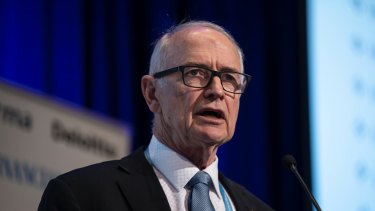
Professor Ross Garnaut says government should be investing in renewable energy.
Professor Ross Garnaut says government should be investing in renewable energy. Credit:Louie Douvis

Professor Garnaut said the country could not avoid sliding into a recession, but governments could "shape the way we come out of it".

"Even if there was no disruption in Australia from the virus, what has already happened to the economies of our major trading partners is deeply damaging to the Australian economy," he said, speaking at a CEDA lunch in Brisbane on Wednesday.
"The pure economics say right now is exactly the right time for major investment in the industries and infrastructure of the future."

"The high cost of transporting renewable energy overseas made Australia the perfect candidate to process its own iron, aluminium and other raw minerals, he said.

"Play it right and Australia has exceptional opportunities for new areas of prosperity and economic expansion in the zero-emissions world economy," he said."


Read the original Brisbane Times article