Showing posts with label #economy. Show all posts

Monday, 14 December 2020

Is Climate-Related Financial Regulation Coming Under Biden? Wall Street Is Betting on It (excerpt): Inside Climate News

 "The president-elect has said he would require publicly traded companies to disclose emissions and financial risks associated with global warming.

The White House may not be preparing to transition to a Biden administration, but Wall Street is.

While President Trump and other Republican leaders continue to dispute the election results, the financial sector is moving ahead with plans to begin the transition to a carbon-free economy and acknowledge a new administration that’s eager to tackle the climate crisis.

Investors are increasingly putting their money into funds geared toward either excluding the fossil fuel industry entirely, or underweighting high-carbon companies in their mix. 

A growing number of major banks and other money managers have committed to net-zero emissions by 2050 and have pledged to disclose


exactly how their finances contribute to climate change, as well as which of their assets are at risk from its impacts. And last week, the U.S. Federal Reserve said for the first time that failing to address climate change would put the nation’s finances at risk and its economy at a global disadvantage.

For years, analysts have been saying that the global economy is shifting away from fossil fuels and toward renewable energy, with or without the United States. Clean energy saw an expansion this year despite a global drop in energy demand because of the pandemic, the International Energy Agency said last week, and renewables are likely to expand nearly 50 percent by 2025.

Now, as President-elect Joe Biden prepares to take office in January, global finance leaders are again calling on the United States to provide some kind of federal guidance for companies in regard to climate change, especially as other parts of the world begin taking major regulatory action.

Last week, the United Kingdom announced that within five years, all major companies and financial institutions doing business in the country would be required to measure and disclose their climate risks and greenhouse gas emissions—a move met with wide support from the financial industry."

 Link to complete Inside Climate News story by Kristoffer Tigue

Big batteries are getting bigger and smarter, and doing things fossil fuels can’t do (excerpt): RenewEconomy


Saturday, 5 December 2020

Green growth vs degrowth: are we missing the point? (excerpt): Open Democracy

Gerd Altmann from Pixabay. Public domain.
"It’s time to stop talking past each other and unite against the real enemies of environmental justice.

By Beth Stratford. Originally published at openDemocracy
4 December 2020 

The row about ecological limits to growth is back with a vengeance. On one side are those who are deeply sceptical about the idea of ‘infinite growth on a finite planet’. They argue that to be sure of offering a good life for all within planetary boundaries, we need to kick our addiction to consumption growth (in wealthy countries at least). These ‘green growth sceptics’ include those advocating for ‘degrowth’, ‘prosperity without growth’, ‘steady state economics’, ‘doughnut economics’ and ‘wellbeing economics’.

In the opposite corner are ‘green growth’ advocates who believe that the historical relationship between GDP and environmental impact can be not just weakened but effectively severed. For green growthers, the key to maintaining a habitable planet is decoupling — reducing the environmental impact associated with each pound or dollar of GDP. By deploying new technologies, and shifting the nature of our consumption, they argue we can do our bit for the environment while continuing to grow our economies, even in wealthy countries.

Green growth sceptics do not dispute the need for decoupling, but observe that the faster we grow the faster we have to decouple. Even a modest goal like 2% growth per year implies doubling the scale of consumption every 35 years. Unfortunately, we have never approached the rates of decoupling that would be necessary for rich countries to get back within their fair share of ecological space while maintaining that kind of exponential growth.

Green growth advocates tend to respond that the historical record shouldn’t be taken as a guide to what is possible in future. Pessimism about future technological breakthroughs will be self-fulfilling, they say.

For some this is a compelling and entertaining debate. But it is not going to be settled in a timeframe that is useful for maintaining a habitable planet. In the meantime, these adversaries are in danger of delivering a major own goal. Because the more time we spend in nerdy (and sometimes venomous) exchanges about decoupling, the less time we have to build the broad-based movement we need to take on the vested interests who benefit from the status quo."

See complete article in openDemocracy

 Related: Photo & Video: Climate Justice Activists Conclude 24-Hour Occupation at Dnc, Demand President-Elect Biden Be Brave (excerpt): Common Dreams


degrowth, #economy, growth economy, green growth, 


Saturday, 19 September 2020

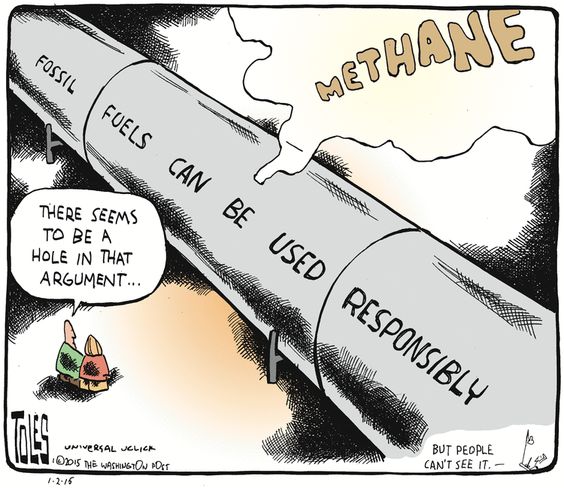
More natural gas isn’t a “middle ground” — it’s a climate disaster (excerpt): Vox

To tackle climate change, natural gas has got to go.

 
Methane gas energy has to go. Leave gas in the ground.

"Methane leakage may make natural gas as bad as coal, but it’s not the reason gas has no future

The paper leads with a quick note on methane leakage in natural gas production. Methane is a fast-acting greenhouse gas with enormous short-term impacts on climate. It leaks at every stage of the natural gas production and transportation process.

While gas itself is less carbon-intensive than coal, if enough methane leaks during its production, its greenhouse gas advantages are wiped out.

Gas wells destroy farmland.
Does that much methane leak? Some studies have suggested that, yes, methane leakage is bad enough to make natural gas the greenhouse equivalent of coal. Other studies have suggested that gas still has an advantage (and proponents note that leakage could be reduced).

For our purposes here, it doesn’t matter. None of the five arguments against natural gas rely on any particular estimate of leakage. All of them would apply even if natural gas achieved zero leakage (which is impossible). The same is true regarding the local environmental impacts of natural gas production (air pollution, habitat loss, earthquakes) — they are dreadful, but even if they were eliminated, the following arguments would still apply.


1) Gas breaks the carbon budget

Honestly, this one is enough to rule out gas on its own. .......... "

Read the complete Vox article by

  Revealed: how the gas industry is waging war against climate action (excerpt) : The Guardian


Fact check on PM Morrison's gas plan.


 #methanegas,methane gas,greenhouse gas pollution,carbon dioxide,#economy,#stranded assets,#renewables,#jailclimatecriminals,


Wednesday, 9 September 2020

COVID-19 can be an historic turning point in tackling the global climate crisis: UK Committee on Climate Change

(Pics from this blog)  

 If only the current Australian government would take advice like this. This is from the United Kingdom's Committee on Climate Change to the U.K. government in 2020.

1. Low-carbon retrofits and buildings that are fit for the future.
Climate Action Now
 "Ministers must seize the opportunity to turn the COVID-19 crisis into a defining moment in the fight against climate change, the Committee on Climate Change (CCC) says today.
 

In its annual report to Parliament, the Committee provides comprehensive new advice to the Government on delivering an economic recovery that accelerates the transition to a cleaner, net-zero emissions economy and strengthens the country’s resilience to the impacts of climate change.

1. Low-carbon retrofits and buildings that are fit for the future.
Cities might become unbearable.
Important steps have been taken in the last year, but much remains to be done. For the first time the Committee sets out its recommendations government department by government department. These are the urgent steps that must be taken in the months ahead to initiate a green, resilient COVID-19 recovery. 

They can be delivered through strong coordination across Whitehall. Doing so will propel the UK towards more rapid climate progress and position the country as an international climate leader ahead of the pivotal COP26 climate summit in Glasgow next year.

CCC Chairman, Lord Deben, said: “The UK is facing its biggest economic shock for a generation. Meanwhile, the global crisis of climate change is accelerating. We have a once-in-a-lifetime opportunity to address these urgent challenges together; it’s there for the taking. The steps that the UK takes to rebuild from the COVID-19 pandemic can accelerate the transition to a successful and low-carbon economy and improve our climate resilience. 

Choices that lock in emissions or climate risks are unacceptable.”


1. Low-carbon retrofits and buildings that are fit for the future.
Climate Change is a fact
Chair of the CCC’s Adaptation Committee, Baroness Brown of Cambridge, said: “COVID-19 has shown that planning for systemic risks is unavoidable. We have warned repeatedly that the UK is poorly prepared for the very serious impacts of climate change, including flooding, overheating and water shortages. Now is the moment to get our house in order, coordinate national planning, and prepare for the inevitable changes ahead. The UK’s domestic ambition can be the basis for strong international climate leadership, but the delivery of effective new policies must accelerate dramatically if we’re to seize this chance.”

The Committee’s new analysis expands on its May 2020 advice to the Prime Minister in which it set out the principles for building a resilient recovery. In its new report, the Committee has assessed a wide set of measures and gathered the latest evidence on the role of climate policies in the economic recovery. Its report highlights five clear investment priorities in the months ahead:

1. Low-carbon retrofits and buildings that are fit for the future.

1. Low-carbon retrofits and buildings that are fit for the future.
Hydrogen energy still requires research and development
There are vital new employment and reskilling opportunities across the country if Governments support a national plan to renovate buildings and construct new housing to the highest standards of energy and water efficiency, to begin the shift to low-carbon heating systems, and to protect against overheating. Roll-out of ‘green passports’ for buildings and local area energy plans can begin immediately. 

2. Tree planting, peatland restoration, and green infrastructure. Investing in nature, including in our towns and cities, offers another quick route to opportunities for highly-skilled employment, and outcomes that improve people’s lives. By making substantial changes in our use of land, which are needed to meet the UK’s Net Zero target, we will bring significant benefits for the climate, biodiversity, air quality, and flood prevention.

1. Low-carbon retrofits and buildings that are fit for the future.
Land ice is melting
3. Energy networks must be strengthened for the net-zero energy transformation in order to support electrification of transport and heating. Government has the regulatory tools to bring forward private sector investment. New hydrogen and carbon capture and storage (CCS) infrastructure will provide a route to establishing new low-carbon British industries. Fast-tracked electric vehicle charging points will hasten the move towards a full phase out of petrol and diesel cars and vans by 2032 or earlier.

4. Infrastructure to make it easy for people to walk, cycle, and work remotely. Dedicated safe spaces for walking and cycling, more bike parking and support for shared bikes and e-scooters can help the nation get back to work in a more sustainable way. For home working to be truly a widespread option, resilient digital technology (5G and fibre broadband) will be needed.

5. Moving towards a circular economy. Within the next five years, we can not only increase reuse & recycling rates rapidly but stop sending biodegradable wastes to landfill. Local authorities need support to invest strategically in separated waste collections and recycling infrastructure and to create new regional jobs.

There are also opportunities to support the transition and the recovery by investing in the UK’s workforce, and in lower-carbon behaviours and innovation:


1. Reskilling and retraining programmes. The net-zero economy will require a net-zero workforce, able to install smart low-carbon heating systems and to make homes comfortable; to design, manufacture and use low-carbon products and materials; and to put carbon back, rather than taking carbon out, from under the North Sea. Now is the time to build that workforce and to equip UK workers with vital skills for the future.

1. Low-carbon retrofits and buildings that are fit for the future.
Our children want answers.
2. Leading a move towards positive behaviours. There is a window for Government to reinforce the ‘climate-positive’ behaviours that have emerged during the lockdown, including increased remote working, cycling and walking. The public sector must lead by example by encouraging remote working. It also needs to innovate in order that customer service can be provided effectively remotely.

3. Targeted science and innovation funding. Kick-starting research and innovation now in low-carbon and adaptation technologies will facilitate the changes needed in the decades ahead and build UK competitive advantage. The COVID-19 crisis has highlighted the importance of research if we are to understand fully the threats and learn how to manage them.

1. Low-carbon retrofits and buildings that are fit for the future.
Cities must retreat from the coast.
Achieving the UK’s climate goals and rebuilding the economy fit naturally together. Each makes the other possible. Success demands that we do both. The actions recommended by the CCC will deliver an improved economy, better public health, improved biodiversity and access to nature, cleaner air, more comfortable homes and highly productive and rewarding employment."

Related:   Climate change: How the UK contributes to global deforestation (excerpt): BBC


#economy, #heatwaves, Britain, cities, COVID-19, energy, England, floods, infrastructure damage, reskilling, science, tidal flooding, United Kingdom

Friday, 4 September 2020

Carbon tariffs: an instrument for tackling climate change?: AXA

Carbon Tariffs: Another Name for Green Protectionism?

A Carbon Tariff model that might be acceptable to developing countries

Carbon tariffs are a tax on carbon-intensive imports, which recently triggered heated international debates. Certain industrialized countries have been advocating the adoption of carbon tariffs on products imported from developing countries, such as China. 

According to Marco Springmann, a physicist turned economist, the main reason is that certain rich nations have implemented binding targets to reduce greenhouse gas emissions, while poorer countries have so far resisted legal commitments. Additionally, because many of them simply do not set a price on carbon, they can produce cheaper carbon-intensive goods. Promoters of carbon tariffs thus think that taxing such goods at the border will make up for this difference in price and indirectly regulate the associated emissions.

However, almost a quarter of China’s CO2 emissions come from its

exports. So China and other nations view carbon tariffs as trade sanctions and protectionism. They even threatened to start a “trade war” if such schemes were to be put into place. They stress the role that carbon emissions have played in the industrialization of advanced economies and demand increased financial aid in order to reduce their emissions.

Carbon tariffs to finance clean development

To avoid this coming carbon war, Springmann proposes to recycle the tax revenues from carbon tariffs (claimed in the importing country) to the exporting country as investments in climate change mitigation and adaptation measures. This coupled scheme addresses the concerns about competitiveness and reducing emissions in one part of the world and economic progress in the other. Since it acknowledges the demand for imports as an emissions-causing factor, it may therefore represent a consensus solution within a global climate policy. According to Springmann, a preliminary assessment has indicated that the revenue from this scheme would range between $8 and $50 billion per year, depending on the price of carbon. In comparison, at the climate summit in Copenhagen in 2009, it was agreed to create a “Fast Start Fund” to support climate adaptation and clean technology in developing countries. The pledged contribution is $30 billion over the next three years. Carbon tariffs would add significant revenue streams to this effort."

Go to original AXA article by Marco Springmann (3 years)


 Related: Young people’s burden: requirement of negative CO2 emissions: Hansen et al


carbon tariffs, carbon footprint, impose trade tariffs on carbon offenders, carbon trading, climate catastrophe, #economy,

Thursday, 3 September 2020

'A shot in the arm:' Victoria backs clean energy in bid to fuel COVID-19 recovery: SMH

(Pics by this blog)

"Clean energy projects will receive a Victorian government funding boost in the hope of driving the state's battered economy out of the coronavirus downturn and avoiding a slump in wind and solar investment.

Victorian Energy Minister Lily D'Ambrosio is preparing to brief 


300 investors on Wednesday about the launch of a formal process to test interest in building 600 megawatts of renewable energy capacity statewide, which she said would drive down prices and create new jobs at a critical time."

.......................................

"Climate advocates say the unprecedented upheaval of COVID-19 presents a once-in-a-generation opportunity to accelerate the energy transition. Mr Thornton said there was now a "massive consensus" in Australia and around the world about the potential for renewable energy to play a leading role in the economic recovery from COVID-19."

By Nick Toscano and Miki Perkins

Go to the complete SMH article 


Related: 

Young people’s burden: requirement of negative CO2 emissions: Hansen et al


Sunday, 30 August 2020

Climate crisis: business, farming and environment leaders unite to warn Australia 'woefully unprepared' (excerpt): The Guardian


(Pics by this blog)

Australia faced escalating costs due to unavoidable climate change from historical emissions
The last generation who can do something about climate change.


An extraordinary statement by 10 groups says the nation’s future prosperity is at risk without a coherent response

Business, industry, farming and environmental leaders have joined forces to warn Australia is “woefully unprepared” for the impact of climate change over the coming decades and to urge the Morrison government to do far more to cut emissions and improve the country’s resilience.

Australia faced escalating costs due to unavoidable climate change from historical emissions
Food systems must adapt
An extraordinary statement by 10 organisations, several with close ties to the Coalition, said climate change was already having a “real and significant” impact on the economy and community. The groups, representing the breadth of Australian society, called on the federal and state governments to act immediately to reduce and manage the risks.

Organisations including the Business Council of Australia, the Australian Industry Group, the National Farmers’ Federation, the Australian Aluminium Council and the ACTU said public debate about the cost of doing more to reduce emissions had too often not considered the cost of climate change to the economy, environment and society.

They cited evidence from the Intergovernmental Panel on Climate Change that emissions would need to be net-zero by 2050 if the goals of the Paris agreement are to be achieved, and said Australia must adopt that target.


Australia faced escalating costs due to unavoidable climate change from historical emissions
Methane produces greenhouse gas.
The statement, issued under the Australian Climate Roundtable banner, said Australia’s future prosperity would be at risk unless it had a coherent national response to the crisis.
“The scale of costs and breadth of the impact of climate change for people in Australia is deeply concerning and will escalate over time,” it said. “It is in Australia’s national interest that we do all we can to contribute to successful global action to minimise further temperature rises and take action to manage the changes we can’t avoid.”


The statement said the expert advice made clear temperatures were increasing, extreme climate-related events such as heatwaves and bushfires were becoming more intense and frequent, and natural systems were suffering irreversible damage. Some communities were now in a constant state of recovery from successive natural disasters with growing economic ramifications. 
 
Australia faced escalating costs due to unavoidable climate change from historical emissions
Agriculture must adapt

It said inaction would lead to unprecedented economic damage to Australia and its regional trading partners, heightened risks to financial stability – particularly as the insurance industry became compromised – and significant threats to the agriculture, forestry, tourism and fishing industries. 

There would be severe pressure on government budgets due to a dramatic fall in tax revenue and a rise in natural disasters that demanded emergency response and recovery spending and there would be major and long-lived social and health impacts, including loss of life.

The roundtable concluded Australia must play its fair part in international efforts to limit average global heating to 1.5C above pre-industrial levels, or at most to well below a 2C increase.


That meant setting a target of net-zero emissions by mid-century and introducing policies to meet it that aimed to lift social equity and the country’s global competitive advantage in a zero-emissions world.


The Morrison government has rejected calls that it back the goal of net-zero emissions by 2050. The target has been adopted by more than 70 countries, all Australian states and a growing number of business and investors, including fossil fuel companies. National emissions have dipped 1.5% since the Coalition was elected in 2013 after falling about 14% in six years under Labor.

Australia faced escalating costs due to unavoidable climate change from historical emissions
Our cities will inundate from sea rise.
The roundtable said even with ambitious global action Australia faced escalating costs due to unavoidable climate change from historical emissions, and must act swiftly to improve resilience. It said the country was “woefully unprepared” for the scale of threats that would emerge as it lacked a systemic government response at any level.


#Australia, #bigbusiness, #cambio-climatico, #climate crisis, #climatecriminals, #climateemergency, #economy, #methanegas, #icemelting, 

Related: 2020 is a Warning That Our Civilization is Beginning to Fall Apart (excerpt): Medium

Friday, 28 August 2020

Far-reaching climate change risks to Australia must be reduced and managed: Aigroup

Photos added by this blog.

It is in Australia's national interest that we do all we can to contribute to successful global action to minimise further temperature rises
Add caption
"The Australian Climate Roundtable (ACR) is a forum that brings together leading organisations from the business, farming, investment, union, social welfare and environmental sectors. Since 2014 we have sought and found common ground on responding to the challenge of climate change."
28 Aug 2020


"What the experts say

Climate change is already having a real and significant impact on the economy and community. Australian temperatures are increasing, extreme climate-related events such as heat waves and bushfires are becoming more intense and frequent, natural systems are suffering irreversible damage, some communities are in a constant state of recovery from successive natural disasters, and the economic and financial impacts of these changes continue to grow.


It is in Australia's national interest that we do all we can to contribute to successful global action to minimise further temperature rises
Sea Level Rise will affect our cities

Even with ambitious global action in line with the objectives of the Paris Agreement, Australia will experience escalating costs from the climate change associated with historical emissions. These costs will be significant and will require a concerted national response to manage these now unavoidable climate related damages.

It is in Australia's national interest that we do all we can to contribute to successful global action to minimise further temperature rises
Health risks for children because of climate change


The Intergovernmental Panel on Climate Change advises that global emissions will need to reach net-zero by around 2050 to achieve the goals of the Paris Agreement. If the world fails to meet the objectives of the Paris Agreement, and instead continues its current emissions pathway, climate change would have far-reaching economic, environmental and social effects on Australia. It is unlikely that Australia and the world can remain prosperous in this scenario.

Australia requires a risk assessment for climate change.


These effects include but are not limited to:
* Unprecedented economic damage to Australia and our regional trading partners from acute (e.g. extreme events) and chronic (e.g. sea level rise) changes in climate. Significant impacts on coastal regions, agriculture, human productivity and infrastructure. The economy-wide costs of not achieving the Paris Agreement objectives far outweigh the costs of a smooth transition to net-zero emissions.
* Risks to financial stability and particularly the insurance industry. The ability of the insurance and reinsurance markets to support Australian investments and communities would be compromised.
It is in Australia's national interest that we do all we can to contribute to successful global action to minimise further temperature rises
Drought
* Major acute and long-lived human and community social andhealth impacts. This includes both loss of life and livelihood from extreme events through to long-term medical conditions such as post-traumatic stress disorder. Many communities and regions will suffer a constant cycle of natural disaster and rebuilding or face relocation.

* Irreversible damage to Australian unique natural heritage, including Australia's iconic and internationally significant ecosystems such as the Great Barrier Reef and Kakadu National Park.
* Significant threats to agriculture, forestry, nature-based tourism
It is in Australia's national interest that we do all we can to contribute to successful global action to minimise further temperature rises
Destroyed forests
and fisheries. Unconstrained climate change is a risk to Australia's domestic food security.

The impacts of climate change will also put many governments under fiscal stress. Tax revenues will fall dramatically and increases in the frequency and severity of weather events and other natural disasters, which invoke significant emergency management responses and recovery expenditures, indicate that pressure on government budgets will be especially severe.

Related: Australia fires: Similar or worse disasters 'will happen again' (excerpt): BBC

Tuesday, 25 August 2020

How Hard Is It to Quit Coal? For Germany, 18 Years and $44 Billion (excerpt): NYT

Germany also faces intense opposition to nuclear power.
 
Credit...Federico Gambarini/DPA/
Agence France-Presse — Getty Images
Germany announced on Thursday that it would spend $44.5 billion to quit coal — but not for another 18 years, by 2038.

The move shows how expensive it is to stop burning the world’s dirtiest fossil fuel, despite a broad consensus that keeping coal in the ground is vital to averting a climate crisis, and how politically complicated it is.

Coal, when burned, produces huge amounts of the greenhouse gas emissions that are responsible for global warming.

Germany doesn’t have shale gas, as the United States does, which
expensive it is to stop burning the world’s dirtiest fossil fuel
Resistance to the Adani Coal Mine in Australia
has led to the rapid decline of coal use in America, despite President Trump’s support for coal. Germany also faces intense opposition to nuclear power. After the Fukushima disaster in 2011, that opposition prompted the government to start shutting down the country’s nuclear plants, a transition that should be complete by 2022.

The money announced Thursday is to be spent on compensating workers, companies and the four coal producing states — three in the country’s east and one in the west. It followed months of negotiations between regional officials and Chancellor Angela Merkel’s government.

Germany’s timetable, though, could present challenges to the European Union’s efforts to swiftly cut its greenhouse gas emissions, as the bloc’s new leadership has announced. Countries around the world are watching how quickly the 28-country union, which, taken together is currently the third-largest emitter of planet-warming gases, can reduce its carbon footprint. Germany is the largest economy in the European Union.

Go to NYT article