Showing posts with label trees. Show all posts

Saturday, 17 October 2020

How the world’s biggest emitter could be carbon neutral by 2050 (excerpts): Vox

 "China’s road to net-zero emissions

The new study contains many significant recommendations; key among them is the timeline for China’s decarbonization.

When Xi Jinping announced the goal of carbon neutrality by 2060, it was broadly interpreted to refer to carbon dioxide, the main gas driving global warming, and not other greenhouse gases, like methane or nitrous oxide. But the researchers suggest otherwise, saying China should reach net-zero for all greenhouse gases by 2060, and net-zero for carbon dioxide by 2050.

In his presentation of the results on Monday, He Jiankun, a Tsinghua professor and climate expert who co-led the study, said his understanding is that Xi’s goal of “carbon neutrality” by 2060 was referring to all greenhouse gases. An expert source told China Dialogue that this interpretation shouldn’t be understood as the official government stance until it is further clarified. But if official, it would mean China would have to cut emissions more rapidly over the coming decades.

The research also shows what net-zero emissions might look like for the world’s top emitter. Under their net-zero emissions scenario, the researchers propose almost entirely replacing fossil fuels with clean energy in the electricity sector, leaving coal power at less than 5 percent of power generation — a massive drop from the almost 70 percent coal supplied in 2019." .....

.................

.... "What to watch for in the coming year

Although this new study has strong backing from people with connections to the highest levels of government, its place in China’s official plans will be clearer when China submits its “mid-century strategy,” a document that all signatories of the Paris Agreement are requested to complete by the end of 2020 to chart out long-term decarbonization. (China is expected to release this document sometime in the next few months.)

As for more immediate decision-making, the study authors also recommend that China upgrade its climate and energy targets under the Paris Agreement and in its five-year plan. China’s carbon emissions are still growing — last year saw a 2 percent increase — so the authors advise that the next five-year plan set a hard cap on carbon emissions at 10.5 billion tons. As for setting new Paris Agreement targets this year, one key recommendation is to up the 2030 target from 20 percent non-fossil fuel energy generation to 25 percent to speed China’s renewable energy build-out.

Whether China adopts these upgraded targets in the coming months will be a first real indication of how and when the country plans to get to net zero."

Go to Vox article

Related: A nine-point plan for the UK to achieve net zero carbon emissions (excerpts): Guardian


China,methane gas,carbon capture,trees,coal,Paris Agreement,#climate crisis,#climatechange, #wewantclimateactionnow

Thursday, 13 August 2020

Dear Future Generations- Sorry: Video

Standfortrees.org


An Apology Letter to Future Generations. Sorry. 

🌟JOIN MY LIFE SCHOOL AND GET PERSONAL AUDIO MESSAGES DAILY FROM ME SENT STRAIGHT TO YOUR PHONE https://www.princeealifeschool.com/

Related:   Bill Nye's profanity-laced video goes viral: CNN "climate change deniers will be a thing of the past"

#Jailclimatecriminals

Saturday, 5 October 2019

Greta Thunberg and George Monbiot make short film on the climate crisis


Environmental activists Greta Thunberg and George Monbiot have helped produce a short film highlighting the need to protect, restore and use nature to tackle the climate crisis. Living ecosystems like forests, mangroves, swamps and seabeds can pull enormous quantities of carbon from the air and store them safely, but natural climate solutions currently receive only 2% of the funding spent on cutting emissions.

 The film’s director, Tom Mustill of Gripping Films, said: 'We tried to make the film have the tiniest environmental impact possible. We took trains to Sweden to interview Greta, charged our hybrid car at George’s house, used green energy to power the edit and recycled archive footage rather than shooting new.'

Subscribe to Guardian News on YouTube ► http://bit.ly/guardianwiressub Support the Guardian ► https://support.theguardian.com/contr... #naturenow #climatecrisis #gretathunberg CREDITS Narrators: Greta Thunberg & George Monbiot Director: Tom Mustill Producer: Triangle Monday DoP & Editor: Fergus Dingle Sound: Shaman Media GFX: Paraic Mcgloughlin Online: Bram De Jonghe Picture Post: Special Treats Productions Mix: Mcasso Music Audio Post: Tom Martin NCS Guidance: Charlie Lat Music: Rone / InFiné Music The Independent film by Gripping Films(Tom Mustill) was supported by: Conservation International Food and Land Use Coalition Gower St With guidance from Nature4Climate Natural Climate Solutions www.grippingfilms.com FIND OUT MORE: #naturenow www.naturalclimate.solutions Today in Focus podcast ► https://www.theguardian.com/news/seri... The Guardian YouTube network: The Guardian ► http://www.youtube.com/theguardian Owen Jones talks ► http://bit.ly/subsowenjones Guardian Football ► http://is.gd/guardianfootball Guardian Sport ► http://bit.ly/GDNsport Guardian Culture ► http://is.gd/guardianculture

Wednesday, 7 August 2019

Want to beat climate change? Protect our natural forests: The Conversation


Tomorrow a special report on how land use affects climate change will be released by the Intergovernmental Panel on Climate Change. 

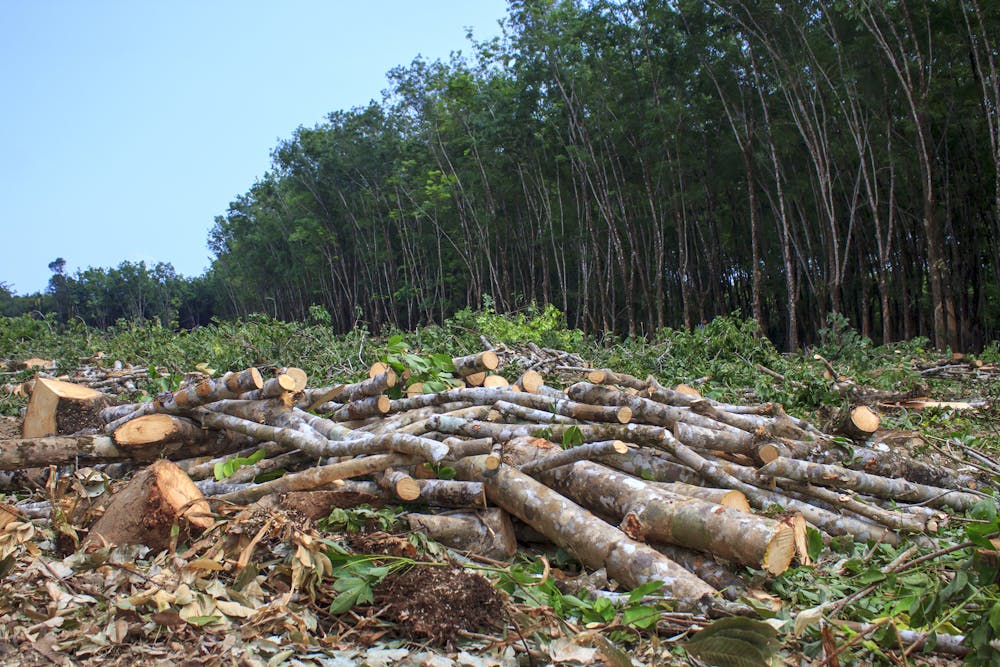
Land degradation, deforestation, and the expansion of our deserts, along with agriculture and the other ways people shape land, are all major contributors to global climate change.

Conversely, trees remove carbon dioxide and store it safely in their trunks, roots and branches. 

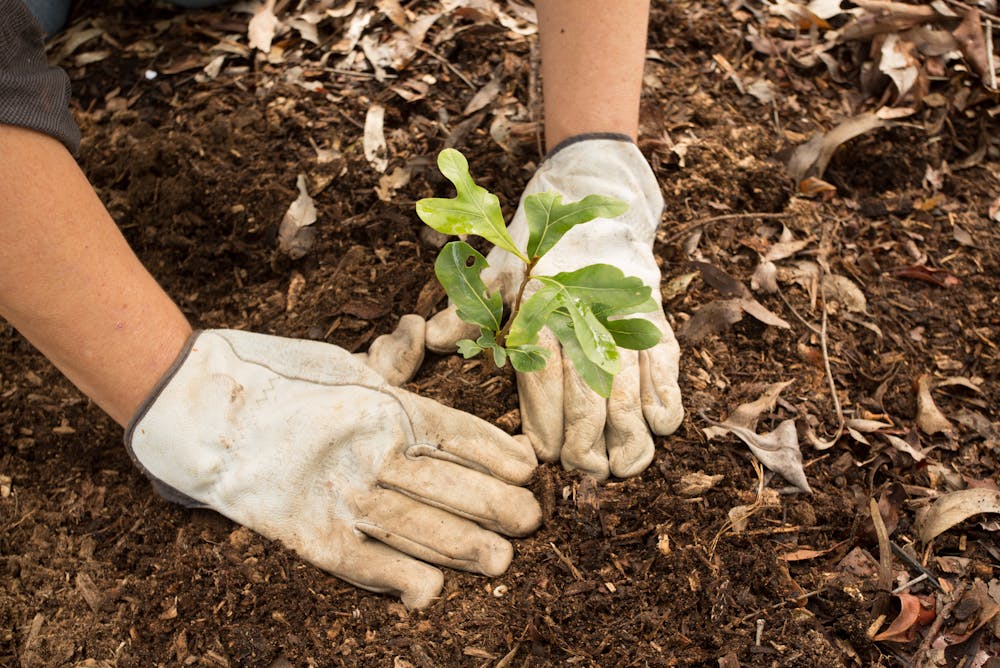
Research published in July estimated that planting a trillion trees could be a powerful tool against climate change.

Read more: Our cities need more trees, but some commonly planted ones won't survive climate change


However, planting new trees as a climate action pales in comparison to protecting existing forests. Restoring degraded forests and expanding them by 350 million hectares will store a comparable amount of carbon as 900 million hectares of new trees.

Natural climate solutions

Using ecological mechanisms for reducing and storing carbon is a growing field of study. Broadly known as “natural climate solutions”, carbon can be stored in wetlands, grasslands, natural forests and agriculture. 

This is called “sequestration”, and the more diverse and longer-lived the ecosystem, the more it helps mitigate the effect of climate change.
Allowing trees to regenerate naturally is a more effective, immediate and low-cost method of removing and storing atmospheric carbon than planting new trees. Shutterstock
Research has estimated these natural carbon sinks can provide 37% of the CO₂ reduction needed to keep the rise in global temperatures below 2℃.
But this research can be wrongly interpreted to imply that the priority is to plant young trees. In fact, the major climate solution is the protection and recovery of carbon-rich and long-lived ecosystems, especially natural forests.

Read more: Extreme weather caused by climate change has damaged 45% of Australia's coastal habitat

With the imminent release of the new IPCC report, now is a good time to prioritise the protection and recovery of existing ecosystems over planting trees.
Forest ecosystems (including the soil) store more carbon than the atmosphere. Their loss would trigger emissions that would exceed the remaining carbon budget for limiting global warming to less than the 2℃ above pre-industrial levels, let alone 1.5℃, threshold.

Read more: 40 years ago, scientists predicted climate change. And hey, they were right

Natural forest systems, with their rich and complex biodiversity, the product of ecological and evolutionary processes, are stable, resilient, far better at adapting to changing conditions and store more carbon than young, degraded or plantation forests.

Protect existing trees

Forest degradation is caused by selective logging, temporary clearing, and other human land use. In some areas, emissions from degradation can exceed those of deforestation. Once damaged, natural ecosystems are more vulnerable to drought, fires and climate change.
Recently published research found helping natural forest regrow can have a globally significant effect on carbon dioxide levels. This approach – called proforestation – is a more effective, immediate and low-cost method for removing and storing atmospheric carbon in the long-term than tree planting. And it can be used across many different kinds of forests around the world.

 
Avoiding further loss and degradation of primary forests and intact forest landscapes, and allowing degraded forests to naturally regrow, would reduce global carbon emissions. Shutterstock
Avoiding further loss and degradation of primary forests and intact forest landscapes, and allowing degraded forests to naturally regrow, would reduce global carbon emissions annually by about 1 gigatonnes (Gt), and reduce another 2-4 Gt of carbon emissions just through natural regrowth.

Read more: Not everyone cares about climate change, but reproach won't change their minds

Research has predicted that protecting primary forests while allowing degraded forests to recover, along with limited expansion of natural forests, would remove 153 billion tonnes of carbon from the atmosphere between now and 2150.
Every country with forests can contribute to this effort. In fact, research shows that community land management is the best way to improve natural forests and help trees recover from degradation.

Read The Conversation article

Saturday, 20 July 2019

Can planting trees save our climate?

In recent weeks, a new study by researchers at ETH Zurich has hit the headlines worldwide (Bastin et al. 2019). It is about trees. The researchers asked themselves the question: how much carbon could we store if we planted trees everywhere in the world where the land is not already used for agriculture or cities? Since the leaves of trees extract carbon in the form of carbon dioxide – CO2 – from the air and then release the oxygen – O2 – again, this is a great climate protection measure. The researchers estimated 200 billion tons of carbon could be stored in this way – provided we plant over a trillion trees.

The media impact of the new study was mainly based on the statement in the ETH press release that planting trees could offset two thirds of the man-made CO2 increase in the atmosphere to date. To be able to largely compensate for the consequences of more than two centuries of industrial development with such a simple and hardly controversial measure – that sounds like a dream! And it was immediately welcomed by those who still dream of climate mitigation that doesn’t hurt anyone.

Unfortunately, it’s also too good to be true. 

Read the RealClimate article

Wednesday, 10 July 2019

Restoring forests may be one of our most powerful weapons in fighting climate change: Vox


Preserve Forests
One of the technologies for tackling climate change I’m most excited about is direct air capture: using huge electric-powered scrubbing machines to filter carbon dioxide directly out of the air and either stashing it deep underground, or using it for industrial purposes.
 
Adding 2.2 billion acres of tree cover would capture two-thirds of man-made carbon emissions, a new study found.


Allowing the earth’s forests to recover could soak up a significant amount of humanity’s greenhouse gas emissions, according to new research. 

The worldwide assessment of current and potential forestation using satellite imagery appeared Thursday in the journal Science. It estimates that letting saplings regrow on land where forests have been cleared would increase global forested area by one-third and remove 205 billion metric tons of carbon from the atmosphere. That’s two-thirds of the roughly 300 billion metric tons of carbon humans have put up there since the dawn of the Industrial Revolution. 

“The point is that [reforestation is] so much more vastly powerful than anyone ever expected,” said Thomas Crowther, a professor of environmental systems science at ETH Zurich and a co-author of the paper. “By far, it’s the top climate change solution in terms of carbon storage potential.”


Some climate scientists who were not involved with the study disagree with its calculations and are warning against its “silver bullet” message. Still, supporting natural systems that can soak up carbon is widely accepted as a major component of any climate change mitigation strategy — in addition to deploying clean energy, switching to electric vehicles, and curbing consumption overall.


See also:

Three Surprising Solutions To Climate Change: Forbes