Showing posts with label science. Show all posts

Tuesday, 24 November 2020

Climate Deniers Are Claiming EVs Are Bad for the Environment — Again. Here’s Why They’re Wrong. (excerpt): DeSmog

Charging electric vehicle
 "A new paper published Tuesday, November 17, by the conservative think tank the Competitive Enterprise Institute (CEI), raises environmental concerns with electric vehicles in what appears to be the latest attempt by organizations associated with fossil fuel funding to pump the brakes on the transportation sector’s transition away from petroleum and towards cleaner electricity.

In the U.S., the transportation sector is the largest contributor to planet-warming emissions. Climate and energy policy experts say electrifying vehicles is necessary to mitigate these emissions.

In fact, scientists recently warned that if the country has any hope of reaching the Paris climate targets of limiting warming to below 2 degrees Celsius (3.6 degrees Fahrenheit), 90 percent of all light-duty cars on the road must be electric by 2050.

But the Competitive Enterprise Institute — a longtime disseminator of disinformation on climate science and supported by petroleum funding sources including the oil giant ExxonMobil and petrochemical billionaire Koch foundations — dismisses this imperative and instead tries to portray electrified transport as environmentally problematic in a paper titled, “Would More Electric Vehicles Be Good for the Environment?”

“This is a grab bag of old and misleading claims about EVs [electric

vehicles],” said David Reichmuth, a senior engineer in the clean transportation program at the Union of Concerned Scientists. “If you want to answer this question [posed by the report’s title], you have to also look at the question of what are the impacts of the current gasoline and diesel transport system, and this report just ignores that.”.."


See complete DeSmog article
By Dana Drugmand • Tuesday, November 17

Related:   Trump gutted environmental protections. How quickly can Biden restore them? (excerpt): GRIST

Monday, 19 October 2020

Amy Coney Barrett says she’s “not a scientist” and has no “firm views” on the topic of climate change: (excerpts) LAT and NYT

Wikipedia pic from 2018 Amy Coney Barrett
Amy Coney Barrett, the president’s Supreme Court nominee, was asked about climate change during Senate confirmation hearings. She responded that she’s “not a scientist” and has no “firm views” on the topic. The Supreme Court could play a big role in determining whether the federal government is able to mount a serious response to the climate crisis; as Marianne Lavelle wrote recently for InsideClimate News, activists are worried the court’s landmark 2007 climate ruling could be in danger.


Go to LA Times story

"But with Senator Kamala Harris of California, the Democratic

Photo from Alliance for Justice

candidate for vice president, Judge Barrett, the daughter of an oil executive, went further. She described the settled science of climate change as still in dispute, compared to Ms. Harris’s other examples, including whether smoking causes cancer and the coronavirus is infectious.

“Do you believe that climate change is happening and threatening the air we breathe and the water that we drink?” Ms. Harris asked.

Judge Barrett responded, “You asked me uncontroversial questions, like Covid-19 being infectious or if smoking causes cancer” to solicit “an opinion from me on a very contentious matter of public debate,” climate change.

“I will not do that,” Judge Barrett concluded. “I will not express a view on a matter of public policy, especially one that is politically controversial.”

Go to New York Times story 


Related:  Anxiety Mounts Abroad About Climate Leadership and the Volatile U.S. Election (excerpts): InsideClimate News


Friday, 18 September 2020

A season of climate-fueled disasters (excerpt): NYT

Wildfires are still scorching the West as a hurricane hits the South

"It’s pretty scary out there these days. There are wildfires in the West and a hurricane causing 

More severe climate fires

 “catastrophic” flooding in the South. And the destructiveness of those disasters is being aggravated by climate change.

All of that is keeping those of us on The Times climate team very busy.

For decades, climate journalists focused on the science of climate change, which proves the planet is warming and forecasts the consequences. That goes back at least to 1988, when The Times published a front-page article about the NASA scientist James Hansen, who testified in the Senate and warned in an interview that “It is time to stop waffling so much and say that the evidence is pretty strong that the greenhouse effect is here.”

The government, as we all know, continued to waffle. And here we are. Now, to an ever increasing degree, being a climate reporter is all about catastrophes, reported in real time.

And so, we do what we do. We cover the news.

More severe hurricanes

In the West, more than 5 million acres have now burned, and fire season still has months to go. Our coverage has focused heavily on the links between wildfires and climate change.

.........................."


By John Schwartz    (Images from this blog)


Read complete NYT article

 Related: How Climate Migration Will Reshape America Millions will be displaced. Where will they go? (excerpt) : NYT Magazine

 Related: The exhausted Raccoons of the Resistance are running an Antifarsonist self care workshop

#climatefires,#climatechange,#climateaction,#climate crisis,hurricanes,floods,science,

Sunday, 13 September 2020

Scientists say they're being silenced by the government: from ABC Radio

"On RN Breakfast with Fran Kelly
scientists employed by government and industry had work "unduly modified
science or fiction


As the Morrison Government rushes to amend national environmental protection laws, scientists warn a growing number of their colleagues are being silenced.

A study by the Ecological Society of Australia claims a third of ecologists and conservation scientists employed by government and industry had work "unduly modified" and almost half of those working for government were blocked from releasing their findings.

Their treatment has renewed calls for the creation of an independent environmental agency, something the Coalition has ruled out.

scientists employed by government and industry had work "unduly modified
The scientific conspiracy!
Featured:
Don Driscoll, Professor in Terrestrial Ecology, Deakin University

Producer: Cathy Van Extel

Duration: 8min 57sec

Wednesday, 9 September 2020

COVID-19 can be an historic turning point in tackling the global climate crisis: UK Committee on Climate Change

(Pics from this blog)  

 If only the current Australian government would take advice like this. This is from the United Kingdom's Committee on Climate Change to the U.K. government in 2020.

1. Low-carbon retrofits and buildings that are fit for the future.
Climate Action Now
 "Ministers must seize the opportunity to turn the COVID-19 crisis into a defining moment in the fight against climate change, the Committee on Climate Change (CCC) says today.
 

In its annual report to Parliament, the Committee provides comprehensive new advice to the Government on delivering an economic recovery that accelerates the transition to a cleaner, net-zero emissions economy and strengthens the country’s resilience to the impacts of climate change.

1. Low-carbon retrofits and buildings that are fit for the future.
Cities might become unbearable.
Important steps have been taken in the last year, but much remains to be done. For the first time the Committee sets out its recommendations government department by government department. These are the urgent steps that must be taken in the months ahead to initiate a green, resilient COVID-19 recovery. 

They can be delivered through strong coordination across Whitehall. Doing so will propel the UK towards more rapid climate progress and position the country as an international climate leader ahead of the pivotal COP26 climate summit in Glasgow next year.

CCC Chairman, Lord Deben, said: “The UK is facing its biggest economic shock for a generation. Meanwhile, the global crisis of climate change is accelerating. We have a once-in-a-lifetime opportunity to address these urgent challenges together; it’s there for the taking. The steps that the UK takes to rebuild from the COVID-19 pandemic can accelerate the transition to a successful and low-carbon economy and improve our climate resilience. 

Choices that lock in emissions or climate risks are unacceptable.”


1. Low-carbon retrofits and buildings that are fit for the future.
Climate Change is a fact
Chair of the CCC’s Adaptation Committee, Baroness Brown of Cambridge, said: “COVID-19 has shown that planning for systemic risks is unavoidable. We have warned repeatedly that the UK is poorly prepared for the very serious impacts of climate change, including flooding, overheating and water shortages. Now is the moment to get our house in order, coordinate national planning, and prepare for the inevitable changes ahead. The UK’s domestic ambition can be the basis for strong international climate leadership, but the delivery of effective new policies must accelerate dramatically if we’re to seize this chance.”

The Committee’s new analysis expands on its May 2020 advice to the Prime Minister in which it set out the principles for building a resilient recovery. In its new report, the Committee has assessed a wide set of measures and gathered the latest evidence on the role of climate policies in the economic recovery. Its report highlights five clear investment priorities in the months ahead:

1. Low-carbon retrofits and buildings that are fit for the future.

1. Low-carbon retrofits and buildings that are fit for the future.
Hydrogen energy still requires research and development
There are vital new employment and reskilling opportunities across the country if Governments support a national plan to renovate buildings and construct new housing to the highest standards of energy and water efficiency, to begin the shift to low-carbon heating systems, and to protect against overheating. Roll-out of ‘green passports’ for buildings and local area energy plans can begin immediately. 

2. Tree planting, peatland restoration, and green infrastructure. Investing in nature, including in our towns and cities, offers another quick route to opportunities for highly-skilled employment, and outcomes that improve people’s lives. By making substantial changes in our use of land, which are needed to meet the UK’s Net Zero target, we will bring significant benefits for the climate, biodiversity, air quality, and flood prevention.

1. Low-carbon retrofits and buildings that are fit for the future.
Land ice is melting
3. Energy networks must be strengthened for the net-zero energy transformation in order to support electrification of transport and heating. Government has the regulatory tools to bring forward private sector investment. New hydrogen and carbon capture and storage (CCS) infrastructure will provide a route to establishing new low-carbon British industries. Fast-tracked electric vehicle charging points will hasten the move towards a full phase out of petrol and diesel cars and vans by 2032 or earlier.

4. Infrastructure to make it easy for people to walk, cycle, and work remotely. Dedicated safe spaces for walking and cycling, more bike parking and support for shared bikes and e-scooters can help the nation get back to work in a more sustainable way. For home working to be truly a widespread option, resilient digital technology (5G and fibre broadband) will be needed.

5. Moving towards a circular economy. Within the next five years, we can not only increase reuse & recycling rates rapidly but stop sending biodegradable wastes to landfill. Local authorities need support to invest strategically in separated waste collections and recycling infrastructure and to create new regional jobs.

There are also opportunities to support the transition and the recovery by investing in the UK’s workforce, and in lower-carbon behaviours and innovation:


1. Reskilling and retraining programmes. The net-zero economy will require a net-zero workforce, able to install smart low-carbon heating systems and to make homes comfortable; to design, manufacture and use low-carbon products and materials; and to put carbon back, rather than taking carbon out, from under the North Sea. Now is the time to build that workforce and to equip UK workers with vital skills for the future.

1. Low-carbon retrofits and buildings that are fit for the future.
Our children want answers.
2. Leading a move towards positive behaviours. There is a window for Government to reinforce the ‘climate-positive’ behaviours that have emerged during the lockdown, including increased remote working, cycling and walking. The public sector must lead by example by encouraging remote working. It also needs to innovate in order that customer service can be provided effectively remotely.

3. Targeted science and innovation funding. Kick-starting research and innovation now in low-carbon and adaptation technologies will facilitate the changes needed in the decades ahead and build UK competitive advantage. The COVID-19 crisis has highlighted the importance of research if we are to understand fully the threats and learn how to manage them.

1. Low-carbon retrofits and buildings that are fit for the future.
Cities must retreat from the coast.
Achieving the UK’s climate goals and rebuilding the economy fit naturally together. Each makes the other possible. Success demands that we do both. The actions recommended by the CCC will deliver an improved economy, better public health, improved biodiversity and access to nature, cleaner air, more comfortable homes and highly productive and rewarding employment."

Related:   Climate change: How the UK contributes to global deforestation (excerpt): BBC


#economy, #heatwaves, Britain, cities, COVID-19, energy, England, floods, infrastructure damage, reskilling, science, tidal flooding, United Kingdom

Saturday, 25 July 2020

Climate change talk has been around for 30 years. Where's the action? / ABC Radio National Excerpt


 "Since 2015, the world has seen its five hottest years on record. Much of the eastern part of the country has been gripped by drought.

A few summers ago, fires burnt parts of alpine Tasmania that hadn't burnt in a thousand years. Last year was the hottest year in Australia since records began — and we had the biggest bushfires in history."

Scientists have repeatedly warned that the effects of climate change would include more extreme weather.(Supplied: Gena Dray)
cambioclimatico, #criminalesclimáticosdelacárcel
Scientists have warned us about the dangers of 2 degrees of warming — at the moment, we're heading for more than that.(ABC News: Jordan Hayne)

'Scientists have spelt out this out repeatedly for 30 years, and environmental groups have championed the cause. But both made mistakes.

 For too long, scientists believed that the facts spoke for themselves, that all they had to do was get them out there. And the NGOs had a tendency come across as self-righteous, or guilt-trippy.

I was already on board — with me they were preaching to the choir — but I don't think they pulled in enough other people.

I want you to panic   Greta Thunberg
Climate Action Now
But here we are. After years of drought at home, and increasingly extreme weather all over the world, polling shows that most of us get it enough to think climate change is a problem and that we should do something about it.


And yet we've done very little. I want to know why. That's why I've made this series.

And yes, part of it turns out to be the fossil fuel industry. Part of it turns out to be that change is hard, and that it's been easier for politicians to do little, especially when they are themselves divided.

But part of it turns out to be you and me — our own psychology, the stuff that makes us human, means acting on climate change is hard to do.

Not that it can't be done — and there is hope. We'll get to that too. I hope you'll join me for Hot Mess."'

 By Richard Aedy for Hot Mess 
Richard Aedy has been a journalist for more than 30 years. He's been concerned about climate change for most of that time. He's been at Radio National since 1998. 


#drought, #wildfire, droughts, bushfire, science, climate science, Australia, #Australia, fossil fuel subsidies,  #climatejustice

Sunday, 2 February 2020

British carbon tax leads to 93% drop in coal-fired electricity: UCL News

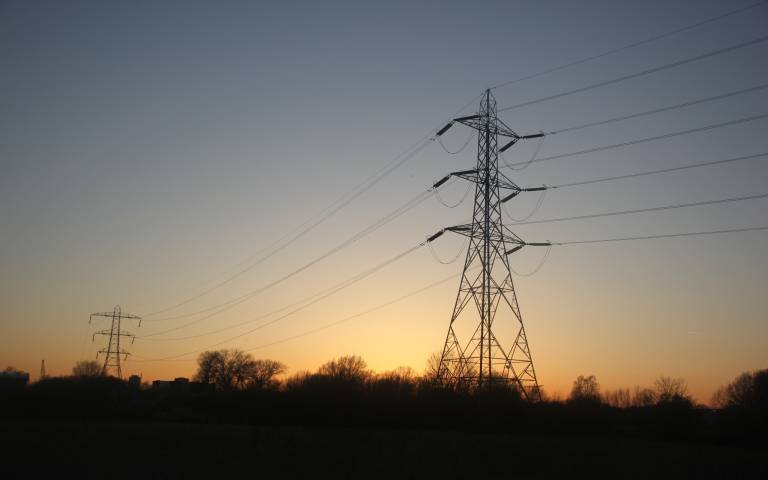
"A tax on carbon dioxide emissions in Great Britain, introduced in 2013, has led to the proportion of electricity generated from coal falling from 40% to 3% over six years, according to research led by UCL.

pylons
British electricity generated from coal fell from 13.1 TWh (terawatt hours) in 2013 to 0.97 TWh in September 2019, and was replaced by other less emission-heavy forms of generation such as gas. The decline in coal generation accelerated substantially after the tax was increased in 2015."

Read the UCL article

See also:

Morrison now demands we 'adapt' to climate change catastrophes: IA

Friday, 31 January 2020

Now that climate change is irrefutable, denialists like Andrew Bolt insist it will be good for us : The Guardian

"Even as the fires roar at the gates of power, the Murdoch columnist and others argue climate change is ‘overall, a good thing’"
 .......


"What to make of Bolt’s most recent concession to the reality of
actual climate change is what his insistent “good thing, overall” messaging reveals of the new political reality facing the conservative movement. Unlike an election result that can be willed into existence through sheer force of persuasion, the planet is not actually persuadable. The ideological resistance among conservatives to address the source of climate crisis is so powerful, so historically entrenched, that flames literally surround the city in which the conservative Australian prime minister himself has announced that “resilience and adaptation” amid the fires will substitute for climate mitigation, prevention, action to make them stop. On cue, the megaphones insist this nightmare will be good for us.

Take it from one of the selectively misquoted credible scientists: global heating is not heralding a new agricultural prosperity, these forces are causing forests to burn, not to bloom. They can’t offer solutions. The propaganda of a new denial is all they’ve got."

Read the original the Guardian Van Badham article

See also: Prepare Australia's transport now for climate change or face costly transport chaos

Sunday, 29 December 2019

Sick of compromises and wary of those who suggest compromise


Soft words

Softly, softly approaches
Compromises, are fit for negotiating colour schemes, diets, games,
Not when talking of the need for crisis climate action
When the science is clear
When you can’t compromise on facts.
When human existence is at stake.

Can we cease our headlong, headstrong rush to species annihilation
Prevent the greedy destruction of our only planet, and
Call out those who trust in prayers and loving thoughts to clean up a man-made catastrophe.

Sick of compromises and wary of those who suggest compromise
And ‘sweet’ pieces of research that nudge us towards a gentle, soothing, less challenging way to swing opinions?
Have the advocates of compromise been duped, dudded, diddled or paid off in some way?

Let’s act NOW.

Tuesday, 10 September 2019

The terrible truth of climate change: The Monthly

"As I collated this information for my presentation, it became clear to me that Cyclone Tracy is a warning. Without major action, we will see tropical cyclones drifting into areas on the southern edge of current cyclone zones, into places such as south-east Queensland and northern New South Wales, where infrastructure is not ready to cope with cyclonic conditions.

These areas currently house more than 3.6 million people; we simply aren’t prepared for what is upon us.

There is a very rational reason why Australian schoolkids are now taking to the streets – the immensity of what is at stake is truly staggering. Staying silent about this planetary emergency no longer feels like an option for me either. Given how disconnected policy is from scientific reality in this country, an urgent and pragmatic national conversation is now essential. Other-
wise, living on a destabilised planet is the terrible truth that we will all face."


"We still have time to try and avert the scale of the disaster, but we must respond as we would in an emergency. The question is, can we muster the best of our humanity in time?"

Read the complete The Monthly article 

See also:

Honest Government Ad | We're F**ked: YouTube

Saturday, 31 August 2019

Climate change: Big lifestyle changes 'needed to cut emissions': BBC

"People must use less transport, eat less red meat and buy fewer clothes if the UK is to virtually halt greenhouse gas emissions by 2050, the government's chief environment scientist has warned.

Prof Sir Ian Boyd said the public had little idea of the scale of the challenge from the so-called Net Zero emissions target.

However, he said technology would help.

The conundrum facing the UK - and elsewhere - was how we shift ourselves away from consuming, he added.

In an interview with BBC News, Sir Ian warned that persuasive political leadership was needed to carry the public through the challenge.

Asked whether Boris Johnson would deliver that leadership, he declined to comment.

Mr Johnson has already been accused by environmentalists of talking up electric cars whilst reputedly planning a cut in driving taxes that would increase emissions and undermine the electric car market."

Read the BBC article 

Related: Death, blackouts, melting asphalt: ways the climate crisis will change how we live : The Guardian

Tuesday, 23 July 2019

Major U.S. cities are leaking methane (Natural Gas) at twice the rate previously believed

Natural gas, long touted as a cleaner burning alternative to coal, has a leakage problem. A new study has found that leaks of methane, the main ingredient in natural gas and itself a potent greenhouse gas, are twice as big as official tallies suggest in major cities along the U.S. eastern seaboard. The study suggests many of these fugitive leaks come from homes and businesses—and could represent a far bigger problem than leaks from the industrial extraction of the fossil fuel itself.

“This is an issue that people tend to ignore when trying to estimate methane emissions,” says Kathryn McKain, an atmospheric scientist with the National Oceanic and Atmospheric Administration’s Earth System Research Laboratory in Boulder, Colorado, who wasn’t involved in the new research. When compared with the global amount of natural and human-driven methane emissions, she notes, “These emissions are small, but they’re preventable.”

Read the ScienceMag article