Sunday, 22 September 2019


It’s Time To Start Prosecuting Climate Criminals: Ecosystem Marketplace

Countries around the world are implementing
new laws and developing new mechanisms to achieve the goals of the Paris
Climate Agreement, while while several organizations have filed civil
suits to force government action. But one mechanism has been sorely
under-utilized: namely, prosecuting climate scofflaws as criminals under
laws that already exist, argues Reinhold Gallmetzer of the
International Criminal Court.
This story initially appeared in the UNEP magazine “Our Planet”
Criminal justice can help achieve the objectives of the Paris Agreement on climate change as part of an integrated approach from governments, private businesses, finance, science, civil society and others.
A significant share of global greenhouse gas emissions results from, or is associated with, conduct that violates existing criminal law. Those caused by deforestation and forest degradation are one striking example: a World Bank study on forest crimes found that up to 90 per cent of logging in key producer tropical countries is illegal and involves criminal activity. In addition, INTERPOL’s guide on carbon trading crime shows how fraud undermines the carbon market, an essential mechanism for reducing greenhouse gas emissions.
Even when emissions are not directly based on criminal conduct, they may be associated with crimes – such as corruption, trade violations, financial crimes or fraud – committed, for instance, in the context of extracting or trading fossil fuels or timber. Moreover, if there is a concrete causal link between a specific source of emissions and a harmful consequence – such as serious injury to body or physical health or the destruction of property – this may constitute a crime. All these offences can be collectively referred to as climate crimes.
Climate crimes are under-prosecuted due to: a misconception that their prosecution has an uncertain legal basis; the low priority given to them; and their under-reporting in the first place. Yet none of these reasons should stand in the way of significantly scaling up the prosecution of climate crimes. That would repress and deter criminal conduct that facilitates greenhouse gas emissions, and thereby help achieve the objectives of the Paris Agreement.
Law enforcement authorities are already equipped with the necessary legal tools to prosecute climate crimes effectively. Many legal systems punish environmental crimes such as illegal deforestation or pollution, which may allow direct prosecution of greenhouse gas-emitting activities. Prosecutors may also examine the broader context in which emissions occur, as well as their consequences, and target them indirectly by focussing on crimes commonly associated with, or resulting from, emissions, such as corruption, financial crimes or destruction of property.
Read the complete Ecosystem Marketplace article
See also: http://www.climatecrimeanalysis.org/priority-prosecution.html
Friday, 20 September 2019
Friday, 13 September 2019
Former fire chiefs demand urgent action on 'escalating climate change threat': SBS
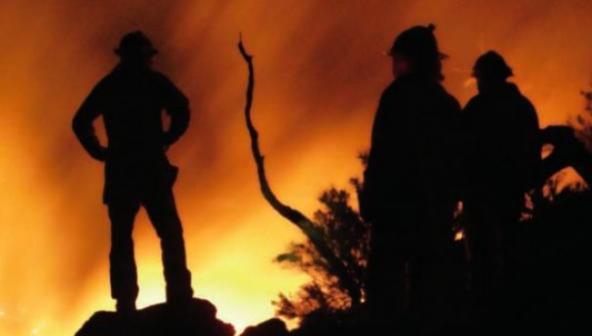
Longer bushfire seasons, ‘dry’ lightning storms,
increased flooding and higher rates of anxiety: this is Australia’s
future without immediate action on climate change, some of Australia’s
most senior former emergency service chiefs have warned.
In an unprecedented joint statement directed to the state and federal governments, 23 former emergency service bosses have come together on Wednesday to call for stronger action on climate change, which they believe is threatening lives in Australia.
The
23 signatories, representing every state and territory, have called on
Prime Minister Scott Morrison to commit to a parliamentary inquiry into
whether the emergency services are fit to defend Australia against the
increasing risk of natural disasters."
Related:
Time to rethink Australia's fire fighting resources.
Wednesday, 11 September 2019
Time to rethink Australia's fire fighting resources.
 |
| 📷: Bindi Cox |
Our firefighters in Australia, both paid and volunteer, are out there risking injury and putting their lives on the line, or at the very least sacrificing their work. Employers, often small business employers, are supporting them. Are our firefighters sufficient in number?
"There are
still 50 fires burning across New South Wales, with 21 fires
uncontained. A total of 630 firefighters have been deployed across the
state. A fire in Bees Nest, north-west of Dorrigo in the Armidale area,
is currently over 66,500 hectares and out of control." September 10
What are we losing in these fires?
 |
| 📷 Photo Credit: Darren, Jimboomba Police |
• We now have a new fire category, 'extreme'.
• We are also losing precious forests and biodiversity. This week the Gondwana World Heritage Area has been severely damaged.
"The Gondwana Rainforests of Australia, World Heritage Area, contains the most extensive areas of subtropical rainforest in the world, large areas of warm temperate rainforest, and the majority of the world's Antarctic beech cool temperature rainforest. These extraordinary areas still contain ancient and primitive plants and animals from which life on Earth evolved." NSW National Parks
The same fire began in the Guy Fawkes River National Park and by September10, had burned 66,500 hectares and was 'out of control'.
"The park is a significant conservation site with amazing biodiversity. There are 24 threatened animal species you might encounter here, including the brush-tailed rock-wallabies that can often be seen in the park’s rocky areas." National Parks
 There has been a world wide reaction to careless burning of the Amazon forests. Other countries are busily planting trees to protect soils and store carbon, yet Australia is busy clearing trees and fighting forest fires with limited resources.
 It is time to review our fire fighting resources.
We know some extra resources have been ordered or already purchased.
"New South Wales has signed a contract with United States-based Coulson Aviation to purchase three aircraft for firebombing duties, including a modified Boeing 737 large air tanker.
NSW buys Boeing 737 large air tanker for firefighting ...
https://australianaviation.com.au › 2019/05
› nsw-buys-boeing-737-large-..."
As we face an increasing number of fierce fires in an extended fire season, it is time to ask:
Are we allowing our rural communities to suffer unnecessarily?
Why are we allowing our world heritage forests with unique biodiversity to burn?
Do we have sufficient resources to fight fires and to extinguish them quickly?
Why are we still reliant on volunteers? Why are we putting volunteers at risk?
Do we have enough air support?
Is a budget surplus a priority over expanding our firefighting resources and better protecting our communities?
Related:
Related:
What if we stopped pretending Climate Change could be prevented.
Tuesday, 10 September 2019
The terrible truth of climate change: The Monthly

These areas currently house more than 3.6 million people; we simply aren’t prepared for what is upon us.
There is a very rational reason why Australian schoolkids are now taking to the streets – the immensity of what is at stake is truly staggering. Staying silent about this planetary emergency no longer feels like an option for me either. Given how disconnected policy is from scientific reality in this country, an urgent and pragmatic national conversation is now essential. Other-
wise, living on a destabilised planet is the terrible truth that we will all face."
"We still have time to try and avert the scale of the disaster, but we must respond as we would in an emergency. The question is, can we muster the best of our humanity in time?"
Read the complete The Monthly article
See also:
Honest Government Ad | We're F**ked: YouTube
Subscribe to:
Posts (Atom)