Sir David Attenborough ci fa il suo ultimo grande dono. Ci ricorda con parole sincere che non vi è un altro momento per agire. Possiamo ancora salvare noi stessi e il nostro pianeta.
Thursday, 17 October 2019
A reason for hope from Sir David Attenborough
Sir David Attenborough ci fa il suo ultimo grande dono. Ci ricorda con parole sincere che non vi è un altro momento per agire. Possiamo ancora salvare noi stessi e il nostro pianeta.

How Earth Would Look If All The Ice Melted: YouTube
We learned last year that many of the effects of climate change are irreversible. Sea levels have been rising at a greater rate year after year, and the Intergovernmental Panel on Climate Change estimates they could rise by another meter or more by the end of this century. As National Geographic showed us in 2013, sea levels would rise by 216 feet if all the land ice on the planet were to melt. This would dramatically reshape the continents and drown many of the world's major cities. Science Insider tells you all you need to know about science: space, medicine, biotech, physiology, and more.
Wednesday, 16 October 2019
ACT Greens call for static pill testing site as NSW Coroner recommendations released

"I am not surprised to hear of the coroner's draft recommendation relating to pill-testing. The Greens know that pill-testing is a successful harm minimisation activity, and a key step to save lives in festival environments," Greens spokesperson for Drug Law Reform Shane Rattenbury said today.
"The NSW coroner is an independent judicial body that has today, after exploring the evidence in relation to the deaths of six young people at music festivals between December 2017 and January 2019, come to the same conclusion of other medical bodies - that pill-testing reduces harm from drug use.
Tuesday, 15 October 2019
Ghost Forests Are Visceral Examples of the Advance of Climate Change: NYT
"As Matt Kirwan walks through Maryland’s Blackwater National Refuge, his rubber boots begin to squish. With each step the land beneath him turns from dry ground to increasingly soggy mud. The trees around him go from tall and full of leaves or needles to short, bare and pale white.
Partway out, ankle deep in water, Kirwan stops. “At this point we’ve transitioned from being in the forest, to actually being in a full-fledged marsh,” explains the Virginia Institute of Marine Science ecologist. “This ground is now too salty and too wet to support living trees.”
Kirwan is standing in the midst of what is known as a “ghost forest.” These swaths of dead, white, trees are created when salty water moves into forested areas, first slowing, and eventually halting, the growth of new trees. That means that when old trees die, there aren’t replacements." ......
Read the NYT article
Related:
There are three types of climate change denier, and most of us are at least one: ABC
#jailclimatecriminals #westandwithGreta #suefossilcorpdirectors
Monday, 14 October 2019
Hello From the Year 2050. We Avoided the Worst of Climate Change — But Everything Is Different: NYT

There was a point after 2020 when we began to collectively realize a few basic things.
One, we weren’t getting out of this unscathed. Climate change, even in its early stages, had begun to hurt: watching a California city literally called Paradise turn into hell inside of two hours made it clear that all Americans were at risk. When you breathe wildfire smoke half the summer in your Silicon Valley fortress, or struggle to find insurance for your Florida beach house, doubt creeps in even for those who imagined they were immune.
Two, there were actually some solutions. By 2020, renewable
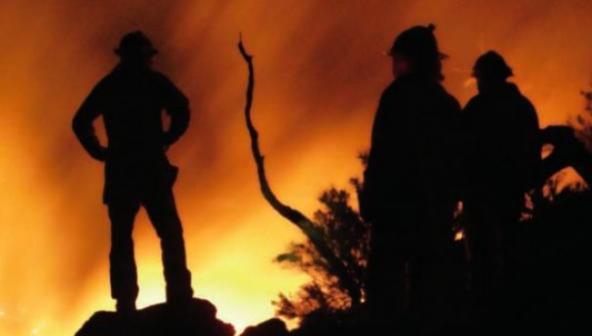
And the third realization? People began to understand that the biggest reason we weren’t making full, fast use of these new technologies was the political power of the fossil-fuel industry.
Investigative journalists had exposed its three-decade campaign of denial and disinformation, and attorneys general and plaintiffs’ lawyers were beginning to pick them apart. And just in time.
Read the NYT article
See also:
Blame for Extinction Spreads to Methane Gas: NYT
#jailclimatecriminals #suefossilcorpsdirectors
Blame for Extinction Spreads to Methane Gas: NYT

"Dr.
Ruhl and his colleagues studied carbon isotopes of sediments from the
period and found that the extinction event coincided with the giant
release of methane into the atmosphere.
Volcanoes still played in a role in the process, Dr. Ruhl said.
“There
was a release of CO2 from volcanic eruptions that warmed up global
temperatures and also the ocean,” he said. “Methane is only stable under
certain temperatures. If it gets warm, it is released.”
The study could be foreshadowing the effect of climate change
on Earth, Dr. Ruhl said. An increase of carbon dioxide in the
atmosphere from fossil-fuel use could warm up the planet enough to
release methane from the ocean floors, he said."
Friday, 11 October 2019
How to Have a Useful Conversation About Climate Change in 11 Steps Climate change can be an emotional topic. Here’s how to approach it: Medium

.... "After
working in mental health and education for 20 years, I’ve learned that
nobody likes being told what to do. When we want to talk about climate
change with friends or family, or even with a stranger on social media, I
think we too quickly launch into a proclamation of the superiority of
our opinions. We lecture more than we listen and this gets in the way. A
key question is this: How can we have productive
conversations about climate change that result in people feeling more
engaged, informed, and willing to do something different?
Here is an 11-step guide that will get results:
f1. Know thyself
Before you have a conversation with someone else, you need to have a conversation with yourself. (Thank you, Richard of City Atlas.)
Begin by asking yourself this question: “Why does climate change matter
to me?” Spend time getting familiar with your own thoughts, emotions,
assumptions, stories, and consumption habits. Ask yourself the questions
in this 11-step map and really listen to everything you have to say.
This will give you an invaluable foundation of self-understanding and
self-awareness, and it will make you well-prepared to have your first
conversation with someone else about climate change."
Subscribe to:
Posts (Atom)