![]() |
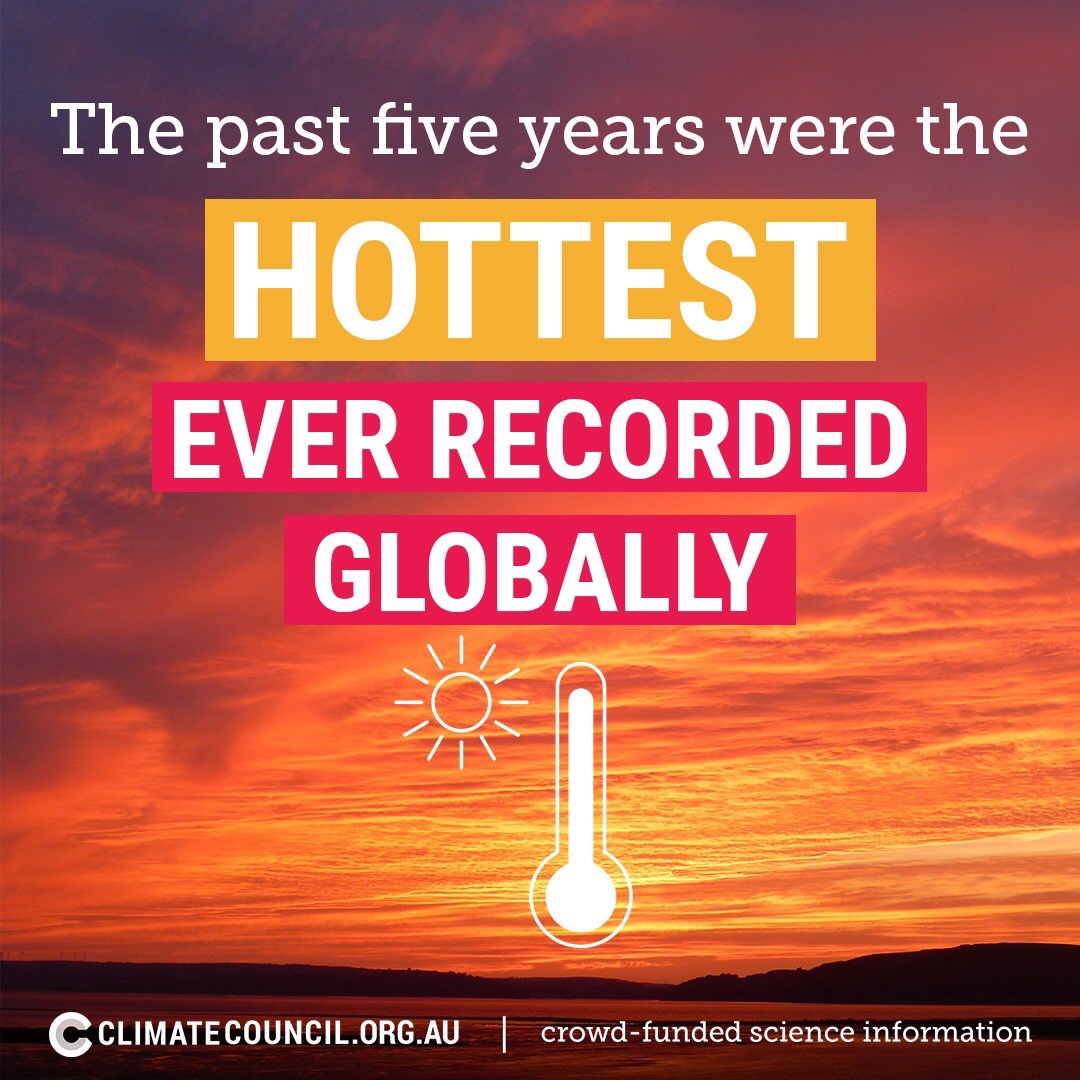
| Hottest Years |
#climateaction News - We have no time to waste. We must act now to reduce the heating of our planet.
Saturday, 27 June 2020
Six ways nature can protect us from climate change: CAA
Monday, 22 June 2020
Government's COVID Commission manufacturing plan calls for huge public gas subsidies: ABC NEWS
State bans on coal seam gas development would be
scrapped and the Federal Government would underwrite gas prices and
massively subsidise costs and investment for gas companies, under
confidential plans for a "gas-led manufacturing recovery" post-COVID-19.
methane gas industry calls for sunsidies
Key points:
- Leaked documents reveal a draft plan calling for massive gas subsidies and public investment
- The interim report also calls for reduced 'green and red tape' and an end to all fracking moratoriums in NSW and Victoria
- The National COVID Coordination Commission has several members with deep links to the gas industry
The draft plans, obtained by the ABC, call for the scrapping of "green and red tape" on gas development, including a relaxation of Australian standards for equipment used in gas infrastructure and a loosening of environmental regulations and approval processes.
They are set out in an interim report from the manufacturing taskforce of the National COVID Coordination Commission (NCCC).
The NCCC is a hand-picked team of business leaders and former bureaucrats set up by the Prime Minister's Office to shape the economic recovery from the virus and lockdown, and includes several members with strong links to the gas sector.
The manufacturing taskforce includes business representatives as well as union leaders from that sector.
Its draft report advocates "underwriting new [gas] supply with government balance sheets" to allow gas producers "to invest with confidence and new pipelines to be built to get the gas to markets".
Sunday, 21 June 2020
Deep ocean waters warming at faster pace, new study finds: CBS News
Saturday, 20 June 2020
World has six months to avert climate crisis, says energy expert : The Guardian
![]() |
| Climate Change is Real |
“This year is the last time we have, if we are not to see a carbon rebound,” said Fatih Birol, executive director of the International Energy Agency.
Governments are planning to spend $9tn (£7.2tn) globally in the next few months on rescuing their economies from the coronavirus crisis, the IEA has calculated. The stimulus packages created this year will determine the shape of the global economy for the next three years, according to Birol, and within that time emissions must start to fall sharply and permanently, or climate targets will be out of reach.
“The next three years will determine the course of the next 30 years and beyond,” Birol told the Guardian. “If we do not [take action] we will surely see a rebound in emissions. If emissions rebound, it is very difficult to see how they will be brought down in future. This is why we are urging governments to have sustainable recovery packages.”
Thursday, 18 June 2020
Climate worst-case scenarios may not go far enough, cloud data shows : The Guardian
![]() |
| Clouds and climate change |
Recent modelling data suggests the climate is considerably more sensitive to carbon emissions than previously believed, and experts said the projections had the potential to be “incredibly alarming”, though they stressed further research would be needed to validate the new numbers.
Modelling results from more than 20 institutions are being compiled for the sixth assessment by the United Nations Intergovernmental Panel on Climate Change, which is due to be released next year.
Compared with the last assessment in 2014, 25% of them show a sharp upward shift from 3C to 5C in climate sensitivity – the amount of warming projected from a doubling of atmospheric carbon dioxide from the preindustrial level of 280 parts per million. This has shocked many veteran observers, because assumptions about climate sensitivity have been relatively unchanged since the 1980s.
Wednesday, 17 June 2020
Australia had more supersized bushfires creating their own storms last summer than in previous 30 years : The Guardian
![]() |
|
A pyrocumulonimbus (pyroCB) cloud generated by the Orroral Valley
bushfire south of Canberra. During the 2019-20 summer there was a record number of these events. Photograph: Brook Mitchell/Getty Images |
There was a near doubling of the record of pyrocumulonimbus (pyroCB) storms, royal commission hears
Huge thunderstorm-type clouds called pyrocumulonimbus form over fires in particularly hot, dry and dangerous conditions and are capable of generating their own winds and lightning.
They were once considered “bushfire oddities” but last summer there was a “near doubling of the record of these events, in one event,” Prof David Bowman told the royal commission on Tuesday.
Friday, 12 June 2020
Unexpected future boost of methane possible from Arctic permafrost : NASA
New NASA-funded research has discovered that Arctic permafrost’s expected gradual thawing and the associated release of greenhouse gases to the atmosphere may actually be sped up by instances of a relatively little known process called abrupt thawing. Abrupt thawing takes place under a certain type of Arctic lake, known as a thermokarst lake that forms as permafrost thaws.
The impact on the climate may mean an influx of permafrost-derived methane into the atmosphere in the mid-21st century, which is not currently accounted for in climate projections.
The Arctic landscape stores one of the largest natural reservoirs of organic carbon in the world in its frozen soils. But once thawed, soil microbes in the permafrost can turn that carbon into the greenhouse gases carbon dioxide and methane, which then enter into the atmosphere and contribute to climate warming.