Showing posts with label batteries. Show all posts

Thursday, 26 November 2020

Big batteries are getting bigger and smarter, and doing things fossil fuels can’t do (excerpt): RenewEconomy

 "South Australia and Victoria seem to be engaged in a competition for bragging rights over who has the biggest big battery in the country.

Right now it is South Australia, with the newly expanded Hornsdale Power Reserve (150MW/194MWh), but the mantle late next year will go to Victoria, where Hornsdale owner Neoen has committed to building a 300MW/450MWh big battery at Geelong, before the crown possibly returns to South Australia with AGL’s proposed “gigawatt hour” battery next to the Torrens Island gas generator.

What we can be sure of is that big batteries will get even bigger. AGL has talked of a 500MW battery at Liddell with as yet unspecified hours of storage, Neoen is talking of a 900MW/1800MWh big battery at the massive Goyder South wind and solar hybrid plant in South Australia, while Sun Cable may trump them all with a 20 gigawatt hour battery in the Northern Territory if its bold plan to supply Singapore with the world’s biggest solar farm becomes a reality.

Big might be beautiful, and able to steal the headlines, but the real significance of the most recent announcements – Neoen’s in Victoria and AGL’s in South Australia, as well as this week’s new AGL big battery proposal for the Loy Yang A brown coal generator in Victoria – is not just their size, but what they are able to do."

Read complete RenewEconomy article 


Related:   NO FUTURE IN GAS - video

Thursday, 10 September 2020

Aussie invention could save old coal stations by running them on zero-emissions ‘Lego’ blocks (excerpt): The Conversation


(MGA), stores energy in the form of heat
Miscibility Gap Alloy (MGA)
"As climate change worsens, the future of fossil fuel jobs and infrastructure is uncertain. But a new energy storage technology invented in Australia could enable coal-fired power stations to run entirely emissions-free.
The novel material, called miscibility gap alloy (MGA), stores energy in the form of heat. 


MGA is housed in small blocks of blended metals, which receive energy generated by renewables such as solar and wind.


(MGA), stores energy in the form of heat
MGA
The energy can then be used as an alternative to coal to run steam turbines at coal-fired power stations, without producing emissions. Stackable like Lego, MGA blocks can be added or removed, scaling electricity generation up or down to meet demand.

MGA blocks are a fraction of the cost of a rival energy storage technology, lithium-ion batteries. Our invention has been proven in the lab – now we are moving to the next phase of proving it in the real world."
............................................

"If our electricity grid is to become emissions-free, we need an energy storage option that’s both affordable and versatile enough to be rolled out at massive scale - providing six to eight hours of dispatchable power every night. 
 
MGAs store energy for a day to a week. This fills a “middle” time frame between batteries and hydro-power, and allows intermittent renewable energy to be dispatched when needed."


Related:  'The Future We Choose', Book by Christiana Figueres & Tom Rivett-Carnac

miscibility gap alloy (MGA), energy, coal, #methanegas, #Australia, batteries, #jailclimatecriminals, video,

Sunday, 7 April 2019

What’s with the UK’s ‘boneheaded’ energy policy?: Medium

climate criminals

"Lobbies and the Military are pushing the UK to favour fracking and nuclear energy over renewables."

“ 'England’s energy policy is very opportunistic, there is no long-term vision,” says Duncan Connors, an economics and energy policy specialist at Durham University. The idea that there is money to be made short-term in shale gas is what underpins government policy, he says. “In the long run, renewables will also bring in a lot of money, but that doesn’t fit into their frame of vision.' ”
climate emergency

"For now, there is still a limit to wind and solar energy: the need to store energy to compensate for uneven weather conditions. Kirby argues that this “isn’t a real problem,” in a few years, there will be batteries powerful enough to store the surplus energy and retransmit it. “The smart thing to do now would be to invest resources into conducting research into making these storage options a reality,” he says. In the UK, Green energy gets twelve times less R&D funding from the government than nuclear power."


#renewables  #UK   #UnitedKingdom  #shalegas   #methane   #batterystorage   #fracking

Saturday, 30 March 2019

Australia’s plunging wind, solar, storage costs stun fossil fuel industry: Renew Economy


"This week the federal Coalition government decided to dump 90 per cent of the coal projects that had been submitted to its big underwriting program, and chose instead a shortlist dominated by renewables backed by battery storage and pumped hydro, and some gas and just one coal upgrade.


The choice may have been driven more by politics than economics, given the project developers were asked for only a broad outline of their proposal and there is an election just a few weeks away.


But when the final detailed tenders come in later this year – assuming the program survives the upcoming election campaign – the economic case for favouring renewables and storage projects should be crystal clear, if the latest numbers from global analysts BloombergNEF are anything to go by.

The stunning fall in the costs of wind, solar and storage – estimated on a global scale – has already put the fossil fuel industry on notice, as we reported earlier this week."

Read the article 

See also: The Age of Stupid

#coal  #coalgeneratedenergy  #electricity   #renewableenergy  #renewableenergy

Wednesday, 23 January 2019

The good, the bad and the ugly of climate change in 2018: Green Magazine


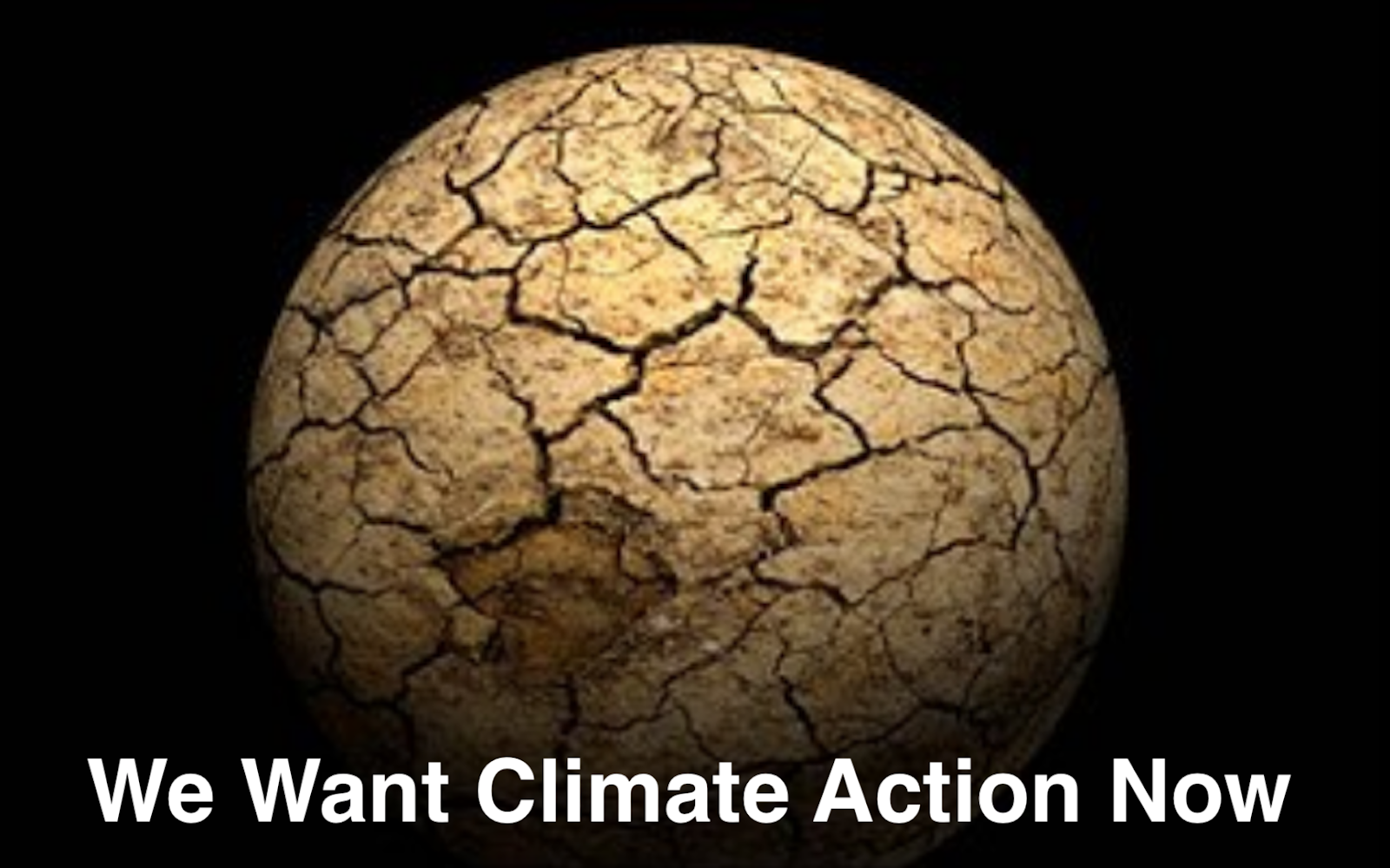
we want climate action now

As the planet relentlessly warms, action to address it is also heating up.  But while other parties are quickly adopting the cause, the Greens have been at the forefront of climate change action for years – and still are.

By Chris Johansen
 

Although ‘economics’ is derided as the ‘dismal science’, I would suggest that an even more dismal one is ‘climate science’. The unfolding series of measurements quantifying how planet Earth is overall warming, and its manifestations, paints a gloomy future for not only our grandkids but our kids – and even us. 

Increasing understanding of how humanity is driving this change, mainly through deforestation and the burning of fossil fuels, also presents solutions for turning this process around, i.e. revegetate and convert to renewable energy. However, an additional pall of gloom is imposed by the failure of humanity to, so far, meaningfully implement the obvious solutions to an otherwise inevitable catastrophe.

At this time of year, it is usual to sit back and review where we are, in the light of events unfolding over the previous 12 months. 

Yes, the bad news keeps on coming but signs of meaningful action to turn around our present climate trajectory are appearing.