Showing posts with label transportation. Show all posts

Thursday, 13 August 2020

Climate Action Tracker: Paris Agreement Compatible Sectoral Benchmarks, August 2020


Progress by 2030 is important
Decarbonisation is needed
 "Executive summary 

While national emission trends are a useful tool for measuring government progress towards meeting the Paris Agreement 1.5 ̊C temperature limit at a global level, each government will have to address its own sectors, each with their own, different baseline. 

What should government sectoral benchmarks be? Will they meet the global carbon budget?  

The Climate Action Tracker has defined and analysed a global-level series of Paris Agreement-compatible benchmarks, across four major sectors: Power, Transport, Industry, and Buildings.  

Within each sector, we define benchmarks for several separate but complementary indicators.  

We have also drilled down to present the benchmarks in these sectors for seven individual countries: Brazil, China, EU, India, Indonesia, South Africa, and the US, taking into account the current technical and infrastructure circumstances in each country. 

We have developed the benchmarks for both 2030 and 2050, with additional temporal resolution depending on the approach and indicator. The data from this work has been added to the Climate Action Tracker interactive data portal https://climateactiontracker.org/data-portal.  

We have identified the following key lessons: 


Decarbonisation by 2050: the Paris Agreement requires the world to decarbonise by2050: on average, all sectors need to decarbonise in this time frame, albeit at slightly different rates. 

In this report, we have identified the potential for such rapid
 decarbonisation across all sectors.


Differences shrink: in terms of timing, benchmarks differ between countries and sectors,because they all start from a different base. But ultimately, governments must pursue all options in all sectors, and sometimes this will require support between countries."

....................


"Progress by 2030 is important: decarbonisation by 2050 alone is not sufficient; to keep carbon budgets within reach, progress must ramp up well before 2030.


Decarbonisation Progress by 2030 is important
Decarbonisation
Power sector is relatively advanced: the power sector is already making quite some progress in decarbonising, and it should continue to be a government priority, especially in avoiding new infrastructure incompatible with the Paris Agreement, such as coal-fired power plants.


Industry, transport, buildings need to advance significantly: these sectors are not yet moving as quickly as is necessary, and efforts to meet 2030 benchmarks must significantly ramp up.

In many countries, much of the building stock that will exist in 2050 is yet to be built
All new buildings from now on in all countries need to be of a high standard and equipped with heating and cooling technologies that either are or can be zero emissions.

Related:

The Harsh Economics of Climate Change: Economics Explained


Thursday, 30 April 2020

The world is on lockdown. So where are all the carbon emissions coming from?: GRIST


' “I think the main issue is that people focus way, way too much on people’s personal footprints, and whether they fly or not, without really dealing with the structural things that really cause carbon dioxide levels to go up,” said Gavin Schmidt, a climatologist and the director of the NASA Goddard Institute for Space Studies in New York City.

Transportation makes up a little over 20 percent of global carbon dioxide emissions, according to the International Energy Agency. (In the United States, it makes up around 28 percent.) That’s a significant chunk, but it also means that even if all travel were completely carbon-free (imagine a renewable-powered, electrified train system, combined with personal EVs and battery-powered airplanes), there’d still be another 80 percent of fossil fuel emissions billowing into the skies.

So where are all those emissions coming from? For one thing, utilities are still generating roughly the same amount of electricity — even if more of it’s going to houses instead of workplaces. Electricity and heating combined account for over 40 percent of global emissions. Many people around the world rely on wood, coal, and natural gas to keep their homes warm and cook their food — and in most places, electricity isn’t so green either." '

Read the original GRIST article

Monday, 30 December 2019

Stanford Researchers Have an Exciting Plan to Tackle The Climate Emergency Worldwide: Science Alert

Things are pretty dire right now. Giant swaths of my country are burning as I write this, at a scale unlike anything we've ever seen. Countless animals, including koalas, are perishing along with our life-supporting greenery. People are losing homes and loved ones.
These catastrophes are being replicated around the globe ever more frequently, and we know exactly what is exacerbating them. We know we need to rapidly make some drastic changes - and Stanford researchers have come up with a plan

Using the latest data available, they have outlined how 143 countries around the world can switch to 100 percent clean energy by the year 2050. 

This plan could not only contribute towards stabilising our dangerously increasing global temperatures, but also reduce the 7 million deaths caused by pollution every year and create millions more jobs than keeping our current systems.

The plan would require a hefty investment of around US$73 trillion. But the researchers' calculations show the jobs and savings it would earn would pay this back in as little as seven years.
"Based on previous calculations we have performed, we believe this will avoid 1.5 degree global warming," environmental engineer and lead author Mark Jacobson told ScienceAlert.

"The timeline is more aggressive than any IPCC scenario - we concluded in 2009 that a 100 percent transition by 2030 was technically and economically possible - but for social and political reasons, a 2050 date is more practical."

Here's how it would work. The plan involves transitioning all our energy sectors, including electricity, transport, industry, agriculture, fishing, forestry and the military to work entirely with renewable energy.

Jacobson believes we have 95 percent of the technology we need already, with only solutions for long distance and ocean travel still to be commercialised.

"By electrifying everything with clean, renewable energy, we reduce power demand by about 57 percent," Jacobson explained.
He and colleagues show it is possible to meet demand and maintain stable electricity grids using only wind, water, solar and storage, across all 143 countries.

These technologies are already available, reliable and respond much faster than natural gas, so they are already cheaper. There's also no need for nuclear which takes 10-19 years between planning and operation, biofuels that cause more air pollution, or the invention of new technologies.

"'Clean coal' just doesn't exist and never will," Jacobson says, "because the technology does not work and only increases mining and emissions of air pollutants while reducing little carbon, and their is no guarantee at all the carbon that is captured will stay captured."

The team found that electrifying all energy sectors makes the demand for energy more flexible and the combination of renewable energy and storage is better suited to meet this flexibility than our current system. 
This plan "creates 28.6 million more full-time jobs in the long term than business as usual and only needs approximately 0.17 percent and approximately 0.48 percent land for new footprint and distance respectively," the researchers write in their report.

Building the infrastructure necessary for this transition would, of course, create CO2 emissions. The researchers calculated that the necessary steel and concrete would require about 0.914 percent of current CO2 emissions. But switching to renewables to produce the concrete would reduce this.

With plans this big there are plenty of uncertainties, and some inconsistencies between databases. The team takes these into account by modelling several scenarios with different levels of costs and climate damage.

"You're probably not going to predict exactly what's going to happen," said Jacobson. "But there are many solutions and many scenarios that could work."

Technology writer Michael Barnard believes the study's estimates are quite conservative - skewing towards the more expensive technologies and scenarios.
"Storage is a solved problem," he writes for CleanTechnica. "Even the most expensive and conservative projections as used by Jacobson are much, much cheaper than business as usual, and there are many more solutions in play."

The authors of the report stress that while implementing such an energy transition, it is also crucial that we simultaneously tackle emissions coming from other sources like fertilisers and deforestation.

This proposal could earn push-back from industries and politicians that have the most to lose, especially those with a track record of throwing massive resources at delaying our progress towards a more sustainable future. Criticisms of the team's previous work have already been linked back to these exact groups

But "the costs of transitioning have dropped so low, transitions are occurring even in places without policies," said Jacobson. "For example, in the US, 9 out of the 10 states with the most wind power installed are Republican-voting states with few or no policies promoting wind power."

Over 60 countries have already passed laws to transition to 100 percent renewable electricity by between 2020 and 2050. This guide can give them and other countries an example of how this can practically be done.

"There's really no downside to making this transition," Jacobson explained to Bloomberg. "Most people are afraid it will be too expensive. Hopefully this will allay some of those fears."

At least 11 independent research groups agree this type of transition is possible, including energy researchers Mark Diesendorf and Ben Elliston from University of New South Wales, Australia.

They reviewed major criticisms of 100 percent renewable energy transition plans and concluded "the principal barriers to [100 percent renewable electricity systems] are neither technological nor economic, but instead are primarily political, institutional and cultural."

So, multiple lines of evidence insist we have the technology, resources and knowledge to make this possible. The only question is, can enough of us put aside our fears and ideologies to make it happen?

"The biggest risk is that the plans are not implemented quickly enough," Jacobson said. "I hope people will take these plans to their policymakers in their country to help solve these problems."
The report has been published in the journal One Earth; more details for individual countries can be found here.

TESSA KOUMOUNDOUROS
27 DEC 2019


#jailclimate criminals 

See also:

Sick of compromises and wary of those who suggest compromise

Wednesday, 30 October 2019

George Monbiot speech at Extinction Rebellion Protest in London


Guardian journalist George Monbiot addresses the Extinction Rebellion climate change protest blocking the road outside parliament, London, UK. 31/10/2018.

Saturday, 31 August 2019

Climate change: Big lifestyle changes 'needed to cut emissions': BBC

"People must use less transport, eat less red meat and buy fewer clothes if the UK is to virtually halt greenhouse gas emissions by 2050, the government's chief environment scientist has warned.

Prof Sir Ian Boyd said the public had little idea of the scale of the challenge from the so-called Net Zero emissions target.

However, he said technology would help.

The conundrum facing the UK - and elsewhere - was how we shift ourselves away from consuming, he added.

In an interview with BBC News, Sir Ian warned that persuasive political leadership was needed to carry the public through the challenge.

Asked whether Boris Johnson would deliver that leadership, he declined to comment.

Mr Johnson has already been accused by environmentalists of talking up electric cars whilst reputedly planning a cut in driving taxes that would increase emissions and undermine the electric car market."

Read the BBC article 

Related: Death, blackouts, melting asphalt: ways the climate crisis will change how we live : The Guardian

Thursday, 11 July 2019

6 Glimmers of Climate Optimism for the End of a Dark Year: Medium

It was a year of frightening reports on the future of our planet. But sustainability experts are still feeling optimistic about some of the strides we’ve made this year.

The consensus among scientists, researchers, and sustainability experts following this years’ reports is that while stopping climate change will require an undoubtedly Herculean effort, the biggest hurdle is political, not technical. In other words, if all the innovations in sustainable technology and science were harnessed and directed at reducing emissions and environmental collapse, we might stand a chance at meeting the goals laid out in the reports.

Don’t get us wrong: It will take a heroic, global effort if we’re even going to come close to limiting global warming to 1.5 degrees Celsius–the point after which, according to the reports, large swaths of the planet will become uninhabitable, and issues like mass starvation will become widespread. And the lack of leadership from the United States, under climate change denier Donald Trump, is making cohesive political action difficult.

But underneath all this, activists, scientists, and business leaders are
working to advance progressive climate action, and despite everything, have hung onto a sense of optimism as we move into 2019. Here are some reasons why:"


Related:

Restoring forests may be one of our most powerful weapons in fighting climate change: Vox


Sunday, 27 January 2019

Climate Change: The Antidote To Democracy’s Mid-life Crisis: Medium

 
Graph showing Opinion on climate change
Opinion on climate change

"The manifesto for this new democratic movement will contain few, if any, new ideas. Rather, it will organise a familiar set of policies into a coherent programme:


A flat-rate, no-exceptions tax on emissions — possibly linked to a dividend for all citizens, or with revenues used to fund other climate protection measures.
  1. Investment in renewables and low-emission transport infrastructure, which will also create jobs.
  2.  
    Enhanced protections for natural carbon sinks in public hands, and incentives for private landowners to increase the quantity of carbon stored by the trees, plants and soils on their land.
  3.  
    Funding for research into carbon capture and use, energy storage and next generation renewables.
  4.  
    Higher mandatory energy efficiency standards for all new buildings, saving households and businesses money on their energy bills.
  5.  
    Scrappage schemes for petrol and diesel vehicles and money for homeowners and landlords to upgrade the energy efficiency of existing properties.
  6.  
    Investment in climate adaptation and resilience to ensure those most exposed to the impacts of extreme weather — from hurricanes to forest fires — are as well protected as possible.
  7.  
    Public awareness campaigns to promote dietary changes that both reduce emissions and improve health.
  8.  
    Lowering the voting age to 16, as a way of giving greater democratic voice to those who will be most personally affected by the long-term consequences of global warming."
 
 
 #energy efficiency  #climate action now   #renewables  #transport  #energy storage  #meat

Wednesday, 23 January 2019

The good, the bad and the ugly of climate change in 2018: Green Magazine


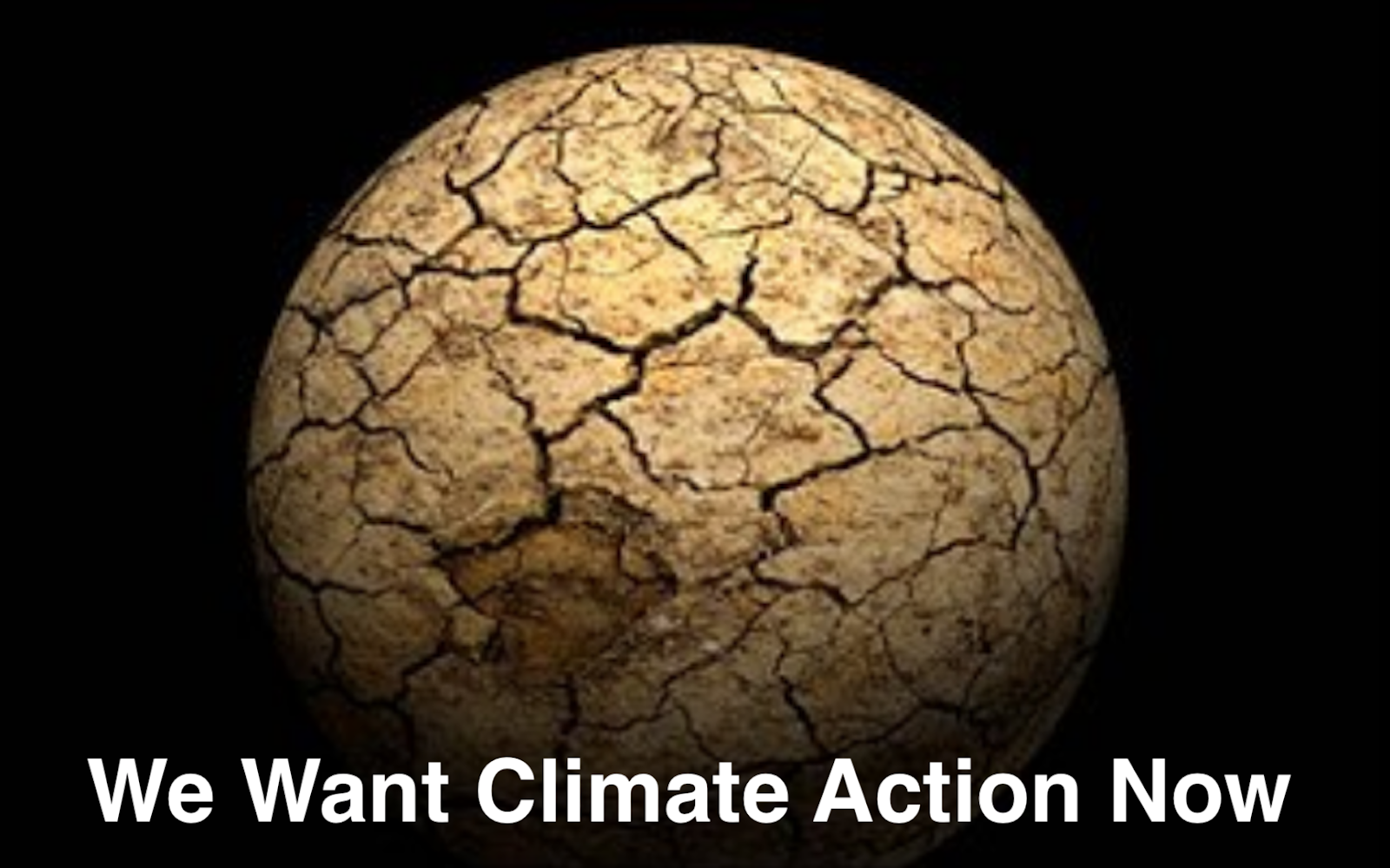
we want climate action now

As the planet relentlessly warms, action to address it is also heating up.  But while other parties are quickly adopting the cause, the Greens have been at the forefront of climate change action for years – and still are.

By Chris Johansen
 

Although ‘economics’ is derided as the ‘dismal science’, I would suggest that an even more dismal one is ‘climate science’. The unfolding series of measurements quantifying how planet Earth is overall warming, and its manifestations, paints a gloomy future for not only our grandkids but our kids – and even us. 

Increasing understanding of how humanity is driving this change, mainly through deforestation and the burning of fossil fuels, also presents solutions for turning this process around, i.e. revegetate and convert to renewable energy. However, an additional pall of gloom is imposed by the failure of humanity to, so far, meaningfully implement the obvious solutions to an otherwise inevitable catastrophe.

At this time of year, it is usual to sit back and review where we are, in the light of events unfolding over the previous 12 months. 

Yes, the bad news keeps on coming but signs of meaningful action to turn around our present climate trajectory are appearing.

Tuesday, 1 January 2019

Is Climate Change Too Much of An Inconvenience?


Photo by Daniel Jensen on Unsplash
Numbers of vertebrate animals have been depleted by 60% since 1970 due to direct human destruction, but at the end of the day do our modern comforts just mean too much to us to give up for long-term future gain?


I have recently been making concerted efforts to reduce the waste I create and lessen my individual impact on climate change. Not only does this take some thinking and planning, as these practices are not culturally inscribed in the average person, but even with the best tips and plans of action, it is not as easy as you might hope.

Firstly, there are numerous ways to reduce your personal carbon footprint. Plastic waste; general waste; other recyclable waste; food waste; food consumption — particularly meat and dairy, but also other produce, such as soy; energy consumption; pollution; and so on.

Where to start?

Go to Medium article

Wednesday, 21 November 2018

Bloomberg Opinion: Big Oil Doesn’t Like EV Subsidies, Just Its Own Giant Subsidy

The lack of a penalty for carbon emissions is the single biggest obstacle to a level playing field.

November 20, 2018

"A far-more efficient method is to put a price on the stuff you want less of and then let capitalism do its thing, pushing consumption away from the undesirables and investment toward innovative alternatives. Indeed, all these letters demand government officials stand back and let the market do its thing — except their version of the market leaves out one essential element. 

Greenhouse gases and the threat they pose are everyone’s problem, but the individual generating them at any given moment doesn’t pay toward dealing with that. Dump your garbage on your neighbor’s lawn and you’ll wind up paying to have it removed and probably a fine, too. Release 20 pounds of carbon dioxide into the atmosphere by burning a gallon of gasoline, and it’s a freebie.

This is an enormous effective subsidy for fossil fuels and makes a mockery of market piety. Using Yale economist and recent Nobel-prize winner William Nordhaus’s $31-per-tonne estimate of the social cost of carbon, it amounted last year to $107 billion for energy-related emissions from oil and natural gas in the U.S. Within that, emissions from transportation — the biggest source in the U.S. and the only one still growing — enjoyed a free ride worth $59 billion."

Read complete Bloomberg Opinion article