The prime minister of Fiji has warned Australia to reduce its coal
emissions and do more to combat climate change as regional leaders
prepare to gather in Tuvalu ahead of the Pacific Islands Forum this week. Speaking in Tuvalu
at a climate change conference ahead of the forum on Monday, Frank
Bainimarama appealed directly to Australia to transition away from
coal-powered energy and asked its government “to more fully appreciate”
the “existential threat” facing Pacific nations.
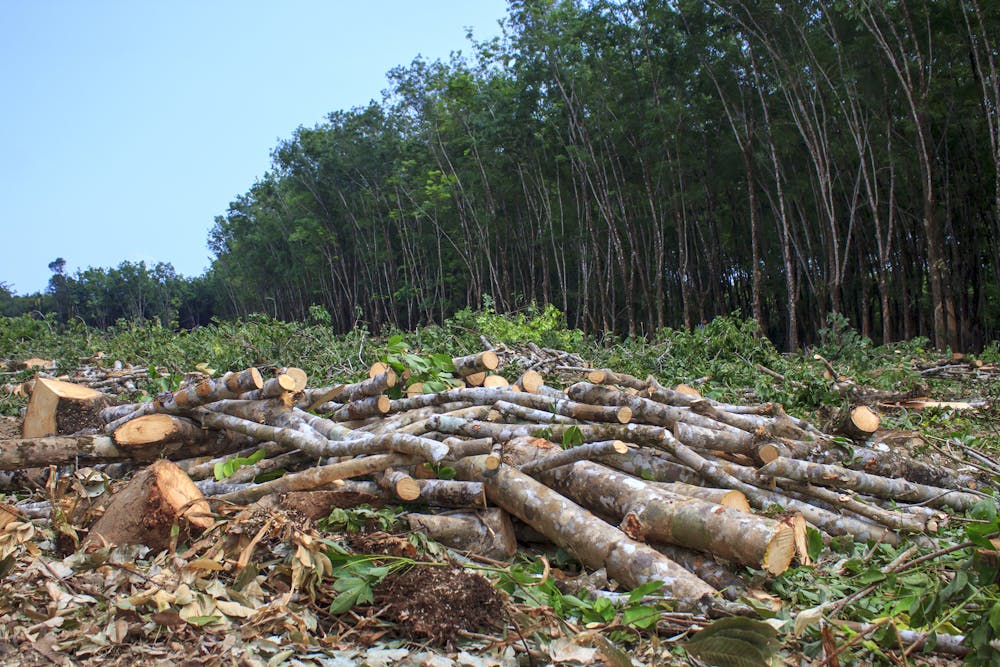
Logging has a serious effect on climate change, writes Frances Pike.
THE INTERGOVERNMENTAL PANEL for Climate Change (IPCC) recommends that "natural solutions" are employed to deal with
climate change emergency. The immediate protection and restoration of
natural systems for carbon dioxide removal (CDR) are preferred to
geo-engineering and B.E.C.C.S — burning biomass as a fossil fuel substitute while using some sort of carbon capture and storage.
It is clear that the resilience of natural systems must be enhanced
to withstand climate change impact, lest they falter and collapse,
inhibiting their capacity for CDR.
The fairytale that burning wood instead of coal is carbon
neutral continues to wreak havoc on the world’s extant forests. But that
fairytale could soon end, taking with it the myth that the industrial
logging of the world’s native forests has been and is now "sustainable".
For a long time, the falsity of carbon emission accounting for forest
bioenergy has been apparently invisible to many policymakers. A Weekend Australian commentator said, in relation to UK power station Drax which has converted to wood: “The
CO2 it emitted as a coal station was causing climate change; the
increased CO2 now emitted from burning wood is defined by the EC
bureaucrats as not existing”.
Report after report have been warning about the dangers of climate change - and that it is happening right now.
The United Nations Intergovernmental Panel on Climate Change has put the minds of more than 100 scientists together.
What they are saying is alarming: Not only are rising temperatures threatening the planet, but so are the world's eating habits.
The way food is farmed is drastically degrading the Earth's land, and
scientists predict that is making global warming worse and will lead to
food shortages.
So, how will governments respond to this warning?
Presenter: Mohamed Jamjoom
Guests:
Simon Lewis - Professor of global change science at University College London
Patrick Holden - CEO of Sustainable Food Trust
Jan Kowalzig - Senior climate policy adviser at Oxfam Germany
Drawing from a major new archive on the fossil fuel billionaire Koch
brothers, Sharon Kelly explains how its documents help illuminate the origin story for Charles and David Kochs' powerful network of influence.
DeSmog also launched a new research tool, the Koch Network Database,
to profile the dozens of organizations and individuals linked to
Charles Koch or other members of the Koch family, Koch Industries, and
related entities.
The Koch political network includes a wide range of groups working to
spread the Kochs’ free market vision on a range of civic issues, which
includes fighting against regulations on carbon emissions and denying
the existence or seriousness of man-made climate change.
Now, you can find this network’s members and activities, all in one
place. We have around 50 profiles to start and many more to come. Please
let us know if you have any information or documents to contribute.
"It’s a tragic missed opportunity. The new report on land
by the Intergovernmental Panel on Climate Change (IPCC) shies away from
the big issues and fails to properly represent the science. As a
result, it gives us few clues about how we might survive the century.
Has it been nobbled? Was the fear of taking on the farming industry –
alongside the oil and coal companies whose paid shills have attacked it
so fiercely – too much to bear? At the moment, I have no idea. But what
the panel has produced is pathetic.
The problem is that it concentrates on just one of the two ways of
counting the carbon costs of farming. The first way – the IPCC’s
approach – could be described as farming’s current account. How much
greenhouse gas does driving tractors, spreading fertiliser and raising
livestock produce every year? According to the panel’s report, the
answer is around 23% of the planet-heating gases we currently produce.
But this fails miserably to capture the overall impact of food
production.
The second accounting method is more important. This could be
described as the capital account: how does farming compare to the
natural ecosystems that would otherwise have occupied the land? A paper published in Nature
last year, but not mentioned by the IPCC, sought to count this cost.
Please read these figures carefully. They could change your life."
Tomorrow a special report on how land use affects climate change will be released by the Intergovernmental Panel on Climate Change.
Land degradation, deforestation, and the expansion of our deserts,
along with agriculture and the other ways people shape land, are all
major contributors to global climate change.
Conversely, trees remove carbon dioxide and store it safely in their
trunks, roots and branches.
Using ecological mechanisms for reducing and storing carbon is a
growing field of study. Broadly known as “natural climate solutions”,
carbon can be stored in wetlands, grasslands, natural forests and
agriculture.
This is called “sequestration”, and the more diverse and longer-lived
the ecosystem, the more it helps mitigate the effect of climate change.
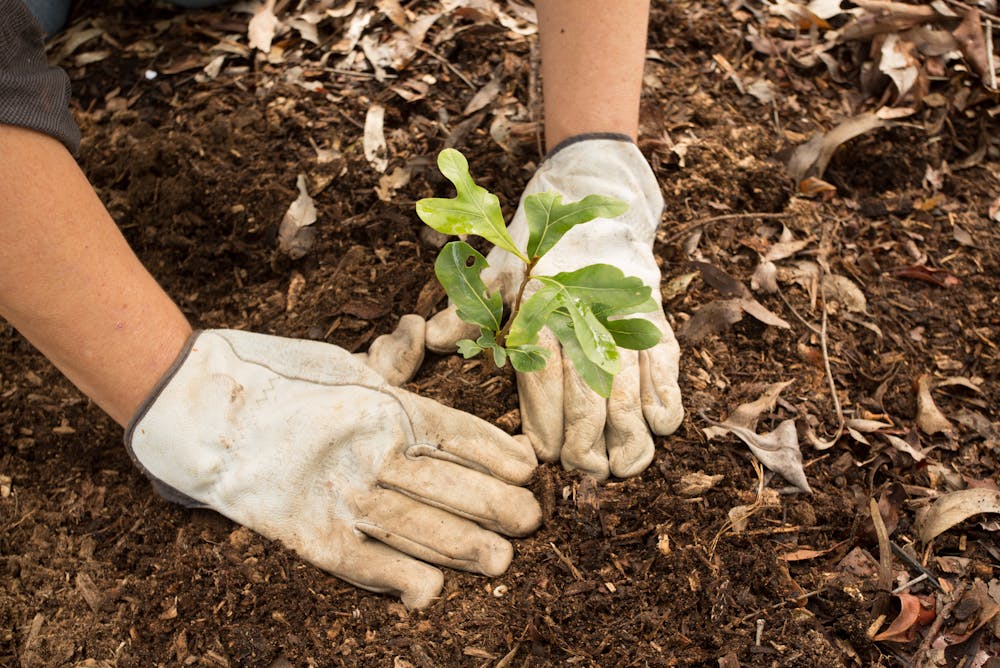
Allowing trees to regenerate
naturally is a more effective, immediate and low-cost method of removing
and storing atmospheric carbon than planting new trees.Shutterstock
Research has estimated these natural carbon sinks can provide 37% of the CO₂ reduction needed to keep the rise in global temperatures below 2℃.
But this research can be wrongly interpreted to imply that the
priority is to plant young trees. In fact, the major climate solution is
the protection and recovery of carbon-rich and long-lived ecosystems,
especially natural forests.
Read more:
Extreme weather caused by climate change has damaged 45% of Australia's coastal habitat
With the imminent release of the new IPCC report, now is a good time
to prioritise the protection and recovery of existing ecosystems over
planting trees.
Forest ecosystems (including the soil) store more carbon than the atmosphere. Their loss would trigger emissions
that would exceed the remaining carbon budget for limiting global
warming to less than the 2℃ above pre-industrial levels, let alone 1.5℃,
threshold.
Read more:
40 years ago, scientists predicted climate change. And hey, they were right
Natural forest systems, with their rich and complex biodiversity,
the product of ecological and evolutionary processes, are stable,
resilient, far better at adapting to changing conditions and store more carbon than young, degraded or plantation forests.
Protect existing trees
Forest degradation is caused by selective logging, temporary
clearing, and other human land use. In some areas, emissions from
degradation can exceed those of deforestation. Once damaged, natural ecosystems are more vulnerable to drought, fires and climate change.
Recently published research found helping natural forest regrow
can have a globally significant effect on carbon dioxide levels. This
approach – called proforestation – is a more effective, immediate and
low-cost method for removing and storing atmospheric carbon in the
long-term than tree planting. And it can be used across many different
kinds of forests around the world.
Avoiding further loss and
degradation of primary forests and intact forest landscapes, and
allowing degraded forests to naturally regrow, would reduce global
carbon emissions.Shutterstock
The
way we currently communicate climate change — be it through articles in
the newspaper, conversations with friends, or billboard adverts — is
fundamentally flawed.
Most discussions of climate change are framed negatively. Take the below screenshot from The Guardian’s
climate change section for instance (as of 17 Dec 2018). We have
climate change ruining dreams of a white Christmas, the message that the
next two years will determine humanity’s fate, corrupted businesses,
activists not doing enough protesting, and the end of blackcurrants.
It’s no wonder most people fail to engage with the narrative around
climate change: it’s simply all gloom and doom.