Thursday, 16 April 2020

The world's top climate negotiator is feeling optimistic. She says you should too: CNN

(CNN)At first glance, Christiana Figueres doesn't have that many reasons to be optimistic.The Costa Rican diplomat played a pivotal role in negotiating the Paris Climate Agreement in 2015. But while the deal was widely praised as a landmark achievement, it has since begun to crumble. 
 
The United States left the pact under President Donald Trump, and negotiations over key aspects of the deal's implementation have repeatedly failed.
 
Yet Figueres says she still feels upbeat about fighting climate change.
 
"It's a deliberate choice," she told CNN in a video call. "This is not about subjecting ourselves to huge sacrifices that lead us to feeling that we're having a worse life, it's actually exactly the opposite," she said.
 
"This is about moving toward a much better life, a life that has better health conditions, that has better urban conditions, that has better transport conditions, that has safer investment conditions."
A slight woman with short hair, Figueres has the sort of no-nonsense attitude that's called for when the future of the world is at stake and it's up to you to find a solution. 
 
She took over as the UN's top climate official in 2010, following the failed Copenhagen climate summit in 2009. 
 
When the Paris Agreement was signed five years later, Figueres was widely credited with making it happen. She also made the radical decision to bring the private sector and NGOs into the negotiations.
 
The idea that fighting climate change will make people's lives better is a key theme in Figueres' upcoming book "The Future We Choose."
 
Figueres and the book's co-author Tom Rivett-Carnac, who were both speaking from the Swiss ski resort of Davos for the World Economic Forum in January, told CNN their "stubborn optimism" is inspired by changes they have witnessed first hand. 
 
"We are in a different world than we were two years ago, the level of civil disobedience that has emerged all around the world, we haven't seen for a generation, it's incredibly positive," Rivett-Carnac said. 
 
...................................
 
The problem, she said, is that there isn't much time to take this control: A decade, at best. 
 
"Ten years from now, in 2030, we will either have written a very positive story, or we will really be condemned to an endless destruction. So for these 10 years we're holding the pen," Figueres said.
 

Wednesday, 15 April 2020

The Guardian view on the climate and coronavirus: global warnings

Steep falls in emissions have been the pandemic’s immediate effect. But what’s needed is a green recovery

So far, discussions of a coronavirus exit strategy have mainly focused on the steps that could bring an end to the lockdown. In the short term, both in the UK and elsewhere, there is nothing more desirable than letting people resume their lives, once it is safe to do so.

But the speed of the “return to normal” is not the only thing that matters. The manner in which the world’s leaders manage the colossal economic and political shocks caused by the virus is also of the utmost importance. And at the top of their list of priorities, alongside human welfare, must be the biosphere and its future.

Tuesday, 7 April 2020

Sorry to disappoint climate deniers, but coronavirus makes the low-carbon transition more urgent: The Conversation

"Deniers argue that further disruption to economies and societies will be avoided at all costs. 

Sorry to be the harbinger of denier disappointment, but there is every reason to expect that the virus crisis will strengthen and accelerate the imperative to transition to a low-carbon world by mid-century."

.............................

"Time is of the essence

As Christiana Figueres, former executive secretary of the UN’s Framework Convention on Climate Change, states in her recent book:
“We are in the critical decade. It is no exaggeration to say that what we do regarding emissions reductions between now and 2030 will determine the quality of human life on this planet for hundreds of years to come, if not more.”
This will require about a 50% reduction in emissions by 2030 – way more than is contemplated in the Paris agreement – to achieve even net zero emissions by 2050.

Read more: Coronavirus is a wake-up call: our war with the environment is leading to pandemics

There are a few “pluses” from the experience of coronavirus. Emissions are falling (although clearly no one would advocate a global recession as a climate strategy). And the response of governments to the crisis has seen decisive domestic action – working individually, but together, in meeting what is a global challenge.

Individual governments have demonstrated how quickly they can move once they accept the reality of a crisis. We’ve also seen just how far they’re prepared to go in terms of policy responses – lockdowns, social distancing, testing, rapid and historically significant fiscal expansions, and massive liquidity injections.

It’s noteworthy that issues that in “normal times” could not have been ignored – such as civil liberties and concerns about intrusive governments and effective competition – have so easily been set aside as part of emergency responses."

Read The complete The Conversation story 

#jail climate criminals

Monday, 30 March 2020

New research puts myth to bed: EVs will lower emissions: The DriveIn

New research has busted the myths around electric vehicles and emissions – confirming that in virtually every part of the world, including still coal-dominated Australia, switching to an electric vehicle will lead to lower greenhouse gas emissions.

The study, published in the journal Nature Sustainability, confirmed that in 95 per cent of the world, switching to an electric vehicle from a petrol equivalent would lead to an overall reduction in greenhouse emissions, even when the full life-cycle of a vehicle is taken into account.

There has been some conjecture over the emissions savings that could be achieved by a switch to an electric vehicle, with myths being pushed by the likes of climate contrarion Bjorn Lomborg in the Murdoch media that electric vehicles have no environmental benefits as they still may still source their electricity from fossil fuel power stations.

But the study, led by researchers from Radboud University in the Netherlands, working with the universities of Exeter and Cambridge, found that electric vehicles did indeed lead to lower emissions, even in regions where a large portion of electricity generation is sourced from fossil fuels.

Read more in the original article

Saturday, 28 March 2020

Cure for coronavirus-hit economy could be in renewables: Garnaut: Brisbane Times

"As Australia scrambles to avoid its first recession in three decades, economist Ross Garnaut says it is "exactly the right time" for government to throw cash into renewable energy infrastructure.

The global outbreak of COVID-19 has already taken a bite out of tourism, education and export industries, with the federal government working on a stimulus package to stave off a recession.
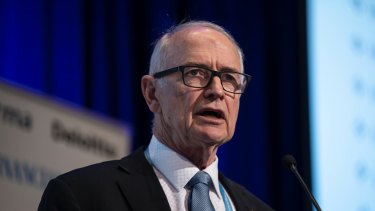
Professor Ross Garnaut says government should be investing in renewable energy.
Professor Ross Garnaut says government should be investing in renewable energy. Credit:Louie Douvis

Professor Garnaut said the country could not avoid sliding into a recession, but governments could "shape the way we come out of it".

"Even if there was no disruption in Australia from the virus, what has already happened to the economies of our major trading partners is deeply damaging to the Australian economy," he said, speaking at a CEDA lunch in Brisbane on Wednesday.
"The pure economics say right now is exactly the right time for major investment in the industries and infrastructure of the future."

"The high cost of transporting renewable energy overseas made Australia the perfect candidate to process its own iron, aluminium and other raw minerals, he said.

"Play it right and Australia has exceptional opportunities for new areas of prosperity and economic expansion in the zero-emissions world economy," he said."


Read the original Brisbane Times article

Thursday, 26 March 2020

Greens amendments to protect renters pass NSW Parliament

The Greens NSW successfully amended the COVID-19 Emergency Measures Bill in NSW Parliament last night, to enable protections for renters to be part of the emergency response by the relevant Ministers now that Parliament has been adjourned.

Greens NSW MP and Housing spokesperson, Jenny Leong MP, said today:
“The COVID-19 Bills introduced by the NSW Government yesterday didn't include any measures for renters or tenants - in fact there was nothing that even began to address the housing and homelessness crisis that is just around the corner if we don't act swiftly.”

“This isn’t just a human rights issue: it’s a health issue. You can’t stay home to social distance without a house. You can’t limit your shopping without a fridge. You can’t rest and recover without a bed.

“Yesterday morning, after getting the Bill late Monday night, I started working with the NSW Tenants Union to draft amendments that would address this massive oversight, these amendments were introduced by the Greens and subsequently passed into law.

“The amendments give the power to the relevant ministers in NSW to create regulations to put a moratorium on evictions, prevent people having their lease terminated and make other changes to what current powers landlords and owners have over tenants.

“If this amendment hadn't been made, they would have had to draft legislation, wait until parliament resumed (next scheduled date in September), then have the legislation debated & passed.

“While these amendments give delegated power to the relevant minister to act, they still need to do that. The National Cabinet including the NSW Premier is meeting tonight, and tenancy is on the agenda. They can and should decide tonight to provide security and relief for renters that can be implemented immediately.

“These are extraordinary times, and these are extraordinary powers, powers that can be used for good - right now - to protect residential and commercial tenants from evictions.

“By passing these NSW Greens amendments to protect renters, the Parliament has put the ball in the Liberals court: they have the capacity to stop families being kicked out of their homes in the middle of this crisis,” Ms Leong said.

Wednesday, 25 March 2020

Why don’t we treat the climate crisis with the same urgency as coronavirus? / The Guardian

"It is a global emergency that has already killed on a mass scale and threatens to send millions more to early graves. As its effects spread, it could destabilise entire economies and overwhelm poorer countries lacking resources and infrastructure. But this is the climate crisis, not the coronavirus. Governments are not assembling emergency national plans and you’re not getting push notifications transmitted to your phone breathlessly alerting you to dramatic twists and developments from South Korea to Italy.

More than 3,000 people have succumbed to coronavirus yet, according to the World Health Organization, air pollution alone – just one aspect of our central planetary crisis – kills seven million people every year. There have been no Cobra meetings for the climate crisis, no sombre prime ministerial statements detailing the emergency action being taken to reassure the public. In time, we’ll overcome any coronavirus pandemic. With the climate crisis, we are already out of time, and are now left mitigating the inevitably disastrous consequences hurtling towards us."

.....................................

"Imagine, then, that we felt the same sense of emergency about the climate crisis as we do about coronavirus. What action would we take? As the New Economic Foundation’s Alfie Stirling points out, a strict demarcation between the two crises in unwise. After all, coronavirus may trigger a global slowdown: the economic measures in response to this should be linked to solving the climate crisis. “What tends to happen in a recession is policy-makers panic about what the low-lying fruits are; it’s all supply chains and sticking plasters,” he tells me. During the 2008 crash, for example, there was an immediate cut in VAT and interest rates, but investment spending wasn’t hiked fast enough, and was then slashed in the name of austerity. According to NEF research, if the coalition government had funded additional zero-carbon infrastructure, it would not only have boosted the economy but could have reduced residential emissions by 30%. This time round, there’s little room to cut already low interest rates or boost quantitative easing; green fiscal policy must be the priority."

Read the whole original story 

"Coronavirus poses many challenges and threats, but few opportunities. A judicious response to global heating would provide affordable transport, well-insulated homes, skilled green jobs and clean air. Urgent action to prevent a pandemic is of course necessary and pressing. But the climate crisis represents a far graver and deadlier existential threat, and yet the same sense of urgency is absent. Coronavirus shows it can be done – but it needs determination and willpower, which, when it comes to the future of our planet, are desperately lacking."

Read the whole original story