Showing posts with label banks. Show all posts

Monday, 14 December 2020

Is Climate-Related Financial Regulation Coming Under Biden? Wall Street Is Betting on It (excerpt): Inside Climate News

 "The president-elect has said he would require publicly traded companies to disclose emissions and financial risks associated with global warming.

The White House may not be preparing to transition to a Biden administration, but Wall Street is.

While President Trump and other Republican leaders continue to dispute the election results, the financial sector is moving ahead with plans to begin the transition to a carbon-free economy and acknowledge a new administration that’s eager to tackle the climate crisis.

Investors are increasingly putting their money into funds geared toward either excluding the fossil fuel industry entirely, or underweighting high-carbon companies in their mix. 

A growing number of major banks and other money managers have committed to net-zero emissions by 2050 and have pledged to disclose


exactly how their finances contribute to climate change, as well as which of their assets are at risk from its impacts. And last week, the U.S. Federal Reserve said for the first time that failing to address climate change would put the nation’s finances at risk and its economy at a global disadvantage.

For years, analysts have been saying that the global economy is shifting away from fossil fuels and toward renewable energy, with or without the United States. Clean energy saw an expansion this year despite a global drop in energy demand because of the pandemic, the International Energy Agency said last week, and renewables are likely to expand nearly 50 percent by 2025.

Now, as President-elect Joe Biden prepares to take office in January, global finance leaders are again calling on the United States to provide some kind of federal guidance for companies in regard to climate change, especially as other parts of the world begin taking major regulatory action.

Last week, the United Kingdom announced that within five years, all major companies and financial institutions doing business in the country would be required to measure and disclose their climate risks and greenhouse gas emissions—a move met with wide support from the financial industry."

 Link to complete Inside Climate News story by Kristoffer Tigue

Big batteries are getting bigger and smarter, and doing things fossil fuels can’t do (excerpt): RenewEconomy


Friday, 31 January 2020

Bushfire survivors join claim against ANZ for financing climate crisis : The Guardian

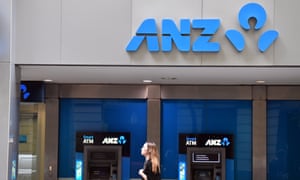
A pedestrian walks past ANZ bankThree survivors joined Friends of the Earth to accuse ANZ of misleading consumers by investing in fossil fuel projects

 
One survivor, Jack Egan, claims there is a clear link between ANZ’s support for fossil fuels and the exacerbated bushfires conditions. Photograph: Mick Tsikas/AAP 
 
Three bushfire survivors have joined environment group Friends of the Earth in a legal claim against ANZ, accusing it of financing the climate crisis by funding fossil fuel projects.

Read The Guardian article 

Related:

With 130-Mile Coast, New Jersey Marks a First in Climate Change Fight: NYT


Monday, 30 September 2019

Climate Risk in the Housing Market Has Echoes of Subprime Crisis, Study Finds: NYT

"Asaf Bernstein, an economist at the University of Colorado in Boulder, said the findings highlighted another problem: By agreeing to buy mortgages for homes at risk from climate change, without charging a premium that reflects that risk, the federal government had effectively encouraged home construction and purchases in vulnerable areas.


“It’s basically an implicit subsidy,” Mr. Bernstein, who was not involved in the study, said.

Economists at both Fannie and Freddie have warned in the past of the risks that climate-related increases in flooding pose to the mortgage industry. In 2016, Sean Becketti, then the chief economist at Freddie Mac, wrote that rising seas “appear likely to destroy billions of dollars in property.”

“The economic losses and social disruption may happen gradually, but they are likely to be greater in total than those experienced in the housing crisis and Great Recession,” he wrote. “It is less likely that borrowers will continue to make mortgage payments if their homes are literally underwater.”

See also:

'It doesn't feel justifiable': The couples not having children because of climate change: SMH


Sunday, 5 May 2019

The Bank of England lays bare the “very real” trillion-dollar risks of climate change: QUARTZ

My message today is simple. Climate change poses significant risks to the economy and to the financial system, and while these risks may seem abstract and far away, they are in fact very real, fast approaching, and in need of action today.
That’s how Sarah Breeden began her speech titled “Avoiding the storm: Climate change and the financial system” (pdf) yesterday. Breeden is the Bank of England’s executive director of International Banks Supervision and she was speaking at the Official Monetary & Financial Institutions Forum in London.

The urgency in Breeden’s speech was also on display on London’s streets. Earlier in the day, the environmental group Extinction Rebellion blocked traffic in five iconic locations across the city in a peaceful, non-violent protest to bring attention to “inactivity” of governments on fighting climate change.


Thursday, 18 April 2019

With Climate Losses Rising, Central Banks Push Greener Finance: Bloomberg

Weather related catastrophes are increasing
"The measures are aimed at building awareness about the potential losses as global temperatures increase, making storms more powerful and weather less predictable. It’s also seeking to encourage funding for greener projects that would reduce emissions and make renewables more affordable.


“If some companies and industries fail to adjust to this new world, they will fail to exist,” Carney and Villeroy said in a Guardian newspaper article on Wednesday. They warned that a “massive” reallocation of capital was necessary to prevent global warming, with the banking system playing a pivotal role."

Read the complete Bloomberg story 

See also:

Corporate America Is Getting Ready to Monetize Climate Change: Bloomberg

Not OK to profit from wrecking the climate
"Bank of America Corp. worries flooded homeowners will default on their mortgages. The Walt Disney Co. is concerned its theme parks will get too hot for vacationers, while AT&T Inc. fears hurricanes and wildfires may knock out its cell towers.

The Coca-Cola Co. wonders if there will still be enough water to make Coke.

As the Trump administration rolls back rules meant to curb global warming, new disclosures show that the country’s largest companies are already bracing for its effects. The documents reveal how widely climate change is expected to cascade through the economy -- disrupting supply chains, disabling operations and driving away customers, but also offering new ways to make money."

Read the Bloomberg story 

See also: Latest: Pentagon Warns of Risk to Bases, Troops From Climate Change

Wednesday, 13 March 2019

'Change now or pay later': RBA's stark warning on climate change: SMH

"The Reserve Bank has warned climate change is likely to cause economic shocks and threaten Australia's financial stability unless businesses take immediate stock of the risks."

"Dr Debelle said the bank was speaking about the issue because of the size of the impact climate change would have on the economy.

"Some of these developments are actually happening now," he said.


Dr Debelle said the current drought across large swathes of the eastern states has already reduced farm output by around 6 per cent and total economic growth by about 0.15 per cent.