Monday, 14 October 2019

Hello From the Year 2050. We Avoided the Worst of Climate Change — But Everything Is Different: NYT

Let’s imagine for a moment that we’ve reached the middle of the century. It’s 2050, and we have a moment to reflect—the climate fight remains the consuming battle of our age, but its most intense phase may be in our rearview mirror. And so we can look back to see how we might have managed to dramatically change our society and economy. We had no other choice.
There was a point after 2020 when we began to collectively realize a few basic things.

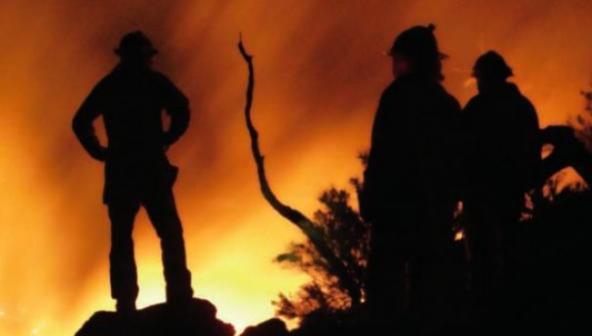
One, we weren’t getting out of this unscathed. Climate change, even in its early stages, had begun to hurt: watching a California city literally called Paradise turn into hell inside of two hours made it clear that all Americans were at risk. When you breathe wildfire smoke half the summer in your Silicon Valley fortress, or struggle to find insurance for your Florida beach house, doubt creeps in even for those who imagined they were immune.

Two, there were actually some solutions. By 2020, renewable
energy was the cheapest way to generate electricity around the planet—in fact, the cheapest way there ever had been. The engineers had done their job, taking sun and wind from quirky backyard DIY projects to cutting-edge technology. Batteries had plummeted down the same cost curve as renewable energy, so the fact that the sun went down at night no longer mattered quite so much—you could store its rays to use later.

And the third realization? People began to understand that the biggest reason we weren’t making full, fast use of these new technologies was the political power of the fossil-fuel industry. 
Investigative journalists had exposed its three-decade campaign of denial and disinformation, and attorneys general and plaintiffs’ lawyers were beginning to pick them apart. And just in time.

Read the NYT article 

See also: 

Blame for Extinction Spreads to Methane Gas: NYT


#jailclimatecriminals  #suefossilcorpsdirectors

Blame for Extinction Spreads to Methane Gas: NYT

"Two hundred million years ago, at the end of the Triassic period, a mass extinction, often attributed to major volcanic activity, wiped out half of all marine life on Earth. But new research published in the journal Science suggests that the extinction was more likely to have been caused by the release of at least 12,000 gigatons of methane from the seafloor into the atmosphere."

"Dr. Ruhl and his colleagues studied carbon isotopes of sediments from the period and found that the extinction event coincided with the giant release of methane into the atmosphere.
Volcanoes still played in a role in the process, Dr. Ruhl said.

“There was a release of CO2 from volcanic eruptions that warmed up global temperatures and also the ocean,” he said. “Methane is only stable under certain temperatures. If it gets warm, it is released.”

The study could be foreshadowing the effect of climate change on Earth, Dr. Ruhl said. An increase of carbon dioxide in the atmosphere from fossil-fuel use could warm up the planet enough to release methane from the ocean floors, he said."

Read the NYT article

Friday, 11 October 2019

How to Have a Useful Conversation About Climate Change in 11 Steps Climate change can be an emotional topic. Here’s how to approach it: Medium

.... "After working in mental health and education for 20 years, I’ve learned that nobody likes being told what to do. When we want to talk about climate change with friends or family, or even with a stranger on social media, I think we too quickly launch into a proclamation of the superiority of our opinions. We lecture more than we listen and this gets in the way. A key question is this: How can we have productive conversations about climate change that result in people feeling more engaged, informed, and willing to do something different?
Here is an 11-step guide that will get results:

f1. Know thyself

Before you have a conversation with someone else, you need to have a conversation with yourself. (Thank you, Richard of City Atlas.) Begin by asking yourself this question: “Why does climate change matter to me?” Spend time getting familiar with your own thoughts, emotions, assumptions, stories, and consumption habits. Ask yourself the questions in this 11-step map and really listen to everything you have to say. This will give you an invaluable foundation of self-understanding and self-awareness, and it will make you well-prepared to have your first conversation with someone else about climate change."

Thursday, 10 October 2019

There are three types of climate change denier, and most of us are at least one: ABC

"Last week, amid the cacophony of reactions to Greta Thunberg's appearance before the United Nations Climate Action Summit, a group of self-proclaimed "prominent scientists" sent a registered letter to UN Secretary-General Antonio Guterres. 

The letter, headed "There is no climate emergency", urged Guterres to follow:
"…a climate policy based on sound science, realistic economics and genuine concern for those harmed by costly but unnecessary attempts at mitigation."
The group, supported by 75 Australian business and industry figures, along with others around the world, obviously rejects the scientific consensus on climate change. 

But this missive displays remarkably different tactics to those
previously used to stymie climate action.

The language of climate change denial and inaction has transformed. 

Outright science denial has been replaced by efforts to reframe climate change as natural, and climate action as unwarranted.

However, this is just another way of rejecting the facts, and their implications for us. Denial can take many forms."

Read the complete ABC NEWS article 

See also:

How the Climate Kids Are Short-Circuiting Right-Wing Media: NYT

Wednesday, 9 October 2019

U.N. Climate Action Summit: World leaders announce plans to tackle climate change: Video


Days after millions of young people took to the streets worldwide to demand emergency action on climate change, leaders gathered at the United Nations on Monday to try to inject fresh momentum into stalling efforts to curb carbon emissions.

Chancellor Angela Merkel announced that Germany would double its contribution to a U.N. fund to support less developed countries to combat climate change to 4 billion euros from 2 billion euros.

New Zealand Prime Minister Jacinda Ardern said the country is determined to be the most "sustainable food-produced in the world," while Indian Prime Minister Modi pledged to increase the country's renewable energy capacity.

 Over 60 world leaders and CEOs of energy and financial companies are expected to address the United Nations conference and announce climate finance measures and transitioning from coal power.

 For more info, please go to https://globalnews.ca/news/5940258/gr...


See also

We are talking about 'drought-proofing' again – they are simplistic solutions that will destroy Australia : The Guardian


#jailclimatecriminals  #suefossilcorpdirectors  #climatecrisis

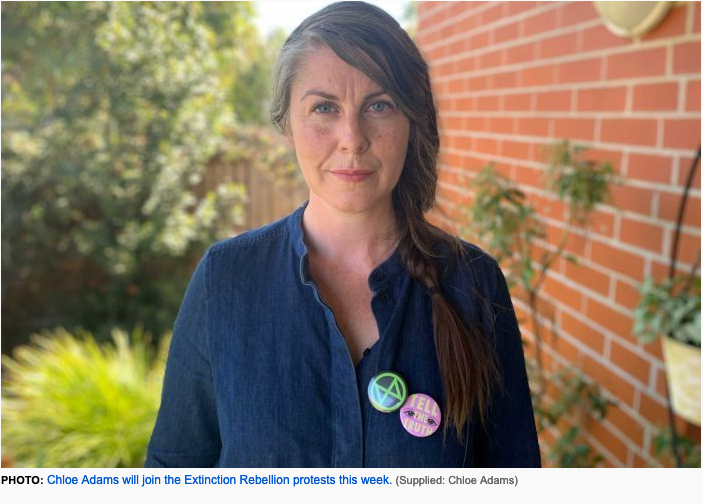
I'm an Extinction Rebellion protester and I'll be disrupting your work commute. Here's why: ABC

"This week thousands of ordinary Australians, and many thousands more across the globe, will disrupt major cities with rolling blockades to draw attention to the climate crisis. 

They will do so under the name of Extinction Rebellion (or XR for short), a new environmental movement. 

As a result of their actions, your life may be disrupted. You may be forced to wait or find another route. You may even become angry.
Inevitably these protesters, myself included, will be reduced by some news media to just another bunch of climate activists.
I want to tell you though, that term "climate activist", whilst true, is limiting. 

It certainly doesn't capture the truth of who I am or why I joined XR. It doesn't tell you that I am a mother of two small children. Or that I have lived a law-abiding life."

Read the complete ABC article 

Satellite Data Record Shows Climate Change's Impact on Fires : NASA


#jailclimatecriminals   #suefossilcorpdirectors  #climatecrisis

No time to be polite about climate: Eureka Street


............ "Today, most people regard the Greensboro Four as heroes. But what would Peter Dutton have said to them?

This week, the Home Affairs Minister called for mandatory sentences for climate protesters who broke the law, claimed that activists who inconvenienced others should be 'named and shamed', and declared that those receiving social security should have their payments stripped. Senior Nationals minister David Littleproud agreed. He, too, denounced protesters, urging magistrates to 'slip into them'. 'What this should be is about respect. When they don't, we've got to call them out.'

All the same arguments were made in Greensboro in 1960. Woolworth's was, after all, just going about its business. Segregation was not only legal — it was mandated. By demanding to be served, the Greensboro protesters (who were, incidentally, like the climate strikers very young) were both breaking the law themselves and asking the staff to join them in criminality.

Their sit-in disrupted normal routines, just as much as any Extinction Rebellion stunt does. The Woolworth's lunch counter was a busy facility, providing food for thousands of hungry workers each day. As the protests spread, they inevitably inconvenienced apolitical men and women who were just trying to get on with their lives. That's why, throughout the south, prosecutors generally charged those defying segregation with crimes like 'disturbing the peace' or 'disorderly conduct'.

So would Littleproud have said that the Greensboro Four 'lacked respect'? If not, why not?"

Read the complete Eureka Street article 

Related:

George Monbiot "It's time to be scientifically realistic" | Extinction Rebellion

#jailclimatecriminals  #suefossilcorpdirectors  #climatecatastrophe