Monday, 24 August 2020

Polar bears, climate crisis, and oil and gas drilling in the Arctic National Wildlife Refuge: WWF site (excerpt)


Identify areas where  cute polar bear cubs can live on solid Arctic sea ice
Polar bear cubs at risk from climate change
"Sea levels are rising and oceans are becoming warmer. Longer, more intense droughts threaten crops, wildlife and freshwater supplies. From polar bears in the Arctic to marine turtles off the coast of Africa, our planet’s diversity of life is at risk from the changing climate."

"Climate change poses a fundamental threat to the places, species and people’s livelihoods WWF works to protect. To adequately address this crisis we must urgently reduce carbon pollution and prepare for the consequences of global warming, which we are already experiencing. WWF works to:
  • advance policies to fight climate change
  • engage with businesses to reduce carbon emissions
  • help people and nature adapt to a changing climate"


"Humans and wild animals face new challenges for survival because of climate change. More frequent and intense drought, storms, heat waves, rising sea levels, melting glaciers and warming oceans can directly harm animals, destroy the places they live, and wreak havoc on people’s livelihoods and communities."


Humans and wild animals face new challenges for survival because of climate change

Polar bears, climate crisis, and oil and gas drilling in the Arctic National Wildlife Refuge


"To adequately address the climate crisis we must urgently reduce carbon pollution and prepare for the consequences of global warming, which the world is already experiencing. Combining global outreach with local expertise, WWF:
  • helps people and nature adapt to a changing climate
  • advances policies to fight climate change
  • combats deforestation
  • engages with businesses to reduce carbon emissions
  • challenges U.S. cities to prepare for more extreme weather"


"Adapting to Climate Change


To avoid the worst effects of climate change, we need to dramatically reduce global carbon emissions. But we must also prepare for the significant and unavoidable consequences of carbon
Identify areas where polar bears can live on solid Arctic sea ice for decades to come
polar bear cubs
emissions such as increasing temperatures, shifting precipitaton patterns, ocean acidification, sea level rise and the increasing intensity and frequency of extreme weather events. WWF works with local communities, governments and others around the world to help nature and people prepare for the many impacts of a changing climate. To do this we:

  • Increase resilience of communities in Nepal by promoting new farming techniques, community weather monitoring and creating seed banks
  • Restore beach vegetation to shade marine turtle nests in the Caribbean
  • Secure access to fresh water for elephants in Thailand during periods of drought
  • Identify areas where polar bears can live on solid Arctic sea ice for decades to come"
 Go to WWF site
 Related: Brazil slashes budget to fight climate change as deforestation spikes: Reuters

The Two Sides to Canada’s Post Pandemic Recovery: by Rolly Montpellier @Below2C

There are two sides to Canada’s post pandemic recovery. On the bright side there’s massive public support for a recovery that puts people before profits and tackles both the climate crisis and the coronavirus crisis simultaneously. Hundreds of organizations all across the land have endorsed these Just Recovery Principles. But there is also a dark side.

The Two Sides to Canada's Post Pandemic Recovery, Below2C
Canada's commitment to different energy types since beginning od Covid 19 pandemic


1. The Dark Side

“The last time we had a financial meltdown (the 2008-09 recession) it was followed by a record surge in fossil fuel burning,” wrote Barry Saxifrage and Chris Hatch recently in the National Observer
 “At the time there was hope that governments would use their huge, future-shaping stimulus to transition to a climate-safe economy.”

Fossil Fuel Burning Annual Totals


Well, that didn’t happen. Instead, the burning of fossils soared in 2010 and continued its upward trajectory every single year since. That is, until the pandemic as the Global Fossil Fuel Burning chart illustrates. The blue dotted line on the chart shows the projection for an 8% decline in CO² for 2020.

The Observer view on the climate catastrophe facing Earth : The Guardian


"Thirty years ago we were warned. Now is our last chance to listen
 
warned the authors of the first assessment report of the IPCC
Climate Catastrophe

Thirty years ago this week, the population of Earth was given official notification that it faced a threat of unprecedented magnitude. Emissions of carbon dioxide and other greenhouse gases, spewed into the atmosphere from factories and vehicles burning fossil fuels, were pinpointed, definitively, as triggers of future climate change. 

Melting icecaps, rising sea levels and increasing numbers of extreme weather events would be the norm for the 21st century unless action were taken, warned the authors of the first assessment report of the Intergovernmental Panel on Climate Change (IPCC).

The scientists had been charged by the IPCC, which had been set
warned the authors of the first assessment report of the IPCC
When Arctic Ice Melts
up two years earlier, with establishing whether climate change was a real prospect and, if it was, to look at the main drivers of that threat. They concluded, in a report released in August 1990, that the menace was real and that coal, gas and oil would be the principal causes of global heating. Unless controls were imposed on their consumption, temperature rises of 0.3C a decade would be occurring in the 21st century, bringing havoc in their wake."


Go to complete story of The Guardian 

 Related: There is an answer to post Covid-19 economic chaos.

UN Intergovernmental Panel on Climate Change (IPCC), IPCC report, #climate crisis, #cambio-climatico, #climatecriminals, #jailclimatecriminals, 

Sunday, 23 August 2020

Brazil slashes budget to fight climate change as deforestation spikes: Reuters


Brazil has seen a sharp spike in deforestation
Climate change driving Brazil's drought; Climate Change News.com
BRASILIA 

"Efforts to keep the Amazon rainforest standing and reduce Brazil’s planet-warming emissions are being hampered by budget cuts for the country’s environmental watchdog and its main climate change programme, researchers have said. 

Brazil has seen a sharp spike in deforestation under the right-wing government of President Jair Bolsonaro, with less than half the forest inspectors it had a decade ago and the COVID-19 pandemic spreading rapidly across the Amazon region. 

Compared with 2019, the first five months of 2020 registered a
Brazil has seen a sharp spike in deforestation
Amazon deforestration: Climate Change News com
substantial drop in government spending on forest inspection activities carried out by the Brazilian Institute of Environment and Renewable Natural Resources (Ibama). 

For January to May 2019, the amount allocated was R$17.4 million ($3.24 million), against R$5.3 million so far in 2020, according to figures provided by the Institute of Socioeconomic Studies (INESC), a non-profit organisation that has analysed Brazil’s public budget for more than 30 years. 

Sinking billions of taxpayer dollars into gas would make Australia an international pariah (excerpt) : The Guardian


billions into gas would mean Australia having to say officially it was abandoning its Paris targets
"The world price for gas continues to dive."

"If environmentalists proposed a comparable
 guarantee to windfarms or industrial-scale
 solar or hydrogen they would be hounded
 for blatant rent seeking."
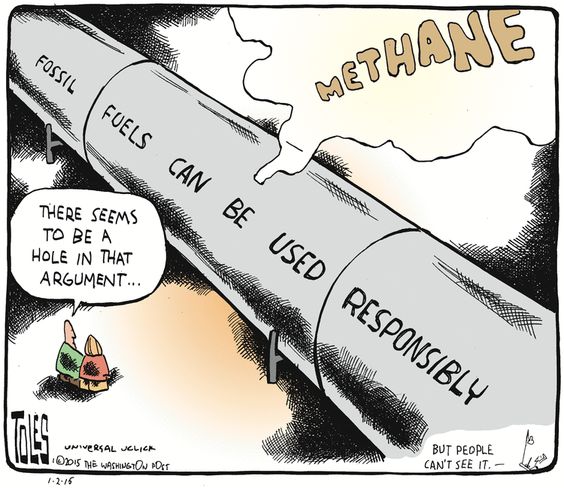
The Morrison government’s post-Covid recovery commission has called for an astonishing level of support for a declining carbon fuel.

"Gas in our own national electricity market has declined by 29% since 2014 and renewables sprung up by 70%, according to data from OpenNEM. The official market operator believes by 2040 the role of gas is going to be smaller. The gas glut on the world market will last the decade.

A decision by Canberra to rescue a declining carbon fuel by sinking billions into gas would mean Australia having to say officially it was abandoning its Paris targets. Given that our 2019-20 fire season is the most recent image the world has of us, this would brand us an international pariah.


Liveris admitted he “tingled with pride” being recruited as an adviser by the US president, Donald Trump. But a Biden-Harris presidency will elevate climate diplomacy and have little regard for an Australia turning its back on climate action as flamboyantly as Brazil’s president Jay Bolsonaro who allows fires to denude the Amazon."
Bob Carr

Read the complete (Aug 21) The Guardian story 

Related: There is an answer to post Covid-19 economic chaos.

#climatecriminals, #methanegas, #climate crisis, #jailclimatecriminals, #corporations, #criminalesclimáticosdelacárcel, #climateaction, Paris Targets, 


Climate change is an economic issue (excerpt from Labor would have to be politically insane to follow Fitzgibbon's fossil fuel folly ): The Guardian

"Climate change is an economic issue, not a matter of religious observance, or inner city high fashion. All the ridiculous language of “belief” and “scepticism” – as if climate science was astrology, or a cult, or a wellness guru – has been entirely unhelpful to progress. 

Labor is fully capable of putting workers at the centre of a plan for economic transformation which will see carbon-intensive industries scale back and other more sustainable industries prosper in a low carbon world. 

That’s how Bob Hawke would have framed climate and energy policy in the 2020s, and Hawke presided over one of the most successful Labor governments in the party’s history."


 Related: There is an answer to post Covid-19 economic chaos.

#Australia, Labor Party, economic impact, jobs, #jailclimatecriminals, 

The Green Recovery: how Australia can close the recycling loop: The Guardian - Video


Remember when you would take your TV to get repaired if it was broken? 

Now, most people just buy a new one. 

When a new phone comes out, we ditch the old one. Each time we do this we're eating into a finite supply of resources and creating mountains of waste. 

A circular economy – also known as closing the loop – is when used items don't end up in landfill, but instead become the building blocks for new products. 

There's a whole industry waiting to be developed in Australia, if governments would get on board. 

This man turns discarded coffee cups into roads.

Related: There is an answer to post Covid-19 economic chaos.