
|
|||
|
Sunday, 11 August 2019
DESMOG Newsletter

Saturday, 10 August 2019
We can’t keep eating as we are – why isn’t the IPCC shouting this from the rooftops? The Guardian
 |
| by George Monbiot |
Wednesday, 7 August 2019
Want to beat climate change? Protect our natural forests: The Conversation
Tomorrow a special report on how land use affects climate change will be released by the Intergovernmental Panel on Climate Change.
Land degradation, deforestation, and the expansion of our deserts, along with agriculture and the other ways people shape land, are all major contributors to global climate change.
Conversely, trees remove carbon dioxide and store it safely in their trunks, roots and branches.
Research published in July estimated that planting a trillion trees could be a powerful tool against climate change.
Read more: Our cities need more trees, but some commonly planted ones won't survive climate change
However, planting new trees as a climate action pales in comparison to protecting existing forests. Restoring degraded forests and expanding them by 350 million hectares will store a comparable amount of carbon as 900 million hectares of new trees.
Natural climate solutions
Using ecological mechanisms for reducing and storing carbon is a growing field of study. Broadly known as “natural climate solutions”, carbon can be stored in wetlands, grasslands, natural forests and agriculture.This is called “sequestration”, and the more diverse and longer-lived the ecosystem, the more it helps mitigate the effect of climate change.
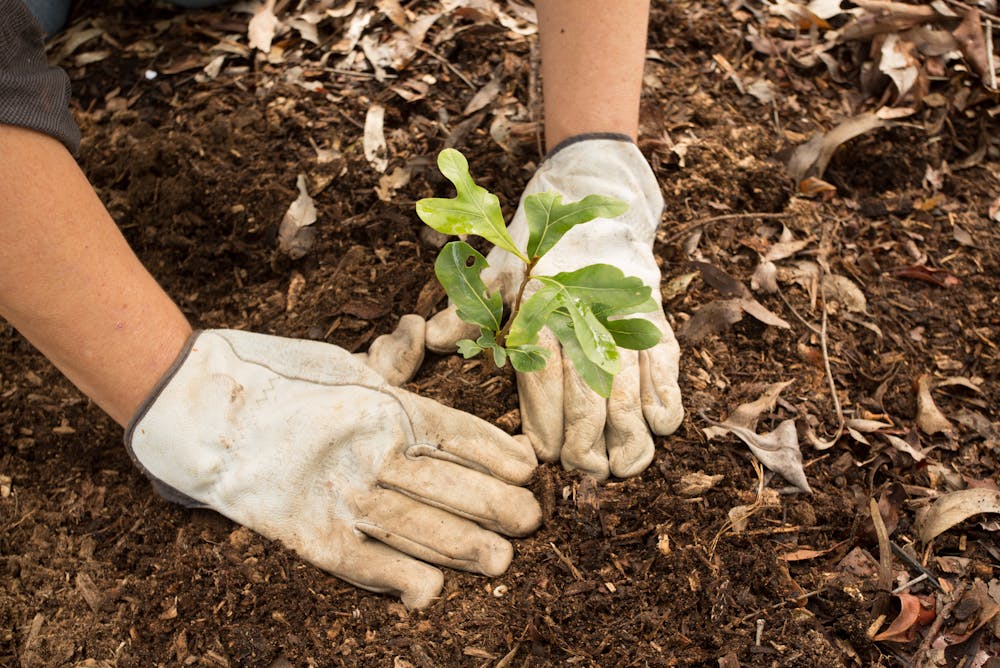
But this research can be wrongly interpreted to imply that the priority is to plant young trees. In fact, the major climate solution is the protection and recovery of carbon-rich and long-lived ecosystems, especially natural forests.
Read more: Extreme weather caused by climate change has damaged 45% of Australia's coastal habitat
With the imminent release of the new IPCC report, now is a good time to prioritise the protection and recovery of existing ecosystems over planting trees.
Forest ecosystems (including the soil) store more carbon than the atmosphere. Their loss would trigger emissions that would exceed the remaining carbon budget for limiting global warming to less than the 2℃ above pre-industrial levels, let alone 1.5℃, threshold.
Read more: 40 years ago, scientists predicted climate change. And hey, they were right
Natural forest systems, with their rich and complex biodiversity, the product of ecological and evolutionary processes, are stable, resilient, far better at adapting to changing conditions and store more carbon than young, degraded or plantation forests.
Protect existing trees
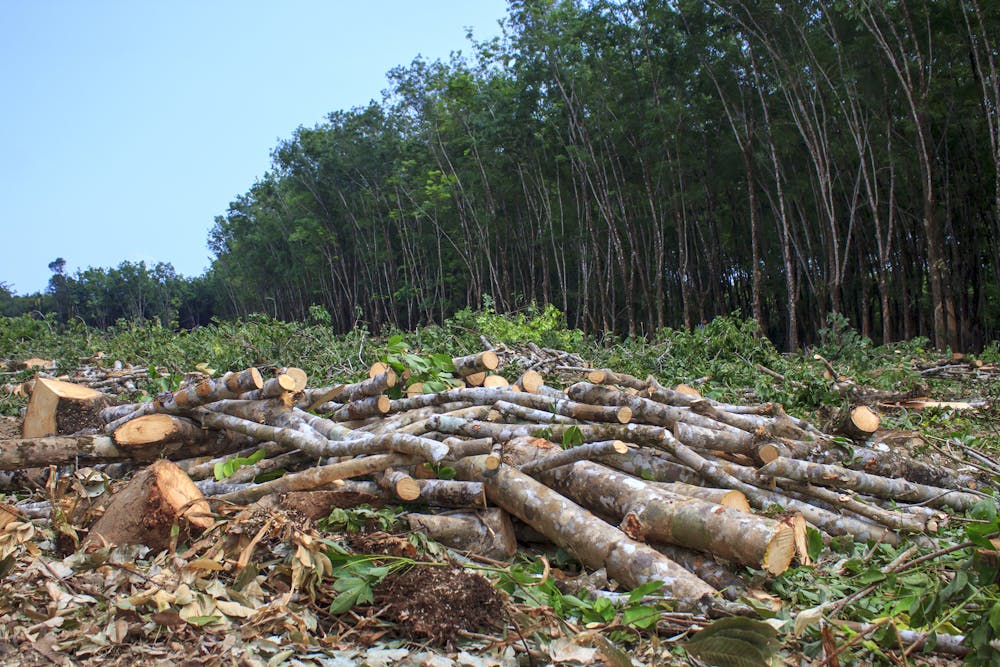
Forest degradation is caused by selective logging, temporary clearing, and other human land use. In some areas, emissions from degradation can exceed those of deforestation. Once damaged, natural ecosystems are more vulnerable to drought, fires and climate change.Recently published research found helping natural forest regrow can have a globally significant effect on carbon dioxide levels. This approach – called proforestation – is a more effective, immediate and low-cost method for removing and storing atmospheric carbon in the long-term than tree planting. And it can be used across many different kinds of forests around the world.
Read more: Not everyone cares about climate change, but reproach won't change their minds
Research has predicted that protecting primary forests while allowing degraded forests to recover, along with limited expansion of natural forests, would remove 153 billion tonnes of carbon from the atmosphere between now and 2150.
Every country with forests can contribute to this effort. In fact, research shows that community land management is the best way to improve natural forests and help trees recover from degradation.
Read The Conversation article
Tuesday, 6 August 2019
Why We Need To Change The Way We Talk About Climate Change: Medium

The
way we currently communicate climate change — be it through articles in
the newspaper, conversations with friends, or billboard adverts — is
fundamentally flawed.
Most discussions of climate change are framed negatively. Take the below screenshot from The Guardian’s
climate change section for instance (as of 17 Dec 2018). We have
climate change ruining dreams of a white Christmas, the message that the
next two years will determine humanity’s fate, corrupted businesses,
activists not doing enough protesting, and the end of blackcurrants.
It’s no wonder most people fail to engage with the narrative around
climate change: it’s simply all gloom and doom.
Related:
Just 10% of fossil fuel subsidy cash 'could pay for green transition' : The Guardian
Sunday, 4 August 2019
One climate change scientist takes on a roomful of sceptics.: SBS

Published on Jun 1, 2011
Can one climate change scientist change the minds of a roomful of climate change sceptics?
Insight: Tuesdays at 8:30pm on SBS ONE http://www.sbs.com.au/news/insight
Fleeing climate change - the real environmental disaster | DW Documentary
DW Documentary
Published on May 2, 2019
How many millions of people will be forced to leave their homes by 2050? This documentary looks at the so-called hotspots of climate change in the Sahel zone, Indonesia and the Russian Tundra. Lake Chad in the Sahel zone has already shrunk by 90 percent since the 1960s due to the increasing heat. About 40 million people will be forced to migrate to places where there is enough rainfall. Migration has always existed as a strategy to adapt to a changing environment. But the number of those forced to migrate solely because of climate change has increased dramatically since the 1990s. It is a double injustice: after becoming rich at the expense of the rest of the world, the industrialized countries are now polluting the atmosphere with their emissions and bringing a second misfortune to the inhabitants of the poorer regions. One of them is Mohammed Ibrahim: as Lake Chad got hotter and drier, he decided to go where the temperatures were less extreme and there was still a little water, trekking with his wife, children and 70 camels from Niger to Chad and then further south. The journey lasted several years and many members of his herd died of thirst. Now he and his family are living in a refugee camp: they only have seven camels left. Mohammed is one of many who have left their homelands in the Sahel - not because of conflict and crises, but because of the high temperatures. He's a real climate refugee.
Video / Climate Scientist Jason Box: “Our Economic System Is Crashing With Reality”: Democracy Now

Published on Aug 2, 2019
He says humanity must move toward living in balance with the environment. “If we don’t reduce greenhouse gas emissions and ultimately stabilize CO2 … there’s no real prospect for a stable society or even a governable society,” Box says. “Perpetual growth on a finite planet is, by definition, impossible.”
Related:
Heatwave: think it’s hot in Europe? The human body is already close to thermal limits elsewhere :The Conversation
Subscribe to:
Posts (Atom)