Friday, 13 September 2019

Former fire chiefs demand urgent action on 'escalating climate change threat': SBS

"Twenty-three of Australia’s most senior former emergency service bosses have come together in an unprecedented show of unity, calling on the Prime Minister to 'get on with the job' of reducing greenhouse gasses. 

Longer bushfire seasons, ‘dry’ lightning storms, increased flooding and higher rates of anxiety: this is Australia’s future without immediate action on climate change, some of Australia’s most senior former emergency service chiefs have warned.

In an unprecedented joint statement directed to the state and federal governments, 23 former emergency service bosses have come together on Wednesday to call for stronger action on climate change, which they believe is threatening lives in Australia.
The 23 signatories, representing every state and territory, have called on Prime Minister Scott Morrison to commit to a parliamentary inquiry into whether the emergency services are fit to defend Australia against the increasing risk of natural disasters."


Related: 

Time to rethink Australia's fire fighting resources.

Wednesday, 11 September 2019

Time to rethink Australia's fire fighting resources.


📷: Bindi Cox
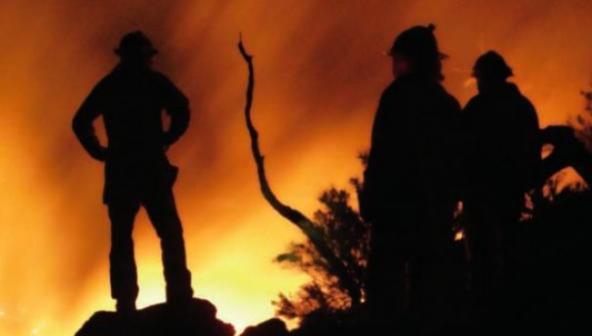
Our wildfires are taking lives, destroying homes and infrastructure and stressing our rural communities. 

Our firefighters in Australia, both paid and volunteer, are out there risking injury and putting their lives on the line, or at the very least sacrificing their work. Employers, often small business employers, are supporting them. Are our firefighters sufficient in number?


"There are still 50 fires burning across New South Wales, with 21 fires uncontained. A total of 630 firefighters have been deployed across the state. A fire in Bees Nest, north-west of Dorrigo in the Armidale area, is currently over 66,500 hectares and out of control." September 10


What are we losing in these fires?

📷 Photo Credit: Darren, Jimboomba Police
 • Of course we are losing homes and infrastructure. Communities are being traumatised. We are now wondering whether drought stricken communities will have the required water to fight the inevitable fires that climate change is increasing. 

• We now have a new fire category, 'extreme'.

• We are also losing precious forests and biodiversity. This week the Gondwana World Heritage Area has been severely damaged.

"The Gondwana Rainforests of Australia, World Heritage Area, contains the most extensive areas of subtropical rainforest in the world, large areas of warm temperate rainforest, and the majority of the world's Antarctic beech cool temperature rainforest. These extraordinary areas still contain ancient and primitive plants and animals from which life on Earth evolved." NSW National Parks

The same fire began in the Guy Fawkes River National Park and by September10,  had burned 66,500 hectares and was 'out of control'.
 
"The park is a significant conservation site with amazing biodiversity. There are 24 threatened animal species you might encounter here, including the brush-tailed rock-wallabies that can often be seen in the park’s rocky areas." National Parks


There has been a world wide reaction to careless burning of the Amazon forests. Other countries are busily planting trees to protect soils and store carbon, yet Australia is busy clearing trees and fighting forest fires with limited resources. 


It is time to review our fire fighting resources.

We know some extra resources have been ordered or already purchased.

"New South Wales has signed a contract with United States-based Coulson Aviation to purchase three aircraft for firebombing duties, including a modified Boeing 737 large air tanker.

  
NSW buys Boeing 737 large air tanker for firefighting ...


https://australianaviation.com.au › 2019/05 › nsw-buys-boeing-737-large-..."

As we face an increasing number of fierce fires in an extended fire season, it is time to ask:

Are we allowing our rural communities to suffer unnecessarily?

Why are we allowing our world heritage forests with unique biodiversity to burn?

Do we have sufficient resources to fight fires and to extinguish them quickly?

Why are we still reliant on volunteers? Why are we putting volunteers at risk?

Do we have enough air support?

Is a budget surplus a priority over expanding our firefighting resources and better protecting our communities? 

Related:
What if we stopped pretending Climate Change could be prevented.

Tuesday, 10 September 2019

The terrible truth of climate change: The Monthly

"As I collated this information for my presentation, it became clear to me that Cyclone Tracy is a warning. Without major action, we will see tropical cyclones drifting into areas on the southern edge of current cyclone zones, into places such as south-east Queensland and northern New South Wales, where infrastructure is not ready to cope with cyclonic conditions.

These areas currently house more than 3.6 million people; we simply aren’t prepared for what is upon us.

There is a very rational reason why Australian schoolkids are now taking to the streets – the immensity of what is at stake is truly staggering. Staying silent about this planetary emergency no longer feels like an option for me either. Given how disconnected policy is from scientific reality in this country, an urgent and pragmatic national conversation is now essential. Other-
wise, living on a destabilised planet is the terrible truth that we will all face."


"We still have time to try and avert the scale of the disaster, but we must respond as we would in an emergency. The question is, can we muster the best of our humanity in time?"

Read the complete The Monthly article 

See also:

Honest Government Ad | We're F**ked: YouTube

Honest Government Ad | We're F**ked: YouTube


 The Government made an ad about climate change as we head into the third decade of the 21st century, and it’s surprisingly honest and informative. 
 - Global Climate Strike Sept 20-27: https://globalclimatestrike.net 
- Worldwide Rebellion Oct 7-18: https://rebellion.global 
- FridaysForFuture Sept 20/27: https://www.fridaysforfuture.org/even... 
Ways you can support us to keep making videos: 
 -- Become a Patron: https://www.patreon.com/TheJuiceMedia 
 -- Tip us on PayPal: https://www.paypal.me/thejuicemedia 
 -- Tip us in Bitcoin: https://www.thejuicemedia.com/support -*- 
CREDITS -- Produced by Patrons of The Juice Media -- Written by Giordano for The Juice Media -- Performed by Zoe x Voice by Lucy -- Animations by Brent Cataldo -- Thanks to Scott, Adso, Damian, Matt and Dbot for feedback on the script -- Footage courtesy of Extinction Rebellion: https://www.youtube.com/channel/UCYTh... -- Music by PMWA: https://audiojungle.net/item/timelaps...

See also:

Leaked IPCC report warns of the future of oceans in climate change: Global Landscapes Forum

Monday, 9 September 2019

What if we stopped pretending Climate Change could be prevented.

"All-out war on climate change made sense only as long as it was winnable. Once you accept that we’ve lost it, other kinds of action take on greater meaning. 

Preparing for fires and floods and refugees is a directly pertinent example. But the impending catastrophe heightens the urgency of almost any world-improving action. In times of increasing chaos, people seek protection in tribalism and armed force, rather than in the rule of law, and our best defense against this kind of dystopia is to maintain functioning democracies, functioning legal systems, functioning communities. In this respect, any movement toward a more just and civil society can now be considered a meaningful climate action. Securing fair elections is a climate action.
 Combatting extreme wealth inequality is a climate action. Shutting down the hate machines on social media is a climate action. Instituting humane immigration policy, advocating for racial and gender equality, promoting respect for laws and their enforcement, supporting a free and independent press, ridding the country of assault weapons—these are all meaningful climate actions. To survive rising temperatures, every system, whether of the natural world or of the human world, will need to be as strong and healthy as we can make it."

"In Santa Cruz, where I live, there’s an organization called the Homeless Garden Project. On a small working farm at the west end of town, it offers employment, training, support, and a sense of community to members of the city’s homeless population. It can’t “solve” the problem of homelessness, but it’s been changing lives, one at a time, for nearly thirty years. Supporting itself in part by selling organic produce, it contributes more broadly to a revolution in how we think about people in need, the land we depend on, and the natural world around us. In the summer, as a member of its C.S.A. program, I enjoy its kale and strawberries, and in the fall, because the soil is alive and uncontaminated, small migratory birds find sustenance in its furrows.

There may come a time, sooner than any of us likes to think, when the systems of industrial agriculture and global trade break down and homeless people outnumber people with homes. At that point, traditional local farming and strong communities will no longer just be liberal buzzwords. Kindness to neighbors and respect for the land—nurturing healthy soil, wisely managing water, caring for pollinators—will be essential in a crisis and in whatever society survives it. A project like the Homeless Garden offers me the hope that the future, while undoubtedly worse than the present, might also, in some ways, be better. Most of all, though, it gives me hope for today."

Read the excellent NYT article

See also:

Leaked IPCC report warns of the future of oceans in climate change: Global Landscapes Forum


For Pope Francis, a Perfect Moment for an Unsettling Warning on the Environment: NYT

"Pope Francis used his first full day in Madagascar to hammer the same point home.

“Your lovely island of Madagascar is rich in plant and animal biodiversity, yet this treasure is especially threatened by excessive deforestation, from which some profit,” Francis said Saturday in Madagascar’s capital, Antananarivo, about an hour’s drive from the lemur reserve. “The last forests are menaced by forest fires, poaching, the unrestricted cutting down of valuable woodlands.”
Francis has been making a similar case since his election in 2013, when he put environmental protection and global warming at the top of his agenda. He championed the Paris climate accord and, in 2015, became the first pope to dedicate an encyclical to protecting the earth."


Sunday, 8 September 2019

What’s Another Way to Say ‘We’re F-cked’? : Medium

One of the leading climate scientists of our time is warning of the horrifying possibility of 15-to-20 feet of sea-level rise


Richard Alley is not a fringe character in the world of climate change. In fact, he is widely viewed as one of the greatest climate scientists of our time. If there is anyone who understands the full complexity of the risks we face from climate change, it’s Alley. And far from being alarmist, Alley is known for his careful, rigorous science. He has spent most of his adult life deconstructing past Earth climates from the information in ice cores and rocks and ocean sediments. And what he has learned about the past, he has used to better understand the future.

For a scientist of Alley’s stature to say that he can’t rule out 15 or 20 feet of sea-level rise in the coming decades is mind-blowing. And it is one of the clearest statements I’ve ever heard of just how much trouble we are in on our rapidly warming planet (and I’ve heard a lot — I wrote a book about sea-level rise)."

 Related:

Showing sea level 5m rise flooding in Melbourne city