Tuesday, 21 July 2020

Video: Why politicians have failed to tackle climate change | The Economist


Global warming is the defining threat facing the planet. So why has so little been done to curb it? 
 
Read more here: https://econ.st/3gevRJu 
 
Click here to subscribe to The Economist on YouTube: https://econ.st/2xvTKdy 
 
 
#jailclimatecriminals  #China  #KyotoAgreement  #fossilfuels  #climateaction  #cambio-climatico
 

Monday, 20 July 2020

Climate Change: Global Sea Level: NOAA

South Beach, Miami on May 3, 2007. Photo by Flickr user James WIlliamor, via a Creative Commons license.


"Sea level since 1880

The global mean water level in the ocean rose by 0.14 inches (3.6 millimeters) per year from 2006–2015, which was 2.5 times the average rate of 0.06 inches (1.4 millimeters) per year throughout most of the twentieth century. By the end of the century, global mean sea level is likely to rise at least one foot (0.3 meters) above 2000 levels, even if greenhouse gas emissions follow a relatively low pathway in coming decades.

In some ocean basins, sea level rise has been as much as 6-8 inches (15-20 centimeters) since the start of the satellite record. Regional differences exist because of natural variability in the strength of winds and ocean currents, which influence how much and where the deeper layers of the ocean store heat."

..........................

ADMIN: The above figures are now seen by some scientists as an underestimation of sea level rise. See article below.

Greenland shed ice at unprecedented rate in 2019; Antarctica continues to lose mass: EurekAlert


....................................


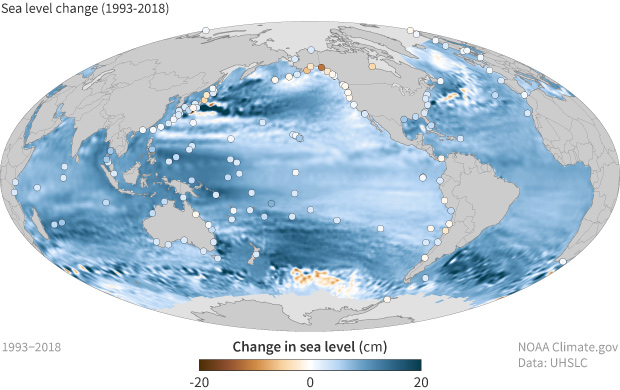
Global map of mean sea level change since 1993 with dots showing local sea level change on land


Between 1993 and 2018, mean sea level has risen across most of the world ocean (blue colors). In some ocean basins, sea level has risen 6-8 inches (15-20 centimeters). Rates of local sea level (dots) can be amplified by geological processes like ground settling or offset by processes like the centuries-long rebound of land masses from the loss of ice age glaciers. NOAA Climate.gov map, based on data provided by Philip Thompson, University of Hawaii. 
Past and future sea level rise at specific locations on land may be more or less than the global average due to local factors: ground settling, upstream flood control, erosion, regional ocean currents, and whether the land is still rebounding from the compressive weight of Ice Age glaciers. In the United States, the fastest rates of sea level rise are occurring in the Gulf of Mexico from the mouth of the Mississippi westward, followed by the mid-Atlantic. Only in Alaska and a few places in the Pacific Northwest are sea levels falling, though that trend will reverse under high greenhouse gas emission pathways.

In some ocean basins, sea level rise has been as much as 6-8 inches (15-20 centimeters) since the start of the satellite record in 1993.

Why sea level matters

In the United States, almost 40 percent of the population lives in relatively high population-density coastal areas, where sea level plays a role in flooding, shoreline erosion, and hazards from storms. Globally, 8 of the world’s 10 largest cities are near a coast, according to the U.N. Atlas of the Oceans.


In urban settings along coastlines around the world, rising seas threaten infrastructure necessary for local jobs and regional industries. Roads, bridges, subways, water supplies, oil and gas wells, power plants, sewage treatment plants, landfills—the list is practically endless—are all at risk from sea level rise. 

Higher background water levels mean that deadly and destructive storm surges, such as those associated with Hurricane Katrina, “Superstorm” Sandy, and Hurricane Michael—push farther inland than they once did. Higher sea level also means more frequent high-tide flooding, sometimes called “nuisance flooding” because it isn't generally deadly or dangerous, but it can be disruptive and expensive. (Explore past and future frequency of high-tide flooding at U.S. locations with the Climate Explorer, part of the U.S. Climate Resilience Toolkit.)


Nuisance flooding in Annapolis in 2012. Around the U.S., nuisance flooding has increased dramatically in the past 50 years. Photo by Amy McGovern.

In the natural world, rising sea level creates stress on coastal ecosystems that provide recreation, protection from storms, and habitat for fish and wildlife, including commercially valuable fisheries. As seas rise, saltwater is also contaminating freshwater aquifers, many of which sustain municipal and agricultural water supplies and natural ecosystems.
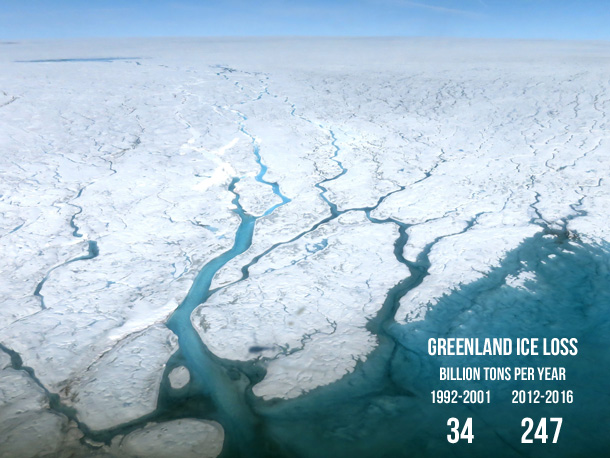

Photo of melt streams on the Greenland Ice Sheet in summer 2015
Melt streams on the Greenland Ice Sheet on July 19, 2015. Ice loss from the Greenland and Antarctic Ice Sheets as well as alpine glaciers has accelerated in recent decades. NASA photo by Maria-José Viñas.

Go to the original NOAA article by

Author: 
November 19, 2019

Other 2019 reports of ice melt predict a higher sea rise. See below.

Greenland shed ice at unprecedented rate in 2019; Antarctica continues to lose mass: EurekAlert

 ' "It is very likely that the current climate models overestimate the meltwater retention capacity of the ice sheet and underestimate the projected sea level rise coming from Greenland ... by a factor of two or three," he said. ' ICNews

Read the complete original Inside Climate News article


Houston: predicted flooding with a conservative sea level rise of only 2ft.


Flooding of Houston with a 2ft sea rise
 • We are looking more and more unlikely to prevent global heating.

• Scientists are predicting the melting of the ice covering Greenland with a subsequent sea level rise of 23ft.

• This rise does not factor in sea rise from the melting of Antarctica and other ice.


• Already many properties are likely to flood when a high tide is combined with high local rainfall. 
 

Flooding of Houston with a  mere 1ft sea level rise


What were a hundred year rainfall events are now ten year events.


• The frequency of high rainfall events will increase with global heating and more and more severe hurricanes are predicted because of warmer seas.


Flooding of Houston with a 10ft sea rise

• Low coastal areas will be subjected to severe storm surges.

• Would you buy a property likely to be inundated in twenty years, fifty years, a hundred years? Many wouldn't. Even the perception of possible inundation will greatly affect property values.

• When certain properties are in less demand their value falls.

• Would you buy a property with a value that is likely to fall?

•  The view of Houston above shows areas likely to be inundated by a 10ft sea level rise.

• Property above a 20ft rise will become highly sought after and will greatly increase in value.

Learn more about how sea rise inundation will affect U.S. property on climate.gov


Related:

Greenland shed ice at unprecedented rate in 2019; Antarctica continues to lose mass: EurekAlert


Melbourne: predicted flooding with a conservative sea level rise of only 1.5m


#sea level rise, #Greenland ice melt, #sea ice, #climateaction, #climatechange, #jailclimatecriminals, #cambio-climatico,  

David Attenborough, the voice of Our Planet: “Things are going to get worse”: Vox

"The voice of some of the most stunning nature documentaries ever made is pessimistic about the future of wildlife on earth.


#cambioclimatico, #jailclimatecriminals


“Unless we act within the next 10 years, we are in real trouble,” Attenborough told Vox.
Shannon Finney/Getty Images


David Attenborough is the most famous nature storyteller on television. The 92-year-old producer, narrator, and documentarian essentially invented the genre of television nature documentaries in his decades-long career at the BBC. Programs like Life on Earth, Blue Planet, and Planet Earth have brought the wild world into the homes of urban dwellers for decades."


"Attenborough has also recently lent his voice to a BBC documentary called Climate Change: The Facts, which explains the science and grim statistics fueling the climate change threat.

“I find it hard to exaggerate the peril,” Attenborough said at the IMF earlier in April, according to the Guardian. “This is the new extinction and we are half way through it. We are in terrible, terrible trouble and the longer we wait to do something about it the worse it is going to get.” "


Sunday, 19 July 2020

HYDROGEN The once and future fuel? Opinion


"London, 19 June: Desperate policy makers trying to reach Net Zero targets that are unaffordable and infeasible are rushing into the premature adoption of hydrogen as a last ditch attempt to save the current agenda.
Hydrogen gas may contribute to greenhouse gases
Hydrogen Gas


Dr John Constable, author of the study, said: 

“Hydrogen has genuine long term potential as a universal energy carrier to supplement electricity, but current methods of production are hugely expensive and will stress fresh water supplies. Target-driven haste is already resulting in accidents. Counterproductive and naive policies are compromising the hydrogen future.” "

"Faced with the task of eliminating carbon dioxide emissions while sustaining economic growth, the UK government, like others around the world, is promoting hydrogen as an energy carrier for sectors of the economy such as heavy transport and peak winter heating that are extremely difficult to decarbonize.

The wisdom of this policy, with a special focus on the United Kingdom, is addressed in a new historical and technical study published today by the GWPF.

The study concludes that current enthusiasm is a desperate measure that will jeopardise the long-term promise of hydrogen for the sake of short-term political optics.

Because of the accelerated timetable required by arbitrary targets, it is necessary to manufacture hydrogen via two expensive and energetically inefficient commodity production processes, the electrolysis of water, and the reforming of natural gas.

Electrolysis is extremely expensive, and the reforming of methane emits carbon dioxide and so requires Carbon Capture and Sequestration, which is not only costly but unproven at the required scale. Both these commodity processes imply high levels of fresh water consumption.

The prudent approach, obvious since the 1970s and still the official long-range policy of the government of Japan, is to aim for hydrogen production by the thermal decomposition of sea water employing advanced nuclear reactors, which alone might conceivably make hydrogen cheap. This is, however, very difficult chemical and nuclear engineering, and its realisation lies well into the future."


Hydrogen Gas
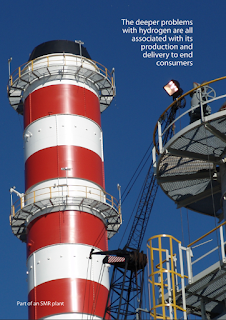
Part of an SMR plant
The paper also notes that hasty introduction will not give enough time for safe societal adjustment to the inherent dangers of a fugitive and readily ignited gas that has a strong tendency to technical detonation (combustion with a supersonic combustion frontier). The learning experience could be needlessly painful and deadly.


Ref Climate Change Institute comment on Hydrogen: The Once And Future Fuel (pdf)


Related:

'Terrifying': Scientists dig deep for missing piece of climate puzzle: SMH

 #cambio-climatico


Saturday, 18 July 2020

Huge swells on NSW Central Coast leave Wamberal homes at risk of collapse due to beach erosion : The Guardian

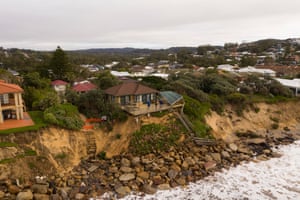
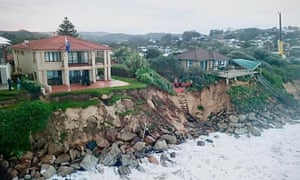
Coastal erosion in the suburb of Wamberal on the Central Coast of NSW where homes are at risk of collapse after huge swells hit the state’s beaches on Thursday.
Coastal erosion in the suburb of Wamberal on the Central Coast of NSW where homes are at risk of collapse after huge swells hit the state’s beaches on Thursday. Photograph: James D Morgan/Getty Images

Several houses on Ocean View Drive now dangerously close to cliff edge as huge waves wash away beaches.

Houses on Ocean Drive in Wamberal
The worst-hit suburb was Wamberal, where large beachfront homes have been significantly damaged as the sandy soil they were built on was stripped away.
 
Comment by blog admin : As sea level rises and higher storm surges destroy more beachfront property the owners will lobby for unaffordable sea walls but ratepayers will resist. Coastal retreat will become the norm. Will you buy where sea rise and coastal surges will occur?

Read original complete The Guardian article  

Related:

Melbourne: predicted flooding with a conservative sea level rise of only 1.5m


 Related:


Thursday, 16 July 2020

Why we need political action to rein in the oil, coal and gas companies | video explainer: The Guardian


The Guardian reveals the 20 fossil fuel companies whose relentless exploitation of the world’s oil, gas and coal reserves can be directly linked to more than one-third of all greenhouse gas emissions in the modern era. Global environment editor, Jonathan Watts, explains how they have continued to expand their operations despite being aware of the industry’s devastating impact on the planet.

The Guardian ► http://www.youtube.com/theguardian

#jailclimatecriminals   #criminalesclimáticosdelacárcel     #cambioclimatico     

See also:

Melbourne: predicted flooding with a conservative sea level rise of only 1.5m