The
WHO Manifesto for a healthy recovery from COVID-19 lists six steps to
create a healthier , fairer and greener world while investing to
maintain and resuscitate the economy.
"A team of researchers from Michigan State University managed to
develop fully transparent solar panels – a breakthrough that could lead
to countless applications in architecture, as well as other fields such
as mobile electronics or the automotive industry. Previous attempts to
create such a device have been made, but results were never satisfying
enough, with low efficiency and poor material quality.
A
transparent luminescent solar concentrator waveguide is shown with
colorful traditional luminescent solar concentrators in the background.
The new LSC can create solar energy but is not visible on windows or
other clear surfaces – Courtesy of Michigan State University,
Photography: G.L. Kohuth
“We can tune these materials to pick up just the ultraviolet and
the near infrared wavelengths that then ‘glow’ at another wavelength in
the infrared” – Richard Lunt, assistant professor of chemical
engineering and materials science at MSU’s College of Engineering. The
captured light is transported to the contour of the panel, where it is
converted to electricity with the help of thin strips of photovoltaic
solar cells.
Solar panels are great, particularly when you are looking at making
your home a lot more energy efficient. Here at Energy Formula, we’re
looking forward at helping you reach your goal. If you’ve been looking
at the idea of solar panels but you just can’t get behind their
functionality as far aster aesthetic appeal, you aren’t alone. There are
many people whose sole reason for not going solar is due to the
appearance of the panel itself. No you have a new way to consider
looking at solar power: through transparent solar panels!
How do transparent solar panels work? These are exactly as simple as they sound. They’re panes of glass
that are coated in a solar concentrator top layer that acts as the solar
panel itself. Invisible to the eye, this super lightweight coating can
be applied to any clear surface and give it maximum solar potential
while still keeping the window itself perfectly clear. This is
essentially an invisible solar panel! These unique transparent solar panels work by using molecules to
absorb the light that hits the glass and then transporting it to the
actual contour of the panel and converting it into energy through the
photovoltaic cells that you know about already. This development would make the most out of the buildings’ facades,
since the vertical footprint is often larger than the rooftop one –
especially for glass towers. Solar harvesting of Transparent Solar
Panels would, thus, become more efficient and aesthetically, without
altering the architectural design. Moreover, this technology could be
easily integrated in old buildings.
The process of their power is exactly as you would expect, but it’s
so special and unique to think that it happens entirely invisible to the
naked eye in the form of a film that can be spread over any clear
surface. Truly, it’s the stuff of legends, but it is very much real
life.
Perks of transparent solar panels
There are no end of perks to consider for transparent solar panels,
but her are some of the leading options to know about for our world as
we know it.
It allows for skyscrapers to engage with renewable energy:
We already know that there are all sorts of skyscrapers and such kinds
of buildings that are filled to the brim with glass. This means that
there are floors and floors, and panes and panes of glass already there
ready to be used for solar power. We just have to use it.
It’s simple to apply and easy to benefit from:
This film must be applied correctly, but it is easy to do so by
professionals, and it will be as simple as “peel and stick” as far as
the benefits . No complicated software, no upkeep. It’s just a covering
for windows of any size and maximum solar power.
It can be an after-market solution: Buildings
new and old can benefit from the use of transparent solar panels as it
is intended as an after-market treatment to consider for glass in both
commercial and residential buildings.
While transparent solar panels have only 1% energy efficiency right
now compared to the blue and black ones that you’ve seen before, there’s
a lot of hope that this will continue to build and grow as more people
get interested in solar power and the technologies that can be used to
put it into effect a bit more realistically for commercial buildings. "
"After the gas ban was beaten back in Seattle, Caleb Heeringa, a
spokesman for the Sierra Club in the city, said advocates saw
coordinated industry and union pushback against gas-related climate efforts grow.
A new group called the Partnership for Energy Progress (PEP) was taking root.
The partnership is an organization of western utilities, labor unions
and businesses that plans to spend $2.8m in 2020 convincing consumers
that “natural gas is part of a clean energy future”, and fighting state
and local climate restrictions on gas, according to records reviewed by
the Guardian."
Methane gas well. They leak.
.................
"The American Gas Association (AGA), which represents mainly
investor-owned gas providers, now convenes monthly calls “that bring
together appliance, homebuilder, fuel, and other associations to compare
notes and support efforts to push back on decarbonization and
electrification issues”, according to the same document."
Burning natural gas produces less planet-heating carbon dioxide than
burning coal or oil. Gas advocates have positioned it as a smart
alternative to those dirtier fossil fuels. Even the Obama administration
backed gas as a “bridge fuel”.
But
the extraction and transportation of natural gas leaks methane: a
climate pollutant with a short-term warming potential far more powerful
than carbon dioxide. Scientists are revealing we have greatly underestimated the methane emitted by the gas industry. Fossil gas is responsible for 42% of the US greenhouse gas emissions
that come from burning fossil fuels, according to data from the
Department of Energy interpreted by Robert Howarth, who researches
methane at Cornell University.
#jailclimatecriminals
“Gas is one of the biggest drivers of emissions growth both in the US
and globally, and the future trends for expansion on the system are
really worrying,” said Sheryl Carter, director of the power sector
climate program at the Natural Resources Defense Council. “The
infrastructure investments that are being made right now … they last for
40 to 60 years. So that really locks in those emissions increases.”"
"BIG NEWS ! This court case could be a watershed moment in
ending the taxpayer-subsidised destruction of Tasmania’s precious native forests and the best chance in a generation to properly protect our old growth wilderness, their critters and critical carbon sinks.
Australian political parties support logging native forests
For more than two decades, too many Tasmanian politicians have hidden behind these dodgy Regional Forest Agreements and promoted the interests of a few profiteers at the expense of our environment and taxpayers.
We have long known these Regional Forest Agreements were used
Native forests are already at risk from fires.
as cover to abandon the endangered wildlife they were set up to protect, simply to grease the wheels for a marginal industry that has wielded significant political clout.
Recently the Tasmanian Government failed again to get FSC certification for its destructive native forest logging operations.
This is no surprise when, for decades, it has not had a robust legal framework holding the industry to account especially around the protection of endangered species such as the Tasmanian devil, wedge-tailed eagle and swift parrot, and also for the logging of old growth forests." Senator Whish-Wilson on Facebook
..............................
"Bob Brown launches legal challenge to native forest logging in Tasmania
State-sanctioned felling is ‘based on a monumental lie’, former Greens leader says
'The former Greens leader Bob Brown has launched a legal challenge to native forest logging in Tasmania, claiming it is inconsistent with federal environment law.
The case by the Bob Brown Foundation, lodged in the federal court on
Thursday, challenges what has been seen as an effective exemption from
environment laws granted to state-sanctioned logging under regional
forest agreements between Canberra and the states.
Australia ranks second worse on climate protection
It argues the Tasmanian regional forest agreement is not valid as it
lacks a legally enforceable requirement that the state must protect
threatened species.
The foundation says if the case were successful it would consider similar action against federal-state forest agreements in Victoria,
New South Wales and Western Australia. It said the current rules
“essentially allows the state government to make up the rules as it
suits, and gives no guaranteed protection for our wildlife and
environment”.
Brown said the foundation had been buoyed by a landmark federal court judgment in May
that found logging in Victoria’s central highlands by the state-owned
agency VicForests was in breach of a regional forest agreement.
Logging in NSW leaves Koala stranded.
“This is a huge undertaking for us but everyone knows that the
flattening and burning of native forests and wildlife is not
ecologically sustainable,” Brown said. “The industry is based on a
monumental lie and this challenge puts that lie to the test.”
A call to action from Jane Fonda, one of the most inspiring activists of
our time, urging us to wake up to the looming disaster of climate
change and equipping us with the tools we need to join her in protest
This is the last possible moment in history when changing course can
mean saving lives and species on an unimaginable scale. It's too late
for moderation.
Our climate is in a crisis. 2019 saw atmospheric concentrations of
greenhouse gases hit the highest level ever recorded in human history,
and our window of opportunity to avoid disaster is quickly closing. In
the autumn of 2019, frustrated with the obvious inaction of politicians
and inspired by contemporary activists, Jane Fonda moved to Washington,
DC to lead weekly climate change demonstrations on Capitol Hill. On
October 11, she launched Fire Drill Fridays (FDF), and has since led
thousands of people in non-violent civil disobedience, risking arrest to
protest for action.
In What Can I Do?, Fonda's deeply personal journey as an
activist is weaved alongside interviews with leading climate scientists,
and discussions of issues, such as water, migration, and human rights,
to emphasise what is at stake. Throughout, Fonda provides concrete
solutions and actions that everybody can take in order to combat the
climate crisis in their community.
As Annie Leonard, Executive Director of Greenpeace US and Fonda's
partner in developing FDF, has declared, "Change is inevitable; by
design, or by disaster." The problems we face now require every one of
us to join the fight. The fight not only for our immediate future, but
for the future of generations to come.
About the Author Jane Fonda is an Emmy- and two time Oscar-winning actress and highly
successful producer. She revolutionised the fitness industry with the
Jane Fonda Workout in 1982 and has sold more than seventeen million
copies of her fitness-focused books, videos, and recordings. She is
involved with several causes and is the founder of both the Georgia
Campaign for Adolescent Pregnancy Prevention and the Jane Fonda Center
at Emory University. She is the author of the #1 New York Times bestseller My Life So Far, and she received a Tony nomination in 2009 for her role in 33 Variations. She lives in Los Angeles.
"Feeling miserable, anxious, helpless and just generally terrible because the world is becoming less habitable? You're not alone.
"The
good news is there are strategies that may help you cope. The bad news
is the pandemic we're now facing may test your passion and enthusiasm
for climate action.
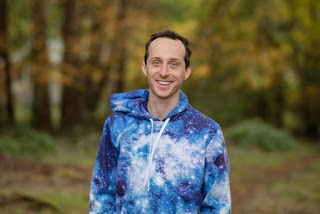
Kurtis Baute recently sought out
professional help to cope with
his despair about climate change.
(Supplied: Kurtis Baute)
For the past 18 months, Canadian scientist Kurtis Baute says he has been dealing with a lot of 'climate grief'.
"Basically
I can't stop thinking about the fact that millions of people, real
people, are dying or will die because of something that is completely
unavoidable," he recently announced on his YouTube channel.
"We
can stop using fossil fuels but so far we've completely failed to do
so...it feels completely out of control and it's depressing."
Climate grief — or eco anxiety/despair — is a strong
psychological response to the current and future loss of habitats,
species and ecosystems.
It's recognised by the
Australian Psychological Society (APS) and sufferers may feel emotions
like fear, anger, guilt, shame, grief, loss and helplessness.
It
can be related to the direct impacts of climate change, such as drought
or bushfire. But it can also take the form of a sense of doom or even
existential crisis about our warming world.
In some ways it's a lot like the grief we experience when someone dies.
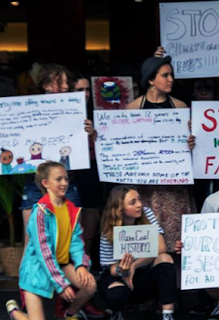
Climate
grief is often categorised as a form of disenfranchised grief which
means it isn't always publicly or openly acknowledged.
"There's
no ritual around loss of environment," says Tristan Snell, a
counselling psychologist and researcher in environmental psychology at
Deakin University.
"When you lose someone, there's a funeral and all
sorts of ways people connect and this helps process that loss. That's
just not the case for loss of environment."
People
experiencing disenfranchised grief can feel unsupported or
The thought of climate catastrophe can be overwhelming
ashamed, and
consequently can be very reluctant to talk with friends, family or a
professional.
"People may feel this isn't something someone else can help with," says Dr Snell.
This can then snowball into major physical and mental health problems.
Some will feel this more than others
Researchers,
including Dr Snell, are currently trying to gauge the mental health
impacts of climate change and recent climate-related events on
Australians with this survey which you can get involved in.
Clinical psychologists are developing strategies to help people work through climate grief, but research is still quite limited.
However you may find the follow tactics help with feelings of emotional distress:
• Gather trusted and authoritative information on the topic to ensure your knowledge on climate change is correct • Become
more environmentally engaged by getting involved in land care or tree
planting for example — taking action to better the planet is thought to
relieve some anticipatory grief • Spend time in nature to remind yourself it's a source of strength
• Talk with like-minded family or friends and if needed, seek professional help"