Showing posts with label #bushfires. Show all posts

Tuesday, 27 October 2020

1 year on since Australia's biggest bushfire: Climate Council

Exactly 12 months ago today, the huge Gospers Mountain Fire started from a lightning strike north-west of Sydney. The fire burned for almost 80 days, and became the biggest forest fire in Australia's recorded history. 
 
One year on, the fire has left a heart-wrenching scar on both the landscape and the communities it tore through. This is what climate change looks like. 
 
In just a few days, the Royal Commission will hand down its findings into the 2019-20 bushfire season, and it's imperative that it clearly acknowledges the role of climate change in fuelling the 2019-20 bushfires.


Related: 

Polling Shows Growing Climate Concern Among Americans. But Outsized Influence of Deniers Remains a Roadblock (excerpt): DeSmog


#climatefires,#Australia,#cambio-climatico,#climateemergency,#bushfires,#firestorms,NSW,

Sunday, 27 September 2020

Wildfires Explained: The YEARS Project video

  Maya Lilly—who has lived through several California wildfires that threatened her home—explains the science behind wildfires. How is climate change responsible for making wildfires worse? Global warming produces more heat and more fuel—two ingredients that necessary for fires. Watch more #ClimateFacts: https://theyearsproject.com/watch/cli...


Related:A season of climate-fueled disasters (excerpt): NYT

Monday, 14 September 2020

'Australia in January, California in August': Aussies watch on in horror as wildfires ravage US west coast (excerpt): SBS

Washington governor blames climate change for fires
Australia and Oregon


Former NSW fire chief Greg Mullins says the wildfires ravaging the US are a 'direct reflection' of what happened in Australia last summer, and serve as another 'wake up call' to pay attention to climate change.

With up to 100 wildfires burning across multiple states on the US west coast, the situation is is eerily reminiscent of Australia’s deadly bushfire event of 2019-20.

Ross Bradstock is from the Centre for Environmental Risk Management of Bushfires at the University of Wollongong. He says what Australia went through last summer "is repeating itself in places like California". 

“We’re seeing something similar play out over there as to what played out in our last season in terms of unprecedented fires, unprecedented area burnt, unprecedented drought and heat,” he told SBS News.


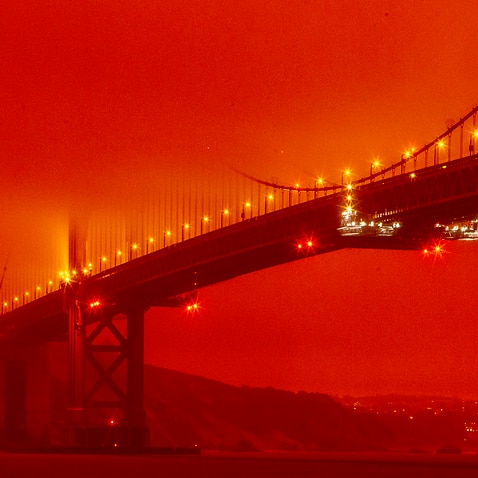
In this photo provided by Frederic Larson, the Golden Gate Bridge is seen at 11 a.m. PT amid a smoky, orange hue caused by the ongoing wildfires, Wednesday, Sept. 9, 2020, in San Francisco. (Frederic Larson via AP)
San Francisco, Pic from SBS story


Former NSW Fire and Rescue Commissioner Greg Mullins has helped to fight fires in California several times since the 1990s. 

He agrees the current wildfires are "a direct reflection" of what Australia faced.

"It's unprecedented," Mr Mullins told SBS News.

"The temperatures they're getting - you know, 49.4 (degrees) in the eastern suburbs of Los Angeles - nothing has ever come close." .................


Go to complete article By Rashida Yosufzai, Jodie Stephens

Related: Washington governor blames climate change for fires (excerpt): abc news


Washington governor blames climate change for fires
 Fires near Sydney, Pic from this blog

Saturday, 12 September 2020

Washington governor blames climate change for fires (excerpt): abc news

Washington Gov_ Jay Inslee says the fires devastating California and the Northwest shouldn’t be called wildfires, but “climate fires.”


Wednesday, 9 September 2020

News outlets continue to ignore climate change in articles about California's record-breaking weather (excerpt): Heated

"Nothing to see here, folks

This long weekend was literal hell for millions in the American West. California, Nevada, Arizona, Oregon, and Washington are suffering from dangerous heat, wildfire and smoke unlike anything they’ve ever seen. 

Three major newspaper stories. Zero climate mentions.
Californian Wildfires, 2019


Scientists attribute the unprecedented intensity of these events to human-caused climate change. Greenhouse gas emissions have made the atmosphere in these areas much hotter and drier than it used to be. “We’re living in a fundamentally climate-altered world,” MIT Technology Review noted last month, citing a multitude of peer-reviewed research about how climate change exacerbates extreme heat and wildfire. These so-called “compound climate events” are only predicted to get worse if greenhouse gas emissions continue unabated. 

Every American should be aware of these basic scientific facts when reading about the devastation of this weekend’s record-breaking extreme weather. But most of the major newspaper stories about the Labor Day Weekend from Hell don’t contain any climate-related information. Why?


Three major newspaper stories. Zero climate mentions.
Melting Siberian permafrost


Three major newspaper stories. Zero climate mentions.


Section A, page 12 of today’s New York Times contains a big story about the unprecedented weather pummeling California. Titled Extreme Heat Turns State Into a Furnace,” the piece contains more than 1,700 words of devastating detail about how heat, fire, and toxic air are affecting people in the state. But none of those details were about why things are getting so bad. None of those words were “climate change.”

The Associated Press’s article today is similar. Titled “Scorched earth: Record 2 million acres burned in California,” it contains 1,100 words about the weather’s unprecedented nature. It lists several different record-breaking data points, and quotes state officials saying how “unnerving” it is to have broken these records so early in the wildfire season. And yet this article—which will be re-published this morning in newspapers across the country—also does not mention the reason why these records might be happening.

The Washington Post also has an article about unprecedented
climate change-fueled extreme weather on its front page this
Three major newspaper stories. Zero climate mentions.
News coverage of Hurricane Laura analysed
morning, but it doesn’t mention climate change’s role. It’s about how 50 hikers are trapped inside a shelter within a rapidly-growing 130,000 acre wildfire, unable to be rescued. 

“This is one of the largest and most dangerous fires in the history of Fresno County,” the local fire chief said. “I don’t think everyone understands that.”

Newspapers often ignore basic climate science in extreme weather stories 


News outlets like the Times, the Post, and the AP have climate reporting teams. These teams all publish important stories about how the climate crisis fuels extreme weather across the country. The Times in particular has increased its climate coverage substantially in the last few years, according to data from the University of Colorado Boulder."


 Related: Trump and Biden: Little room for climate change in US election (excerpt): DW
 
role of media, journalists, #California, #wildfire, #bushfires, permafrost, hurricanes, cyclones, #jailclimatecriminals,


Saturday, 5 September 2020

A bit rich: business groups want urgent climate action, after resisting it for 30 years (excerpt): The Conversation

There is no systemic government response (federal, state and local) to build resilience to climate risks.
Renewable Energy
"Australia has seen the latest extraordinary twist in its climate soap opera. An alliance of business and environment groups declared the nation is “woefully unprepared” for climate change and urgent action is needed. 

And yesterday, Australian Industry Group – one of the alliance members – called on the federal government to spend at least A$3.3 billion on renewable energy over the next decade. 


Read more: The too hard basket: a short history of Australia's aborted climate policies


There is no systemic government response (federal, state and local) to build resilience to climate risks.
Bushfire readiness
The alliance, known as the Australian Climate Roundtable, formed   in 2015. It comprises ten business and environmental bodies, including the Business Council of Australia, National Farmers

Federation and the Australian Council of Trade Unions (ACTU).
Last week, the group stated

There is no systemic government response (federal, state and local) to build resilience to climate risks. Action is piecemeal; uncoordinated; does not engage business, private sector investment, unions, workers in affected industries, community sector and communities; and does not match the scale of the threat climate change represents to the Australian economy, environment and society.
There is no systemic government response (federal, state and local) to build resilience to climate risks.
Drought
This is ironic, since many of the statement’s signatories spent decades fiercely resisting moves towards sane climate policy. Let’s look back at a few pivotal moments."

Read the complete The Conversation article 


There is no systemic government response (federal, state and local) to build resilience to climate risks.
Youth want

 Related:  Will predicted sea rise inundation affect property values in Newcastle, NSW?
#climateaction, #climatecrisis, #bushfires, economic impact, government response, #jailclimatecriminals

Choosing A Place To Retire? Factor In Climate Change (excerpt): Forbes


The hazards of wildfires and extreme heat are also intensifying due to climate change.
Hurricane damage
(Pics added by this blog)

"When Bill and Annemarie Kachur retired in early 2016, they saw no reason to go anywhere. The gray shingled bungalow in Myrtle Beach, S.C. had been their home for more than 15 years.

“I’ve been here so long, it’s a sense of roots now for me,” says Bill, 65, who spent his early career hopping around the country, working on-air at various radio stations. 

Plus, they were already in a haven for retirees. “I like the fact that there isn’t a winter,” says Annemarie, who’ll be 65 in September.
But in recent years, their idyllic spot about 2 ½ miles from the Atlantic Ocean has revealed an ominous side: hurricane season. “I just noticed that the last four or five years, we keep getting hammered,” recalls Bill.

Two Hurricane Evacuations Since 2016

Since 2016, the Kachurs have ridden out four hurricanes, including two evacuations to safer ground.

“Ten months out of the year, it’s great,” says Bill. “And then there’s a couple months out of the year when you’re walking on eggshells and you’re a little bit concerned about what’s blowin’ in the wind, so to speak.” 

Warm, beachy spots on the Atlantic, Pacific and Gulf Coasts have been retirement magnets for decades. But, as Hurricane Laura just underscored, they’re also squarely in the crosshairs of the changing climate, effects of which are already evident in many of the nation’s most popular retirement destinations.

The hazards of wildfires and extreme heat are also intensifying due to climate change.
Planned retreat from rising seas


Climate Change and Retirement Location Decisions

“Current climate and future climate is absolutely something that people should be thinking about when deciding where to live, where to retire,” advises Radley Horton, a climate scientist at Columbia University’s Earth Institute, who has focused on climate adaptation strategies. “Those are absolutely critical concerns when you think about impacts directly on the home, but also livability outdoors — things like critical infrastructure, too,” says Horton.

The hazards of wildfires and extreme heat are also intensifying due to climate change.
Californian Wildfires
Rising seas are threatening things we tend to take for granted in many areas, like major freeways, airports and sewage treatment plants. The hazards of wildfires and extreme heat are also intensifying due to climate change."

Where then to retire to? : Read complete Forbes article: By Craig Miller, Science Journalist

Related: Port Macquarie after a 7m sea level rise. Insurance risks affect property values now.

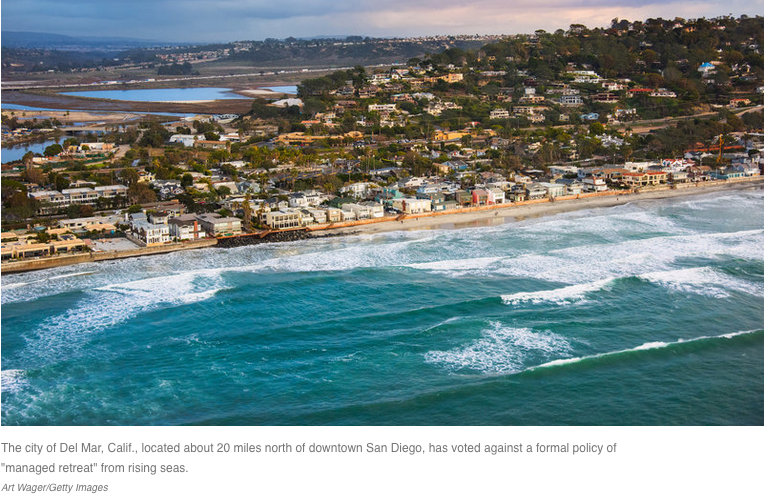
Related: 'Retreat' Is Not An Option As A California Beach Town Plans For Rising Seas: NPR

hurricanes, #searise, #bushfires, property values, insurance, #America, #Australia, #Houston, #wildfire,  

Sunday, 30 August 2020

IPCC: the dirty tricks climate scientists faced in three decades since first report (excerpt): The Conversation

(Pics added by this blog)

As the evidence became ever more compelling, the attacks on scientists escalated.
Wildfire
..... "The path to the summit
The accumulation of carbon dioxide in the atmosphere, caused primarily by the burning of fossil fuels, had been worrying scientists since the 1970s. The discovery of the “ozone hole” above Antarctica had given atmospheric scientists enormous credibility and clout among the public, and an international treaty banning chlorofluorocarbons, the chemicals causing the problem, was swiftly signed. 

Greenhouse gases
The Reagan White House worried that a treaty on CO₂ might happen as quickly, and set about ensuring the official scientific advice guiding leaders at the negotiations was under at least partial control. So emerged the intergovernmental – rather than international – panel on climate change, in 1988.

Already before Sundsvall, in 1989, figures in the automotive and fossil fuel industries of the US had set up the Global Climate Coalition to argue against rapid action and to cast doubt on the evidence. Alongside thinktanks, such as the George Marshall Institute, and trade bodies, such as the Western Fuels Association, it kept up a steady stream of publishing in the media – including a movie – to discredit the science.

But their efforts to discourage political commitment were only partially successful. The scientists held firm, and a climate treaty was agreed in 1992. And so attention turned to the scientists themselves.

The Serengeti strategy

In 1996, there were sustained attacks on climate scientist Ben Santer, who had been responsible for synthesising text in the IPCC’s second assessment report. He was accused of having “tampered with” wording and somehow “twisting” the intent of IPCC authors by Fred Seitz of the Global Climate Coalition.

Wildfire
In the late 1990s, Michael Mann, whose famous “hockey stick” diagram of global temperatures was a key part of the third assessment report, came under fire from right-wing thinktanks and even the Attorney General of Virginia. Mann called this attempt to pick on scientists perceived to be vulnerable to pressure “the Serengeti strategy”.

As Mann himself wrote

Vote for your children's future
By singling out a sole scientist, it is possible for the forces of “anti-science” to bring many more resources to bear on one individual, exerting enormous pressure from multiple directions at once, making defence difficult. It is similar to what happens when a group of lions on the Serengeti seek out a vulnerable individual zebra at the edge of a herd."

Go to complete The Conversation article
by

Research Associate in Social Movements, Keele University

Related:  2020 is a Warning That Our Civilization is Beginning to Fall Apart (excerpt): Medium

#bigbusiness, #bushfires, #carbonstorage, #climatecriminals, #criminalesclimáticosdelacárcel, #climateemergency, #jailclimatecriminals, #jail the climate criminals, anti-science, climate science,

Friday, 28 August 2020

Far-reaching climate change risks to Australia must be reduced and managed: Aigroup

Photos added by this blog.

It is in Australia's national interest that we do all we can to contribute to successful global action to minimise further temperature rises
Add caption
"The Australian Climate Roundtable (ACR) is a forum that brings together leading organisations from the business, farming, investment, union, social welfare and environmental sectors. Since 2014 we have sought and found common ground on responding to the challenge of climate change."
28 Aug 2020


"What the experts say

Climate change is already having a real and significant impact on the economy and community. Australian temperatures are increasing, extreme climate-related events such as heat waves and bushfires are becoming more intense and frequent, natural systems are suffering irreversible damage, some communities are in a constant state of recovery from successive natural disasters, and the economic and financial impacts of these changes continue to grow.


It is in Australia's national interest that we do all we can to contribute to successful global action to minimise further temperature rises
Sea Level Rise will affect our cities

Even with ambitious global action in line with the objectives of the Paris Agreement, Australia will experience escalating costs from the climate change associated with historical emissions. These costs will be significant and will require a concerted national response to manage these now unavoidable climate related damages.

It is in Australia's national interest that we do all we can to contribute to successful global action to minimise further temperature rises
Health risks for children because of climate change


The Intergovernmental Panel on Climate Change advises that global emissions will need to reach net-zero by around 2050 to achieve the goals of the Paris Agreement. If the world fails to meet the objectives of the Paris Agreement, and instead continues its current emissions pathway, climate change would have far-reaching economic, environmental and social effects on Australia. It is unlikely that Australia and the world can remain prosperous in this scenario.

Australia requires a risk assessment for climate change.


These effects include but are not limited to:
* Unprecedented economic damage to Australia and our regional trading partners from acute (e.g. extreme events) and chronic (e.g. sea level rise) changes in climate. Significant impacts on coastal regions, agriculture, human productivity and infrastructure. The economy-wide costs of not achieving the Paris Agreement objectives far outweigh the costs of a smooth transition to net-zero emissions.
* Risks to financial stability and particularly the insurance industry. The ability of the insurance and reinsurance markets to support Australian investments and communities would be compromised.
It is in Australia's national interest that we do all we can to contribute to successful global action to minimise further temperature rises
Drought
* Major acute and long-lived human and community social andhealth impacts. This includes both loss of life and livelihood from extreme events through to long-term medical conditions such as post-traumatic stress disorder. Many communities and regions will suffer a constant cycle of natural disaster and rebuilding or face relocation.

* Irreversible damage to Australian unique natural heritage, including Australia's iconic and internationally significant ecosystems such as the Great Barrier Reef and Kakadu National Park.
* Significant threats to agriculture, forestry, nature-based tourism
It is in Australia's national interest that we do all we can to contribute to successful global action to minimise further temperature rises
Destroyed forests
and fisheries. Unconstrained climate change is a risk to Australia's domestic food security.

The impacts of climate change will also put many governments under fiscal stress. Tax revenues will fall dramatically and increases in the frequency and severity of weather events and other natural disasters, which invoke significant emergency management responses and recovery expenditures, indicate that pressure on government budgets will be especially severe.

Related: Australia fires: Similar or worse disasters 'will happen again' (excerpt): BBC

Wednesday, 26 August 2020

Australia fires: Similar or worse disasters 'will happen again' (excerpt): BBC

Australia should expect "worse" in the years to come
Wildfire: Australia should expect "worse" in the years to come
"An inquiry into the recent massive bushfire disaster in Australia has found the country should expect "worse" in the years to come.
 
The review - which looked at New South Wales (NSW), the worst-hit state - made sweeping proposals aimed at better preparing for future fire seasons.
 
The blazes began last August and burned for months, killing 33 people nationally and scorching vast areas.
 
The NSW state government said it would adopt the inquiry's 76 recommendations.
 
The "extreme and extremely unusual" bushfires destroyed 2,476


Australia should expect "worse" in the years to come
Fires caused by climate change
houses and 5.5 million hectares of land in that state alone, according to the NSW Bushfire Inquiry report.
 
"It showed us bushfires through forested regions on a scale that we have not seen in Australia in recorded history, and fire behaviour that took even experienced firefighters by surprise."
 
The main causes were a drought which had made the land extremely dry and ready to burn, hot and windy weather, and climate change.
 
NSW Premier Gladys Berejiklian said on Tuesday: "The next fire season is already upon us."
 
As deadly fires rage in the US summer in California, NSW has seen winter blazes this month - though none have posed a significant threat.

What did the report recommend?

Australia should expect "worse" in the years to come
Californian wildfires are also caused by climate change
It made far-reaching proposals, including:
  • ordering residents in at-risk areas to conduct compulsory land-clearing
  • better aerial firefighting strategies, including more water-bombing at night
  • drawing on more Aboriginal land management techniques, such as cultural burning
  • allowing firefighters to enter private properties to start controlled burns on materials which fuel fires
  • improving alert systems for bushfire smoke, and research into its health impacts
  • making government agencies more efficient and auditing their progress.
"Ms Berejiklian said: 'We have to accept also that our climate is changing and those who wrote the report acknowledge that.' "


#firestorms, #bushfires, #wildfire, firefighters, #Australia, #California, #cambio-climatico, #climatecriminals, #criminalesclimáticosdelacárcel, #jailclimatecriminals, #climateaction,  

Tuesday, 25 August 2020

The End of the Environment: Bob Brown.: The Saturday Paper (excerpt)

.... "The prime minister’s post-Covid-19 plan is to roar ahead with a slate of mega-projects that would be delayed by any
a boon for corporate environmental exploiters
Liberals and nationals Fail Australian Forests
proper consideration of their environmental and Indigenous heritage impacts.
 
 
While the EPBC Act rarely leads to any project being given the thumbs down, it does require environmental impacts to be assessed, and this takes time. The government’s solution? Get rid of the federal assessment.
 
a boon for corporate environmental exploiters
Forests are only proven carbon storage
When parliament resumes next week, Minister for the Environment Sussan Ley will introduce a bill, under the cover of Covid-19, to amend Howard’s EPBC Act and hand the power to the states – which are more vulnerable to the corporate sector – to approve mining, gas fracking, dam building, the rapid expansion of industrial fish farming and the invasion of national parks by private enterprise. She aims to wash her hands of the Commonwealth’s responsibility for environmental assessment and protection.
 
...........................
 
.........................
 
The minister is not waiting for the final report, due in October, of her own inquiry into the EPBC Act, headed by businessman Graeme Samuel. Last month she peremptorily dismissed his interim report’s key recommendation that the Commonwealth set up a policing agency to watch over state management of environmental matters. This was despite Samuel’s finding that “Australia’s natural environment and iconic places are in an overall state of decline and are under increasing threat”.
 
Undoubtedly, the powers to protect Indigenous heritage will be the
a boon for corporate environmental exploiters
Koala after wildfire
next thing shunted to the states. Ley knew the Juukan Gorge caves were to be blown up by Rio Tinto before the event and yet she did nothing. Next, she rejected national heritage protection for the ancient Djab Wurrung eucalypts in Victoria. Handing her powers to the states will spare her from such complicit embarrassment in the future.
 
a boon for corporate environmental exploiters
Australia's climate action record
With the Greens opposed, it will be up to Labor and the crossbenchers in the senate to take on Scott Morrison’s game plan to relegate environmental powers to weaker state governments while concentrating economic might in Canberra: a boon for corporate environmental exploiters and their lobbyists in both cases.
 
This is a watershed moment for Australia’s environment. It has taken more than two decades to see any success in our fight to chip away at Howard’s RFAs. And now we face another era wherein policy is being devised to ignore the certainty of environmental devastation for the promise of a quick profit.
 
In Earth’s sixth great age of extinction, there is a rising tide of opposition to the foolishness, if not criminality, of destroying wildlife habitats – from the deep seas to coral reefs and coastlines to what little is left of woodlands, grasslands and forests.
 
a boon for corporate environmental exploiters
Koala and destroyed forest
The phenomenon of Extinction Rebellion, temporarily quietened by Covid-19, is just a hint of the public unrest to come unless the needless exploitation of nature and our finest human heritage ends. Earth’s ecosystem is at breaking point. Our human herd is already using nearly twice the living produce this planet is capable of sustaining and yet, everywhere, the clamour is for “growth”.
If the forests continue to fall, everything else will follow. As with whaling in 1978, the time for logging Australia’s wildlife-filled and carbon-rich native forests is up.
 

Saturday, 22 August 2020

Legal challenge to native forest logging in Tasmania might succeed


"BIG NEWS ! This court case could be a watershed moment in
ending the taxpayer-subsidised destruction of Tasmania’s precious native forests and the best chance in a generation to properly protect our old growth wilderness, their critters and critical carbon sinks.


the Tasmanian Government failed again to get FSC certification for its destructive native forest logging operations
Australian political parties support logging native forests
For more than two decades, too many Tasmanian politicians have hidden behind these dodgy Regional Forest Agreements and promoted the interests of a few profiteers at the expense of our environment and taxpayers.
We have long known these Regional Forest Agreements were used 
Recently the Tasmanian Government failed again to get FSC certification for its destructive native forest logging operations
Native forests are already at risk from fires.
as cover to abandon the endangered wildlife they were set up to protect, simply to grease the wheels for a marginal industry that has wielded significant political clout. 
Recently the Tasmanian Government failed again to get FSC certification for its destructive native forest logging operations. 
This is no surprise when, for decades, it has not had a robust legal framework holding the industry to account especially around the protection of endangered species such as the Tasmanian devil, wedge-tailed eagle and swift parrot, and also for the logging of old growth forests." Senator Whish-Wilson on Facebook

..............................

"Bob Brown launches legal challenge to native forest logging in Tasmania

State-sanctioned felling is ‘based on a monumental lie’, former Greens leader says

'The former Greens leader Bob Brown has launched a legal challenge to native forest logging in Tasmania, claiming it is inconsistent with federal environment law.

The case by the Bob Brown Foundation, lodged in the federal court on Thursday, challenges what has been seen as an effective exemption from environment laws granted to state-sanctioned logging under regional forest agreements between Canberra and the states.

it lacks a legally enforceable requirement that the state must protect threatened species.
Australia ranks second worse on climate protection
It argues the Tasmanian regional forest agreement is not valid as it lacks a legally enforceable requirement that the state must protect threatened species.

The foundation says if the case were successful it would consider similar action against federal-state forest agreements in Victoria, New South Wales and Western Australia. It said the current rules “essentially allows the state government to make up the rules as it suits, and gives no guaranteed protection for our wildlife and environment”.

Brown said the foundation had been buoyed by a landmark federal court judgment in May that found logging in Victoria’s central highlands by the state-owned agency VicForests was in breach of a regional forest agreement.

the flattening and burning of native forests and wildlife is not ecologically sustainable,”
Logging in NSW leaves Koala stranded.
“This is a huge undertaking for us but everyone knows that the flattening and burning of native forests and wildlife is not ecologically sustainable,” Brown said. “The industry is based on a monumental lie and this challenge puts that lie to the test.”

Read complete The Guardian story, August 21, 2020

  Related: Both the major parties in Australia support new gas projects