Showing posts with label #covid 19. Show all posts

Monday, 21 September 2020

Pandemic lands 'worst body blow' in modern history on fossil fuel companies (excerpt): Yale Climate Connections


 "......“Serious stress, serious stress.”

“An industry in its last days.”

“Steady decline [in growth, demand] for the past decade.”

“Cratering.”

Those are a few of the characterizations of today’s oil, natural gas, and coal industries put forward by several independent journalists, writers, and analysts in the new edition of the “This is Not Cool” video series.

… And then, along came the coronavirus and the COVID-19 challenges, providing one more blow to the energy industry.

Even pre-pandemic, the conventional energy sector “already had plans to cancel major infrastructure projects like pipelines,” independent journalist Keith Schneider told Yale Climate Connections. And with the pandemic, oil and gas experienced “the worst body blow in its modern contemporary history,” he said.

Journalist and writer Antonia Juhasz agrees, pointing to “an industry in its last days, it’s just getting hit from too many sides.”

“Most of the new electricity generation coming online today is coming from wind and solar,” says Houston Chronicle reporter Chris Tomlinson. And professor Dan Kammen of the University of California Berkeley says solar and wind have been the cheapest energy options worldwide for at least the past three consecutive years.

Kammen also says that he believes solar and wind energy initiatives can advance two to three times as many job opportunities as traditional fossil fuel projects: That would be critical to help long-time coal and other fossil fuel industry employees whose decades of work has been critical to economic development … and who society cannot simply leave stranded as momentum turns toward a clean economy. Tending to the plight of those workers whose jobs are lost will have to be part of the energy-options puzzle, interviewees say."..."

Watch the video

Go Yale Climate Connections


Related: Scottish green hydrogen scheme gears up to fuel ferries, buses and trains (excerpt): The Guardian

Sunday, 30 August 2020

Climate crisis: business, farming and environment leaders unite to warn Australia 'woefully unprepared' (excerpt): The Guardian


(Pics by this blog)

Australia faced escalating costs due to unavoidable climate change from historical emissions
The last generation who can do something about climate change.


An extraordinary statement by 10 groups says the nation’s future prosperity is at risk without a coherent response

Business, industry, farming and environmental leaders have joined forces to warn Australia is “woefully unprepared” for the impact of climate change over the coming decades and to urge the Morrison government to do far more to cut emissions and improve the country’s resilience.

Australia faced escalating costs due to unavoidable climate change from historical emissions
Food systems must adapt
An extraordinary statement by 10 organisations, several with close ties to the Coalition, said climate change was already having a “real and significant” impact on the economy and community. The groups, representing the breadth of Australian society, called on the federal and state governments to act immediately to reduce and manage the risks.

Organisations including the Business Council of Australia, the Australian Industry Group, the National Farmers’ Federation, the Australian Aluminium Council and the ACTU said public debate about the cost of doing more to reduce emissions had too often not considered the cost of climate change to the economy, environment and society.

They cited evidence from the Intergovernmental Panel on Climate Change that emissions would need to be net-zero by 2050 if the goals of the Paris agreement are to be achieved, and said Australia must adopt that target.


Australia faced escalating costs due to unavoidable climate change from historical emissions
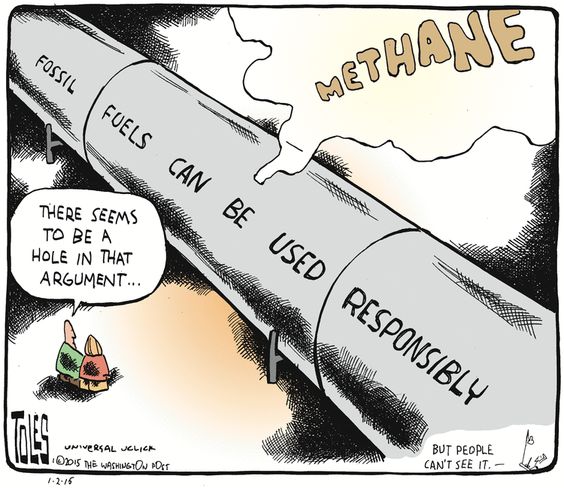
Methane produces greenhouse gas.
The statement, issued under the Australian Climate Roundtable banner, said Australia’s future prosperity would be at risk unless it had a coherent national response to the crisis.
“The scale of costs and breadth of the impact of climate change for people in Australia is deeply concerning and will escalate over time,” it said. “It is in Australia’s national interest that we do all we can to contribute to successful global action to minimise further temperature rises and take action to manage the changes we can’t avoid.”


The statement said the expert advice made clear temperatures were increasing, extreme climate-related events such as heatwaves and bushfires were becoming more intense and frequent, and natural systems were suffering irreversible damage. Some communities were now in a constant state of recovery from successive natural disasters with growing economic ramifications. 
 
Australia faced escalating costs due to unavoidable climate change from historical emissions
Agriculture must adapt

It said inaction would lead to unprecedented economic damage to Australia and its regional trading partners, heightened risks to financial stability – particularly as the insurance industry became compromised – and significant threats to the agriculture, forestry, tourism and fishing industries. 

There would be severe pressure on government budgets due to a dramatic fall in tax revenue and a rise in natural disasters that demanded emergency response and recovery spending and there would be major and long-lived social and health impacts, including loss of life.

The roundtable concluded Australia must play its fair part in international efforts to limit average global heating to 1.5C above pre-industrial levels, or at most to well below a 2C increase.


That meant setting a target of net-zero emissions by mid-century and introducing policies to meet it that aimed to lift social equity and the country’s global competitive advantage in a zero-emissions world.


The Morrison government has rejected calls that it back the goal of net-zero emissions by 2050. The target has been adopted by more than 70 countries, all Australian states and a growing number of business and investors, including fossil fuel companies. National emissions have dipped 1.5% since the Coalition was elected in 2013 after falling about 14% in six years under Labor.

Australia faced escalating costs due to unavoidable climate change from historical emissions
Our cities will inundate from sea rise.
The roundtable said even with ambitious global action Australia faced escalating costs due to unavoidable climate change from historical emissions, and must act swiftly to improve resilience. It said the country was “woefully unprepared” for the scale of threats that would emerge as it lacked a systemic government response at any level.


#Australia, #bigbusiness, #cambio-climatico, #climate crisis, #climatecriminals, #climateemergency, #economy, #methanegas, #icemelting, 

Related: 2020 is a Warning That Our Civilization is Beginning to Fall Apart (excerpt): Medium

Friday, 28 August 2020

The Unraveling of America (excerpt): Rolling Stone

*Photos added by this blog.

most Americans live on a high wire, with no safety net
Elizabeth Warren: Storm is Coming
 "Anthropologist Wade Davis on how COVID-19 signals the end of the American era"

"Never in our lives have we experienced such a global phenomenon. For the first time in the history of the world, all of humanity, informed by the unprecedented reach of digital technology, has come together, focused on the same existential threat, consumed by the same fears and uncertainties, eagerly anticipating the same, as yet unrealized, promises of medical science."

"At the root of this transformation and decline lies an ever-widening chasm between Americans who have and those who have little or nothing. Economic disparities exist in all nations, creating a tension that can be as disruptive as the inequities are unjust. In any number of settings, however, the negative forces tearing apart a society are mitigated or even muted if there are other elements that reinforce social solidarity — religious faith, the strength and comfort of family, the pride of tradition, fidelity to the land, a spirit of place.

But when all the old certainties are shown to be lies, when the promise of a good life for a working
most Americans live on a high wire, with no safety net
"...as a buffoon of a president.."
family is shattered as factories close and corporate leaders, growing wealthier by the day, ship jobs abroad, the social contract is irrevocably broken. For two generations, America has celebrated globalization with iconic intensity, when, as any working man or woman can see, it’s nothing more than capital on the prowl in search of ever cheaper sources of labor.

For many years, those on the conservative right in the United States have invoked a nostalgia for the 1950s, and an America that never was, but has to be presumed to have existed to rationalize their sense of loss and abandonment, their fear of change, their bitter resentments and lingering contempt for the social movements of the 1960s, a time of new aspirations for women, gays, and people of color. In truth, at least in economic terms, the country of the 1950s resembled Denmark as much as the America of today. Marginal tax rates for the wealthy were 90 percent. The salaries of CEOs were, on average, just 20 times that of their mid-management employees."