Showing posts with label #extremeheat. Show all posts

Wednesday, 16 September 2020

How Climate Migration Will Reshape America Millions will be displaced. Where will they go? (excerpt) : NYT Magazine

(Pics by this blog)

a nation on the cusp of a great transformation
Hurricane Michael left this
" ....... I wanted to know if this was beginning to change. Might Americans finally be waking up to how climate is about to transform their lives? And if so — if a great domestic relocation might be in the offing — was it possible to project where we might go? To answer these questions, I interviewed more than four dozen experts: economists and demographers, climate scientists and insurance executives, architects and urban planners, and I mapped out the danger zones that will close in on Americans over the next 30 years. The maps for the first time combined exclusive climate data from the Rhodium Group, an independent data-analytics firm; wildfire projections modeled by United States Forest Service researchers and others; and data about America’s shifting climate niches, an evolution of work first published by The Proceedings of the National Academy of Sciences last spring. (See a detailed analysis of the maps.) "


a nation on the cusp of a great transformation
Sea rise and no planned retreat

"What I found was a nation on the cusp of a great transformation. Across the United States, some 162 million
people — nearly one in two — will most likely experience a decline in the quality of their environment, namely more heat and less water. For 93 million of them, the changes could be
particularly severe, and by 2070, our analysis suggests, if carbon emissions rise at extreme levels, at least four million Americans could find themselves living at the fringe, in places decidedly outside the ideal niche for human life. The cost of resisting the new climate reality is mounting. Florida officials have already acknowledged that defending some roadways against the sea will be unaffordable. And the nation’s federal flood-insurance program is for the first time requiring that some of its payouts be used to retreat from climate threats across the country. It will soon prove too expensive to maintain the status quo. "


........................


a nation on the cusp of a great transformation
Some predicted sea rise may be too conservative

"Let’s start with some basics. Across the country, it’s going to get hot. Buffalo may feel in a few decades like Tempe, Ariz., does today, and Tempe itself will sustain 100-degree average summer temperatures by the end of the century. Extreme humidity from New Orleans to northern Wisconsin will make summers increasingly unbearable, turning otherwise seemingly survivable heat waves into debilitating health threats. Fresh water will also be in short supply, not only in the West but also in places like Florida, Georgia and Alabama, where droughts now regularly wither cotton fields. By 2040, according to federal government projections, 
extreme water shortages will be nearly ubiquitous west of Missouri. The Memphis Sands Aquifer, a crucial water supply for Mississippi, Tennessee, Arkansas and Louisiana, is already overdrawn by hundreds of millions of gallons a day. Much of the Ogallala Aquifer — which supplies nearly a third of the nation’s irrigation groundwater — could be gone by the end of the century."


Go to complete, extensive New York Times Magazine article

Related:  Trump baselessly questions climate science during California wildfire briefing (excerpt): CNN

#America, #climaterefugees, #extremeheat, #searise, #USA, climate migration, water security

Sunday, 6 September 2020

Donald Trump is hampering fight against climate change, WEF warns (excerpt) : The Guardian (2 years ago)

Donald Trump’s go-it-alone approach to tackling climate change
Trump digs coal
Two years after 2018 the situation is even worse.

"World Economic Forum outlines huge increase in all five eco risks since the US president assumed office


The World Economic Forum delivered a strong warning about Donald Trump’s go-it-alone approach to tackling climate change as it highlighted the growing threat of environmental collapse in its annual assessment of the risks facing the international community."

............." the WEF avoided mentioning Trump by name but said “nation-state unilateralism” would make it harder to tackle global warming and ecological damage.

The WEF’s global risks perception survey showed Trump’s arrival in the White House in 2017 had coincided with a marked increase in concern about the environment among experts polled by the Swiss-based organisation.

It said all five environmental risks covered by the survey – extreme weather events, natural disasters, failure of climate-change mitigation and adaptation, biodiversity loss and ecosystem collapse, and human-made natural disasters – had become more prominent.

“This follows a year characterised by high-impact hurricanes, extreme temperatures and the first rise in CO2 emissions for four years. We have been pushing our planet to the brink and the damage is becoming increasingly clear. 

“Biodiversity is being lost at mass-extinction rates, agricultural systems are under strain, and pollution of the air and sea has become an increasingly pressing threat to human health.”


Trump has threatened to withdraw the US from the 2015 Paris agreement under which nations agreed to take steps to limit the increase in global temperature. He has said the commitments made by his predecessor, Barack Obama, would damage the American economy.

Other states have said they will keep to the pledges made in Paris, an approach supported by the WEF."


ALSO

Trump suggests the climate may actually be 'fabulous' after an ominous UN report on looming disaster

failure of climate-change mitigation and adaptationTrump digs coal

  
   • President Donald Trump on Tuesday sought to cast doubt on a UN report on climate change that had dire warnings about how little time we have to stop a global catastrophe.
 
   • Trump suggested that the world’s climate might actually be “fabulous” and that he’d seen reports expressing that position.
 
   • The UN report outlines the effects of global warming of 1.5 degrees Celsius above pre-industrial levels.
 
   • Trump has previously called climate change a “hoax,” and last year he announced he would pull the US out of the Paris climate accord.
Trump, WEF, Paris Agreement, #climate crisis, #jailclimatecriminals, #criminales-climáticos-de-la-cárcel, #criminalesclimáticosdelacárcel, #extremeheat, #icemelting, hurricanes,  climatechangedenial

Sunday, 30 August 2020

Climate crisis: business, farming and environment leaders unite to warn Australia 'woefully unprepared' (excerpt): The Guardian


(Pics by this blog)

Australia faced escalating costs due to unavoidable climate change from historical emissions
The last generation who can do something about climate change.


An extraordinary statement by 10 groups says the nation’s future prosperity is at risk without a coherent response

Business, industry, farming and environmental leaders have joined forces to warn Australia is “woefully unprepared” for the impact of climate change over the coming decades and to urge the Morrison government to do far more to cut emissions and improve the country’s resilience.

Australia faced escalating costs due to unavoidable climate change from historical emissions
Food systems must adapt
An extraordinary statement by 10 organisations, several with close ties to the Coalition, said climate change was already having a “real and significant” impact on the economy and community. The groups, representing the breadth of Australian society, called on the federal and state governments to act immediately to reduce and manage the risks.

Organisations including the Business Council of Australia, the Australian Industry Group, the National Farmers’ Federation, the Australian Aluminium Council and the ACTU said public debate about the cost of doing more to reduce emissions had too often not considered the cost of climate change to the economy, environment and society.

They cited evidence from the Intergovernmental Panel on Climate Change that emissions would need to be net-zero by 2050 if the goals of the Paris agreement are to be achieved, and said Australia must adopt that target.


Australia faced escalating costs due to unavoidable climate change from historical emissions
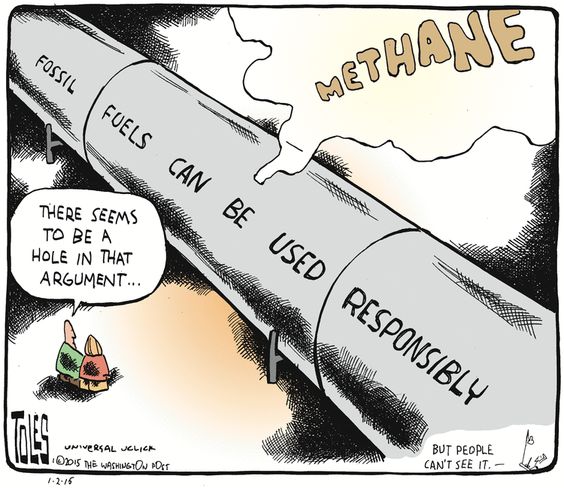
Methane produces greenhouse gas.
The statement, issued under the Australian Climate Roundtable banner, said Australia’s future prosperity would be at risk unless it had a coherent national response to the crisis.
“The scale of costs and breadth of the impact of climate change for people in Australia is deeply concerning and will escalate over time,” it said. “It is in Australia’s national interest that we do all we can to contribute to successful global action to minimise further temperature rises and take action to manage the changes we can’t avoid.”


The statement said the expert advice made clear temperatures were increasing, extreme climate-related events such as heatwaves and bushfires were becoming more intense and frequent, and natural systems were suffering irreversible damage. Some communities were now in a constant state of recovery from successive natural disasters with growing economic ramifications. 
 
Australia faced escalating costs due to unavoidable climate change from historical emissions
Agriculture must adapt

It said inaction would lead to unprecedented economic damage to Australia and its regional trading partners, heightened risks to financial stability – particularly as the insurance industry became compromised – and significant threats to the agriculture, forestry, tourism and fishing industries. 

There would be severe pressure on government budgets due to a dramatic fall in tax revenue and a rise in natural disasters that demanded emergency response and recovery spending and there would be major and long-lived social and health impacts, including loss of life.

The roundtable concluded Australia must play its fair part in international efforts to limit average global heating to 1.5C above pre-industrial levels, or at most to well below a 2C increase.


That meant setting a target of net-zero emissions by mid-century and introducing policies to meet it that aimed to lift social equity and the country’s global competitive advantage in a zero-emissions world.


The Morrison government has rejected calls that it back the goal of net-zero emissions by 2050. The target has been adopted by more than 70 countries, all Australian states and a growing number of business and investors, including fossil fuel companies. National emissions have dipped 1.5% since the Coalition was elected in 2013 after falling about 14% in six years under Labor.

Australia faced escalating costs due to unavoidable climate change from historical emissions
Our cities will inundate from sea rise.
The roundtable said even with ambitious global action Australia faced escalating costs due to unavoidable climate change from historical emissions, and must act swiftly to improve resilience. It said the country was “woefully unprepared” for the scale of threats that would emerge as it lacked a systemic government response at any level.


#Australia, #bigbusiness, #cambio-climatico, #climate crisis, #climatecriminals, #climateemergency, #economy, #methanegas, #icemelting, 

Related: 2020 is a Warning That Our Civilization is Beginning to Fall Apart (excerpt): Medium

Monday, 17 August 2020

California begins rolling blackouts as state faces worst heat in 70 years (excerpt): SMH

America's west coast is set to have its hottest two weeks in 70 years
Extreme heat has caused Californian fires and blackouts
"As many as 2 million Californians were plunged into darkness over a four-hour span late Friday in the state's first rolling blackouts since the 2001 energy crisis - and that was just day one.

America's west coast is set to have its hottest two weeks in 70 years, putting even more strain on power grids after California imposed its first rolling blackouts since 2001.

Excessive heat warnings and watches stretch from the Pacific Coast inland to Montana, Utah and Arizona, according to the National Weather Service. Sacramento is forecast to be 109 degrees Fahrenheit (43 Celsius) by Tuesday. Pasadena could hit 108."

"The sudden and largely unannounced outages in California are a stark reminder of the fragility of power grids in the face of extreme weather. Searing heat has gripped cities around the globe in recent weeks, including Brussels, Paris and New York."


#extremeheat, #cambio-climatico, #气候变化, #California, energy, #jailclimatecriminals,  

Saturday, 8 August 2020

World's three hottest Julys happened in the last five years: Reuters (excerpt)

BRUSSELS (Reuters) -

#heatwaves,  #jailclimatecriminals
We want climate action now
 "Last month was the world’s third-hottest July on record, new data show — the latest milestone in a global warming trend that has seen the three hottest Julys within the last five years.


With the heat has come a high level of ice melt in the Arctic, where the extent of sea ice last month hit the lowest level for July since the polar satellite record-keeping began four decades ago, according to the European Union’s Copernicus Climate Change Service. 

“It’s on a global scale, and all months are warming.”
California burnt
The new findings come as France and Belgium brace for a possible weekend heat wave, while Italian roads near an Alpine glacier were closed amid warnings that high temperatures could cause ice to collapse. 


“It’s not just a summer thing,” said Copernicus senior scientist Freja Vamborg. “It’s on a global scale, and all months are warming.” 


The heat has also been linked with wildfires that have been scorching patches of Siberian forestAtmospheric temperature records dating back to the mid-19th century reveal the last five years to be the hottest yet. In terms of records for the month of July, only 2019 and 2016 were warmer than last month. "

Go to complete Reuters article 

See also:

This Is Inequity at the Boiling Point: The Conversation (excerpt)


HERE IS THE SAME ARTICLE IN MANDARIN.


世界上三个最炎热的七月发生在过去五年中:路透社(节选)
布鲁塞尔(路透社)-

#热浪,监狱气候犯罪分子
我们现在要采取气候行动
 “新数据显示,上个月是有记录以来世界上第三最热的七月。这是全球变暖趋势的最新里程碑,
过去五年来,这是最热的三个七月。


伴随着热量的到来,北极地区的冰层融化程度很高,据欧盟哥白尼气候变化服务局称,
上个月海冰的程度达到了自四十多年前极地卫星保持记录以来的七月份的最低水平。 。

“它在全球范围内,而且所有月份都在变暖。”
加州烧毁
新发现是在法国和比利时为周末可能出现的热浪做好准备的同时,
意大利阿尔卑斯山冰川附近的道路因警告高温可能导致冰塌而关闭。


哥白尼资深科学家Freja Vamborg说:“这不仅仅是夏天。” 
“它在全球范围内,而且所有月份都在变暖。”


高温还与野火联系在一起,野火一直在烧焦西伯利亚森林
始于19世纪中叶的大气温度记录显示,过去五年是最热的。
就7月份的记录而言,只有2019年和2016年比上个月温暖。 ”

去完成路透社的文章
 
Shìjiè shàng sān gè zuì yánrè de qī yuè fāshēng 
zài guòqù wǔ nián zhōng: Lùtòu shè (jiéxuǎn)
bùlǔsài'ěr (lùtòu shè)-

#rèlàng, jiānyù qìhòu fànzuì fēnzǐ
wǒmen xiànzài yào cǎiqǔ qìhòu xíngdòng
 “xīn shùjù xiǎnshì, shàng gè yuè shì yǒu jìlù 
yǐlái shìjiè shàng dì sān zuì rè de qī yuè. 
Zhè shì quánqiú biàn nuǎn qūshì de zuìxīn lǐchéngbēi, 
guòqù wǔ niánlái, zhè shì zuì rè de sān gè qī yuè.


Bàn suí zháo rèliàng de dàolái, 
běijídìqū de bīng céng rónghuà chéngdù hěn gāo, 
jù ōuméng gē bái ní qìhòu biànhuà fúwù jú chēng, 
shàng gè yuè hǎi bīng de chéngdù dádàole zì sìshí duō nián qián jí dì wèixīng 
bǎochí jìlù yǐlái de qī yuèfèn de zuìdī shuǐpíng. .

“Tā zài quánqiú fànwéi nèi, érqiě suǒyǒu yuèfèn dōu zài biàn nuǎn.”
Jiāzhōu shāohuǐ
xīn fāxiàn shì zài fàguó hé bǐlìshí wèi zhōumò kěnéng 
chūxiàn de rèlàng zuò hǎo zhǔnbèi de tóngshí, 
yìdàlì ā'ěrbēisī shān bīngchuān fùjìn de dàolù yīn jǐnggào gāowēn kěnéng dǎozhì 
bīng tā ér guānbì.


Gē bái ní zīshēn kēxuéjiā Freja Vamborg shuō:“Zhè bùjǐn jǐn shì xiàtiān.” 
“Tā zài quánqiú fànwéi nèi, érqiě suǒyǒu yuèfèn dōu zài biàn nuǎn.”


Gāowēn hái yǔ yěhuǒ liánxì zài yīqǐ, yěhuǒ yīzhí zài shāo jiāo xībólìyǎ sēnlín
shǐ yú 19 shìjì zhōngyè de dàqì wēndù jìlù xiǎnshì, guòqù wǔ nián shì zuì rè de. 
Jiù 7 yuèfèn de jìlù ér yán, zhǐyǒu 2019 nián hé 2016 nián bǐ shàng gè yuè wēnnuǎn. ”

Qù wánchéng lùtòu shè de wénzhāng

#heatwaves, #climatechange, #climatecrisis, #drought, #extremeheat, #wildfire, 
#人类灭绝

Friday, 7 August 2020

This Is Inequity at the Boiling Point: The Conversation (excerpt)


https://www.nytimes.com/interactive/2020/08/06/climate/climate-change-inequality-heat.html?campaign_id=3&emc=edit_MBAU_p_20200806&instance_id=21045&nl=morning-briefing&regi_id=94643053&section=backStory&segment_id=35452&te=1&user_id=8e8e563fc4e5a5c16b6b437d6b7137af
Heatwaves

"This Is Inequity at the Boiling Point


It was a record 125 degrees Fahrenheit in Baghdad in July, and 100 degrees above the Arctic Circle this June. Australia shattered its summer heat records as wildfires, fueled by prolonged drought, turned the sky fever red. 


For 150 years of industrialization, the combustion of coal, oil and gas has steadily released heat-trapping gases into the atmosphere, driving up average global temperatures and setting heat records. Nearly everywhere around the world, heat waves are more frequent and longer lasting than they were 70 years ago. 

But a hotter planet does not hurt equally. If you’re poor and
https://www.nytimes.com/interactive/2020/08/06/climate/climate-change-inequality-heat.html?campaign_id=3&emc=edit_MBAU_p_20200806&instance_id=21045&nl=morning-briefing&regi_id=94643053&section=backStory&segment_id=35452&te=1&user_id=8e8e563fc4e5a5c16b6b437d6b7137af
Heatwaves
marginalized, you’re likely to be much more vulnerable to extreme heat. You might be unable to afford an air-conditioner, and you might not even have electricity when you need it. You may have no choice but to work outdoors under a sun so blistering that first your knees feel weak and then delirium sets in. Or the heat might bring a drought so punishing that, no matter how hard you work under the sun, your corn withers and your children turn to you in hunger.
It’s not like you can just pack up and leave. So you plant your corn higher up the mountain. You bathe several times a day if you can afford the water. You powder your baby to prevent heat rash. You sleep outdoors when the power goes out, slapping mosquitoes. You sit in front of a fan by yourself, cursed by the twin dangers of isolation and heat. 

Extreme heat is not a future risk. It’s now. It endangers human health, food production and the fate of entire economies. And it’s worst for those at the bottom of the economic ladder in their societies. See what it’s like to live with one of the most dangerous and stealthiest hazards of the modern era. 

Photographs by Myrto Papadopoulos in Athens, Ilana Panich-Linsman in Houston, KC Nwakalor in the Niger Delta, Nigeria, Daniele Volpe in Jocotán, Guatemala, Saumya Khandelwal in Lucknow, India, and Juan Arredondo in New York City."


‘Nature doesn’t trust us any more’: Arctic heatwave stokes permafrost thaw: Climate Home News