Tuesday, 24 March 2020

Small, modular wind farms

small vertical-axis wind turbines
Professor John Dabiri and his team have been conducting research for over 8 years on the potential of small vertical-axis wind turbines (VAWTs) for wind farms. According to their data, by using the wind wakes that so drastically inflate the size of wind farms using horizontal-axis wind turbines (HAWTs) constructively, rather than destructively, a VAWT farm could produce the same amount of power in 1/10th the land area, using turbines that are around 1/8th as tall. This has huge potential for industrial power production, as Dabiri et al rightfully point out, but I see an equal potential in a smaller niche: energy independence.

Read the original post

Photovoltaic solar panels (PVs) are currently the standard for community energy independence, from experimental ecovillages, to exploited areas such as Puerto Rico or Navajo Nation, to more privileged people looking to reduce their reliance on fossil fuels. This makes sense - even using the synergistic VAWT layout, solar still outperforms wind in power-per-area, assuming roughly equal reliability of wind and sun. PVs have a host of other problems, though, most notably a very high energy input, high cost, reliance on industrial production, and lots of intermittency from nighttime, clouds, and winter requiring large batteries. On the other hand, VAWTs can be built by the communities hoping to use them, potentially at very low cost in both energy and money, and run much more consistently through the night and the winter - potentially making up for the extra land area

While the synergistic VAWT layout is very efficient in terms of power-per-area, the one concern I have is power-per-turbine. A dynamo on each windmill could inflate the cost of the system quickly, and though smaller generators can be built from salvaged electric motors, the ideal turbine for this system is too large for any consumer washing machine or dryer motor and so finding enough motors could be tough. I believe the best solution to this would be mechanical transmission to a central generator, either through something like a jerker line or - my preferred idea - water pressure. Each turbine could run a mechanical pump, sending water through a series of pipes to run a single, large water wheel - which could either be salvaged from old industrial machinery or built by the community. This system could be incorporated into plumbing, welling, purification/desalination, etc. and could even be attached to a gravity battery system, pumping water upward when supply exceeds demand to be run back through the turbine when demand exceeds supply and thus solving the intermittency problem. A system like this would also be really easy to expand as needed
Of course, this kind of design isn’t a catch-all solution - nothing is. Areas with more reliable sunlight (such as tropical regions or deserts) and/or less reliable wind might benefit more from solar power, whereas communities with small enough energy demands to be provided by a single HAWT (like Open-Source Ecology’s design, for instance) wouldn’t have to deal with wakes at all, and thus could provide their power with only the space needed for its physical structure and access to the wind. I definitely think there are cases where synergistic VAWT clusters would be a great fit, though, and I hope this post inspires engineers, makers, and communities to start working on a robust, open-source design for such a system


Read the original post

Monday, 23 March 2020

Meet the Climate Science Deniers Who Downplayed COVID-19 Risks: DESMOG

On January 30, 2020, the World Health Organization (WHO) declared that the outbreak of novel coronavirus 2019, which causes the disease COVID-19, was officially a “public health emergency of international concern.” At the time, there were cases confirmed in 19 countries and deaths in China had reached 170.

The very next day, the American Council on Science and Health (ACSH) published an article titled, “Coronavirus in the U.S.: How Bad Will It Be?”

Is coronavirus worse than the flu?” it began. “No, not even close.”
It already has spread from person-to-person in the U.S., but it probably won't go far,” ACSH added. “And the American healthcare system is excellent at dealing with this sort of problem.”

ACSH is one of several organizations promoting climate science denial that are now spreading misinformation on the coronavirus, with potentially deadly consequences.

American Council on Science and Health?

The ACSH presents itself to the public as a proponent of “peer-reviewed mainstream science,” in the words of the organization’s mission. Their experts have frequently been quoted in mainstream newspapers and magazines, and they pen columns criticizing journalists who write critically about companies like Monsanto. The group has received funding from oil giants including ExxonMobil, as well as from the agribusiness, chemical and tobacco industries to name a few.

Read the complete DESMOG article

Sunday, 22 March 2020

The Frontline: experts answer your questions on the impacts of the climate emergency – as it happened: Ther Guardian

To mark the end of The Frontline series a panel of experts answer your questions about the climate crisis and how it is affecting Australia.
Ask Prof Lesley Hughes, Greg Mullins, Prof Michael Mann and Assoc Prof Donna Green your questions, and see the answers on our live blog. Email frontline.live@theguardian.com or tweet #frontlinelive

State MPs dismayed at NSW Forestry logging unburnt habitat after bushfires: The Guardian

Endangered species have lost up to 82% of their habitat but Environment Protection Authority says logging of unburnt forest is legal

Sunday, 2 February 2020

British carbon tax leads to 93% drop in coal-fired electricity: UCL News

"A tax on carbon dioxide emissions in Great Britain, introduced in 2013, has led to the proportion of electricity generated from coal falling from 40% to 3% over six years, according to research led by UCL.

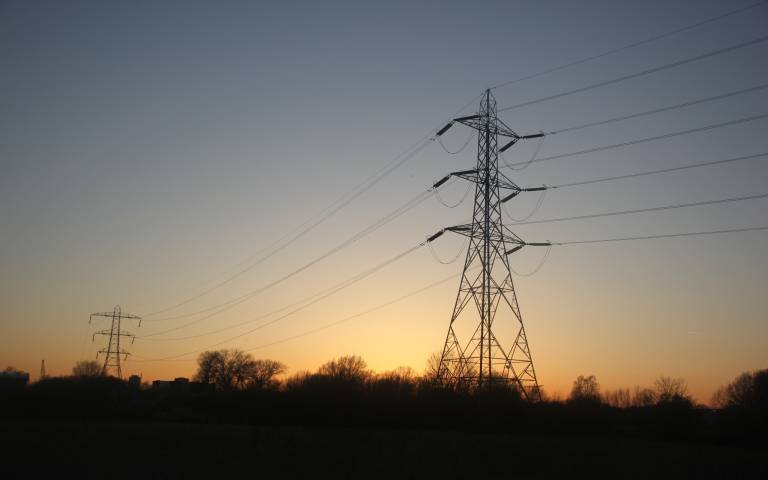
pylons
British electricity generated from coal fell from 13.1 TWh (terawatt hours) in 2013 to 0.97 TWh in September 2019, and was replaced by other less emission-heavy forms of generation such as gas. The decline in coal generation accelerated substantially after the tax was increased in 2015."

Read the UCL article

See also:

Morrison now demands we 'adapt' to climate change catastrophes: IA

Saturday, 1 February 2020

A Message From the Future With Alexandria Ocasio-Cortez: You Tube Video

Australia also needs a Green New Deal

The story of how fossil fuel corporations lie to us is shocking.

But we may have a green future! Maybe!


"What if we actually pulled off a Green New Deal? What would the future look like? The Intercept presents a film narrated by Alexandria Ocasio-Cortez and illustrated by Molly Crabapple.

Set a couple of decades from now, the film is a flat-out rejection of the idea that a dystopian future is a forgone conclusion. Instead, it offers a thought experiment: What if we decided not to drive off the climate cliff? What if we chose to radically change course and save both our habitat and ourselves? We realized that the biggest obstacle to the kind of transformative change the Green New Deal envisions is overcoming the skepticism that humanity could ever pull off something at this scale and speed. That’s the message we’ve been hearing from the “serious” center for four months straight: that it’s too big, too ambitious, that our Twitter-addled brains are incapable of it, and that we are destined to just watch walruses fall to their deaths on Netflix until it’s too late. This film flips the script. It’s about how, in the nick of time, a critical mass of humanity in the largest economy on earth came to believe that we were actually worth saving. Because, as Ocasio-Cortez says in the film, our future has not been written yet and “we can be whatever we have the courage to see.” 


Subscribe to our channel: https://interc.pt/subscribe 

Read the article from Naomi Klein: https://interc.pt/2UktTeE"


See also:

Bushfire survivors join claim against ANZ for financing climate crisis : The Guardian


Media ‘impartiality’ on climate change is ethically misguided and downright dangerous : The Conversation


"In September 2019, the editor of The Conversation, Misha Ketchell, declared The Conversation’s editorial team in Australia was henceforth taking what he called a “zero-tolerance” approach to climate change deniers and sceptics. Their comments would be blocked and their accounts locked. 


His reasons were succinct:
Climate change deniers and those shamelessly peddling pseudoscience and misinformation are perpetuating ideas that will ultimately destroy the planet.
From the standpoint of conventional media ethics, it was a dramatic, even shocking, decision. It seemed to violate journalism’s principle of impartiality – that all sides of a story should be told so audiences could make up their own minds.

But in the era of climate change, this conventional approach is out of date. A more analytical approach is called for.

The ABC’s editorial policy on impartiality offers the best analytical approach so far developed in Australia. It states that impartiality requires:
  • a balance that follows the weight of evidence

  • fair treatment
  • open-mindedness
  • opportunities over time for principal relevant perspectives on matters of contention to be expressed.
It stops short of saying material contradicting the weight of evidence should not be published, which is the position adopted explicitly by The Conversation and implicitly by Guardian Australia." ...........................................................................................................

"Twice we have been evacuated from our home. Twice
we have been among the lucky ones to return unhurt and find our home intact.

From this perspective, media acquiescence in climate change denial, failure to follow the weight of evidence, or continued adherence to an out-of-date standard of impartiality looks like culpable irresponsibility."


Read The Conversation article 

See also: 

Now that climate change is irrefutable, denialists like Andrew Bolt insist it will be good for us : The Guardian


jailclimatecriminals