Sunday, 13 September 2020

Scientists say they're being silenced by the government: from ABC Radio

"On RN Breakfast with Fran Kelly
scientists employed by government and industry had work "unduly modified
science or fiction


As the Morrison Government rushes to amend national environmental protection laws, scientists warn a growing number of their colleagues are being silenced.

A study by the Ecological Society of Australia claims a third of ecologists and conservation scientists employed by government and industry had work "unduly modified" and almost half of those working for government were blocked from releasing their findings.

Their treatment has renewed calls for the creation of an independent environmental agency, something the Coalition has ruled out.

scientists employed by government and industry had work "unduly modified
The scientific conspiracy!
Featured:
Don Driscoll, Professor in Terrestrial Ecology, Deakin University

Producer: Cathy Van Extel

Duration: 8min 57sec

Saturday, 12 September 2020

Washington governor blames climate change for fires (excerpt): abc news

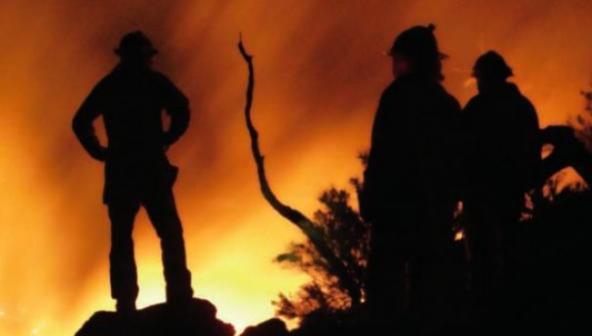
Washington Gov_ Jay Inslee says the fires devastating California and the Northwest shouldn’t be called wildfires, but “climate fires.”


The Climate Disasters We Ignore Today Will Eventually Come for Us (excerpt): Gizmodo


Even if the world does act, some climate disasters may be inevitable
Vehicles ply on waterlogged Delhi-Gurgaon Expressway
 near Narsingpur after heavy rains, in Gurugram
..... "In a just world, this would be major news, even in the faraway U.S. Perhaps stories about the local covid-19 crises we’re seeing across the country would get more attention, but surely, the displacement of millions deserves a spot on the front page. And yet.


If you didn’t know these floods were happening, I’m not here to scold you. Tragedies take place around the world every day, from bombings to hunger. Plus, here in the U.S., things are pretty awful for lots of people, too. It’s difficult if not impossible to keep up with every bad thing happening in all places. It’s also, frankly, easier for many of us in the Global North to ignore crises that are happening to poor people far away. When these crises do surface in news reports, many of us are taught to treat them as inevitable — things are simply more difficult for people “over there.”


This can all lead us to feel insulated from these horrors. We need to
Even if the world does act, some climate disasters may be inevitable
Local residents look at a submerged bus in a waterlogged road 
underpass after monsoon rainfalls in New Delhi
 (Photo: Prakash Singh, Getty Images)
fight that impulse. Caring about our fellow human beings is the right thing to do, sure. But even if empathy isn’t your thing, there’s also an uncomfortable reality: Climate disasters will eventually come for us all if we don’t act now. 


The deafening silence about climate change-fuelled weather in the Global South isn’t limited to the recent floods in South Asia. People have died in deluges in India and Bangladesh in previous years, too — hundreds last year, 1,000 in 2018, over 1,200 in 2017. Hurricane Dorian, one of the most intense hurricanes to ever form in the Atlantic Ocean, absolutely ravaged the Bahamas just last year. Yet it has all but faded from popular memory in the U.S. aside from the saga of Sharpiegate. And nearly three years after Hurricane Maria hit Puerto Rico, thousands are still without homes and the power grid recently crashed again in the face of a moderate tropical storm yet these stories of widespread suffering are rarely found on front pages. 


Even if the world does act, some climate disasters may be inevitable
World leaders plan for climate change
All of this devastation was not inevitable. World leaders could have taken steps to move us away from fossil fuels decades ago. They also could have poured far more resources into helping vulnerable people adapt before emergencies strike, and rebuild after they do. But they’ve made clear they won’t do much of that of their own accord — they claim it’s too expensive, too difficult, too impractical. We need a mass movement that shows them we won’t take no for an answer, and part of that is recognising the toll the crisis is already taking and acting with urgency and compassion.
World leaders already have blood on their hands. Every life these actions could have saved is important. Each of the hundreds of Indian and Bangladeshi people killed by the ongoing monsoons in India deserved better. And we all deserve better than to see this continue.


That’s not just because it’s the right thing to do. It’s also our only option. Eventually, ecological horror will come for all of us. It might be in a month, a year, or 20 years, but eventually, a storm, heat wave, or tornado will come banging down your door. The time to change course is now, starting with, at a minimum, acknowledging the impacts the climate crisis on the poorest among us. 


Even if the world does act, some climate disasters may be inevitable
We want climate action now
Even if the world does act, some climate disasters may be inevitable since we’ve already overheated the planet and left people vulnerable. We won’t be able to stop every flood or heat wave from taking place. But what’s not inevitable is our treatment of some people as disposable. If we prioritise taking steps to help people adapt and prepare, countless lives could be saved. Stopping deforestation of catchment areas and restoring wetlands, for instance, could go a long way to better shielding communities in India and Bangladesh from rising waters. So could national policies to provide more resilient housing to all people, and international policies to prioritise aid to the struggling countries that are hit hardest......"

Go to complete Gizmodo story by Dharna Noor, August 21, 2020

Related:  Climate Change Poses Serious Threats to India's Food Security (excerpt): The Wire


Friday, 11 September 2020

Impact Assessment of the Canada's Vista Coal Mine Expansion Project: CAN

Vista Coal Mine, Alberta, Canada
"Unceded Algonquin Anishinaabe Territories [OTTAWA], 30 July 2020 – Teika Newton of Climate Action Network – Réseau action climat Canada applauds Minister Wilksinson’s decision to designate the Vista Coal Mine Expansion for a federal assessment in light of its potential adverse impacts to areas under federal jurisdiction and to Aboriginal and Treaty rights, a welcome shift from his December 2019 determination.  

Canada’s domestic and international leadership on phasing-out coal power would be severely undermined by continuing to supply overseas markets with the dirtiest fossil fuel. The Vista expansion must be closely scrutinized, and its climate effects carefully taken into consideration throughout the federal assessment process, as is to be expected under the newly released Strategic Assessment of Climate Change (part of the Impact Assessment Act)."

30 July 2020

Go to Climate Action Network


From Climate Action Network Canada

coal mining, Canada, #jailclimatecriminals, greenhouse gases, 100% renewable energy,

Joe Biden if president will push allies like Australia to do more on climate, adviser says (excerpt): The Guardian

tough conversations about Australia’s climate policies
Biden
Jake Sullivan says the former vice-president, if elected, won’t ‘pull any punches’ on what is a global problem

Joe Biden will not pull any punches with allies including Australia in seeking to build international momentum for stronger action on the climate crisis, an adviser to the US presidential candidate has said.

"If elected in November, Biden will hold heavy emitters such as
tough conversations about Australia’s climate policies
Biden and Harris
China accountable for doing more “but he’s also going to push our friends to do more as well”, according to Jake Sullivan, who was the national security adviser to Biden when he was vice-president and is now in the candidate’s inner circle.


In a wide-ranging podcast interview with the Sydney-based Lowy Institute, Sullivan also signalled that Biden would work closely with Australia and other regional allies in responding to the challenges posed by the rise of China.

While Australia’s prime minister, Scott Morrison, is likely to welcome the pledge of US coordination with allies on regional security issues, there may be unease in government ranks about the potential for tough conversations about Australia’s climate policies.

The Coalition government has resisted calls to embrace a target of net-zero emissions by 2050 and it proposes to use Kyoto carryover credits to meet Australia’s 2030 emission reductions pledge. Some Coalition backbenchers still openly dispute climate science......"

Pics are from this blog

Go to The Guardian article   

Related:The Federal Government’s plan to use clean money to fund dirty projects - Video: The Climate Council


Biden, Harris, Trump, PM Morrison, #cambio-climatico, #climateaction, #Australia, #climateemergency,

Thursday, 10 September 2020

How do you take care of your pets during a heatwave? - - Climate Council


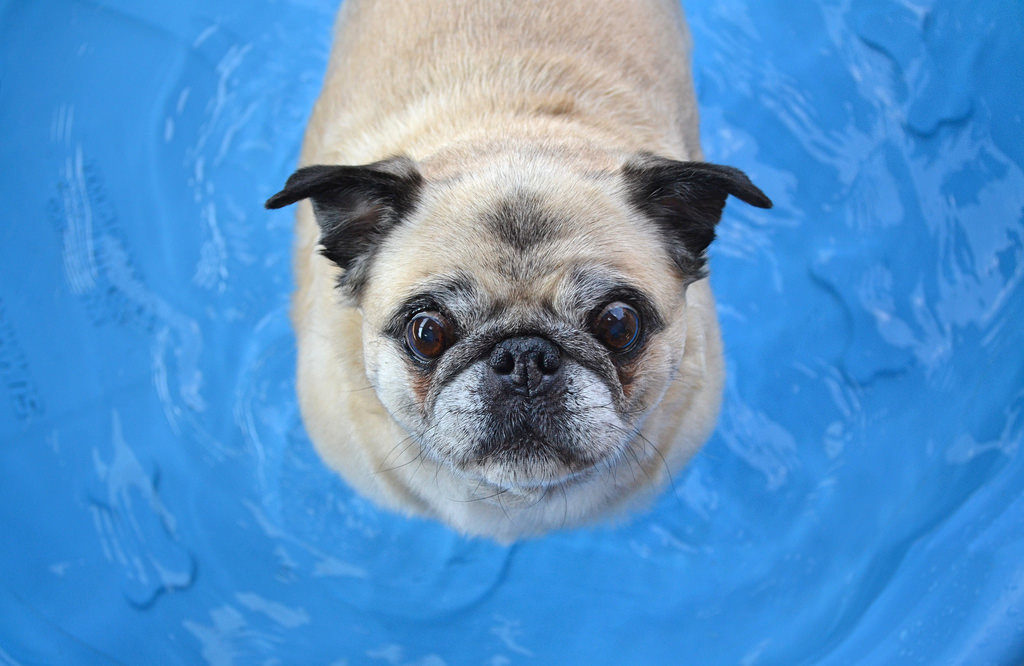
Pug in water
15.12.19 By
 
In the lead up to last Christmas and during January 2019, blistering heatwaves swept across the country. January 2019 was the hottest month ever recorded in Australia, and the summer also went down as the hottest on record for Australia. This summer, we are again facing intense heatwaves across the country, and temperature records are expected to be broken once again. The entire summer is shaping up to be a terrible trifecta of heatwaves, bushfires and drought.

Preliminary results suggest that the 17th December 2019 was Australia’s hottest day on record at 40.9 ºC, with the average maximum across the country as a whole, exceeding the previous record of 40.3 ºC on the 7th January 2013.

Over the past 100 years, heatwaves have killed more Australians than any other natural hazard. Scientists predict that heatwaves are only going to get hotter, longer and more frequent

While we can escape to the air conditioner or strip off to cool down, we need to consider our furry friends in the extreme heat, both domestic pets and surrounding wildlife. 

Just like us, many animals can be affected by heat stress or heat stroke. Similar to humans, the old and the young are often the most vulnerable. However, while we can sweat it out, dogs and cats can only release heat through areas not covered by fur, mostly their paws.  


HOW DO YOU TAKE CARE OF YOUR PETS DURING A HEATWAVE?


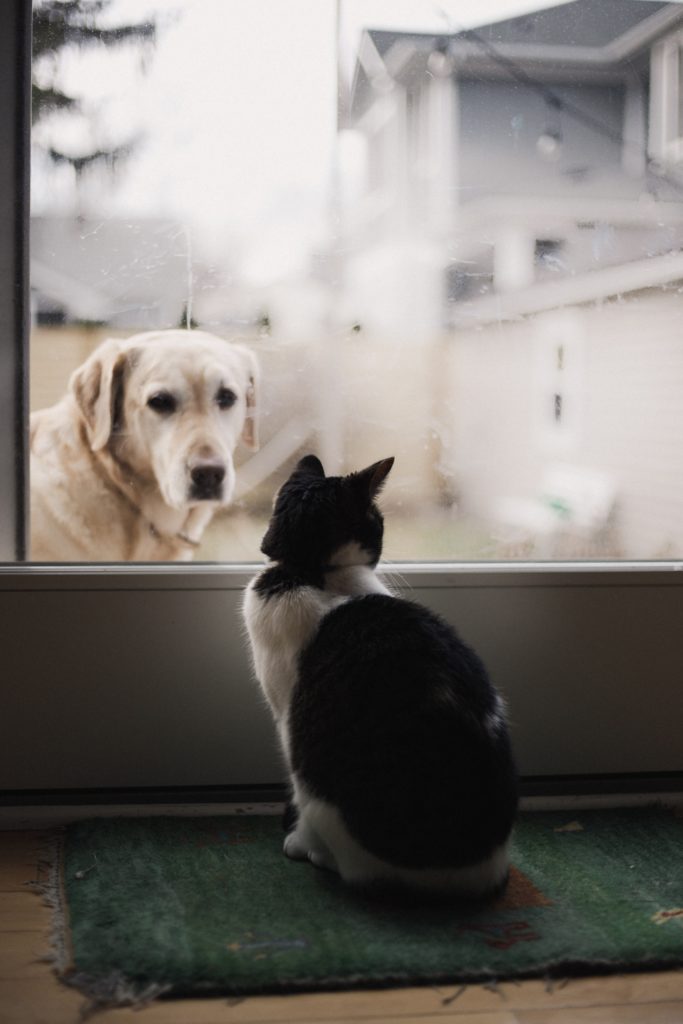
Cat at window with dog watching

Image Credit: Unsplash
Cats are normally pretty self sufficient and stay cool by seeking shade and limiting physical activity. They will normally find a nice cool place to sleep it off so just make sure they have water and shade and some wet towels if they want them.

However, dogs need a little more TLC when it gets hot. The small surface area of their paws are not a very effective means of getting rid of excess heat from their bodies. Dogs use the evaporation of moisture from their tongues, nasal passages and lungs to cool down by panting. 

Make sure if you are heading to work your best friend has plenty of water and shade in a well-ventilated area. If you want to get creative with ways to cool your pal down you could whip up some refrigerated snacks, top their bowls up with cold water from the fridge or simply dampen their bed. Got a garden? Perhaps invest in a small paddling pool or turn the sprinklers or hose on so they can get a bit of a shower.


Image Credit: ‘Young at Heart’ Flickr user DaPuglet licensed under CC BY-SA 2.
If your dog is riding with you never leave them locked in the car! It takes under 10 minutes for a car to reach lethal temperatures even when parked in shaded areas, with the windows open.


Dog in car

Image Credits: ‘FGE_7735” Flickr user Just Me licensed under CC BY-SA 2.0.
Although they are eager to get out and burn off some energy, reconsider going for midday walks as the hot pavement can burn their feet (if it’s uncomfortable for you to walk barefoot then it will be for them too!) Top tip: head out for a stroll early in the morning or just before bed and stick to grassy areas. Ultimately if you are melting and want to be in front of the fan or air conditioner, then they probably do too!

HOW DO I KNOW IF MY PET IS AFFECTED BY HEAT?

Key signs you should look for are changes in behaviour, disinterest in food and water, isolating themselves and heavy panting. If your pet is lethargic, relentlessly panting, drooling, vomiting or collapsing get them to a vet ASAP. Check out the RSPCA for more information


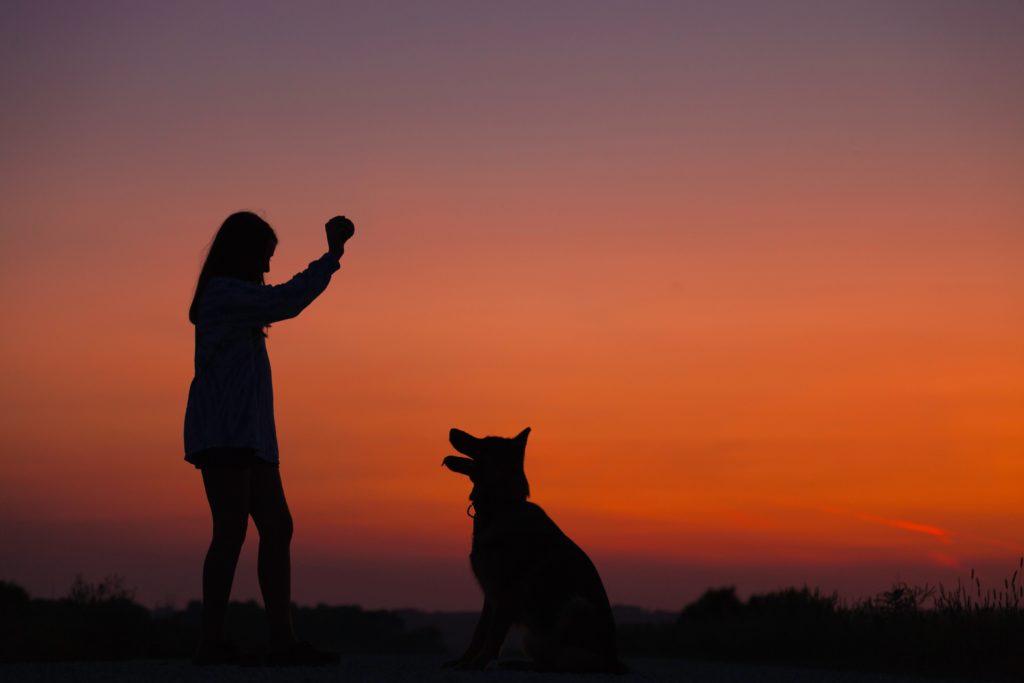
Dog in sunset

Image Credit: Unsplash

HOW DO YOU HELP WILDLIFE DURING A HEATWAVE?

And while you are out and about, think of our native wildlife too: the same rules apply – water, shade and rest. If you live in a rural area put some water out in shady areas for any native wildlife that may be nearby. 

Try to avoid disturbing our native wildlife more than you have to. Everyone is feeling hot and bothered, so the last thing you’d want to do is stress them out and use up any more of their already low energy stocks.  

However, rescue babies if they are particularly vulnerable and reach out to a local wildlife helpline:

NSW: WIRES 1300 094 737
VIC: Wildlife Victoria (03) 8400 7300
QLD: RSPCA QLD 1300 ANIMAL
SA: Fauna Rescue of SA inc 08 8289 0896
WA: Wildcare WA (08) 9474 9055.
NT: Wildcare NT 08 8996 121.
TAS: Bonorong Wildlife Hospital and Rescue 0447 264 625
ACT: ACT Wildlife 0432 300 033

Go to Climate Council site

Related: News outlets continue to ignore climate change in articles about California's record-breaking weather (excerpt): Heated


Climate Council, pets, #heatwaves, #extremeheat, global heating, #Australia, heatstroke, #wildfire, wild life,

Australian coal worker of 40 years embraces renewables: Climate Council video


Tony Wolfe has worked in coal for over forty years. But he knows it's time for a change - it's time to embrace renewables. Australia needs clean jobs to reboot its economy. That's why we created the Clean Jobs Plan. 
 
Learn more about it here: https://climc.nl/3hAZdSW -- 
 
 The Climate Council is Australia's leading independent, community-funded climate change communications organisation. We're a catalyst propelling Australia to take bold, effective steps to address the climate crisis. We're made up of some of the country’s leading climate scientists, health, renewable energy and policy experts, as well as a team of staff, and a huge community of volunteers and supporters who power our work. 
 
Find out more and connect with us here: → Website: https://www.climatecouncil.org.au → Facebook: https://www.facebook.com/climatecouncil → Instagram: https://www.instagram.com/theclimatec... → Twitter: https://twitter.com/climatecouncil