Exactly
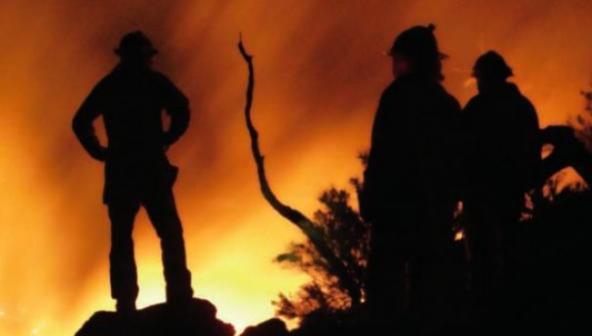
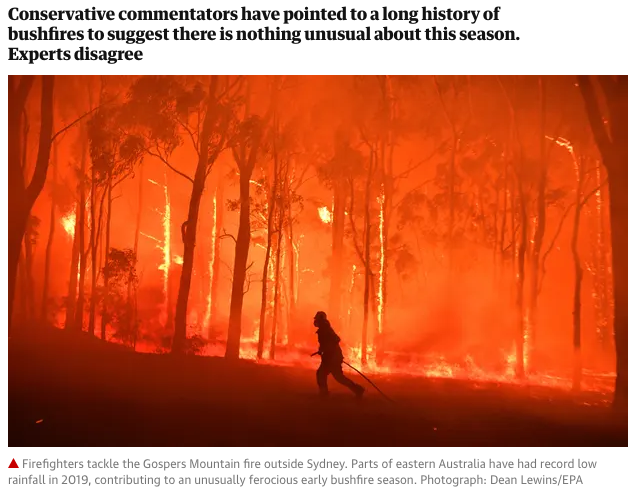
12 months ago today, the huge Gospers Mountain Fire started from a
lightning strike north-west of Sydney. The fire burned for almost 80
days, and became the biggest forest fire in Australia's recorded
history.
One
year on, the fire has left a heart-wrenching scar on both the landscape
and the communities it tore through. This is what climate change looks
like.
In
just a few days, the Royal Commission will hand down its findings into
the 2019-20 bushfire season, and it's imperative that it clearly
acknowledges the role of climate change in fuelling the 2019-20
bushfires.
"Some Ages Have World Wars. Others Have Moonshots. Our Great Challenge is Preventing the Collapse of Civilization.
Let me explain what I mean by “accelerating pulsation of disaster.” Take the example of California’s wildfires. They’re the direct result
of climate change. Hotter temperatures, hotter oceans, bigger storms,
more lightning, drier vegetation — bang! A near certainty of historic
fires igniting."
Wildfire emergency
"So California’s burning…again. Just
like it was last year, and the year before that, and so on. In a few
months, it’ll be Australia’s turn to be hit by megafires, all over
again. They’ll be worse than last year, at least if we average it all
over a decade or so. That’s because, of course, fire is seasonal. And as
we head into the age of catastrophe, “megafire season” will become a
part of our lives. The world will develop Fire Belts, of which
California and Australia are becoming a part."
"Then there are Flood Belts. While the pandemic raged, much of Asia flooded. The West didn’t take much notice — even though China’s largest dam is now at it’s limits.
And yet the megafloods Asia just experienced are just like megafires —
natural phenomena that are getting worse on a seasonal, yearly cycle.
Within a decade or two, these floods will also threaten habitability.
Expect much greater sea level rise as land-ice melts
...................................
"Are
you beginning to get what I mean by “accelerating pulsation of
disaster” yet? As we head into the age of catastrophe, a new range of
calamities will become our dismal new normal. They’ll recur, in cycles.
Only each time the cycle spins, they’ll get worse and worse. Megafires,
megafloods, pandemics, extinctions."
Sea Rise will flood cities
................................................
The accelerating pulsation of disaster. Life
is going to feel scary, strange, dislocating, anxiety-inducing. As soon
as this disaster ebbs — phew, the megafire’s over! — here comes another
one. Now it’s megaflood season. Now it’s Covid season. Christ, now
there’s a new pandemic. What the? You and I were born live at the very
tail end of a golden age of human stability. That age is now over, and
the transition into the age of apocalypse is going to feel deeply
frightening. 2020 was just the beginning. It’s going to get much, much
worse, before — if — it ever gets better.
Melting Land ice on Greenland
As all
those cycles of catastrophe, operating at annual, semiannual, decadal
scales get worse and worse, ultimately, our systems will begin to
buckle, and then break. Faster and harder than we think.
Think of California right about now. A wildfire is bad. A respiratory pandemic is really bad. But megafires during a respiratory pandemic? What now? They have conflicting objectives: quarantine and stay at home, versus evacuate and firefight."
........................
Heatwaves kill
"They then face a stark dilemma. To
fight accelerating waves of natural calamity, fire, flood, drought,
famine, then saps resources that are needed to invest in tomorrow. We
fight that megafire, we try to build a barrier against tomorrow’s mega
flood. There go all those schools, hospitals, universities, libraries,
parks, roads, high-speed trains we wanted to build, expand, renew.
Simply fending off catastrophe will take a larger and large share of our resources. That
leaves less left over to invest in the things which really improve
people’s quality of life, whether healthcare, education, retirement, and
so on.
What happens as a result of that? Well, people’s qualities of life fall. Depression and frustration and unhappiness grow. And the predictable consequence of that is more extremism. Discontented masses tend to turn to demagogues, who blame all of a society’s problems on hated minorities. The age of catastrophe will be a boon to tomorrow’s Trumps.
And yet even all this just takes to about the mid 2030s or so. After that? That’s when the real fireworks begin."
"By about then, the limits of our civilization’s fundamental systems will have been breached.
Insurance and banking systems won’t be able to cover the losses of
burning states and flooded cities. They’ll go bankrupt, and probably
demand huge bailouts. Those bankruptcies will have a devastating
consequence. Not just the lack of credit, but a sharp rise in the cost
of it. Translation, you’re probably living in debt right now — whether
mortgage, credit card debt, car loans, student debt, medical debt, or
all of the above — and the interest rates on all that are going to
skyrocket. Somebody has to pay for the risk and costs of all this sudden
catastrophe. And it’s probably going to be you, in the hidden form of
paying massively more interest on all that debt you already can’t pay off."
Properties will become uninsurable
As
insurance and financial systems go broke, and the costs of accessing
money and credit spike, huge waves of businesses will close. Most small
businesses exist on razor-thin margins, from restaurants and bars to
nail salons and hobby shops. When their rents double and the interest on
their loans triples and they can’t get any more credit — at exactly the
same time as their customer base is falling apart? Bang! They go broke,
too. And all the millions of people they employ — small businesses are still the heart of the economy — are unemployed. The cycle of depression and poverty accelerates."
"This is not a drill, my friends. It’s
time to stop acting like it is, burying our pretty vacant little heads
in Netflix-and-chill and Instagram envy and the latest gender pronoun
and Fakebook friends. That’s all, history will rightly say, garbage for
the human mind and spirit. This is it. We’re not going to get another chance." "
"It
showed us bushfires through forested regions on a scale that we have
not seen in Australia in recorded history, and fire behaviour that took
even experienced firefighters by surprise."
The
main causes were a drought which had made the land extremely dry and
ready to burn, hot and windy weather, and climate change.
NSW Premier Gladys Berejiklian said on Tuesday: "The next fire season is already upon us."
"What interviews with flood, wildfire, and drought survivors can teach us about how to live amid the threat of climate change
Extreme heat kills
Ronnie Scott lost his wife when she tried to
to rescue their dog and cat from floodwaters in West Virginia in 2016.
Carole Duncan almost lost her 83-year-old father during Australia’s
massive 2019 bushfires, the firefighters finding him just in time.
KerryAnn Laufer returned home days after the 2019 Kincade Fire in
California to find only her fireplace still standing, while Dave Mackey
saw nearly every house in his neighborhood on Grand Bahama island washed
away, pummeled by raging waters and 200-mile-per-hour winds from
Hurricane Dorian.
Storms,
wildfires, and other such disasters are getting more common and intense
as climate change accelerates. Scott, Duncan, Laufer, and Mackey, who
survived these extreme weather events, are among the lucky ones. But
each of them found themselves changed by the experience.
What
would you do if your house burned down or your neighborhood washed away
in a flood? How would you respond if a cataclysmic weather event killed
someone you love or forced you to abandon, perhaps forever, the place
you call home? And how would it change the way you think about the
world?
These questions are at the heart of a new
“Voices from the Future”
Green new deal is cheap actually
interview series a small group of journalist,
researchers, and I have developed at the Julie Ann Wrigley Global
Futures Laboratory at Arizona State University. We have collected the
stories and insights of nearly three dozen survivors on five continents,
eight of which will be published in these pages over the next few
weeks."
Steven Beschloss is a professor of practice at
the Walter Cronkite School of Journalism and Mass Communication and
directs the Narrative Storytelling Initiative at Arizona State
University. He has written for The New Yorker and The Washington Post, among other publications.
#California, #firestorms, #wildfire, Australia, cyclones, floods, Green New Deal, hurricanes,
There is no climate sceptic on the end of a fire hose. #jailclimatecriminals
Governments must prepare for catastrophic fires.
* Establishing
services to support those ‘burned out’ and those who cannot insure
* rezoning areas unsuitable for building
* changing building regulations
* employing indigenous people to carry out controlled burning to reduce fuel loads as they have done for thousands of years
* increasing the numbers of professional firefighters, giving more
support to volunteer firefighters and purchasing more aviation support
are just small steps.
* increasing funding for bushfire research
* the most important action for governments is to cut carbon targets and to pressure other countries to do the same. Tariffs on carbon reckless countries, like the USA, Saudi Arabia, China and Australia are inevitable.
and
Koalas suffered greatly. #jailclimatecriminals
* funding air support.
" The main reason more prescribed burning has not been done is the risk
the deliberately lit fires will get out of control and burn down
property, or otherwise choke population areas with unhealthy amounts of
smoke.
This risk has gone up with the drought, which has meant
there are fewer days every year with low-risk fire conditions. It's also
gone up with population levels, which has meant more people are
affected by prescribed burning.
#climatecrisis, heatwaves
"With many prescribed burns now
conducted close to the expanding urban fringe and close to essential
infrastructure and agriculture, the community tolerance levels are very
low to heavy smoke and potential damage to delicate ecosystems," Dr
Thornton says."
".... Mr Bradstock
described it as a "tired and old conspiracy theory" while Greg Mullins
said ex-fire chiefs were annoyed that the fires were being used for
political attack."
#bushfire, #wildfire, #jailclimatecriminals
"Greg Mullins (former NSW fire and rescue commissioner Greg Mullins) said climate change means it's often too dangerous to
burn: "Extreme drought like this, underpinned by 20 years of reduced
rainfall, has meant the window for hazard reduction is very narrow now."
He also said a long-term reduction in forestry and national parks personnel has meant hazard reduction has fallen to volunteers."
California fires 2020
How effective is hazard reduction?
Many
bushfire experts want to see more hazard reduction, but they also say
there's a danger in presenting prescribed burning and fuel management
measures as a 'silver bullet solution' to the continent's increasing
fire risk.
Some areas are suitable for prescribed burning, while others are not.
"The
complexities around hazard reduction burning are large and growing,"
said Dr Richard Thornton, CEO of the Bushfire and Natural Hazards
Cooperative Research Centre."
"Australia faces a
"nightmare scenario" of escalating and catastrophic natural disasters
without urgent action on climate change, the bushfires royal commission
has been told.
A
group of 33 former fire and emergency services chiefs wants the royal
commission to record as fact that climate change was the main driver of
the extreme weather conditions behind Australia's unprecedented bushfire
season.
"We
think that this is a great opportunity for an authoritative body to
spell out loud and clear that if it wasn't for climate change we would
not have faced the bushfires that we did," former Fire and Rescue NSW
commissioner Greg Mullins told AAP.
"That
the science is very clear that we would not have had weather conditions
like we did if it wasn't for a warming climate and the fires were
driven by extreme weather."" The Canberra Times, May 24,2020
Catastrophic bushfires and catastrophic fire seasons will become a
new normal due to the shortening of fuel reduction periods, increasing
severe droughts and extreme temperatures.