Tuesday, 14 May 2019

DESMOG: Renewables Offset 35 Times More CO2 Every Year Than All Carbon Capture Projects Ever, New Analysis Finds


By Justin Mikulka (6 min. read)
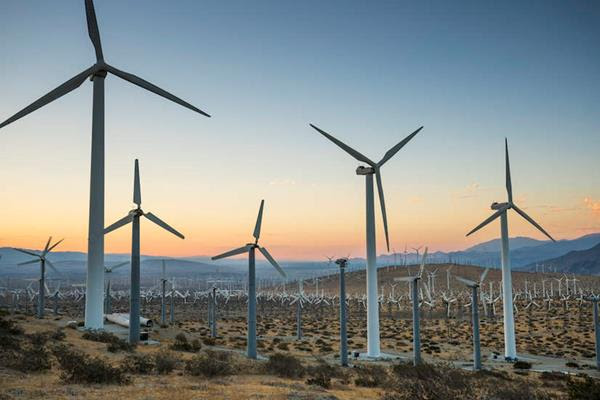
A new analysis by Clean Technica found that global investment in carbon capture and storage technology (CCS) adds up to roughly $7.5 billion total. It also examined how much, for that investment, CCS has reduced atmospheric carbon dioxide (CO2) levels compared to an equivalent investment in renewable power generation.

The analysis calculated that “wind and solar are displacing roughly 35 times as much CO2 every year as the complete global history of CCS.” Clean Technica's Mike Barnard concluded, “CCS is a rounding error in global warming mitigation.” 

Thursday, 9 May 2019

Video: Kiribati - A Climate Change Reality


Boobu Tioram, a resident of the Pacific island of Kirabati, took time out from reinforcing a seawall in front of his newly built house to speak with UNDP about what climate change has meant to his way of life. 

Study: Sea level rise causes Texas coastal homeowners to lose millions in potential property value: Houston Chronicle

"Sea level rise has cost Texas homeowners $76.4 million in potential property value, with Galveston hit the hardest, a new study released Tuesday found.

First Street Foundation and Columbia University analysts examined about 3 million coastal properties in Texas. Using a combination of real estate transactions and tidal flooding exposure, they found that from 2005 to 2017, homes in Galveston lost $9.1 million in potential value, followed by Jamaica Beach (which lost $8.6. million) and the Bolivar Peninsula ($8.1 million). It’s not necessarily that these coastal homes decreased in value by these amounts, the authors say, but that they didn’t appreciate as much as similar homes not exposed to tidal flooding. Researchers factored in square footage, proximity to amenities and economic trends like the 2008 housing recession."

Sunday, 5 May 2019

The Bank of England lays bare the “very real” trillion-dollar risks of climate change: QUARTZ

My message today is simple. Climate change poses significant risks to the economy and to the financial system, and while these risks may seem abstract and far away, they are in fact very real, fast approaching, and in need of action today.
That’s how Sarah Breeden began her speech titled “Avoiding the storm: Climate change and the financial system” (pdf) yesterday. Breeden is the Bank of England’s executive director of International Banks Supervision and she was speaking at the Official Monetary & Financial Institutions Forum in London.

The urgency in Breeden’s speech was also on display on London’s streets. Earlier in the day, the environmental group Extinction Rebellion blocked traffic in five iconic locations across the city in a peaceful, non-violent protest to bring attention to “inactivity” of governments on fighting climate change.


Saturday, 4 May 2019

Rapid permafrost thaw unrecognized threat to landscape, global warming researcher warns: PHYSORG

A "sleeping giant" hidden in permafrost soils in Canada and other northern regions worldwide will have important consequences for global warming, says a new report led by University of Guelph scientist Merritt Turetsky. 


Scientists have long studied how gradual permafrost occurring over decades in centimetres of surface soils will influence to the atmosphere. But Turetsky and an international team of researchers are looking at something very different: rapid collapse of permafrost that can transform the landscape in mere months through subsidence, flooding and landslides.


"We are watching this sleeping giant wake up right in front of our eyes," said Turetsky, who holds the Canada Research Chair in Integrative Ecology.

Read the PHYSORG article