"Instead
of combating criminal behavior and protecting Indigenous forest
guardians already hit hard by Covid-19, this government continues to
reduce environmental protection."
#climateaction News - We have no time to waste. We must act now to reduce the heating of our planet.
Friday, 21 August 2020
Climate grief expected to be widespread soon but it's still not openly acknowledged (excerpt): ABC
"Feeling miserable, anxious, helpless and just generally terrible because the world is becoming less habitable? You're not alone.
"The
good news is there are strategies that may help you cope. The bad news
is the pandemic we're now facing may test your passion and enthusiasm
for climate action.
![]() |
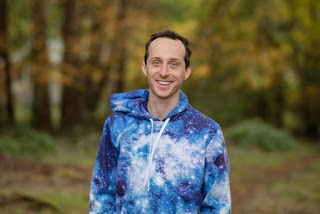
Kurtis Baute recently sought out
professional help to cope with
his despair about climate change.
(Supplied: Kurtis Baute) |
For the past 18 months, Canadian scientist Kurtis Baute says he has been dealing with a lot of 'climate grief'.
"Basically
I can't stop thinking about the fact that millions of people, real
people, are dying or will die because of something that is completely
unavoidable," he recently announced on his YouTube channel.
"We
can stop using fossil fuels but so far we've completely failed to do
so...it feels completely out of control and it's depressing."
Climate grief — or eco anxiety/despair — is a strong
psychological response to the current and future loss of habitats,
species and ecosystems.
It's recognised by the
Australian Psychological Society (APS) and sufferers may feel emotions
like fear, anger, guilt, shame, grief, loss and helplessness.
It
can be related to the direct impacts of climate change, such as drought
or bushfire. But it can also take the form of a sense of doom or even
existential crisis about our warming world.
In some ways it's a lot like the grief we experience when someone dies.
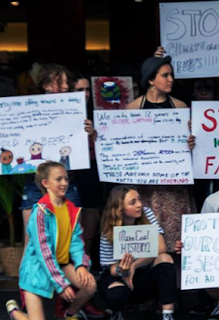
The health industry predicts it will be common place in the next 10 years.
![]() |
| Becoming more environmentally engaged |
The danger of unvalidated grief
Climate
grief is often categorised as a form of disenfranchised grief which
means it isn't always publicly or openly acknowledged.
"There's
no ritual around loss of environment," says Tristan Snell, a
counselling psychologist and researcher in environmental psychology at
Deakin University.
"When you lose someone, there's a funeral and all
sorts of ways people connect and this helps process that loss. That's
just not the case for loss of environment."
People
experiencing disenfranchised grief can feel unsupported or
ashamed, and
consequently can be very reluctant to talk with friends, family or a
professional.
![]() |
| The thought of climate catastrophe can be overwhelming |
"People may feel this isn't something someone else can help with," says Dr Snell.
This can then snowball into major physical and mental health problems.
Some will feel this more than others
Researchers,
including Dr Snell, are currently trying to gauge the mental health
impacts of climate change and recent climate-related events on
Australians with this survey which you can get involved in.
![]() |
| Climate change is causing grief |
"How to cope
Clinical psychologists are developing strategies to help people work through climate grief, but research is still quite limited.
However you may find the follow tactics help with feelings of emotional distress:
• Become more environmentally engaged by getting involved in land care or tree planting for example — taking action to better the planet is thought to relieve some anticipatory grief
• Spend time in nature to remind yourself it's a source of strength
• Talk with like-minded family or friends and if needed, seek professional help"
Read the complete ABC article
Related: We need action to prevent further catastophic fires and we need to be prepared for wildfires
#cambio-climatico, #climateaction, #climate crisis, #climateemergency, #criminales-climáticos-de-la-cárcel, #jailclimatecriminals, #人类灭绝, #气候变化, fossil fuel industry,
Thursday, 20 August 2020
Lessons From the Frontlines of Global Warming (excerpt): New Republic
"What interviews with flood, wildfire, and drought survivors can teach us about how to live amid the threat of climate change
KerryAnn Laufer returned home days after the 2019 Kincade Fire in
California to find only her fireplace still standing, while Dave Mackey
saw nearly every house in his neighborhood on Grand Bahama island washed
away, pummeled by raging waters and 200-mile-per-hour winds from
Hurricane Dorian.
#California, #firestorms, #wildfire, Australia, cyclones, floods, Green New Deal, hurricanes,

Extreme heat kills

Ronnie Scott lost his wife when she tried to to rescue their dog and cat from floodwaters in West Virginia in 2016. Carole Duncan almost lost her 83-year-old father during Australia’s massive 2019 bushfires, the firefighters finding him just in time.
KerryAnn Laufer returned home days after the 2019 Kincade Fire in
California to find only her fireplace still standing, while Dave Mackey
saw nearly every house in his neighborhood on Grand Bahama island washed
away, pummeled by raging waters and 200-mile-per-hour winds from
Hurricane Dorian.
Storms,
wildfires, and other such disasters are getting more common and intense
as climate change accelerates. Scott, Duncan, Laufer, and Mackey, who
survived these extreme weather events, are among the lucky ones. But
each of them found themselves changed by the experience.
What
would you do if your house burned down or your neighborhood washed away
in a flood? How would you respond if a cataclysmic weather event killed
someone you love or forced you to abandon, perhaps forever, the place
you call home? And how would it change the way you think about the
world?
These questions are at the heart of a new
“Voices from the Future”

Green new deal is cheap actually
interview series a small group of journalist,
researchers, and I have developed at the Julie Ann Wrigley Global
Futures Laboratory at Arizona State University. We have collected the
stories and insights of nearly three dozen survivors on five continents,
eight of which will be published in these pages over the next few
weeks."
Original story
Steven Beschloss is a professor of practice at
the Walter Cronkite School of Journalism and Mass Communication and
directs the Narrative Storytelling Initiative at Arizona State
University. He has written for The New Yorker and The Washington Post, among other publications.

#California, #firestorms, #wildfire, Australia, cyclones, floods, Green New Deal, hurricanes,
Labels:
#California,
#firestorms,
#wildfire,
Australia,
cyclones,
floods,
Green New Deal,
hurricanes
Greenpeace Gives Democratic Platform C+ on Climate, Calling for 'Action at the Scale That Science and Justice Demand':
Greenpeace USA announced Wednesday that the platform which Democrats are set to adopt this week earns only a C+ rating based on the scorecard process the group previously used to rank the climate policies of what was once a large field of the party's 2020 presidential primary candidates.
That C+ (52.5 points out of 100) is notably lower than the B+ (75.5/100) that Greenpeace gave to former Vice President Joe Biden, whom Democrats formally nominated as the party's candidate Tuesday night, or the B+ (77/100) the group gave to his former competitor and current running mate, Sen. Kamala Harris (D-Calif.).
Although the soon-to-be-finalized 2020 Democratic platform received "decent marks for advancing renewable energy and environmental justice," Greenpeace determined that there are "critical policy gaps in addressing the power of the fossil fuel industry" and it makes "no mention of the Green New Deal."
That C+ (52.5 points out of 100) is notably lower than the B+ (75.5/100) that Greenpeace gave to former Vice President Joe Biden, whom Democrats formally nominated as the party's candidate Tuesday night, or the B+ (77/100) the group gave to his former competitor and current running mate, Sen. Kamala Harris (D-Calif.).
Although the soon-to-be-finalized 2020 Democratic platform received "decent marks for advancing renewable energy and environmental justice," Greenpeace determined that there are "critical policy gaps in addressing the power of the fossil fuel industry" and it makes "no mention of the Green New Deal."
Labels:
#climateaction,
#greennewdeal,
#USA,
Greenpeace,
voters
As Fires Surge in Brazilian Amazon, Bolsonaro Strategy to Battle Deforestation Blasted as 'PR Stunt': Common Dreams
![]() |
| Greenpeace flew over Amazonas and Rondônia on August 16, 2020 states to verify the effectiveness of a fire ban imposed by the Brazilian government last month. (Photo: Christian Braga/Greenpeace) |
A month after Brazilian President Jair Bolsonaro declared a 120-day ban on setting fires in the Amazon rainforest and three months after he deployed
military troops to combat deforestation, Greenpeace on Tuesday called
out the far-right leader for his ineffective strategies and attacks on
environmental protections.
"Bolsonaro's administration has continued to systematically dismantle environmental protection and has undermined the work of environmental law enforcement agencies," Cristiane Mazzetti, an Amazon campaigner for Greenpeace Brazil, said in a statement. "Bolsonaro's supposed fire ban has already been undermined by Bolsonaro himself. Sending troops to the Amazon is just a PR stunt and a waste of resources."
Wednesday, 19 August 2020
Rare 'fire tornado' rips through California as heat wave descends on the US: CNN
Aug 17, 2020
![]() |
2020 has reached into its bag of tricks again and tossed out another surprise - this time in the form of a swirling fire.
Or as meteorologists call it, a "firenado" - short for fire tornado.
The
National Weather Service Office issued a tornado warning for a
pyrocumulonimbus cloud that formed by the Loyalton Fire, saying it was
"capable of producing a fire-induced tornado and outflow winds in excess
of 97km/h," CNN meteorologist Haley Brink said.
A pyrocumulonimbus cloud forms above intense rising heat, typically from a fire or volcano.
Fire
tornadoes are created when the rising heat from a fire pulls in smoke,
fire and dirt, creating a rotation vortex above the blaze, Ms Brink
said.
Fire tornadoes can be massive and deadly.
When
the National Weather Service surveyed the damage on that firenado, it
determined it was equivalent to an EF-3 tornado with winds in excess of
230km/h.
Officials in California, Oregon and Colorado are battling a series of wildfires
that have collectively torched more than 40,000 hectares - and things
could get worse with intense heat descending on much of the US.
The Loyalton Fire has burned over 8000 hectares and was five per cent contained by early Sunday.
Related: We need action to prevent further catastophic fires and we need to be prepared for wildfires
#wildfire, #bushfires, #California, #heatwaves, #drought, #climatechange, #climateaction, #cambio-climatico, #jailclimatecriminals,
See original 9 story
Sea level rise is so much more than melting ice: Verge Science video
While researching climate change, we heard something confusing: the sea level in New York City is rising about one and a half times faster than the global average. We couldn’t figure out what that meant. Isn’t the sea level...flat? So we called up an expert, Dr. Andrea Dutton, and went down the rabbit hole. And, we did our best to visualize her truly bizarre answers with animations, dioramas, and a lot of melting ice.
Subscribe: http://bit.ly/2FqJZMl
Related:Greenland's melting ice sheet has passed the point of no return, scientists say (excerpt): USA Today
sea level rise, #searise, #climatechange, #cambio-climatico, #icemelting, #jailclimatecriminals,
Subscribe to:
Posts (Atom)


