Thursday, 3 September 2020

Young people’s burden: requirement of negative CO2 emissions: Hansen et al

Abstract. 

The rapidity of ice sheet and sea level response to global temperature is difficult to predict
Melting ice sheets
Global temperature is a fundamental climate metric highly correlated with sea level, which implies that keeping shorelines near their present location requires keeping global temperature within or close to its preindustrial Holocene range. 

However, global temperature excluding short-term variability now exceeds +1C relative to the 1880–1920 mean and annual 2016 global temperature was almost +1.3C. 

We show that global temperature has risen well out of the Holocene range and Earth is now as warm as it was during the prior (Eemian) interglacial period, when sea level reached 6–9 m higher than today. 

Further, Earth is out of energy balance with present atmospheric composition, implying that more warming is in the pipeline, and we show that the growth rate of greenhouse gas climate forcing has accelerated markedly in the past decade.  

The rapidity of ice sheet and sea level response to global temperature is difficult to predict, but is dependent on the magnitude of warming. 

Targets for limiting global warming thus, at minimum, should aim to avoid leaving global temperature at Eemian or higher levels for centuries. 

Such targets now require “negative emissions”, i.e., extraction of CO2from the air. 

If phase down of fossil fuel emissions begins soon, improved agricultural and forestry practices,including reforestation and steps to improve soil fertility and increase its carbon content, may provide much of the necessary CO2 extraction. 

In that case, the magnitude and duration of global temperature excursion above the natural range of the current inter glacial (Holocene) could be limited and irreversible climate impacts could be minimized. 

In contrast, continued high fossil fuel emissions today place a burden on young people to undertake massive technological CO2 extraction if they are to limit climate change and its consequences. 

Proposed methods of extraction such as bio energy with carbon capture and storage (BECCS) or air capture of CO2 have minimal estimated costs of USD 89–535 trillion this century and also have large risks and uncertain feasibility.    

Continued high fossil fuel emissions unarguably sentences young people to either a massive, implausible cleanup or growing deleterious climate impacts or both.

James Hansen et al  
Published by Copernicus Publications on behalf of the European Geosciences Union. 

Correspondence to:James Hansen (jeh1@columbia.edu) 
Received: 22 September 2016 – Discussion started: 4 October 2016 Revised: 29 May 2017 – Accepted: 8 June 2017 – Published: 18 July 2017


Go to research article  

 
targets now require “negative emissions”, i.e., extraction of CO2from the air.
Newcastle with a 0.7m sea rise by 2100, below the 2010 official government planning estimate of 0.9m.


Related: 

Port Macquarie after a 7m sea level rise. Insurance risks affect property values now.

Related: 'Retreat' Is Not An Option As A California Beach Town Plans For Rising Seas: NPR 


Tuesday, 1 September 2020

Sea level rise from ice sheets track worst-case climate change scenario: Phys.org

Credit: CC0 Public Domain 
Ice sheets in Greenland and Antarctica whose melting rates are rapidly increasing have raised the global sea level by 1.8cm since the 1990s, and are matching the Intergovernmental Panel on Climate Change's worst-case climate warming scenarios.
According to a new study from the University of Leeds and the Danish Meteorological Institute, if these rates continue, the ice sheets are expected to raise sea levels by a further 17cm and expose an additional 16 million people to annual coastal flooding by the end of the century.

Since the ice sheets were first monitored by satellite in the 1990s, melting from Antarctica has pushed global sea levels up by 7.2mm, while Greenland has contributed 10.6mm. And the latest measurements show that the world's oceans are now rising by 4mm each year.

"Although we anticipated the ice sheets would lose increasing amounts of ice in response to the warming of the oceans and atmosphere, the rate at which they are melting has accelerated faster than we could have imagined," said Dr. Tom Slater, lead author of the study and climate researcher at the Centre for Polar Observation and Modelling at the University of Leeds.

"The melting is overtaking the we use to guide us, and we are in danger of being unprepared for the risks posed by rise."

Will predicted sea rise inundation affect property values in Newcastle, NSW?

• We are looking more and more unlikely to prevent global heating.

• Scientists are predicting the melting of the ice covering Greenland with a subsequent sea level rise of 7m.
 
• This rise does not factor in sea rise from the melting of Antarctica and other ice.

"The Antarctic ice sheet, most of which is in East Antarctica, is Earth’s largest freshwater reservoir. If it all melts, it could lead to a 60-meter rise in global sea levels. Current predictions estimate global sea levels will rise one meter by 2100 and more than 15 meters by 2500." SciTechDaily

• Already many properties are likely to flood when a high tide is combined with high local rainfall. What were a hundred year rainfall events are now ten year events.

• The frequency of high rainfall events will increase with global heating and more and more severe hurricanes are predicted because of warmer seas.

• Low coastal areas will be subjected to severe storm surges.

• Would you buy a property likely to be inundated in twenty years, fifty years, a hundred years? Many wouldn't. Even the perception of possible inundation will greatly affect property values.

• When certain properties are in less demand their value falls.

• Would you buy a property with a value likely to fall?


Predicted flooding of Newcastle, NSW, with a conservative 1.4m sea rise

•  The view of Newcastle above shows areas likely to be inundated by a conservative 1.4m sea level rise.

• Property above a 10m rise will become highly sought after and will greatly rise in value.


Predicted flooding of Newcastle, NSW, with a 10m sea rise


•  The view of Newcastle above shows areas likely to be inundated by a 10m sea level rise.

• Property above a 10m rise will become highly sought after and will greatly rise in value.

Learn more about how sea rise inundation will affect Australian property.


......................................
These appear to be the current planning guidelines for sea rise in NSW. Many scientists would say they are too conservative.

"Sea Level Rise Planning Benchmarks This Guideline adopts the NSW sea level rise planning benchmarks in the NSW Sea Level Rise Policy Statement (2009). The NSW sea level rise planning benchmarks are an increase above 1990 mean sea levels of 40cm by 2050 and 90cm by 2100. These benchmark figures were established by considering the most credible national and international projections of sea level rise for the NSW coast and take into consideration the uncertainty associated with sea level rise projections. These benchmark figures are to be used in NSW when planning for sea level rise.
NSW Coastal Planning guideline: adapting to Sea Level Rise August 2010 " 

 
Newcastle with a 0.7m sea rise by 2100, below the 2010 official government planning estimate of 0.9m.

East Antarctic Melting Hotspot Identified by Japanese Expedition – Ice Melting at Surprisingly Fast Rate: SciTechDaily

"Ice is melting at a surprisingly fast rate underneath Shirase Glacier Tongue in East Antarctica due to the continuing influx of warm seawater into the Lützow-Holm Bay.

Hokkaido University scientists have identified an atypical hotspot of sub-glacier melting in East Antarctica. Their findings, published in the journal Nature Communications, could further understandings and predictions of sea level rise caused by mass loss of ice sheets from the southernmost continent.

The 58th Japanese Antarctic Research Expedition had a very rare
opportunity to conduct ship-based observations near the tip of East Antarctic Shirase Glacier when large areas of heavy sea ice broke up, giving them access to the frozen Lützow-Holm Bay into which the glacier protrudes.

“Our data suggests that the ice directly beneath the Shirase Glacier Tongue is melting at a rate of 7–16 meters per year,” says Assistant Professor Daisuke Hirano of Hokkaido University’s Institute of Low Temperature Science. “This is equal to or perhaps even surpasses the melting rate underneath the Totten Ice Shelf, which was thought to be experiencing the highest melting rate in East Antarctica, at a rate of 10–11 meters per year.”'

"The Antarctic ice sheet, most of which is in East Antarctica, is Earth’s largest freshwater reservoir. If it all melts, it could lead to a 60-meter rise in global sea levels. Current predictions estimate global sea levels will rise one meter by 2100 and more than 15 meters by 2500. Thus, it is very important for scientists to have a clear understanding of how Antarctic continental ice is melting, and to more accurately predict sea level fluctuations.


Monday, 31 August 2020

Population panic lets rich people off the hook for the climate crisis they are fuelling (excerpt); The Guardian

(Pics by this blog)

"Rising consumption by the affluent has a far greater environmental impact than the birth rate in poorer nations

When a major study was published last month, showing that the global population is likely to peak then crash much sooner than most scientists had assumed, I naively imagined that people in rich nations would at last stop blaming all the world’s environmental problems on population growth. I was wrong. If anything, it appears to have got worse.
 
Next week the BirthStrike movement – founded by women who, by announcing their decision not to have children, seek to focus our minds on the horror of environmental collapse – will dissolve itself, because its cause has been hijacked so virulently and persistently by population obsessives. The founders explain that they had “underestimated the power of ‘overpopulation’ as a growing form of climate breakdown denial”.

It is true that, in some parts of the world, population growth is a major driver of particular kinds of ecological damage, such as the expansion of small-scale agriculture into rainforests, the bushmeat trade and local pressure on water and land for housing. But its global impact is much smaller than many people claim.

The formula for calculating people’s environmental footprint is simple, but widely misunderstood: Impact = Population x Affluence x Technology (I = PAT). The global rate of consumption growth, before the pandemic, was 3% a year. Population growth is 1%. Some people assume this means that the rise in population bears one-third of the responsibility for increased consumption. But population growth is overwhelmingly concentrated among the world’s poorest people, who have scarcely any A or T to multiply their P. The extra resource use and greenhouse gas emissions caused by a rising human population are a tiny fraction of the impact of consumption growth."

Go to the revealing, complete article by George Monbiot in The Guardian


Related: Far-reaching climate change risks to Australia must be reduced and managed: Aigroup

overpopulation, affluence, technology, #climatechange, #cambio-climatico, #foodsecurity, #criminalesclimáticosdelacárcel, #人类灭绝, 

Sunday, 30 August 2020

Climate crisis: business, farming and environment leaders unite to warn Australia 'woefully unprepared' (excerpt): The Guardian


(Pics by this blog)

Australia faced escalating costs due to unavoidable climate change from historical emissions
The last generation who can do something about climate change.


An extraordinary statement by 10 groups says the nation’s future prosperity is at risk without a coherent response

Business, industry, farming and environmental leaders have joined forces to warn Australia is “woefully unprepared” for the impact of climate change over the coming decades and to urge the Morrison government to do far more to cut emissions and improve the country’s resilience.

Australia faced escalating costs due to unavoidable climate change from historical emissions
Food systems must adapt
An extraordinary statement by 10 organisations, several with close ties to the Coalition, said climate change was already having a “real and significant” impact on the economy and community. The groups, representing the breadth of Australian society, called on the federal and state governments to act immediately to reduce and manage the risks.

Organisations including the Business Council of Australia, the Australian Industry Group, the National Farmers’ Federation, the Australian Aluminium Council and the ACTU said public debate about the cost of doing more to reduce emissions had too often not considered the cost of climate change to the economy, environment and society.

They cited evidence from the Intergovernmental Panel on Climate Change that emissions would need to be net-zero by 2050 if the goals of the Paris agreement are to be achieved, and said Australia must adopt that target.


Australia faced escalating costs due to unavoidable climate change from historical emissions
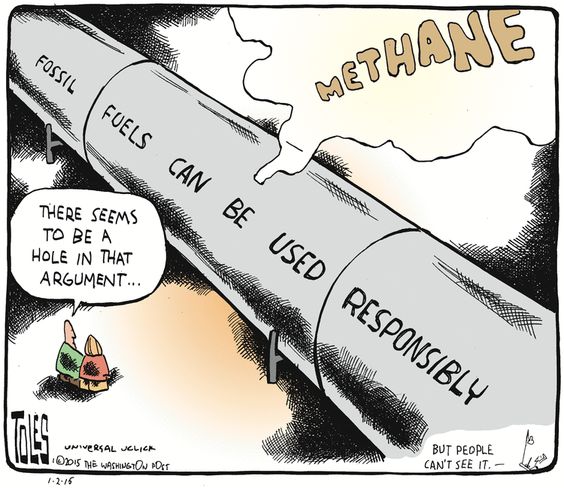
Methane produces greenhouse gas.
The statement, issued under the Australian Climate Roundtable banner, said Australia’s future prosperity would be at risk unless it had a coherent national response to the crisis.
“The scale of costs and breadth of the impact of climate change for people in Australia is deeply concerning and will escalate over time,” it said. “It is in Australia’s national interest that we do all we can to contribute to successful global action to minimise further temperature rises and take action to manage the changes we can’t avoid.”


The statement said the expert advice made clear temperatures were increasing, extreme climate-related events such as heatwaves and bushfires were becoming more intense and frequent, and natural systems were suffering irreversible damage. Some communities were now in a constant state of recovery from successive natural disasters with growing economic ramifications. 
 
Australia faced escalating costs due to unavoidable climate change from historical emissions
Agriculture must adapt

It said inaction would lead to unprecedented economic damage to Australia and its regional trading partners, heightened risks to financial stability – particularly as the insurance industry became compromised – and significant threats to the agriculture, forestry, tourism and fishing industries. 

There would be severe pressure on government budgets due to a dramatic fall in tax revenue and a rise in natural disasters that demanded emergency response and recovery spending and there would be major and long-lived social and health impacts, including loss of life.

The roundtable concluded Australia must play its fair part in international efforts to limit average global heating to 1.5C above pre-industrial levels, or at most to well below a 2C increase.


That meant setting a target of net-zero emissions by mid-century and introducing policies to meet it that aimed to lift social equity and the country’s global competitive advantage in a zero-emissions world.


The Morrison government has rejected calls that it back the goal of net-zero emissions by 2050. The target has been adopted by more than 70 countries, all Australian states and a growing number of business and investors, including fossil fuel companies. National emissions have dipped 1.5% since the Coalition was elected in 2013 after falling about 14% in six years under Labor.

Australia faced escalating costs due to unavoidable climate change from historical emissions
Our cities will inundate from sea rise.
The roundtable said even with ambitious global action Australia faced escalating costs due to unavoidable climate change from historical emissions, and must act swiftly to improve resilience. It said the country was “woefully unprepared” for the scale of threats that would emerge as it lacked a systemic government response at any level.


#Australia, #bigbusiness, #cambio-climatico, #climate crisis, #climatecriminals, #climateemergency, #economy, #methanegas, #icemelting, 

Related: 2020 is a Warning That Our Civilization is Beginning to Fall Apart (excerpt): Medium

IPCC: the dirty tricks climate scientists faced in three decades since first report (excerpt): The Conversation

(Pics added by this blog)

As the evidence became ever more compelling, the attacks on scientists escalated.
Wildfire
..... "The path to the summit
The accumulation of carbon dioxide in the atmosphere, caused primarily by the burning of fossil fuels, had been worrying scientists since the 1970s. The discovery of the “ozone hole” above Antarctica had given atmospheric scientists enormous credibility and clout among the public, and an international treaty banning chlorofluorocarbons, the chemicals causing the problem, was swiftly signed. 

Greenhouse gases
The Reagan White House worried that a treaty on CO₂ might happen as quickly, and set about ensuring the official scientific advice guiding leaders at the negotiations was under at least partial control. So emerged the intergovernmental – rather than international – panel on climate change, in 1988.

Already before Sundsvall, in 1989, figures in the automotive and fossil fuel industries of the US had set up the Global Climate Coalition to argue against rapid action and to cast doubt on the evidence. Alongside thinktanks, such as the George Marshall Institute, and trade bodies, such as the Western Fuels Association, it kept up a steady stream of publishing in the media – including a movie – to discredit the science.

But their efforts to discourage political commitment were only partially successful. The scientists held firm, and a climate treaty was agreed in 1992. And so attention turned to the scientists themselves.

The Serengeti strategy

In 1996, there were sustained attacks on climate scientist Ben Santer, who had been responsible for synthesising text in the IPCC’s second assessment report. He was accused of having “tampered with” wording and somehow “twisting” the intent of IPCC authors by Fred Seitz of the Global Climate Coalition.

Wildfire
In the late 1990s, Michael Mann, whose famous “hockey stick” diagram of global temperatures was a key part of the third assessment report, came under fire from right-wing thinktanks and even the Attorney General of Virginia. Mann called this attempt to pick on scientists perceived to be vulnerable to pressure “the Serengeti strategy”.

As Mann himself wrote

Vote for your children's future
By singling out a sole scientist, it is possible for the forces of “anti-science” to bring many more resources to bear on one individual, exerting enormous pressure from multiple directions at once, making defence difficult. It is similar to what happens when a group of lions on the Serengeti seek out a vulnerable individual zebra at the edge of a herd."

Go to complete The Conversation article
by

Research Associate in Social Movements, Keele University

Related:  2020 is a Warning That Our Civilization is Beginning to Fall Apart (excerpt): Medium

#bigbusiness, #bushfires, #carbonstorage, #climatecriminals, #criminalesclimáticosdelacárcel, #climateemergency, #jailclimatecriminals, #jail the climate criminals, anti-science, climate science,