A roadmap for an optimal electricity market suggests gas prices will
need to stay low to compete with alternatives on renewable grid.
New gas-fired power is not essential for a grid increasingly based on
renewable energy, and gas prices will need to stay low if it is to
compete with alternatives, according to the government agency
responsible for the electricity system.
Solar Power is cheaper
The Australian Energy Market Operator
(Aemo) has released a roadmap detailing what an optimal national
electricity market would look like to 2040 if it was designed with a
focus on security, reliability and the lowest cost for consumers.
Its integrated system plan, the result of 18 months consultation and
analysis, describes a diverse system built on large and small-scale
renewable energy supported by a range of “dispatchable” power sources
that can be turned on and off when needed.
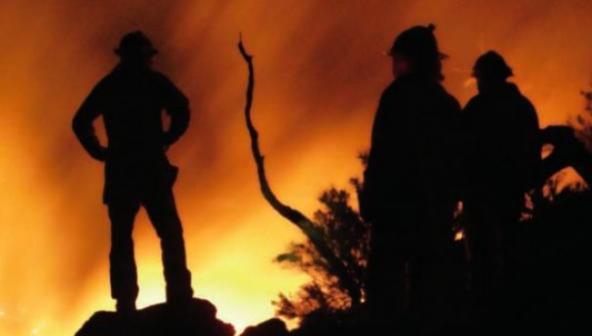
A week before Christmas last year, five of my fellow veteran fire and
emergency chiefs and I held a press conference as fires ravaged Australia’s east coast. Appalled by the utter lack of leadership from
Canberra in supporting bushfire response efforts, we took matters into
our own hands. We announced
that 33 retired fire and emergency chiefs would convene a National
Bushfire and Climate Summit to do what the federal government should
have done: bring together everyone with a role to play in an effective
bushfire response, and develop solutions to help protect Australians
against the growing bushfire threat, fuelled by climate change.
Much
has changed since then. The COVID-19 pandemic has turned life as we
know it on its head, forcing us to take our summit online, but it did
not change our commitment to finding solutions to improve Australia’s
bushfire response, readiness, and recovery.
Our sense of urgency
was fuelled by a simple truth that was echoed time and again in every
session: climate change has pushed Australia into a new era of
unprecedented bushfire risk, and our governments have underestimated the
threat. This puts communities in danger.
The
concern we felt was mirrored in the discussions at the summit, which
brought together almost 200 experts including firefighters, bushfire
survivors, economists, doctors, farmers, Indigenous cultural burning
experts, economists, and many more.
In
every session, there was a shared, palpable level of fear. Fear that
the death and destruction of our Black Summer is now the benchmark for
our periodic worst fire seasons. Fear that no matter what we do to fight
such fires, fire seasons like our last will overwhelm every effort at
control. Fear that some communities are now located in places that
cannot be defended on the worst days. Fear that old approaches to fuel
management are no match for fires that now burn so fast and intensely
that they create their own dry thunderstorms and weather systems.
The
biggest fear expressed, however, was that our national government will
continue to ignore the urgent need to reduce greenhouse gas emissions
and act on climate change, while supporting the opening of new fossil
fuel projects that will worsen global warming.
The truth is
abundantly clear: we need a fundamental rethink of how we plan, prepare
for, respond to and recover from bushfires. Our Australian Bushfire and
Climate Plan, with 165 practical recommendations resulting from summit
discussions, is a good start.
But
first, if we are to have any hope of coping with the increasing
bushfire threat, we must deal with the underlying driver – by phasing
out fossil fuels, banning new coal, oil, and gas projects, and reaching
net zero emissions as fast as possible.
The
remaining recommendations outline how we can better use the support
capabilities of our defence forces, better resource our fire, emergency
and land management agencies, increase fuel reduction, resource
Indigenous cultural burning capabilities and improve insurance access.
We also need a national strategy to deal with the health consequences of
worsening bushfires.
We
recommend new rapid fire-detection technology, new types of
water-bombing aircraft and more remote-area fire teams to stop small
fires becoming big ones.
There is also considerable emphasis on
community support, and community-led solutions. This includes boosting
mental health support for afflicted communities and firefighters, and
community resilience hubs in every vulnerable local government area.
It
is an ambitious plan, for a big problem, but who will pay for it? The
summit concluded that fossil fuel companies, which drive the
emissions-causing global warming and extreme weather, should pay a levy
so Australia can build resilience to, and recover from, worsening
climate disasters.
Federal agents arrested Ohio
Speaker of the House Larry Householder, along with several lobbyists,
on July 21 on charges that the group used $60 million of funds provided
by the monopoly utility FirstEnergy Corp. in exchange for passing a law
that bailed out that company’s nuclear and coal plants.
The scandal is the latest example of monopoly utility companies
deceiving lawmakers, regulators, and the public to enrich executives and
shareholders, and occasionally being criminally investigated or
prosecuted for their actions. Many instances of utility corruption
center around attempts to change policies or regulations in ways that
would increase electric bills – often to cover costs at expensive power
plants, win approval to construct controversial power plants, or
restrict the growth of rooftop solar power.
"Global warming affects agriculture in a number of ways, including through changes in average temperatures, rainfall, and climate extremes (e.g., heat waves); changes in pests and diseases; changes in atmospheric carbon dioxide and ground-level ozone concentrations; changes in the nutritional quality of some foods; and ..."
It
is obvious that many farmers are going to be displaced because of
climate change. As their usual crops become unviable and broad scale
farming becomes uneconomical because of costs, it is impossible to
continue to subsidise farmers that continue to farm or to graze
unsuitable animals in an unsustainable fashion. Yet farmers need
government support and Australia requires food production.
Australia must learn to manage with less surface water. Artesian water resources must be husbanded.
Suggested Actions
1. “What we still don’t have in the year 2019 is a national (Australian) strategy on
climate change in agriculture. There’s still no actual framework to help
farmers manage these risks and implement solutions,” she said. Verity Morgan-Schmidt, the chief executive of Farmers for Climate Action 2. Revitalise, with extra funding, our agricultural support services that have provided excellent research and development in the past, new crops and animal husbandry practices can be developed. 3. Provide education for farmers that demonstrate alternative farming practices, for example move from cattle to goats. 4. Only subsidise farmers that change their practice to accommodate a changing climate and protect our soils but retrain farmers unable to accommodate change. 5. Encourage small farming practices such as permaculture, greenhouse production, urban farms.
Note: Intensive farming practices have been shown to be as productive as industrial broad scale farming. 6. Stop selling water off or subsidising in any way corporations that persist in growing water hungry crops such as cotton and almonds in water scarce areas. 7. Protect our surface and artesian water from destructive and unsustainable industries. 8. Support farmers to plan moves from floodplains or cope with more flooding.
Droughts will occur more often. Soils will erode. Desertification will occur.
9. Encourage farmers to 'get a yield' with new products.
" 'Agritourism, insect farming off waste resources, bush tucker foods —
there are options out there, but it's not traditional agriculture in
that sense.'
" 'We need support structures, new ideas, people helping us transition to these other production industries. ' "
She (Anika)
believes the first step needs to come from the energy sector to buy
more time for other industries to develop response strategies.
'The
easiest way to put the brakes on what we are experiencing is to
transition away from dirty fossil fuel energy to clean, renewable
energy; that then takes the pressure off other industries.' "
Scientists have repeatedly warned that the effects of climate change would include more extreme weather.(Supplied: Gena Dray)
Scientists have warned us about the dangers of 2 degrees of warming — at the moment, we're heading for more than that.(ABC News: Jordan Hayne)
'Scientists
have spelt out this out repeatedly for 30 years, and environmental
groups have championed the cause. But both made mistakes.
For
too long, scientists believed that the facts spoke for themselves, that
all they had to do was get them out there. And the NGOs had a tendency
come across as self-righteous, or guilt-trippy.
I was already on board — with me they were preaching to the choir — but I don't think they pulled in enough other people.
Climate Action Now
But
here we are. After years of drought at home, and increasingly extreme
weather all over the world, polling shows that most of us get it enough
to think climate change is a problem and that we should do something
about it.
And yet we've done very little. I want to know why. That's why I've made this series.
And yes, part of it turns out to be the fossil fuel industry.
Part of it turns out to be that change is hard, and that it's been
easier for politicians to do little, especially when they are themselves
divided.
Not that it can't be done — and there is hope. We'll get to that too. I hope you'lljoin me for Hot Mess."'
By Richard Aedy for Hot Mess
Richard Aedy has been a journalist for more than 30 years. He's been concerned about climate change for most of that time. He's been at Radio National since 1998.
"Our homes have become sanctuaries — places of refuge in the time of coronavirus. But they can't protect us from all threats.
Analysts
say the houses we've built, and where we've built them, could increase
our future vulnerability as we face the ongoing effects of climate
change.
Analysts fear insurers may withdraw
from areas they don't believe
are profitable.(ABC News: Tim Swanston)
With increased damage to houses through
catastrophic fires, floods and other disasters, the global insurance
market is under increasing stress, and there are fears whole communities
could become impoverished or homeless.
Experts
doubt industry players and governments have fully come to terms with the
issue — and they worry about some of the financial mechanisms insurance
companies have put in place to share the risk.
Too focused on past catastrophes
Insurers
have a short-term focus and often fail to be proactive in assessing
future problems, according to Jason Thistlethwaite, a Canada-based
academic and expert on insurance practice.
He says
while global climate models are forward looking, the actuarial practices
used for risk modelling in the insurance industry are not.
Put bluntly, insurers still spend most of their time looking in the rear-view mirror.
Erosion could cost some homeowners their entire asset, experts warn.(ABC RN: Antony Funnell)
Where
there has been a shift in attitude, though, is among "reinsurers" —
essentially, the insurance companies for insurance companies.
"Reinsurers
are starting to grasp that these extreme events are something known as
correlated risk, meaning that there is a common cause underlying them,"
Professor Thistlethwaite says.
"So, Australia may
have a good year with very few claims in the primary insurance market,
but reinsurance rates may still go up because there is bad flooding in
the Philippines or the United Kingdom, for instance.
"They
are operating at a global scale that allows them to pick up on data
points that provide a much more coherent pattern that shows extreme
weather events are getting worse and contributing to higher losses."
He says that broader, interconnected understanding of
risk is starting to filter down to primary insurers, as they themselves
experience increasing reinsurance costs.
Nevertheless,
he's predicting a rationalisation of the primary insurance market, with
some companies going bust and others simply withdrawing from areas they
don't believe profitable.
Rise of the 'red zones of risk'
Professor
Thistlethwaite says it's already happening in the United States in
regions regularly affected by major climate-related events, such as
hurricanes and tornados.
And it's also beginning to occur in Australia, according to Karl Mallon, director of science at the organisation Climate Risk.
"If
we see emissions continuing in the current direction, the level of
warming continuing in the same direction, and if we continue to see a
sort of blind attitude to what's happening, then our risk will rise to
about one in 10 properties," he says.
"Ninety per
cent of properties may be OK, as in they are still insurable, even
though the costs might be elevated. [But] one in 10 may really cross into the red zone territory."
Early last year the
Insurance Council of Australia accused Dr Mallon of "scaremongering",
but its president Richard Enthoven has since acknowledged that changing
weather systems could potentially make some parts of Australia
"uninsurable".
Dr Mallon cites parts of the Gold
Coast in Queensland, the Central Coast in New South Wales, and West
Lakes in South Australia as regions facing an impending crisis.
Legal
expert Justine Bell-James warns that coastal communities could face a
double hit: not only could their houses become uninsurable, but some
homeowners could lose their entire asset due to erosion."
Katta O'Donnell, 23, is suing the Government over the risks
to her investments through climate change.
(Supplied: Molly Townsend)
A
23-year-old Melbourne law student is suing the Australian Government
for failing to disclose the risk climate change poses to Australians'
super and other safe investments.
Key points:
The
world-first case alleges the Government failed in its duty to disclose
climate change's impact on the value of government bonds
The case is being led by a 23-year-old student and investor who says she did it to "protect her future"
Experts say it could open the floodgates for other litigation by tying climate change to real-world financial risk
The
world-first case filed on Wednesday in the Federal Court alleges the
Government, as well as two government officials, failed in a duty to
disclose how climate change would impact the value of government bonds.
Katta
O'Donnell, the head litigant for the class action suit, said she hoped
the case would change the way Australia handled climate change.
"I'm
suing the Government because I'm 23 [and] I think I need to be aware of
the risks to my money and to the whole of society and the Australian
economy," Ms O'Donnell said.
"I think the Government needs to stop keeping us in the dark so we can be aware of the risks that we're all faced with."
Experts say it is the first where a national government has been sued for its lack of transparency on climate risks.
Government
bonds are considered the safest form of investment, with most
Australians invested in them through compulsory superannuation.
Bonds
are similar to shares, but instead of investing in companies, the
investor lends a government money to build infrastructure and fund
critical services such as health, welfare and national security.
Ms O'Donnell, who has invested in bonds independently from her super, said she did it to "protect her future".
However
bonds, like shares, can lose value if they become less attractive to
the market. This can occur if investors question a government's ability
to repay them due to rising government debt, ethical or reputational
reasons.
Ms O'Donnell said watching the impact of bushfires in Australia made her worry about the value of her bonds.
Despite
the Government not disclosing climate-related risks to its investment
products, government regulators are increasingly forcing companies to
disclose how climate change will impact their shareholders.
APRA is working with corporate
regulator ASIC and the Reserve Bank of Australia to ensure public
companies are examining climate risk, disclosing it to investors, and
acting on it.
Ms O'Donnell's lawyer, David Barnden from Equity Generation Lawyers, said the duty to be transparent extended to the Government.
"We allege that the Government is misleading and deceiving investors by not telling them about the risks," Mr Barnden said.
Experts say the drought and the threat of bushfires
in Australia exposes
the Government
to more financial risk compared to other countries.